Connect with us

Business

PSA Singapore details mitigation measures to overcome port congestion

Measures include reinforcing its frontline capacity, commissioning new berths at Tuas Port, and reactivating berths and yard space at Keppel Terminal.

Admin

Published

on

PSA Singapore details mitigation measures to overcome port congestion

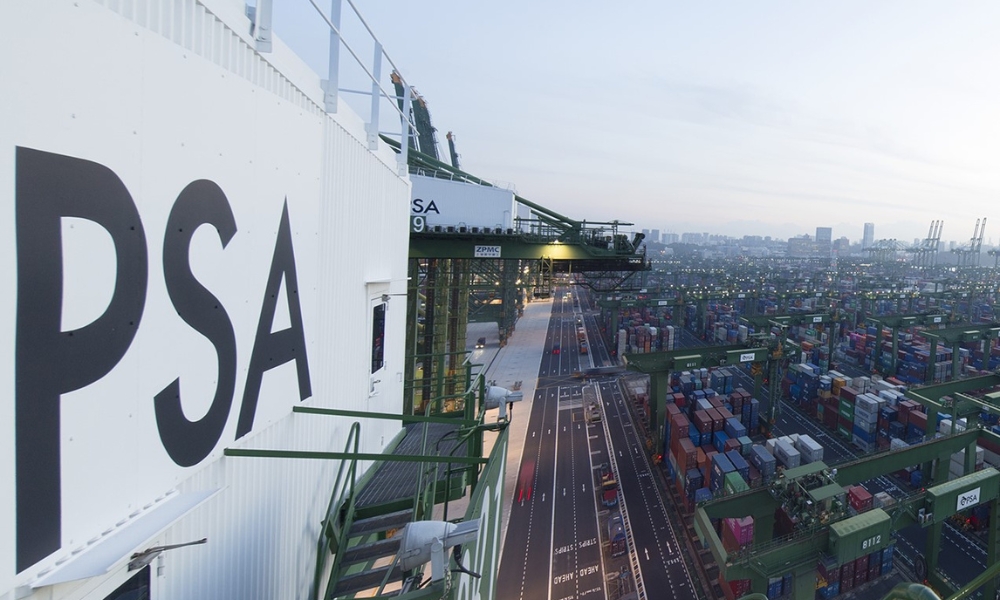
PSA Singapore (PSA), a major global transhipment hub, on Wednesday (10 July) said it has significantly ramped up its capabilities to support increased activity and mitigate the impact of global supply chain disruptions since the beginning of 2024. 

This includes reinforcing its frontline capacity, commissioning new berths at Tuas Port, and reactivating berths and yard space at Keppel Terminal. 

As a result, the average wait time at the port in recent weeks has been reduced to two days or less. 

“As the various disruptions, including the Red Sea situation, are still ongoing, the supply chain demand and impact remain volatile. PSA remains committed to work alongside its customers during these uncertain times,” it said in a statement. 

Since the start of 2024, PSA has faced strong berth demand as well as off-schedule vessel arrivals, resulting in high concentrations of vessels arriving during certain days of the week, causing a significant increase in waiting times despite maxing out all of PSA’s berths. 

Larger call sizes have required vessels to stay longer, with lengthier transhipment container dwell.

This has arisen from a confluence of various factors, including the Red Sea situation (which has indirectly reduced overall global shipping capacity), upstream and downstream ports congestion, and port omissions by shipping lines to recover their schedules, giving rise to substantial changes in vessel arrival patterns and call sizes.

Mr Ong Kim Pong, Group CEO of PSA International, said: “As the flagship project for the Group, PSA Singapore remains committed to meet the challenges of ongoing volatility and ensure the port’s development and handling capacity align with our customers’ needs. The Red Sea crisis has significantly disrupted global shipping and trade and we anticipate this challenging situation to persist for a prolonged period, potentially extending port congestion from Asia to Europe.”

“PSA is building partnerships with like-minded customers and stakeholders on a series of Node-to-Network initiatives to better coordinate between upstream and downstream ports so as to uplift shipping schedule reliability and overall network efficiency.”

“At the same time, we are also constantly on the lookout to expand our fabric of port networks and port ecosystems so as to grow our global presence in locations which can add value and enhance cargo flows. By leveraging our port facilities, supply chain capabilities and especially our people, we remain steadfast in enhancing collaboration with our customers to address their bespoke needs amidst the ever-changing global landscape.”

Singapore’s port has seen about 90% of container vessels arriving off-schedule, compared to an average of about 77% in 2023. In addition, vessel port stays at PSA have also increased by 22% compared to the same period last year. This is due to more containers being handled per vessel call due to higher demand and container re-handling, where some containers are unloaded from the vessel to make way for other containers in consideration of port of discharge, weight and vessel stability. Unloaded containers are then loaded back to the vessel again.

Container re-handlings on mega vessels berthed at PSA have increased by 8% in the first half of 2024, compared to the previous year. This is due to high vessel utilisation caused by the Red Sea situation that results in shipping lines leveraging more on PSA to optimise the stowage of containers on board their vessels, and to ensure safety at sea, especially now when most mega vessels are taking the longer route around the Cape of Good Hope. This in turn has led to extended vessel port stays and will affect the berthing time for incoming vessels, even while PSA upkeeps its productivity.

PSA also noted it moved 7% more container volumes in the first half of 2024, compared to the same period last year.

In addition to the reactivation of some berths and yard space at Keppel Terminal, PSA’s Tuas Port currently operates nine berths and will add two more by the end of this year. 

Looking ahead, PSA planned to further expand Tuas Port and continue hiring frontline workers across all our terminals. In 2024 alone, PSA hired nearly 1,500 frontline workers to enhance its operational capabilities and capacity.

Related: Singapore sees large increases in container volumes, bunkering activities remain unaffected
Related: MPA reports ‘significant increase’ in vessel arrivals in Singapore


Photo credit: PSA Singapore
Published: 11 July, 2024

Continue Reading

Legal

Singapore withdraws remaining 127 charges against Hin Leong founder OK Lim

Lim Oon Kuin, also known as OK Lim, was issued a stern warning and a district court granted him a discharge amounting to an acquittal for these charges on 17 July.

Admin

Published

on

By

RESIZED Sora Shimazaki on Pexels

Founder of collapsed oil trader Hin Leong Trading, Lim Oon Kuin, also known as OK Lim, has had the remaining 127 charges against him withdrawn, according to The Straits Times on Monday (20 July). 

OK Lim was issued a stern warning and a district court granted him a discharge amounting to an acquittal for these charges, including those for cheating, on 17 July. The discharge means Lim cannot be prosecuted again for the same offences.

Lim, 84, is currently serving a 13½-year prison sentence after the High Court reduced his original 17½-year jail term in March 2026. He was convicted in 2024 on two cheating charges and one count of abetting forgery in a case prosecutors described as one of Singapore’s most serious trade finance frauds.

Lim was convicted in May 2024 of two charges of cheating the Hongkong and Shanghai Banking Corporation (HSBC) and one count of abetting forgery that proceeded to trial out of a total of 130 criminal charges.

He was first charged in court on 14 August 2020, and was subsequently handed further charges in court on 25 September 2020, 30 April 2021 and 24 June 2021 for his role in perpetuating fraud on various financial institutions. 

A total of 130 charges were eventually brought against him for cheating and forgery-related offences.

Related: Singapore: Hin Leong Founder OK Lim gets jail term slashed to 13.5 years


Photo credit: Sora Shimazaki
Published: 21 July, 2026

Continue Reading

Winding up

Singapore: Coastal Logistics Pte Ltd to be wound up voluntarily

Coastal Logistics was reportedly affiliated with troubled Singapore bunker player Coastal Oil (Singapore) Pte Ltd.
Admin

Published

on

By

RESIZED Drew Beamer

Several resolutions for Coastal Logistics Pte Ltd were made during an extraordinary general meeting held on 14 July, according to a notice in the Government Gazette on Friday (4 July).

The following resolutions were duly passed during the meeting:

As Special Resolution

  • That it has been proved to the satisfaction of the meeting that the Company cannot by reason of its liabilities continue its business and accordingly the Company be wound up voluntarily pursuant to Section 160(1)(b) of the Insolvency, Restructuring and Dissolution Act 2018 (No. 40 of 2018);

As Ordinary Resolutions

  • that Mr. Wong Pheng Cheong Martin and Ms. Koay May Yee, both care of FTI Consulting (Singapore) Pte Ltd, One Raffles Quay, #27-10 South Tower, Singapore 048583 be appointed as the joint and several Liquidators of the Company for the purpose of such winding up; and
  • that the Liquidators be at liberty to open, maintain and operate any bank account(s) or account(s) for monies received by them as Liquidators with such bank(s) as they deem fit; and
  • that a Committee of Inspection will not be formed.

Manifold Times previously reported Nicholas James Gronow, director of Heng Tong Fuels & Shipping and Coastal Logistics, filed statutory declarations for both companies stating the firms cannot continue their businesses due to liabilities.

Both companies were reportedly affiliated with troubled Singapore bunker player Coastal Oil (Singapore) Pte Ltd. 

In 2019, several vessels owned by both firms entered the sale & purchase (S&P) market in Singapore.

Related: Singapore: Director declares Heng Tong Fuels & Shipping’s inability to continue business
Related: Heng Tong Fuels & Shipping in court over DBS Bank bunker tanker loan
Related: Singapore: Bunker tanker “Coastal Neptune” arrested
Related: Heng Tong Fuels & Shipping, Coastal Logistics tankers enter S&P market


Photo credit: Drew Beamer
Published: 21 July, 2026

Continue Reading

LNG Bunkering

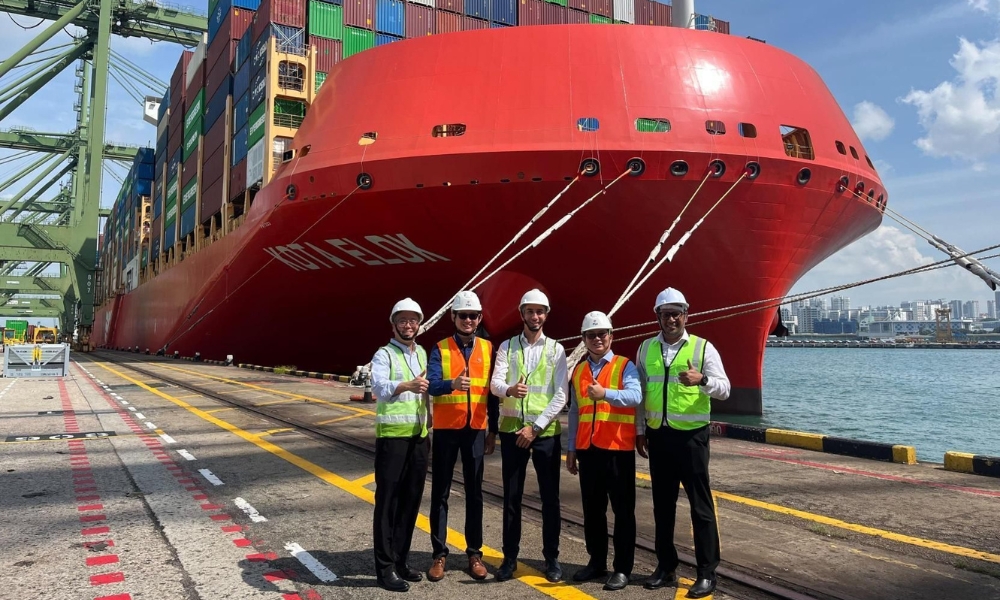
PIL’s LNG dual-fuel boxship “Kota Elok” arrives in Singapore on maiden call

As the first of 13 new 13,000 TEU vessels joining its fleet, Kota Elok is equipped to operate on LNG and low-sulphur fuel oil that helps reduce our greenhouse gas emissions.
Admin

Published

on

By

PIL's LNG dual-fuel boxship “Kota Elok” arrives in Singapore on maiden call

Singapore-based Pacific International Lines Pte Ltd on Monday (20 July) said its first 13,000 TEU LNG dual-fuel container vessel, Kota Elok, recently made her maiden call to Singapore on 15 July.

As the first of 13 new 13,000 TEU vessels joining its fleet, Kota Elok is equipped to operate on liquefied natural gas (LNG) and low-sulphur fuel oil that helps reduce our greenhouse gas emissions. 

The vessel also incorporated energy-saving features and digital technologies to reduce fuel consumption and enhance operational performance, as well as a bow windshield to improve aerodynamics, contributing to improved fuel efficiency and lower emissions over the course of long-haul voyages.

“Following Singapore, Kota Elok will continue her voyage on our East Coast Service 1 (ES1) route to South America, calling at ports in Brazil, Uruguay, and Argentina before returning to Asia,” the company said in a social media post. 

Kota Elok also became PIL’s first vessel to receive Lloyd’s Register certification for compliance with the IACS UR E26 and UR E27 cyber security requirements.

Developed by the International Association of Classification Societies (IACS), UR E26 and UR E27 are mandatory cyber resilience requirements for newbuild vessels contracted from 1 July 2024. 


Photo credit: Pacific International Lines
Published: 21 July, 2026

Continue Reading

Trending