Connect with us

Business

IMO forum discusses energy transition challenges and solutions of the maritime industry

Three-day IMO-UNEP-Norway Zero- and Low Emission Forum event held on 27-29 September and broadcast on UN TV saw over 1,000 participants.

Admin

Published

on

IMO new

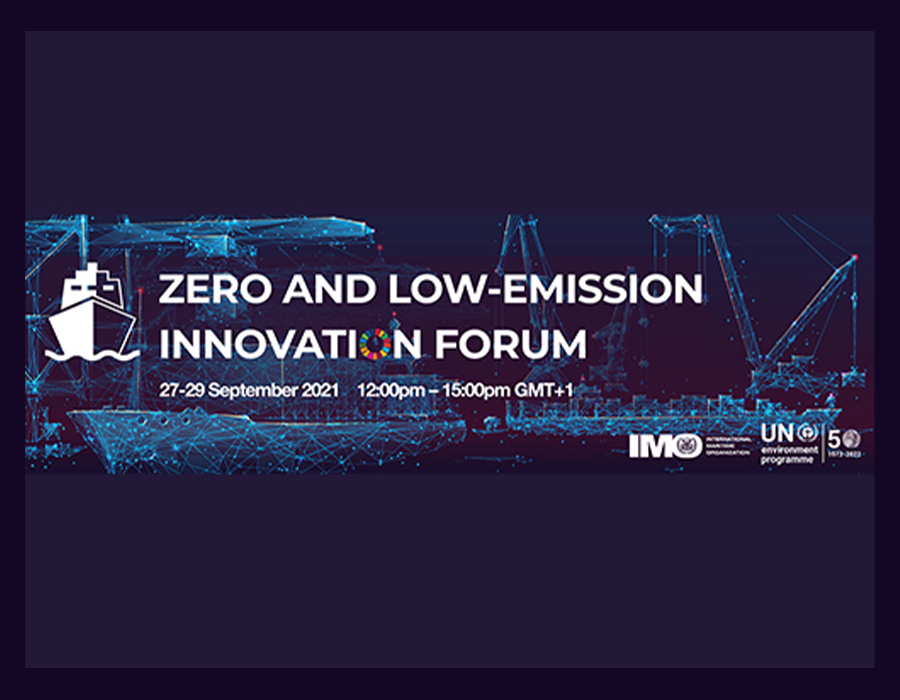
The International Maritime Organization (IMO) on Friday (15 October) said it has held a three-day IMO-UNEP-Norway Zero- and Low Emission Forum.

The online event on 27-29 September and broadcast on UN TV, saw over 1,000 participants from across the world exchange best practices, ideas and latest developments with a view to enabling more inclusive maritime innovation towards decarbonisation. 

In his opening speech, IMO Secretary-General Kitack Lim said, “The energy transition of the maritime industry will require new technologies, low- and zero- carbon (renewable) alternative fuels and infrastructure to support low- and zero-carbon shipping. Innovation is core to its success. The IMO-UNEP-Norway Zero- and Low-Emission Innovation Forum is a recognition of this need. This is a novel forum to promote further cooperation and exchange of best practices, and to learn from other sectors where a similar transition has taken place on the global scale.”

The IMO Chief of the Department of Partnerships and Projects, Dr. Jose Matheickal said, “IMO is keen to ensure that no Member State is left behind in the journey a low-carbon future. This transition requires global effort with buy in from multiple stakeholders, which is why we are thrilled by the level of interest and participation in this forum as well as the practical steps that emerged from the discussions.”

Topics in the spotlight included novel technologies to reduce GHG emissions in maritime; R&D enabling environment, including financing; ongoing projects; and models of innovation and cooperation which could further foster innovation; as well as examples of North-South and South-South cooperation on R&D. Attendees heard from numerous high-profile speakers, including representatives of Governments, regulators, industry and academics on these topics. Many exchanges took place during the breakout sessions. (See the list of speakers and the programme  here).

Making innovation inclusive

An important focus for the forum addresses the specific needs of developing countries, especially Least Developed Countries (LDCs) and Small Island Developing States (SIDS). An issue that was acknowledged by numerous speakers was a lag between decarbonisation efforts particularly in research and development in developing countries and those in the developed countries.

One solution proposed was to raise awareness of innovation projects, financing opportunities and areas of mutual growth of LDCs and SIDS so that they were not left to re-invent the decarbonisation wheel. The awareness must be on a regional and global scale, in order to take advantage of opportunities while avoiding fragmentation.

Forum discussions highlighted the importance of inclusive innovation. Calling for coordination of key stakeholders across the value chain. Inclusive innovation requires close coordination and cooperation among stakeholders, both in developed and developing countries – particularly SIDS and LDCs.

Some speakers highlighted the coordinated actions to reduce emissions from shipping could be achieved by bringing together the R&D initiatives and R&D centres in developed countries (such as Singapore Global Maritime Decarbonisation Centre, MAERSK Center for Zero-Carbon Shipping) with those in developing regions (such as the Maritime Technology Cooperation Centres -MTCCs a network of regional centres established by IMO under a project funded by the European Union).

Finance was a prominent topic during the forum, with emphasis given to the need to bring onboard the private sector, national banks and International Financial Institutions in a coordinated manner. Not only would it minimize risk but would support the demonstration of appropriate solutions in developing countries, including in LDCs and SIDS.

Many speakers noted the kind of coordination would require innovative financial solutions to underwrite some of the associated risks. It could be achieved through Government support and International Financial Institution interventions, such as blended public and private financing for technology demonstrations, technology diffusion and eventually wider uptake of innovative solutions.

IMO is already operating a number of initiatives in LDCs and SIDS that bridge the knowledge gap with developed nations and spread innovation along the maritime chain. 

The projects include sharing of information on new maritime decarbonisation initiatives using the IMO-Singapore NextGEN portal, knowledge sharing via the network of European-Union-funded MTCCs and the IMO-Norway GreenVoyage2050 Project that assists developing countries to implement low-carbon projects and optimise existing systems and is currently preparing a major pilot project.

The proposed IMO CARES emission reduction project will also support the process, within its preparatory phase actively seeking solutions on how to link North and South R&D efforts, and how to link country needs and ongoing R&D effort, with the inclusion of the financial sector as well.

Funding a global transition

The need for funding streams to facilitate a global transition to low-carbon operations formed an important part of the discussions, with speakers pointing out that funding of pilot projects raises the profile of and reduces risks associated with new technologies. The forum also highlighted the importance of varied sources of funding, going beyond those offered by banks, such as private investment, blended financing and more.

Although funding for decarbonisation projects exists, some attendees warned that it is not prolific enough and may not be visible to LDC and SIDS stakeholders. There may also be issues securing funds when scaling up projects after trial periods. One solution put forward during the forum was to develop a capacity building toolkit on potentially available funding sources offered by International Financial Institutions (IFIs) and other key global initiatives and funds (such as the Global Environment Facility and the Green Climate Fund).

Speakers recognised that maritime innovation is currently considered a niche sector for financial stakeholders, which may be the reason for a limited number of participants in the market. The issue can only be addressed by increasing the profile of maritime technological solutions and building trust, as well as mutual capacity building. 

The trust-building and education on maritime decarbonisation needs and specifics must target the financial sector, with the opportunities in developing countries an important part of the conversation. LDCs and SIDS must also be educated about potential investment and grant availabilities, as well as processes to secure funding.

IMO is already active on its front, together with European Bank for Reconstruction and Development and the World Bank. The group have created the FINSMART Roundtable, to bring together project beneficiary countries, donors and International Financial Institutions, as well as other financial sector representatives to discuss financing risks, opportunities and identify potential financial products, solutions – all with a focus on financing needs of developing countries, LDCs and SIDS.

Some forum speakers highlighted the possibility of incentive schemes and future market-based measures, such as fuel taxes or other forms of carbon dioxide (CO2) pricing, may in future result in an additional funding source for adoption of innovative emission reduction technologies in developing countries, LDCs and SIDS.

Looking forward

A number of practical strategies for the transition to a low- and zero-carbon future emerged during the active discussions. Recommendations included:

  • Joining and connecting the pilot projects and research and development initiatives (in developed and developing regions) and sharing the lessons learned and outcomes;
  • Sharing information and linking maritime decarbonisation initiatives projects using the IMO-Singapore NextGEN portal;
  • Linking R&D Centres in developed countries closer to the regional centres, as well as existing maritime decarbonisation projects in the developed world;
  • Fast-tracking port-linked innovations, as many ports are under national frameworks which may support some immediate buy-ins and investment;
  • Ensuring capacity building of maritime authorities, ports, especially in developing countries, on funding opportunities, potentially available grants and finance options, as well as bankable projects development needs;
  • Educating policy makers, training project leaders with regard to bankable proposal creation, identifying innovation funding in research institutes and engaging with seafarers as technology users;
  • Proposing/developing more IMO pilot projects to include technology demonstrations, including more pilot projects in IMO-implemented GHG-related projects, as well as technology demonstrations; and
  • Arranging further innovation forums to offer a global platform for regular dialogue and exchange of innovation experiences to support the objectives of the initial IMO GHG strategy.

Roadmap to a low carbon future

Forum attendees were keen to widen the audience for the points raised during discussions and further work together to promote inclusive innovation for maritime decarbonisation.

It was suggested that information could be disseminated through IMO. IMO was also seen as the ideal forum to facilitate collaboration and consolidation of the work to spread innovation across the maritime value chain.

More information 

Recordings from the forum can be viewed here: Zero-and Low-Emission Innovation Forum (27-29 September 2021) | UN Web TV 

Speaker presentations from the event can be found here.


Photo credit: International Maritime Organization
Published: 18 October, 2021

Continue Reading

Legal

Singapore withdraws remaining 127 charges against Hin Leong founder OK Lim

Lim Oon Kuin, also known as OK Lim, was issued a stern warning and a district court granted him a discharge amounting to an acquittal for these charges on 17 July.

Admin

Published

on

By

RESIZED Sora Shimazaki on Pexels

Founder of collapsed oil trader Hin Leong Trading, Lim Oon Kuin, also known as OK Lim, has had the remaining 127 charges against him withdrawn, according to The Straits Times on Monday (20 July). 

OK Lim was issued a stern warning and a district court granted him a discharge amounting to an acquittal for these charges, including those for cheating, on 17 July. The discharge means Lim cannot be prosecuted again for the same offences.

Lim, 84, is currently serving a 13½-year prison sentence after the High Court reduced his original 17½-year jail term in March 2026. He was convicted in 2024 on two cheating charges and one count of abetting forgery in a case prosecutors described as one of Singapore’s most serious trade finance frauds.

Lim was convicted in May 2024 of two charges of cheating the Hongkong and Shanghai Banking Corporation (HSBC) and one count of abetting forgery that proceeded to trial out of a total of 130 criminal charges.

He was first charged in court on 14 August 2020, and was subsequently handed further charges in court on 25 September 2020, 30 April 2021 and 24 June 2021 for his role in perpetuating fraud on various financial institutions. 

A total of 130 charges were eventually brought against him for cheating and forgery-related offences.

Related: Singapore: Hin Leong Founder OK Lim gets jail term slashed to 13.5 years


Photo credit: Sora Shimazaki
Published: 21 July, 2026

Continue Reading

Winding up

Singapore: Coastal Logistics Pte Ltd to be wound up voluntarily

Coastal Logistics was reportedly affiliated with troubled Singapore bunker player Coastal Oil (Singapore) Pte Ltd.

Admin

Published

on

By

RESIZED Drew Beamer

Several resolutions for Coastal Logistics Pte Ltd were made during an extraordinary general meeting held on 14 July, according to a notice in the Government Gazette on Friday (4 July).

The following resolutions were duly passed during the meeting:

As Special Resolution

  • That it has been proved to the satisfaction of the meeting that the Company cannot by reason of its liabilities continue its business and accordingly the Company be wound up voluntarily pursuant to Section 160(1)(b) of the Insolvency, Restructuring and Dissolution Act 2018 (No. 40 of 2018);

As Ordinary Resolutions

  • that Mr. Wong Pheng Cheong Martin and Ms. Koay May Yee, both care of FTI Consulting (Singapore) Pte Ltd, One Raffles Quay, #27-10 South Tower, Singapore 048583 be appointed as the joint and several Liquidators of the Company for the purpose of such winding up; and
  • that the Liquidators be at liberty to open, maintain and operate any bank account(s) or account(s) for monies received by them as Liquidators with such bank(s) as they deem fit; and
  • that a Committee of Inspection will not be formed.

Manifold Times previously reported Nicholas James Gronow, director of Heng Tong Fuels & Shipping and Coastal Logistics, filed statutory declarations for both companies stating the firms cannot continue their businesses due to liabilities.

Both companies were reportedly affiliated with troubled Singapore bunker player Coastal Oil (Singapore) Pte Ltd. 

In 2019, several vessels owned by both firms entered the sale & purchase (S&P) market in Singapore.

Related: Singapore: Director declares Heng Tong Fuels & Shipping’s inability to continue business
Related: Heng Tong Fuels & Shipping in court over DBS Bank bunker tanker loan
Related: Singapore: Bunker tanker “Coastal Neptune” arrested
Related: Heng Tong Fuels & Shipping, Coastal Logistics tankers enter S&P market


Photo credit: Drew Beamer
Published: 21 July, 2026

Continue Reading

LNG Bunkering

PIL’s LNG dual-fuel boxship “Kota Elok” arrives in Singapore on maiden call

As the first of 13 new 13,000 TEU vessels joining its fleet, Kota Elok is equipped to operate on LNG and low-sulphur fuel oil that helps reduce our greenhouse gas emissions.

Admin

Published

on

By

PIL's LNG dual-fuel boxship “Kota Elok” arrives in Singapore on maiden call

Singapore-based Pacific International Lines Pte Ltd on Monday (20 July) said its first 13,000 TEU LNG dual-fuel container vessel, Kota Elok, recently made her maiden call to Singapore on 15 July.

As the first of 13 new 13,000 TEU vessels joining its fleet, Kota Elok is equipped to operate on liquefied natural gas (LNG) and low-sulphur fuel oil that helps reduce our greenhouse gas emissions. 

The vessel also incorporated energy-saving features and digital technologies to reduce fuel consumption and enhance operational performance, as well as a bow windshield to improve aerodynamics, contributing to improved fuel efficiency and lower emissions over the course of long-haul voyages.

“Following Singapore, Kota Elok will continue her voyage on our East Coast Service 1 (ES1) route to South America, calling at ports in Brazil, Uruguay, and Argentina before returning to Asia,” the company said in a social media post. 

Kota Elok also became PIL’s first vessel to receive Lloyd’s Register certification for compliance with the IACS UR E26 and UR E27 cyber security requirements.

Developed by the International Association of Classification Societies (IACS), UR E26 and UR E27 are mandatory cyber resilience requirements for newbuild vessels contracted from 1 July 2024. 


Photo credit: Pacific International Lines
Published: 21 July, 2026

Continue Reading

Trending