Connect with us

Alternative Fuels

Holland American Line cruise ships to undergo cold ironing upgrade

Three cruise vessels will receive shore power connectors, totalling 11 vessels fitted with upgrade.

Admin

Published

on

5bd00887e3b5a 1540360327

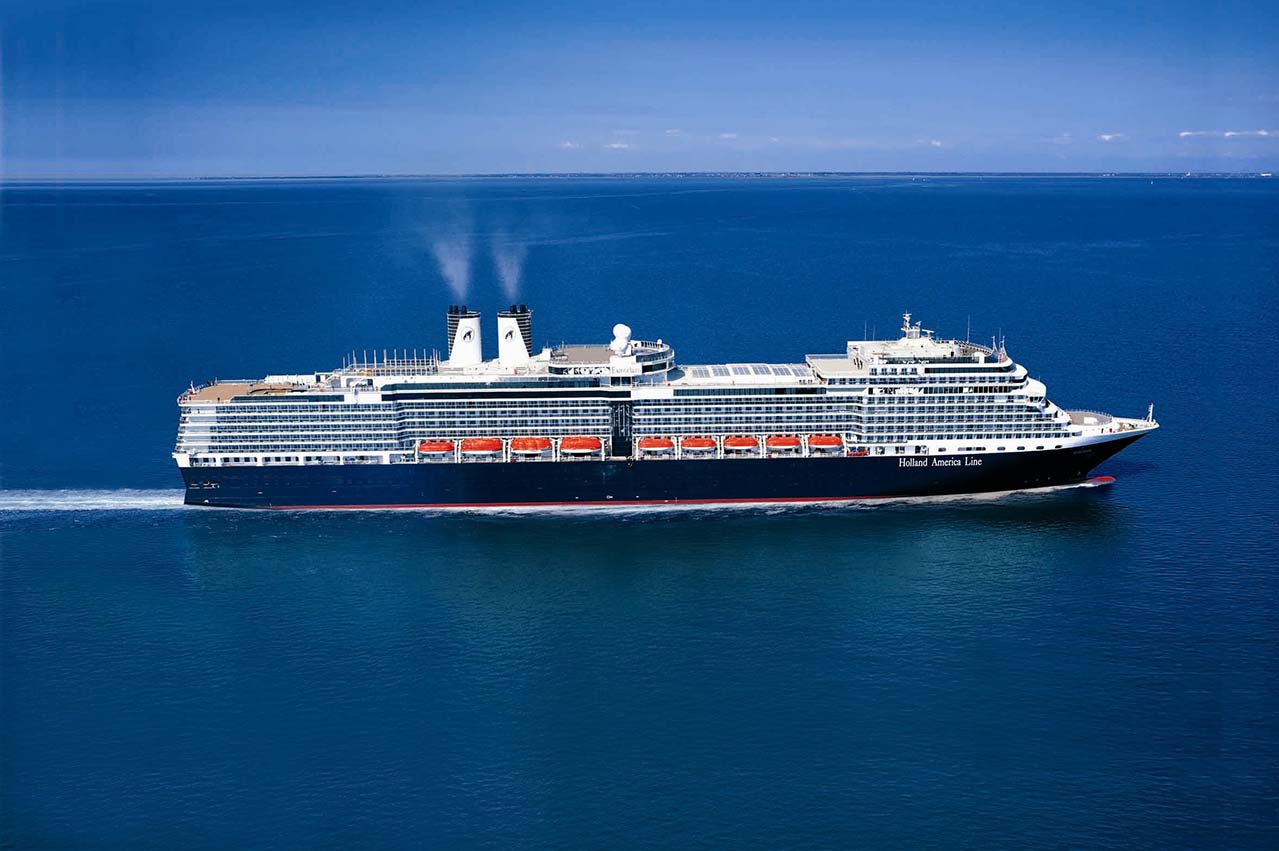
Holland American Line will be retrofitting shore power connectors on three of its cruise ships, according to technology firm ABB.

Shore connection technology allows the vessels to turn off all engines and switch to electricity generated in a power plant on shore, to reduce emissions and noise while also increasing energy efficiency.

After having executed three new installations, Holland America Line will proceed to feature a total of 11 cruise ships outfitted with ABB’s shore power connectors.

“Holland America Line remains firmly committed to including new technical solutions that truly advance its policy for sustainable operations,” said Orlando Ashford, President, Holland America Line.

“Our ships call at the world’s most beautiful destinations, which is one reason we prioritize environmental responsibility. These ships can now achieve very low emissions while in ports where shore power is available.”

According to ABB, the primary distribution voltage for cold ironing operations can vary from 440 volts to 11 kilovolts while load requirements can range from a few hundred kW in the case of car carriers to a dozen or more MW in the case of passenger ships or reefer ships.

Its single interface for complete port electrification and grid integration is compliant worldwide and can be installed for newbuilding projects or for retrofit.

Cable connection and preparation for safe power transfer can take around 20 minutes on existing shore power solutions, but the ABB solution for Holland America Line includes a simplified switchover process, enabling a more seamless transition between ship and shore power sources. 

ABB has also taken steps to streamline and minimise disruption during the installation process, whether for newbuildings or for retrofitting.

“Over the last 13 years, ABB has developed and installed shore power connections for a wide variety of ship types, including cruise vessels, and has extensive practical know-how across a spectrum of power and switchboard configurations,” says Juha Koskela, Managing Director, ABB Marine & Ports.

“We have also reached the point where the full installation can be done during the normal operation of the vessel. For Holland America Line, we completed three turnkey projects simultaneously, covering procurement, engineering, installation and commissioning.”

Moving forward, an increasing number of ports in North America, Europe and Asia are investing in shore power infrastructure for visiting ships, yet implementation standards for connectors and cables vary, says ABB.

ISO 80005-1 offers an international standard covering design, installation and testing of high-voltage shore connections and an update for low-voltage systems is in the pipeline, but the lack of such a standard has hindered the adoption of shore power, despite its agreed benefits.

Photo credit: ABB
Published: 24 October, 2018


Continue Reading

LNG Bunkering

PIL’s LNG dual-fuel boxship “Kota Elok” arrives in Singapore on maiden call

As the first of 13 new 13,000 TEU vessels joining its fleet, Kota Elok is equipped to operate on LNG and low-sulphur fuel oil that helps reduce our greenhouse gas emissions.

Admin

Published

on

By

PIL's LNG dual-fuel boxship “Kota Elok” arrives in Singapore on maiden call

Singapore-based Pacific International Lines Pte Ltd on Monday (20 July) said its first 13,000 TEU LNG dual-fuel container vessel, Kota Elok, recently made her maiden call to Singapore on 15 July.

As the first of 13 new 13,000 TEU vessels joining its fleet, Kota Elok is equipped to operate on liquefied natural gas (LNG) and low-sulphur fuel oil that helps reduce our greenhouse gas emissions. 

The vessel also incorporated energy-saving features and digital technologies to reduce fuel consumption and enhance operational performance, as well as a bow windshield to improve aerodynamics, contributing to improved fuel efficiency and lower emissions over the course of long-haul voyages.

“Following Singapore, Kota Elok will continue her voyage on our East Coast Service 1 (ES1) route to South America, calling at ports in Brazil, Uruguay, and Argentina before returning to Asia,” the company said in a social media post. 

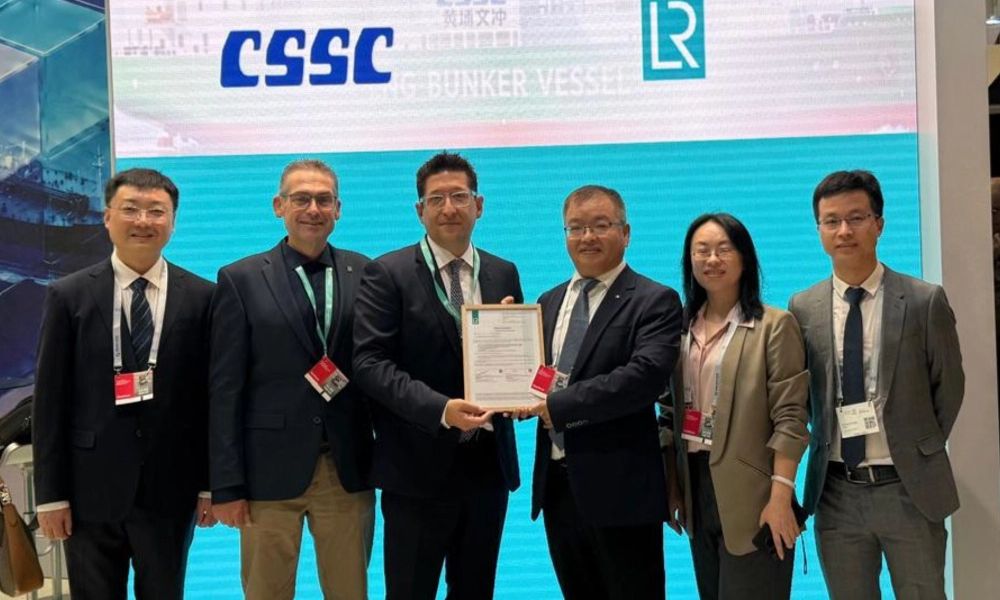
Kota Elok also became PIL’s first vessel to receive Lloyd’s Register certification for compliance with the IACS UR E26 and UR E27 cyber security requirements.

Developed by the International Association of Classification Societies (IACS), UR E26 and UR E27 are mandatory cyber resilience requirements for newbuild vessels contracted from 1 July 2024. 


Photo credit: Pacific International Lines
Published: 21 July, 2026

Continue Reading

LNG Bunkering

CIMC SOE secures order for 12,000-cbm LNG bunkering vessel from Sinopec Clean Energy

Once operational, the vessel is expected to strengthen Sinopec’s domestic coastal LNG bunkering network and help address gaps in China’s alternative fuel bunkering infrastructure.

Admin

Published

on

By

CIMC SOE secures order for 12,000-cbm LNG bunkering vessel from Sinopec Clean Energy

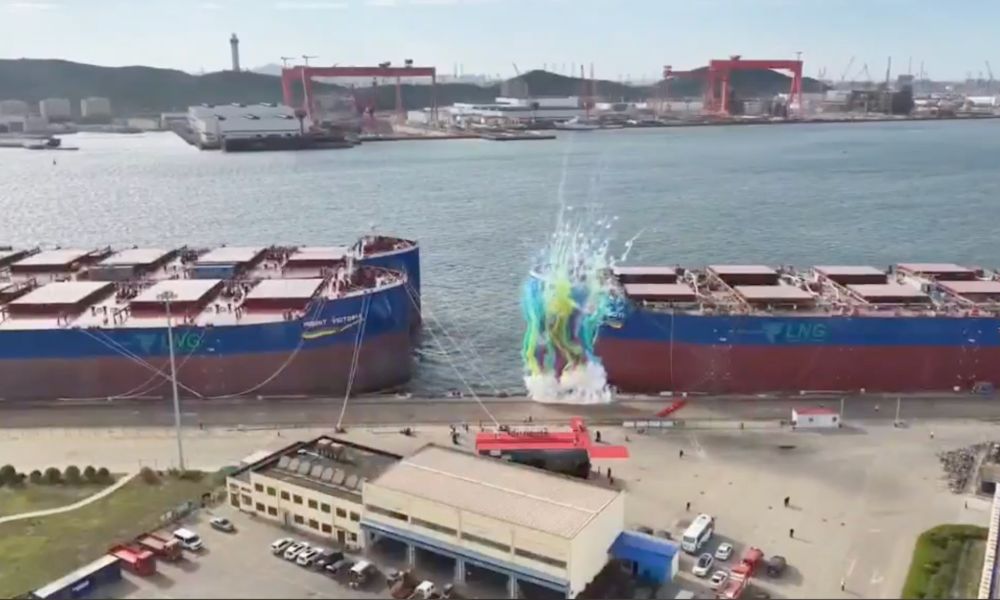
China’s Nantong CIMC Sinopacific Offshore & Engineering Co., Ltd. (CIMC SOE) recently signed a contract with Sinopec (Beijing) Clean Energy Co., Ltd. to build a 12,000-cubic metre (m3) LNG bunkering vessel, according to Chinese maritime media.

The vessel is scheduled for delivery in 2028 and will support Sinopec’s efforts to expand its presence in the marine clean energy sector.

Once operational, the vessel is expected to strengthen Sinopec’s domestic coastal LNG bunkering network and help address gaps in China’s LNG bunkering infrastructure.

With this signing , CIMC Pacific Offshore Engineering’s LNG bunkering vessel orderbook is further strengthened, maintaining its leading position in the global market for small and medium-sized LNG bunkering vessels.

The contract also marked another milestone for CIMC SOE, which has seen a sharp increase in orders and business performance this year amid a surge in domestic LNG vessel demand.


Photo credit: Nantong CIMC Sinopacific Offshore & Engineering
Published: 21 July, 2026

Continue Reading

Nuclear

ABS awards AiP to Korean institute for SMR-powered container ship concept design

KRISO says AiP recognises the technical feasibility and safety of its concept design, marking an important milestone toward the development of next-generation nuclear-powered commercial ships.

Admin

Published

on

By

ABS awards AiP to Korean institute for SMR-powered container ship concept design

Korea Research Institute of Ships & Ocean Engineering (KRISO) on Thursday (16 July) received Approval in Principle (AiP) from the American Bureau of Shipping (ABS) for its concept design of a 15,000 TEU Small Modular Reactor (SMR)-powered container ship utilising Molten Salt Reactor (MSR) technology.

KRISO said the AiP recognises the technical feasibility and safety of its concept design, marking an important milestone toward the development of next-generation nuclear-powered commercial ships.

“This achievement demonstrates international recognition of KRISO’s technological capabilities in the rapidly evolving field of nuclear-powered shipping, supporting the transition toward low-carbon maritime transport,” it said. 

Building on this milestone, KRISO will continue advancing basic and detailed ship design, paving the way for future demonstration and commercialisation of SMR-powered vessels. 

Through continued R&D and international collaboration, KRISO remains committed to strengthening next-generation maritime technologies and contributing to the safe deployment of nuclear propulsion in the maritime industry.


Photo credit: Korea Research Institute of Ships & Ocean Engineering
Published: 21 July, 2026

Continue Reading

Trending