
LNG Bunkering
Drewry: LNG shipping on a ‘road to recovery’, but 2026 marks just the beginning
Although 2026 appears to mark the start of recovery, rising geopolitical tensions in the West have heightened uncertainty and could undermine expectations for this year.

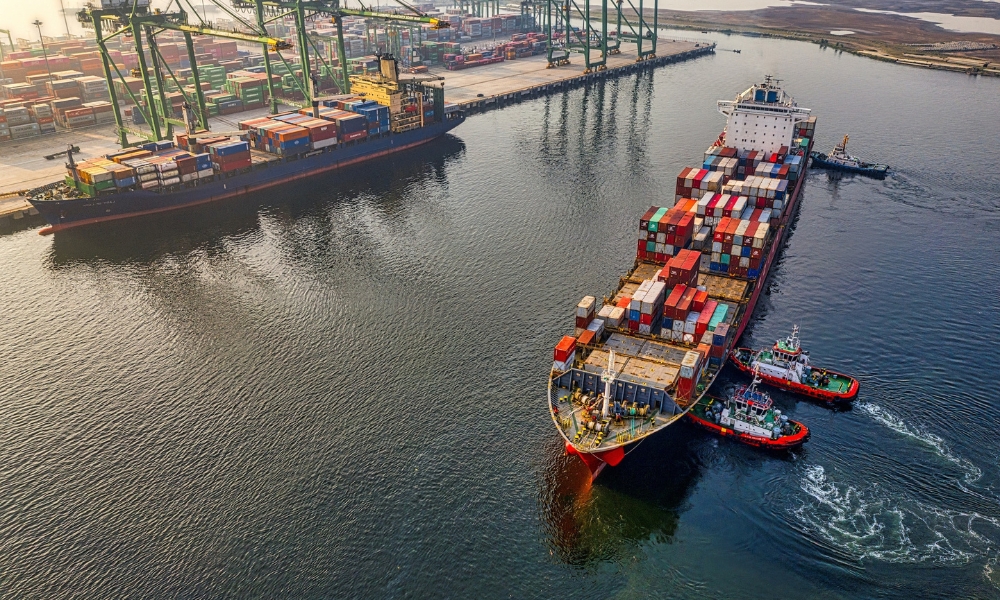
Maritime research and research provider Drewry recently said while it expects LNG shipping rates to improve in 2026, rising geopolitical tensions in the West have heightened uncertainty and could undermine expectations for this year:
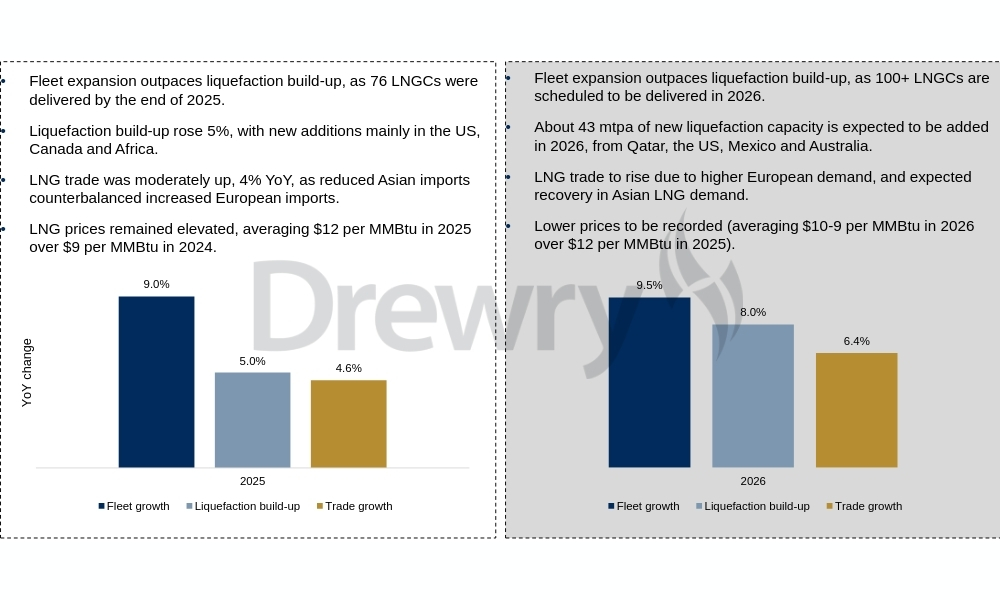
Drewry expects LNG shipping rates to improve in 2026, driven by demand acceleration and LNG supply expansion. However, a significant rebound is still unlikely, as fleet expansion continues to outpace liquefaction build-up. This is highlighted in the 2026 schedule: over 65% of annual deliveries are scheduled for 1H26, while 60% of new supply is expected in 2H26. Although 2026 appears to mark the start of recovery, rising geopolitical tensions in the West have heightened uncertainty and could undermine expectations for this year.
Rates to revive, but rather cautiously, as geopolitical factors and Asian demand could be the wildcards
We expect LNG shipping rates to recover this year from the multi-year lows recorded in 2025 (with TFDE rates averaged $25,000pd in 2025, down 37% YoY, and XDF/MEGI rates averaged $40,500pd, down 25% YoY). Meanwhile, the chances for a strong rebound remain slim, as 100+ LNGCs are scheduled for delivery in 2026, following 76 deliveries in 2025, signalling persistent oversupply.
Although the fleet expansion will continue to prevent any major correction in rates, some positives will serve as catalysts in pivoting rates toward a road of recovery.
Figure 1: 2025 vs 2026
LNG trade: Demand will rise, but supply expansion will outpace the demand growth
- Supply growth: About 43 mtpa of new liquefaction capacity is expected to be added in 2026, with some mega projects, including Qatar’s North Field Expansion (16.5 mtpa), Golden Pass T1 (6 mtpa), Corpus Christi Phase-3 and Block2-7 (8.6 mtpa), hitting the market. However, 60% of the upcoming supply is expected to become available in 2H26. Global LNG supply will improve on the back of new production additions (40 mtpa) from 2025, which will ramp up their export intensity.
- Trade recalibration: The demand outlook is bright for Europe, with robust imports expected this year as the continent is likely to end the 2025-26 winter with less than 30% of storage, supporting demand. However, Europe’s quest to implement further structural changes in its energy sourcing (backed by new supply deals and regasification expansion) will be the main driver of imports in 2026.
- Asian demand is set to rise, along with China’s improved demand: Asian demand is anticipated to improve, supported by new supply volumes, higher gas demand, and lower LNG prices. Meanwhile, China’s imports are likely to revive, not due to lower pipeline supply or reduced domestic supply, but to the maxing out of key supply sources that capped China’s LNG demand in 2025. With domestic production already meeting targets for 2025-26 and pipeline supply via PoS 1 operating at full capacity, we expect China’s growing demand to be met through spot buying (which remained subdued in 2025), while new contractual supply is set to commence in 2026.
Note: The full article by Drewry can be found here.
Photo credit: Drewry
Published: 26 January, 2026
LNG Bunkering
Singapore-based EPS takes delivery of three LNG dual-fuel bulk carriers
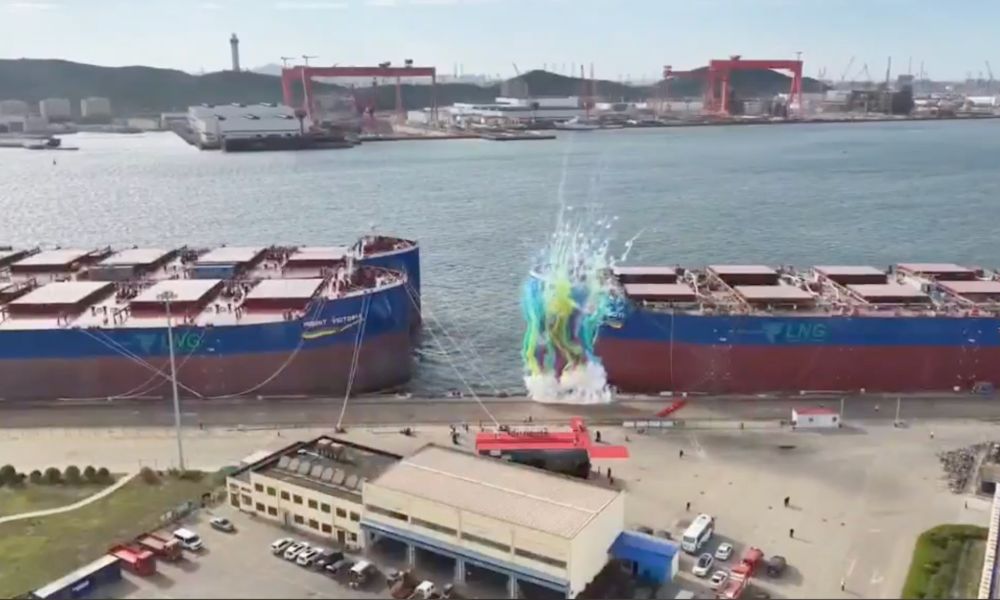
Three vessels are the third, fourth and fifth in the company’s series of 14 Newcastlemaxes being built at the yard, and were delivered five months ahead of their contracted delivery dates.
LNG Bunkering
LR awards AiP to CSSC Huangpu Wenchong for 12,500 m³ LNG bunker vessel design
Vessel design incorporates Type C LNG cargo tanks and has been evaluated against a range of class notations covering gas operations, automation, environmental performance and cyber resilience.

Alternative Fuels
Yang Ming orders six LNG dual-fuel, ammonia-ready containerships from Hanwha Ocean
Each of the six new vessels will have a capacity of up to 13,650 TEU and feature LNG dual-fuel propulsion and Ammonia Fuel Ready specifications.


OUR INDUSTRY PARTNERS

Singapore: Liquidators of Nan Ho Maritime, Nan Xin Maritime issue notices of dividend

Singapore-based EPS takes delivery of three LNG dual-fuel bulk carriers

ISWG-GHG 22: IMO working group aims to present NZF text at MEPC 85

UCL on ISWG-GHG 22: Majority back GHG pricing, centralised fund in IMO NZF talks

LR awards AiP to CSSC Huangpu Wenchong for 12,500 m³ LNG bunker vessel design

DNV at SMM: Chinese shipbuilders, European owners seek closer ties on alternative bunker fuels

Auramarine: Marine fuel flexibility will be key to shipping’s energy transition

Singapore-flagged tugboat “Kim Heng 3203” placed under Sheriff’s arrest

US targets five bunker companies in latest sanctions campaign against Iran

China’s bunker market reshaped by tax rebates, trade flows and refining changes, says economist

Hengli Petrochemical’s ex-Singapore trading arm faces winding up application

Rajah & Tann: Bunker disputes are won in the first 48 hours

Report: GCMD outlines practical approach to quantity assurance in marine biofuel supply chains

Singapore: Notices of annual meeting issued for Vroon Shipping Asia and related firms
-
 Vessel Arrest2 weeks ago
Singapore-flagged tugboat “Kim Heng 3203” placed under Sheriff’s arrest
-
 Sanctions2 weeks ago
US targets five bunker companies in latest sanctions campaign against Iran
-
 Interview1 week ago
China’s bunker market reshaped by tax rebates, trade flows and refining changes, says economist
-
 Winding up2 weeks ago
Hengli Petrochemical’s ex-Singapore trading arm faces winding up application
-
 Bunker Claim5 days ago
Rajah & Tann: Bunker disputes are won in the first 48 hours
-
 Biofuel2 weeks ago
Report: GCMD outlines practical approach to quantity assurance in marine biofuel supply chains
-
 Winding up1 week ago
Singapore: Notices of annual meeting issued for Vroon Shipping Asia and related firms
-
 Alternative Fuels2 weeks ago
GEA to provide global ethanol fuel data for DNV’s AFI platform