Connect with us
DNV Decarbonization Insight Series August 2026 - What maritime professionals should know about AI Training

Business

Clyde & Co: Implications of Wuhan virus outbreak for shipping and international trade

Outbreak is increasingly putting a strain on businesses and shippers should be well armed with relevant contractual terms to ensure smooth negotiations.

Admin

Published

on

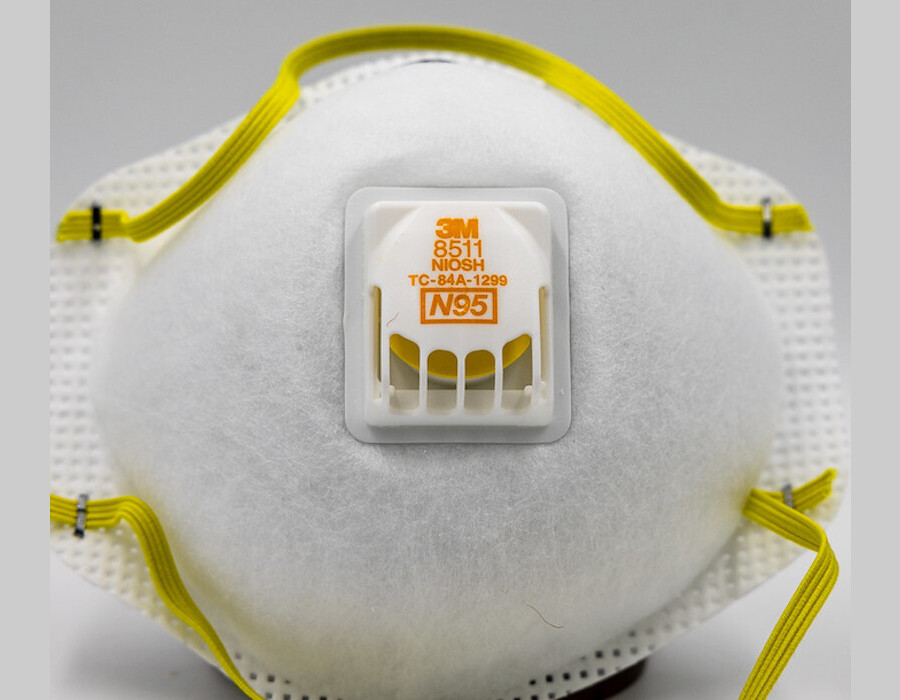
N95 mask

International law firm Clyde & Co has published an article highlighting the key implications from the novel coronavirus outbreak for international trade and shipping, it has been written by Nicholas Lum and Iain Clayton; the article has also been shared with Manifold Times:

Part of the same family as Severe Acute Respiratory Syndrome (SARS) and Middle East Respiratory Syndrome (MERS), the virus is known to transmit from animals to humans and causes, amongst other things, pneumonia. Presently, available antiviral drugs are no use against it. The virus is believed to have originated in the Huanan seafood wholesale market in Wuhan, China and has now spread to other parts of Asia, Europe and North America.  On 30 January 2020, the World Health Organization declared the outbreak a Public Health Emergency of International Concern.

The outbreak of any virulent disease poses the trading and shipping industries with various challenges, as was the case with SARS, MERS and Ebola previously.

In this article, we consider some of the pertinent issues that are likely to arise and be faced in the shipping and trading industries.

(Un)safe ports

Time charters usually contain a warranty which requires the charterers to nominate a safe port for the vessel. “Safety” typically concerns the physical characteristics of the port or the prevailing weather conditions but dangers to the crew in the form of political risks or diseases may also render a port unsafe.  If a port is unsafe, owners may justifiably refuse to call at that particular port.

With regards to the new coronavirus, strong evidence would be needed to demonstrate the substance of the risk and the unsafety of the port. If appropriate protective measures are in place, a port may still be considered safe, despite the presence of the virus there.

At the time of writing, it is unlikely that the new coronavirus has rendered any port unsafe as the risk of infection would appear to be manageable. Owners may face difficulties refusing to call at Chinese ports on the basis of unsafety. That said, the situation is moving quickly and this issue will need to be considered carefully, especially with respect to Wuhan and other nearby ports on the Yangtze River.

If a port becomes unsafe after nomination, charterers are under an obligation to nominate an alternative port. Similarly, if the vessel is at a port which becomes unsafe while the vessel is there but the danger may be avoided by leaving, the charterers may be obliged to order the vessel to depart.  

Deviation and quarantine

One of the latest cases of the new coronavirus identified in Singapore involved a person who had served on board a cargo vessel. The vessel was thereafter isolated at anchorage and went through the process of disinfection.

If a member of the crew is unwell or is suspected of carrying the virus, this could lead to deviation and/or quarantine.

Under a time charter, owners are at liberty to deviate for the purpose of saving life, excusing owners from their obligations to proceed with utmost dispatch and to comply with charterers’ employment orders. The vessel may also be off-hire for the entire period of the deviation which would include the putting back of the voyage. The position under a voyage charter is likely to be similar as most voyage charters allow the vessel to deviate for the purpose of saving life but no additional freight will be payable. It should be stressed, however, that the “saving life” element must be firmly established to justify the deviation. This would likely mean that the crew member must be seriously unwell and requires immediate onshore treatment.

Time and voyage charters commonly incorporate the Hague-Visby Rules and/or US COGSA. These both exempt owners from loss or damage caused by quarantine restrictions. Other types of restrictions may fall within the exemption for restraint of princes, rulers or people. A time charter may also contain an express exception for restraint of princes, rulers or people which charterers (as opposed to owners) may rely on. Since quarantine may itself not be an off-hire event (assuming no deviation), in certain circumstances, charterers may seek to rely on this exception to excuse themselves from paying hire. 

Force majeure

International trade contracts and charterparties commonly contain a force majeure clause which terminates the contract or excuses the parties from performance of their obligations on the occurrence of an extraordinary event beyond the control of either party. From the perspective of common law, whether a force majeure event is triggered will, of course, depend on the wording of the provision and the relevant facts. A detailed force majeure clause may declare events such as quarantine, entry and exit restrictions, restraint of princes, rulers or people, epidemics and certain disruption to inland and shore side transport as force majeure events. If so, the clause may be triggered if the relevant circumstances exist, for example, if a port is closed or cargo cannot reach the load port due to transport restrictions or disruptions, or if there is the existence of an epidemic.

It is noteworthy that the China Council for the Promotion of International Trade (CCPIT), accredited with China’s Ministry of Commerce, is now issuing force majeure certificates (upon request) to businesses in China if their businesses with overseas partners have been affected by the virus outbreak. Whether a party can rely on such force majeure certificates to declare force majeure will depend on a careful analysis of the facts and the wording of the force majeure clause (as mentioned above). The crux will lie in whether such businesses have been truly and seriously affected by the virus outbreak and have had to face the possibility of halting their business operations / unable to fulfil their contractual obligations due to the virus outbreak.

If the contract or charter does not contain a force majeure clause, the doctrine of frustration may come into play. Frustration occurs where there is an event which makes the contract or charter either impossible to perform or its performance radically different, through no fault of either party. In those circumstances, the contract or charter is automatically terminated. Generally, frustration will be less straightforward to establish and will require very serious and significant events to be triggered, for example, a lengthy, indefinite delay.

If entering a new contract or fixture, it is suggested that care be taken to ensure that an appropriately worded force majeure clause is included.

BIMCO Infectious or Contagious Disease Clause

Some charters may also include the BIMCO Infectious or Contagious Disease Clause. The clause was released in 2015 in response to the Ebola virus outbreak in West Africa. It comes in time and voyage charter versions.

The clause helpfully clarifies the parties’ respective rights and obligations when a vessel encounters the outbreak or aftermath of a disease. It is therefore important to check whether the charter contains such a clause. Note, however, that the clause is only intended to be triggered in the most serious of cases and a high threshold has been set – it will only take effect upon the onset of extreme illness and cannot be triggered in relation to more commonly encountered and widespread viruses.

If entering a new fixture, it is again suggested that the parties consider including the BIMCO Infectious or Contagious Disease Clause (in addition to an appropriately worded force majeure clause) as it clarifies some important matters and gives the parties additional options.

Minor events / issues

Less serious events / issues and the delays they cause are perhaps the most difficult to deal with. For example, a vessel may face delays due to immigration or health checks because it employs a Chinese crew but no quarantine restriction is imposed. Such an incident is unlikely to trigger any of the above provisions or principles but could nonetheless lead to disputes between owners and charterers over off-hire or the running of laytime or demurrage. Resolving such matters will invariably involve a detailed analysis of the charter and the relevant facts.

Conclusion

The new novel coronavirus is likely to lead to operational difficulties big and small for businesses in the shipping and trading industry. Negotiating and resolving these matters successfully will involve careful consideration of the relevant contractual terms and all the surrounding background facts.


Source:
Clyde & Co
Photo credit: Ehpien on Flickr
Published:  5 February, 2020


Continue Reading

Bunker Fuel

Singapore: Bunker fuel sales down by 3.8% on year in July 2026

4.73 million mt of various marine fuel grades were delivered at the world’s largest bunkering port in July, up from 4.92 million mt recorded during the similar month in 2025.
Admin

Published

on

By

Singapore: Bunker fuel sales down by 3.8% on year in July 2026

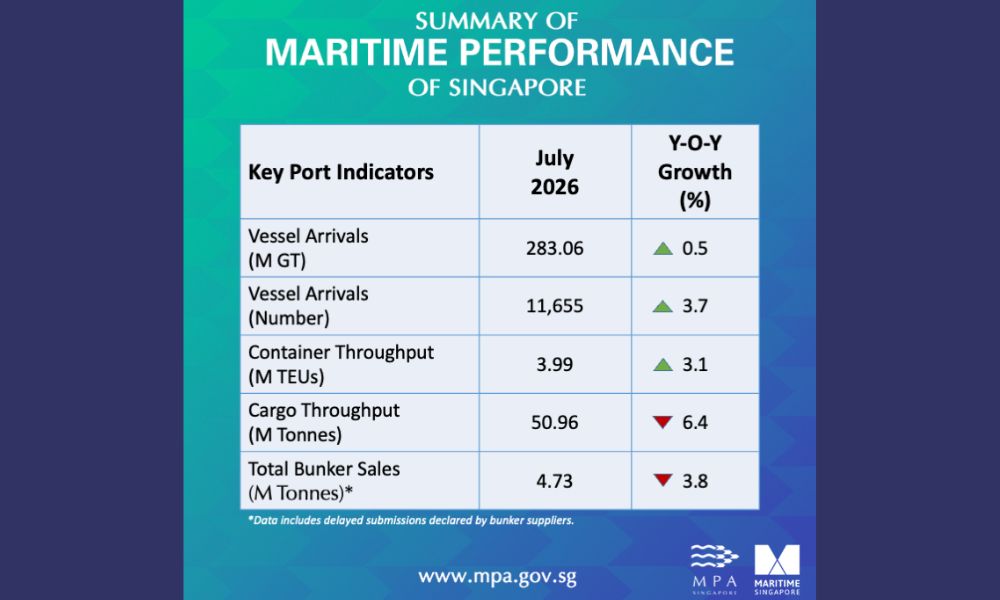
Sales of marine fuel at Singapore port fell by 3.8% on year in July 2026, according to data from the Maritime and Port Authority of Singapore (MPA).

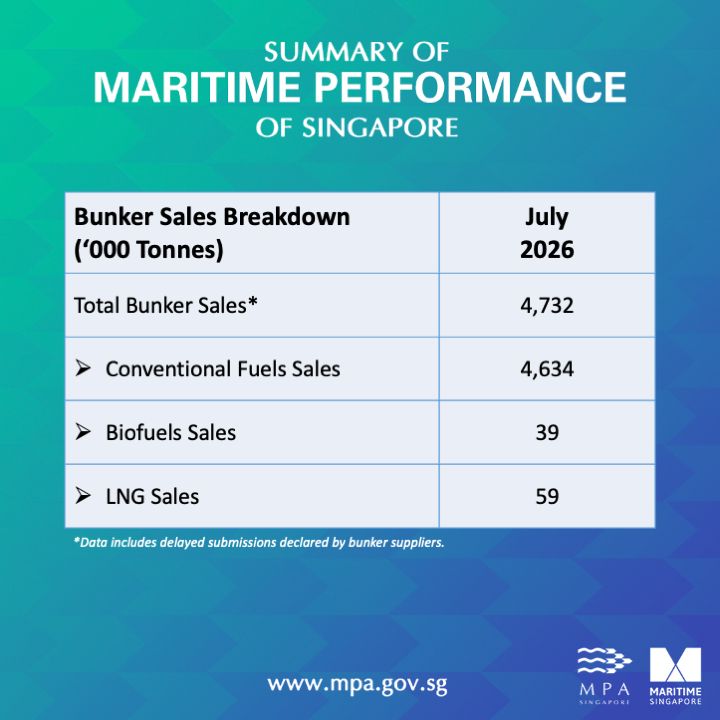
In total, 4.73 million metric tonnes (mt) (exact 4,731,900 mt) of various marine fuel grades were delivered at the world’s largest bunkering port in July, up from 4.92 million mt (4,918,000 mt) recorded during the similar month in 2025.

Deliveries of marine fuel oil, low sulphur fuel oil, ultra low sulphur fuel oil, marine gas oil and marine diesel oil in July (against on year) recorded respectively 1.95 million mt (zero from 1.95 million mt), 2.33 million mt (-2.1% from 2.38 million mt), 1,600 mt (+100% from zero), 700 mt (-82% from 3,900 mt) and zero (from zero).
Singapore: Bunker fuel sales down by 3.8% on year in July 2026

Bio-blended variants of marine fuel oil, low sulphur fuel oil, ultra low sulphur fuel oil, marine gas oil and marine diesel oil in July, (against on year) recorded respectively 8,200 mt (-83.7% from 50,300 mt), 29,900 mt (-62.9% from 80,500 mt), zero (from zero), zero (from zero) and zero (from zero). B100 biofuel bunkers, introduced in February last year, recorded 1,400 mt (-46.2% from 2,600 mt). 

LNG and methanol sales were 58,700 mt (+41.4% from 41,500 mt) and zero (from zero) respectively. There were no recorded sales of ammonia for the month and so far since 2025.


Photo credit: Maritime and Port Authority of Singapore
Published: 17 August, 2026

Continue Reading

Alternative Fuels

Ammonia, methanol bunkering workshops to be held at 13th Singapore Safety@Sea Week

Three workshops on ammonia bunkering, methanol bunkering, and crew safety awareness are part of MPA’s Safety@Sea Week, which will be held from 17 to 21 August.
Admin

Published

on

By

Singapore

The Maritime and Port Authority of Singapore (MPA), together with industry partners, on Monday (17 August) launched several new initiatives to enhance maritime safety. 

Announced at the opening of the 13th Singapore Safety@Sea Week, these initiatives will support shared learning, strengthen operational capabilities, and prepare the industry for the safe adoption of new technologies.

Organised by MPA from 17 to 21 August, this year’s Safety@Sea Week is themed “All Hands on Deck – Safety First!”. About 1,500 participants from across the maritime community are expected to take part in 18 events organised by MPA and its partners. 

These include the Safety@Sea Symposium, featuring seven speakers across two panel sessions, and three workshops on ammonia bunkering, methanol bunkering, and crew safety awareness. 

Speaking at the opening, Mr Murali Pillai, Senior Minister of State for Law and Transport, highlighted three priorities for strengthening maritime safety: harnessing technology responsibly, preparing early for emerging risks, and keeping people at the centre of safety. He also underscored the importance of strong partnerships across the maritime community in building a strong safety culture.

At the opening of Safety@Sea Week, the National Maritime Safety at Sea Council and the Singapore Shipping Association launched the Singapore Near Miss Reporting System to encourage the reporting and sharing of lessons from near miss incidents.

Modelled on the internationally recognised Confidential Human Factors Incident Reporting Programme (CHIRP), the system provides sea space users with a confidential online channel to report near misses. CHIRP will independently receive the submissions and provide anonymised information to the Council, which will distil key safety lessons for sharing with the wider maritime community.

Note: More information about the event can be found here


Photo credit: Peter Nguyen on Unsplash
Published: 17 August, 2026

Continue Reading

Bunker Fuel

Alkagesta highlights key insights on European choke point pressures in August

Update covers dual supply crisis currently shaping global bunker markets — a stalled Strait of Hormuz peace process and Rhine water levels at a 140-year record low — and the implications for Singapore.
Admin

Published

on

By

Alkagesta

Malta-based global commodity trading house Alkagesta recently shared latest market insight examining the dual supply crisis gripping global energy markets as diplomatic efforts to reopen the Strait of Hormuz stall and Rhine water levels fall to record lows, creating what the company describes as a “state of emergency” for European inland fuel distribution.

In an article published on Alkagesta Market Insights on 11 August, the company’s trading and market intelligence teams outlined how the convergence of two simultaneous logistical crises is tightening prompt fuel availability across Singapore, Northwest Europe, and the Mediterranean:

Strait of Hormuz transits fell to a near-one-month low of 13 ships on August 9 following an attack on an ADNOC-linked tanker, as both the US and Iran demand war reparations before any reopening agreement can be reached. Simultaneously, Rhine water levels at the Kaub chokepoint fell to 16 cm on August 10 — the lowest since records began in 1880 — with forecasts pointing to a further drop to just 4 cm by August 14, effectively halting barge traffic and trapping fuel oil stocks at the ARA hub.

The supply picture across both key hubs has deteriorated sharply. In Singapore, Middle Eastern fuel oil imports nearly tripled week-over-week to 328,878 mt by July 29 — the highest volume since March — providing some relief as onshore commercial heavy distillate stocks rose to a five-week high of 19.58 million barrels by August 5. However, July bunker fuel sales are estimated to have fallen 3.7% month-over-month to 4.44 million mt, with elevated premiums redirecting prompt demand toward alternative ports including Zhoushan and Port Klang.

In Europe, the VLSFO market remains acutely undersupplied as refiners continue to prioritize high-margin diesel over low-sulfur blending components, while the Rhine crisis has forced barges to operate at just 15–20% of normal capacity — with freight rates from Rotterdam to Karlsruhe rising more than 400% in two months.

Alkagesta’s strategic outlook points to a potential total breakdown in Rhine-linked inland distribution by mid-August, a VLSFO Hi-5 spread likely to remain above $200/mt through Q3, and a global crude market that analysts warn requires an additional 2.1 million b/d for 18 months to rebuild depleted inventories.

Note: The full article can be read here.


Photo credit: Alkagesta
Published: 17 August, 2026

Continue Reading

Trending