Connect with us

Biofuel

Bunker One reviews European bunker markets for 2025 and outlines 2026 outlook

Company highlighted its review of 2025 and its outlook for 2026 at how consolidation, larger tonnage, and daily biofuel operations are shaping the next phase.

Admin

Published

on

Bunker One

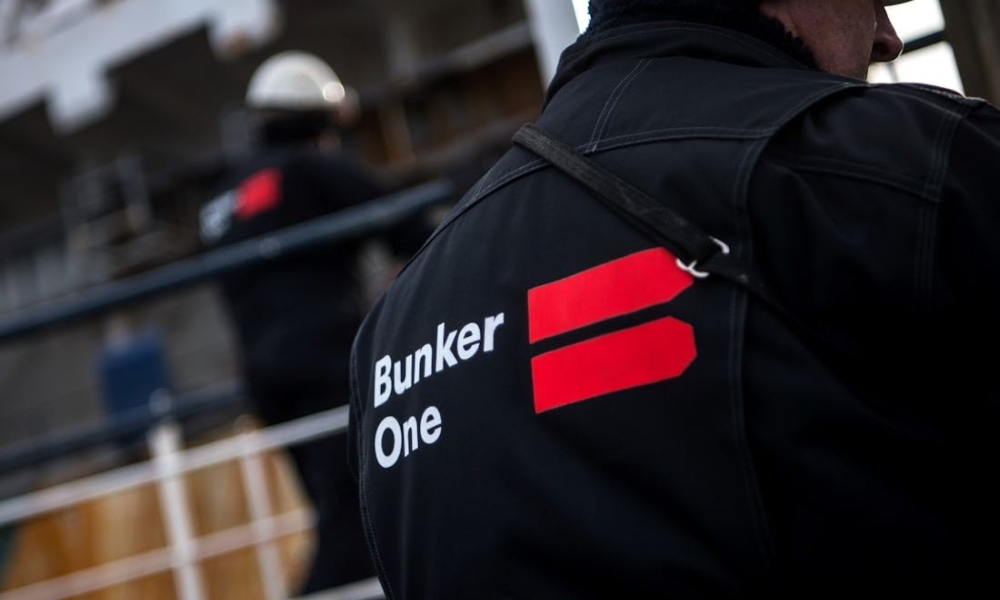
Bunker One on Friday (19 December) outlined its review of 2025 and its outlook for 2026 at how consolidation, larger tonnage, and daily biofuel operations are shaping the next phase:

2025 was a defining year for Bunker One Europe, marked by a clear focus on consolidation, scale, and readiness for change. Against a backdrop of evolving market conditions and accelerating sustainability requirements, the organization focused on strengthening its foundation – ensuring that growth, flexibility, and innovation could be delivered consistently across Northern Europe.

Three themes stood out:

  • Continued consolidation of the organization
  • The chartering of larger tonnage, most notably MT Sagafjord
  • The rapid integration of new fuels into daily operations

Together, these developments reinforced Bunker One Europe’s ability to turn complexity into clarity while remaining commercially agile.

Operational Resilience Across Northern Europe

Operating conditions can change quickly across Northern Europe. Bunker One Europe is structured to respond immediately when they do.

A key strength is the cross-border delivery capability. With operations spanning Denmark, Sweden, Germany, UK and surrounding markets, deliveries can be shifted between ports with minimal effort. This flexibility allows Bunker One Europe to adapt quickly to disruptions – whether operational, logistical, or external, and maintain reliable supply.

Market Developments: Consolidation and Larger Tonnage

Across Sweden, Denmark, Germany, and the UK, 2025 continued to reflect a trend toward market consolidation. For Bunker One Europe, this reinforced the importance of scale, integrated operations, and strong logistics control.

At the same time, customer demand increasingly pointed toward larger tonnage and higher-capacity solutions, both to improve efficiency and to support evolving fuel strategies.

MT Sagafjord: Increased Capacity and Scale

The chartering of MT Sagafjord was a strategic step to increase cargo capacity and support larger volumes.

With its larger size, the vessel strengthens Bunker One Europe’s ability to handle higher throughput and serve customers more efficiently. At the same time, it provides a robust platform capable of supporting both conventional and alternative fuels, aligning capacity today with future fuel requirements.

New Fuels & Sustainability: From Concept to Daily Operations

2025 marked a turning point in Bunker One Europe’s New Fuels journey. Biofuels became an integral part of daily operations, with demand increasing steadily month by month.

During parts of 2025, our bunker tanker MT Amak Swan operated on B30 MGO and B100 biofuel. As MT Amak Swan is below 5,000 GT and therefore not subject to FuelEU Maritime requirements, this decision was driven by internal ESG agenda. While volumes were modest, the initiative demonstrates Bunker One Europe’s commitment to actively participating in the green transition.

Significant progress was made by:

  • Optimizing logistics and shortening lead times from enquiry to supply
  • Supplying biofuels by both barge and truck, depending on customer needs
  • Embedding low-carbon fuels into routine bunker operations rather than treating them as niche products

Customer Demand

Within Scandinavia and Northern Europe, the Ferry and RoRo segment clearly led the transition. Operating primarily on intra-EU routes with high fuel consumption, these customers face direct pressure to meet FuelEU Maritime GHG intensity targets, making low-carbon fuels a commercial necessity rather than a future ambition.

Innovation, Trials, and Alternative Fuel Development

In parallel with scaling biofuel supply, Bunker One Europe invested significant resources in identifying more economically viable alternatives to standard EN14214 FAME products.

Large marine diesel engines are typically designed for heavy residual fuels, while EN14214 was developed primarily for road transport engines. To reduce the cost of low-carbon compliance, Bunker One Europe explored options such as:

  • FAME distillation bottoms
  • Recycled Carbon Fuels

While confident that EN14214 will remain an essential fuel for shipping, the focus remains on expanding the solution set, balancing technical compatibility, regulatory acceptance, and commercial viability.

Outlook 2026: Scaling Alternative Fuels with Agility

Fuel Priorities

Looking ahead to 2026, demand for biofuels and LNG/bio-methane is expected to remain strong as shipowners seek to meet FuelEU Maritime GHG intensity requirements. At the same time, interest in bio-and e-methanol continues to grow.

Bunker One Europe has, over several years, built the operational capability to supply methanol by both barge and truck. The primary obstacle to wider adoption remains the price gap between low-carbon methanol and biofuels, which continues to influence customer decision-making.

Infrastructure and Partnerships

Rather than waiting for future infrastructure, Bunker One Europe has positioned itself one step ahead of the curve by:

  • Leveraging existing biofuel and methanol infrastructure
  • Building strong partnerships with fuel suppliers
  • Maintaining an agile operational setup that can adapt quickly as demand evolves

As volumes grow, infrastructure will be adapted in line with market needs — ensuring scalability without sacrificing reliability.

Regulation as a Market Driver in 2026

From 1 January 2026, EU ETS will move to 100% implementation, significantly increasing emission compliance costs for shipowners.

With current EUA prices above USD 100/mt:

  • HSFO users face roughly a 100% increase in effective fuel costs
  • MGO users face an increase of approximately 50%

These economics are expected to accelerate interest in biofuels, as EU ETS costs are incorporated into overall fuel decision making.

At the same time, FuelEU Maritime compliance mechanisms are expected to mature. A more transparent pooling market will likely emerge, allowing over achievers to monetize surplus compliance and enabling others to manage shortfalls more efficiently. As with all new market mechanisms, the first phase is the most challenging — but clarity is expected to improve rapidly.

Ready for What Comes Next

The strategic choices made in 2025 – consolidation, larger tonnage, and the operational integration of new fuels, have positioned Bunker One Europe to meet 2026 with confidence. Agility remains the guiding principle: anticipating change, adapting quickly, and continuing to turn complexity into clarity for customers across Northern Europe.


Photo credit: Bunker One
Published: 22 December, 2025

Continue Reading

Biofuel

BHP and GCMD trial multi-feedstock B100 bio bunker fuel on bulk carrier

Bio-blend in the BHP and GCMD pilot is being used on a BHP-chartered bulk carrier “Berge Lyngor”, which was bunkered in Singapore in early May.

Admin

Published

on

By

BHP and GCMD trial multi-feedstock B100 bio bunker fuel on bulk carrier

BHP and the Global Centre for Maritime Decarbonisation (GCMD) on Wednesday (3 June) said they have blended biofuels from two distinct feedstocks—used cooking oil and waste animal fats —and introduced the lower-emissions marine fuel into a BHP-chartered bulk carrier as part of a pilot project.

The bio-blend in the BHP and GCMD pilot is being used on a BHP-chartered bulk carrier Berge Lyngor, owned and operated by Berge Bulk, transporting BHP iron ore from Western Australia to China. When run on bio-blend, the vessel has the potential to reduce well-to-wake greenhouse gas emissions by approximately 79 per cent per voyage compared to sailing on very low sulphur fuel oil (VLSFO).

The vessel bunkered in Singapore in early May with a B100 bio-blend comprising 50 percent tallow-derived biodiesel, sourced and supplied by HAMR Energy, and 50 per cent used cooking oil (UCOME) supplied by Mitsui & Co Energy Trading Singapore (METS).

Mitsui also blended the fuel and Dan-Bunkering coordinated and executed the bunkering operation, which was performed by Global Energy’s barge MT Maple.

The BHP and GCMD pilot will assess how biofuels from multiple feedstocks can be blended, handled, and introduced under real-world operating conditions using existing used cooking oil bunkering infrastructure.

At the same time, insights from this pilot will help identify solutions to challenges related to fuel quality, handling, traceability, and onboard vessel performance.

Biofuels for global shipping today rely heavily on used cooking oil – a feedstock whose availability is approaching its projected limits. Biofuel from waste animal fats presents a promising option to expand the supply of lower-emissions marine fuels.

The outcomes of the pilot are expected to shed light on the practical steps to integrate biofuel blends from different feedstocks into existing supply chains. The diversity of biofuels will provide shipowners and operators with greater flexibility to optimise fuel procurement based on cost, availability, and lifecycle emissions performance.

Biofuels derived from different feedstocks can exhibit varying properties that may impact operations, including potential corrosion from oxidation, fuel system clogging caused by wax formation, which this pilot aims to assess.

The pilot will trace and verify the biofuel blend’s integrity aimed at bolstering confidence in emissions reductions reporting. The pilot will also provide insights into how robust tracing can support future marine fuel supply chains where biofuels from multiple feedstocks with varying lifecycle greenhouse gas emissions footprints are blended together.

This project is co-funded by the Maritime and Port Authority of Singapore under the Maritime Innovation and Technology Fund (MINT).


Photo credit: Global Centre for Maritime Decarbonisation
Published: 3 June, 2026

Continue Reading

Biofuel

NYK starts one-year B100 bio bunker fuel trial on car carrier

In this trial, NYK will operate a car carrier continuously on B100 for one year to evaluate the impact on engines, fuel supply systems, and operational practices.

Admin

Published

on

By

NYK starts one-year B100 bio bunker fuel trial on car carrier

Japanese shipping firm NYK on Tuesday (2 June) said it has commenced a one-year long-term trial involving the continuous use of 100% biofuel (B100) on an NYK-operated car carrier. 

In this trial, NYK will operate a car carrier continuously on B100 for one year to evaluate the impact on engines, fuel supply systems, and operational practices. High-purity biofuels such as B100 are known to be susceptible to degradation from oxygen, light, and heat, raising concerns about the stability of such fuels during long-term use.

In this trial, the biofuel primarily comprises FAME (Fatty Acid Methyl Ester) derived from used cooking oil and similar feedstocks.

The initiative is designed to evaluate the fuel’s effects on the vessel’s equipment and verify operational safety under real-world conditions. 

Through this effort, NYK seeks to accumulate technical expertise that will support the broader use of high-purity biofuels and further accelerate efforts to reduce greenhouse gas (GHG) emissions.

NYK has been advancing the use of biofuels through various initiatives. In 2024, the company conducted a trial using biofuel blend B24 and subsequently expanded practical usage to B30. However, the company said there remains limited global experience with the long-term continuous use of B100.

“By collecting long-term operational data through this trial, NYK aims to accumulate valuable technical insights to support both the safe operation of vessels and the wider adoption of high-purity biofuels,” it said. 


Photo credit: NYK
Published: 3 June, 2026

Continue Reading

Biofuel

Dutch inland barge “Birjo II” to fully operate on B100 bio bunker fuel

Conversion of the barge to run on B100 demonstrates how existing barges can already contribute to a more sustainable transport sector, says Sunoil.

Admin

Published

on

By

Dutch inland barge “Birjo II” to fully operate on B100 bio bunker fuel

Biofuel producer Sunoil recently said it successfully converted the barge Birjo II to run on 100% biodiesel (B100), in collaboration with BFT Tanker Logistics. 

The company said the conversion of the barge to run on B100 marks an important step toward reducing emissions within inland shipping and demonstrates how existing barges can already contribute to a more sustainable transport sector.

The Birjo II, owned by DK Shipping, is a large barge used for transporting biofuels on Dutch inland waterways. It is primarily used for transporting biodiesel from Sunoil’s production facility in Kampen to its storage locations, while also carrying out direct deliveries to customers.

By transitioning from fossil fuel to B100, the barge can reduce CO₂ emissions by up to 90% while continuing normal operations without replacing the engine itself. 

“This makes Birjo II one of the first barges in the world capable of running fully on 100% biodiesel,” the company added. 

The barge will be able to be fueled directly from Sunoil’s Kampen location, creating a fully integrated renewable fuel chain from production to transport and end use.

“What makes this project especially valuable for Sunoil is that Birjo II now operates on our own biodiesel while transporting renewable fuels between our locations and customers,” said Jeroen Hovius, Chief Commercial Officer at Sunoil. 

“Together with BFT, we are continuing a strong long-term collaboration focused on practical solutions that help make inland shipping more sustainable. At the same time, this project creates a platform for the conversion and rollout of multiple barges operating on B100 across Europe.”

Sunoil said the successful conversion of Birjo II demonstrates that existing inland shipping assets can already be adapted today to significantly reduce emissions. 

“It highlights how practical renewable fuel solutions can support a more sustainable future for inland shipping without requiring full vessel replacement,” it added. 


Photo credit: Sunoil
Published: 3 June, 2026

Continue Reading

Trending