Connect with us
DNV Decarbonization Insight Series August 2026 - What maritime professionals should know about AI Training

Business

Bunker Holding on MEPC 84: ‘Industry does not need perfection but it needs predictability’

Investment in alternative bunker fuels and infrastructure depends on credible, stable frameworks, says company.

Admin

Published

on

RESIZED bunker holding

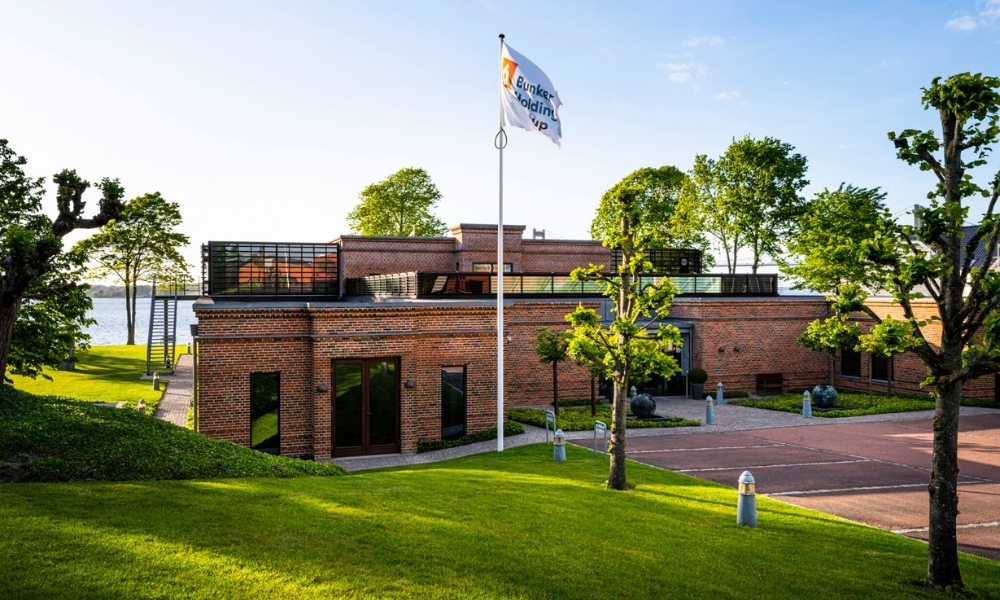
Bunker Holding on Monday (4 May) released a social media post on its summary of the 84th session of the Marine Environment Protection Committee (MEPC), held from 27 April to 1 May: 

The outcome of MEPC 84 at the International Maritime Organization confirms what many across the industry already sensed, which is that progress is being made but uncertainty remains.

Over the past two weeks, discussions on the NZF (Net-Zero Framework) and supporting measures moved forward in important ways. Technical work on key building blocks such as fuel certification, GFI methodologies, and reward mechanisms has advanced, and a broad majority of member states signalled support for the NZF as a foundation.

At the same time, several critical elements remain unresolved. The design of the Net-Zero Fund is still unclear, key aspects of energy efficiency regulation (including CII and SEEMP) have been delayed, and further negotiations will be needed to align positions across member states. So, the direction is clearer, but the pathway is not yet fully defined.

Here are the five takeaways from the NZF discussions at MEPC 84:

  • A broad majority of member states expressed support for the NZF as a foundation, signalling continued momentum.
  • Technical work progressed on key elements such as fuel certification, GFI calculation and verification, and reward mechanisms.
  • Lifecycle assessment discussions advanced, particularly around methodology, sustainability criteria, and land-use considerations.
  • The Net-Zero Fund remains undefined, despite its importance for ensuring an equitable global transition.
  • Several countries indicated openness to compromise, meaning further negotiation – and uncertainty – is inevitable.

From our perspective as a global marine fuel supplier, this reinforces a simple point. The industry does not need perfection but it needs predictability.

Investment in alternative marine fuels and infrastructure depends on credible, stable frameworks. Clarity on market-based mechanisms, lifecycle methodologies, and reward systems will be essential to scale solutions across a diverse global fleet.

We remain fuel-agnostic in our approach, because the transition will not be driven by a single fuel or technology. It will require a portfolio of solutions, supported by regulation that works in practice across regions and trading patterns.

MEPC 84 did not deliver final answers, but it did show continued engagement and a willingness to move forward. The next phase of discussions will be critical to turn that momentum into the certainty the industry needs. 

Our role remains unchanged: to support our customers today, while enabling the transition as the regulatory framework takes shape.

Related: IMO: MEPC ‘back on track’ towards consensus on global shipping emissions
Related: DNV on IMO MEPC 84: Revisiting Net‑Zero Framework
Related: MEPC 84 opening: IMO Sec-Gen urges for constructive and pragmatic exchanges


Photo credit: Bunker Holding
Published: 6 May, 2026

Continue Reading

Interview

Exclusive: Caroline Yang takes helm on future of IBIA Asia

The newly appointed Chair of IBIA’s Regional Board – Asia, shares her plans to strengthen bunkering standards while promoting transparency and industry collaboration across key Asian maritime hubs.

Admin

Published

on

By

Exclusive: Caroline Yang takes helm on future of IBIA Asia

Caroline Yang, CEO of Hong Lam Marine Pte Ltd, outlines her plans for IBIA Asia in her first interview with Manifold Times since becoming Chair of the Regional Board – Asia:

MT: Why is IBIA important to the bunkering market in Asia?

IBIA Asia is amongst five regional boards operating under the umbrella of London-based IBIA Global. Its presence in Asia is vital because the region, excluding the Middle East, accounts for more than 50% of global bunkering volume.

While Singapore continues to maintain its strong lead as the world’s busiest bunkering port with almost 56 million mt of marine fuel delivered in 2025, several ports in China are showing to be strong bunkering ports as well; these developments take place on the back of a forecast for China to be amongst the leading suppliers of green fuels such as methanol.

Based on this alone, IBIA Asia has to play an important role in raising and addressing issues of suppliers and shipowners and the other parties in the regional bunkering eco-system.

MT: What is the overall state of bunkering standards at major Asian ports and how can IBIA elevate this?

Singapore is the clear leader in standards, acting as a “flag bearer” with established protocols including SS 600 for bunkering, SS 648 for bunker mass flow metering, SS 524 for quality management of bunker supply chain, TR 56 for LNG bunkering, and TR 80 for meter verification using master MFM.

While other Asian ports are adopting mass flow meters – a positive step – IBIA Asia’s role is to disseminate these best practices while maintaining deep respect for local operational realities and regulatory environments.

MT: As Chair of the Regional Board – Asia, what are your plans to make this happen? Are there any topics you will be focusing on?

The IBIA Asia regional board of 10 members from comes from a diverse group of suppliers, shipowners, bunker buyers, fuels testers and bunker tanker owners. Backed by a strong secretariat, we are committed to move the needle for bunkering in Asia.

Our initial strategy is outreach-driven, progressing beyond a Singapore-centric approach. For starters, the board will be concentrating on Hong Kong, Zhoushan, and Shanghai, with potential expansion to Japan and South Korea.

The core objective is to promote the quality, transparency, and integrity of bunkers lifted in Asia. This includes building on existing MOUs such as the collaboration with Hong Kong Shipowners Association (HKSOA) to explore alternative bunker fuels, and participation in regional maritime week programmes.

MT: Do you expect to encounter any challenges? What do you think are the solutions?

Challenges, without a doubt; these include macro-level standards and topical quality issues, such as those highlighted in a recent FOBAS report.

We are aware most solutions will not have instant results, but produce short-term, mid-term and long-term responses.

The solution lies in structured communication and feedback loops involving industry, regulators, and experts. Success requires an altruistic approach where stakeholders prioritise the health of the bunkering ecosystem to achieve win-win outcomes, even at the compromise of individual sectors.

MT: Is participation of local/regional IBIA members included within your plan? How will they be involved?

Member participation is the foundation of an association’s strength. The plan involves active outreach – meeting members where they operate and integrating them into meetings to ensure the board’s positions reflect representative industry views. We must push out credible, strong messages to encourage active engagement. If there is anyone in the maritime bunkering in these areas and reading this interview, reach out to us so we can start our conversations!

The Secretariat and some board members have scheduled to visit and attend bunkering events in Hong Kong and China. In November 2026, IBIA will participate in the Hong Kong Maritime Week by organising a one-day conference. We hope to be also participating in the Shanghai Pudong Maritime Conference and the 9th International Petroleum and Natural Gas Enterprises Conference (IPEC 2026), also known as the “Zhoushan Bunker Oil conference”, in late October.

MT: How will previous experience gained at SSA, ICS, MPA, SMF, and Hong Lam Marine contribute to your role at IBIA?

As CEO of Hong Lam Marine, our bunker tankers supply about 10% of bunkering volume in Singapore, so we are an involved and relevant stakeholder. My experiences in the above-mentioned organisations have taught me how to crystallise and articulate important issues, engage effectively with diverse stakeholders, and leverage on pre-existing professional connections to engage more effectively for IBIA Asia.

Related: IBIA announces Caroline Yang as new Regional Board Chair for Asia
Related: IBIA and Hong Kong Shipowners Association to collaborate on alternative bunker fuels
Related: FOBAS report warns of growing operational risks from ISO-compliant bunker fuels


Photo credit: Manifold Times
Published: 6 August 2026

Continue Reading

Business

Asian Shipowners Association among groups to raise concerns on Hormuz tolls

Eight shipping organisations wrote an open letter to the UN and IMO to raise concerns regarding the potential imposition of tolls or service fees in the Strait of Hormuz.

Admin

Published

on

By

RESIZED william william on Unsplash

Eight shipping organisations wrote an open letter to the United Nations (UN) and the International Maritime Organization (IMO) to raise concerns regarding the potential imposition of tolls or service fees in the Strait of Hormuz, warning that such a move would undermine international law and disrupt global trade.

In an open letter dated 3 August to UN Secretary-General António Guterres and IMO Secretary-General Arsenio Dominguez, the organisations said the safety of seafarers and the principle of freedom of navigation must remain paramount amid ongoing uncertainty surrounding the strategic waterway.

The signatories comprise the Asian Shipowners’ Association (ASA), BIMCO, Cruise Lines International Association (CLIA), European Shipowners (ECSA), International Chamber of Shipping (ICS), INTERCARGO, INTERTANKO and the World Shipping Council (WSC). 

“Introducing compulsory charges for transit, or service fees that are a toll in all but name, through the Strait of Hormuz would represent a significant departure from established international practice,” the groups said in the letter. 

“Beyond the immediate financial implications for global trade, it would establish a precedent that could undermine the internationally recognised legal framework governing straits used for international navigation and transit passage.”

“Once such a precedent is established, it becomes increasingly difficult to resist similar measures elsewhere, creating uncertainty for international shipping and global commerce.”

The groups also said any additional costs imposed on maritime transport inevitably flow through international supply chains.

“These consequences extend beyond shipping costs, contributing to higher energy prices, higher inflation, and higher economic uncertainty,” they added.

“Ultimately, these impacts will carry a human cost, affecting livelihoods around the world. It is vital that we continue supporting the preservation of freedom of navigation as the foundation of international maritime governance.”


Photo credit: william william on Unsplash
Published: 6 August, 2026

Continue Reading

Biofuel

Peninsula and Evos to develop bio bunker fuel storage facility in Port of Algeciras

Proposed Evos expansion includes plans to develop up to 60,000 cubic metres of storage capacity, fully allocated to Peninsula to support the expansion of its marine biofuels supply chain in the region.

Admin

Published

on

By

Peninsula

Marine fuels supplier Peninsula on Wednesday (5 August) said it has signed a Memorandum of Understanding (MOU) with European independent liquid energy and chemicals storage company Evos to jointly progress the development of dedicated biofuel storage infrastructure at Evos’ terminal in the Port of Algeciras.

The proposed Evos expansion includes plans to develop up to 60,000 cubic metres of storage capacity, fully allocated to Peninsula to support the expansion of its biofuels supply chain in the region.

Located at the Strait of Gibraltar—one of the world’s busiest maritime corridors—the Evos Algeciras expansion project is intended to strengthen infrastructure for the energy transition in shipping. It will provide dedicated storage and handling capacity for low-carbon marine fuels, underpinning Peninsula’s quality proposition through control of its own supply chain.

John A. Bassadone, founder and CEO of Peninsula, said: “We are seeing an acceleration of biofuel adoption as a result of price volatility of conventional fuels and regulatory measures such as FuelEU and EU ETS. These regulations are designed to ratchet up, and biofuels are the most versatile, available option today to meet decarbonisation targets. 

“By partnering with Evos to build storage infrastructure, it allows us to control the quality of product and to blend biofuel ratios according to market demand. It will also offer our customers full flexibility and optionality when lifting bio products from us and further demonstrates Peninsula’s active commitment to the decarbonisation of marine fuels.”

Under the MOU, the parties will continue technical and commercial discussions on a long-term storage and handling agreement, subject to Evos’ final investment decision.

Evos will lead project development at its Algeciras terminal, including engineering, permitting and construction, while Peninsula will integrate the capacity into its growing global biofuels supply network.

Daan Vos, CEO at Evos, said: “Algeciras is already an important bunker and trading hub, with direct relevance to global shipping activity and inter-Mediterranean trade flows. Evos has a well-established position in the port as a bunker fuel storage terminal, and the expansion project with a strategic partner such as Peninsula builds on that position. 

“By developing infrastructure for marine biofuels, we can respond to changing demand in the bunker market and strengthen Algeciras’ role in the transition to lower-carbon shipping.”

The agreement reflects a shared ambition to support the evolution of the marine energy sector by investing in scalable, future-facing infrastructure in key global hubs.


Photo credit: Peninsula
Published: 6 August, 2026


Continue Reading

Trending