
Hydrogen
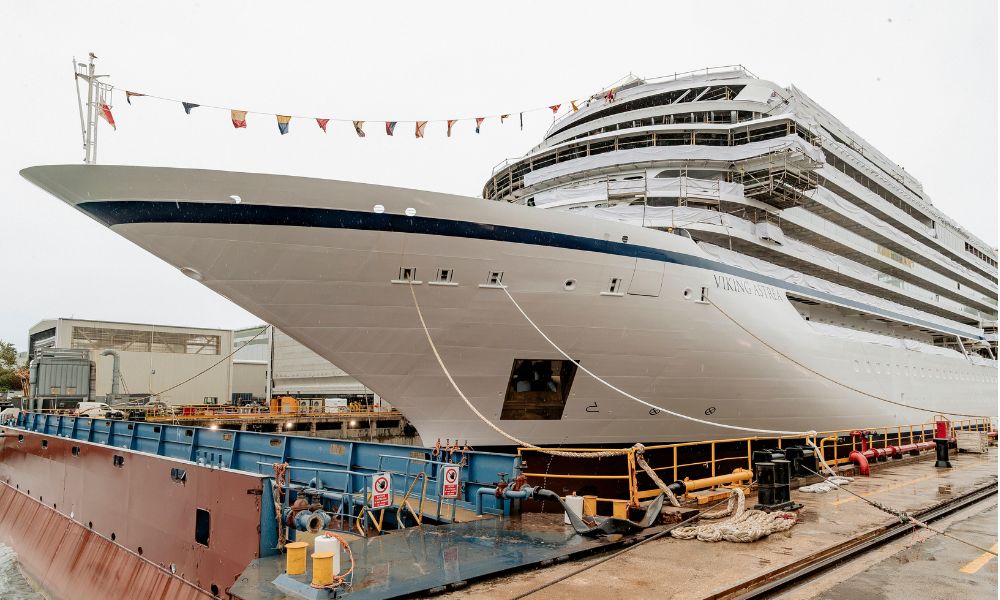
Viking floats out second hydrogen-powered ship, delivery set for May 2027
“Viking Astrea” is a sister ship in Viking’s ocean fleet and will have a propulsion system based partially on liquefied hydrogen and fuel cells.

Alternative Fuels
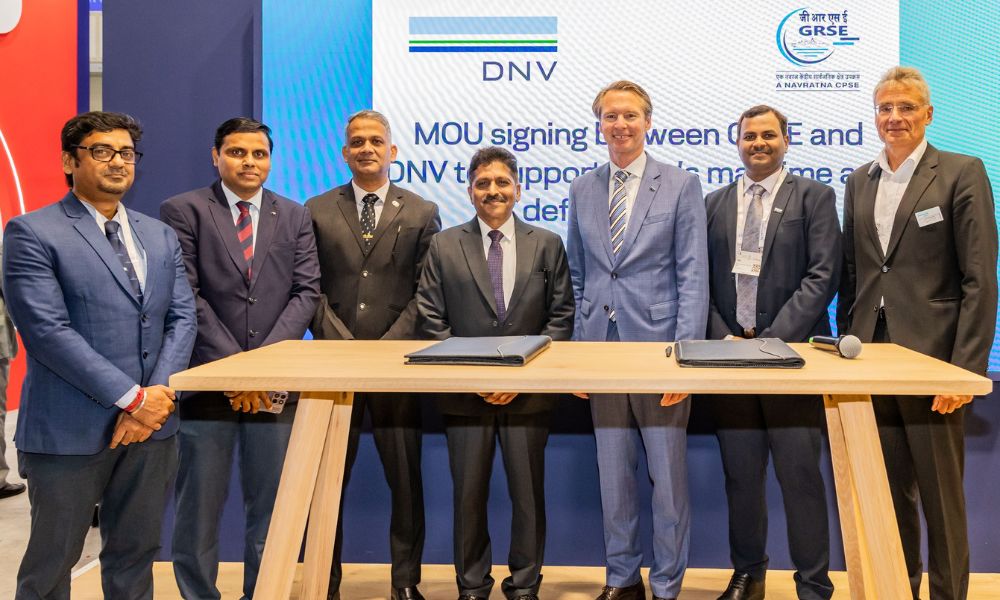
DNV, GRSE ink MoU covering low-carbon propulsion and alternative marine fuels
Partnership will explore electric and hybrid ferries, low-carbon naval auxiliary vessels, and pathways for alternative fuels including hydrogen and ammonia.
Alternative Fuels
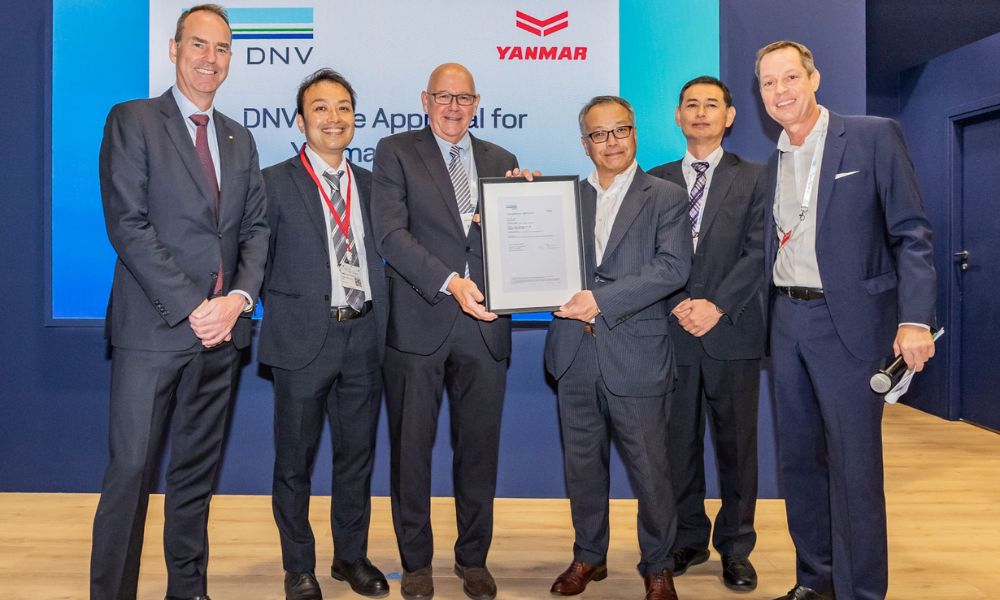
DNV at SMM: Yanmar Maritime awarded type approval for fuel cell system
Certification marked an important step in moving Yanmar’s maritime hydrogen fuel cell technology from successful domestic deployment toward broader commercial adoption in international markets.
Alternative Fuels
DNV: Alternative-fuelled vessel orders hit highest monthly level since October 2024
LNG-fuelled vessels accounted for the vast majority of August activity while the strong summer performance marked a significant acceleration in ordering activity after a relatively slow start to the year.
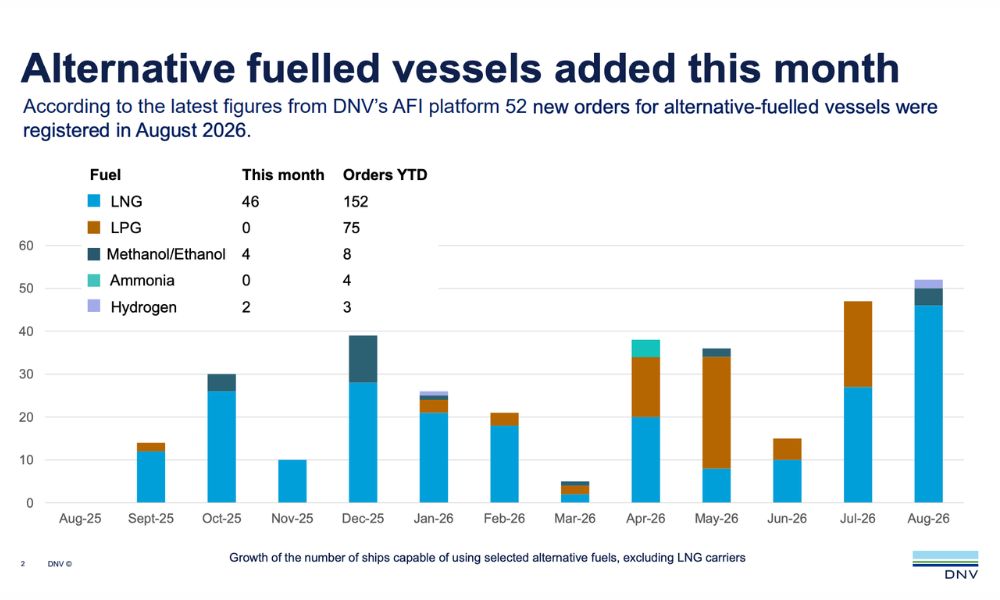
Latest data from classification society DNV’s Alternative Fuels Insight (AFI) platform alternative-fuelled vessel ordering was strong in August, with 52 new vessels added to the platform.
This is the highest monthly total since October 2024 and follows another active month in July, when 47 vessels were added to the database.
LNG-fuelled vessels accounted for the vast majority of August activity, with 46 orders recorded. The container segment led the way with 30 orders, while the car carrier segment contributed a further 12 LNG-fuelled vessels. In addition, four ethanol-fuelled bulk carriers and two hydrogen-powered bulk carriers were added during the month, as well as one LNG bunker vessel.
The strong summer performance marked a significant acceleration in ordering activity after a relatively slow start to the year. In total, 242 alternative-fuelled vessel orders have been placed in the first eight months of 2026, representing a 27% increase compared with the same period in 2025.
LNG remains the dominant fuel choice, accounting for 63% of all alternative-fuelled vessel orders registered so far this year. Container vessels represent the largest share of these LNG orders (59%), followed by car carriers (30%).
Jason Stefanatos, Global Decarbonization Director at DNV Maritime, said: “The past two months have been particularly strong for alternative-fuelled vessel ordering, with August recording the highest monthly total we’ve seen since October 2024. This has helped lift year-to-date orders to a level well above the same period last year.
“LNG remains the leading fuel choice, driven largely by activity in the container and car carrier segments. These sectors have been among the earliest adopters of alternative fuels, supported by predictable liner operations and increasing demand from cargo owners to reduce emissions across supply chains.
“For many owners, LNG offers a combination of emissions reductions, fuel availability and future flexibility while the longer-term fuel landscape continues to evolve.
“At the same time, the latest figures include orders for ethanol- and hydrogen-fuelled vessels, highlighting that owners continue to explore a range of decarbonization pathways. Different segments are making different fuel choices, but the overall level of activity demonstrates continued investment in lower-emission shipping.”
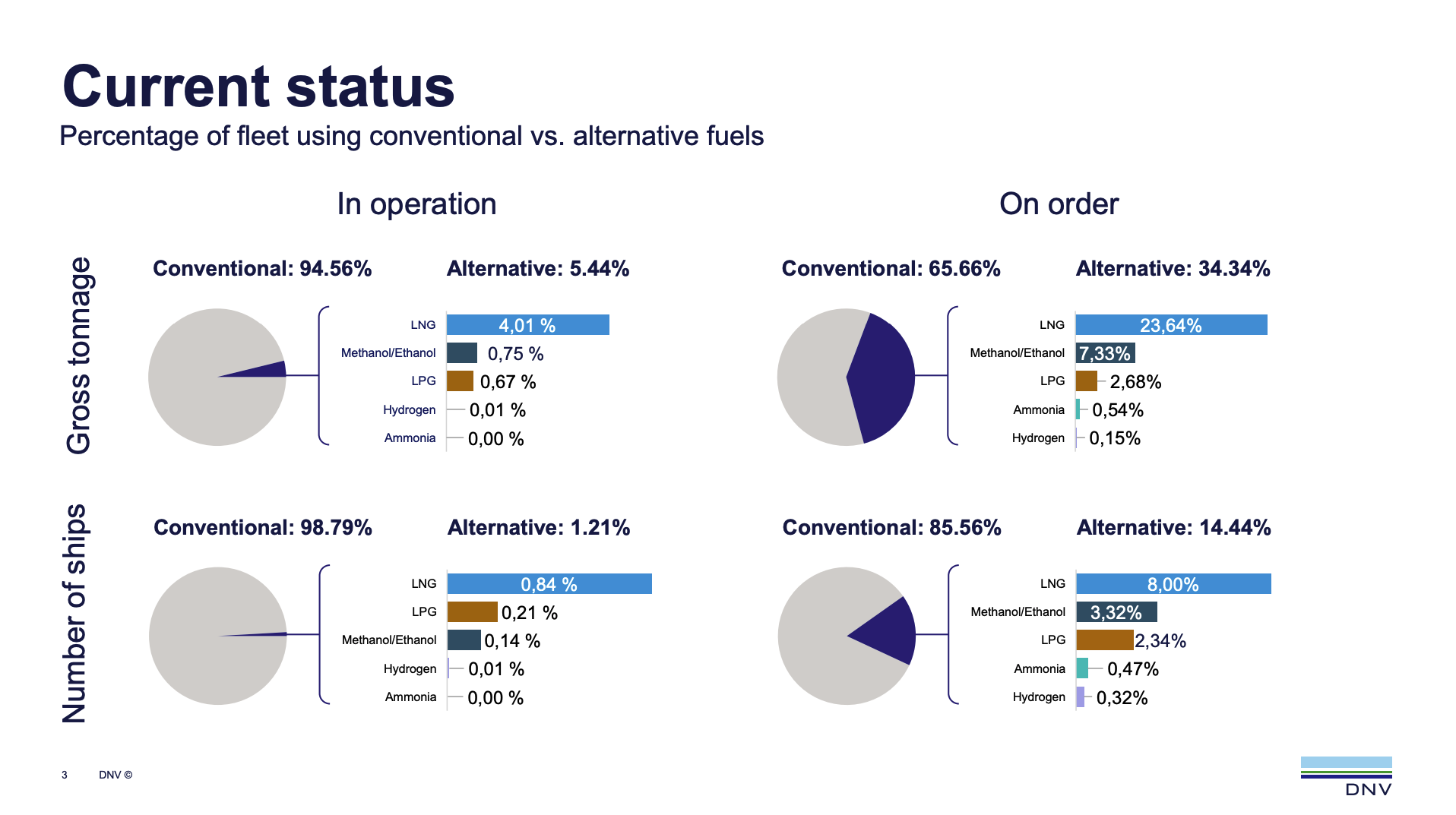
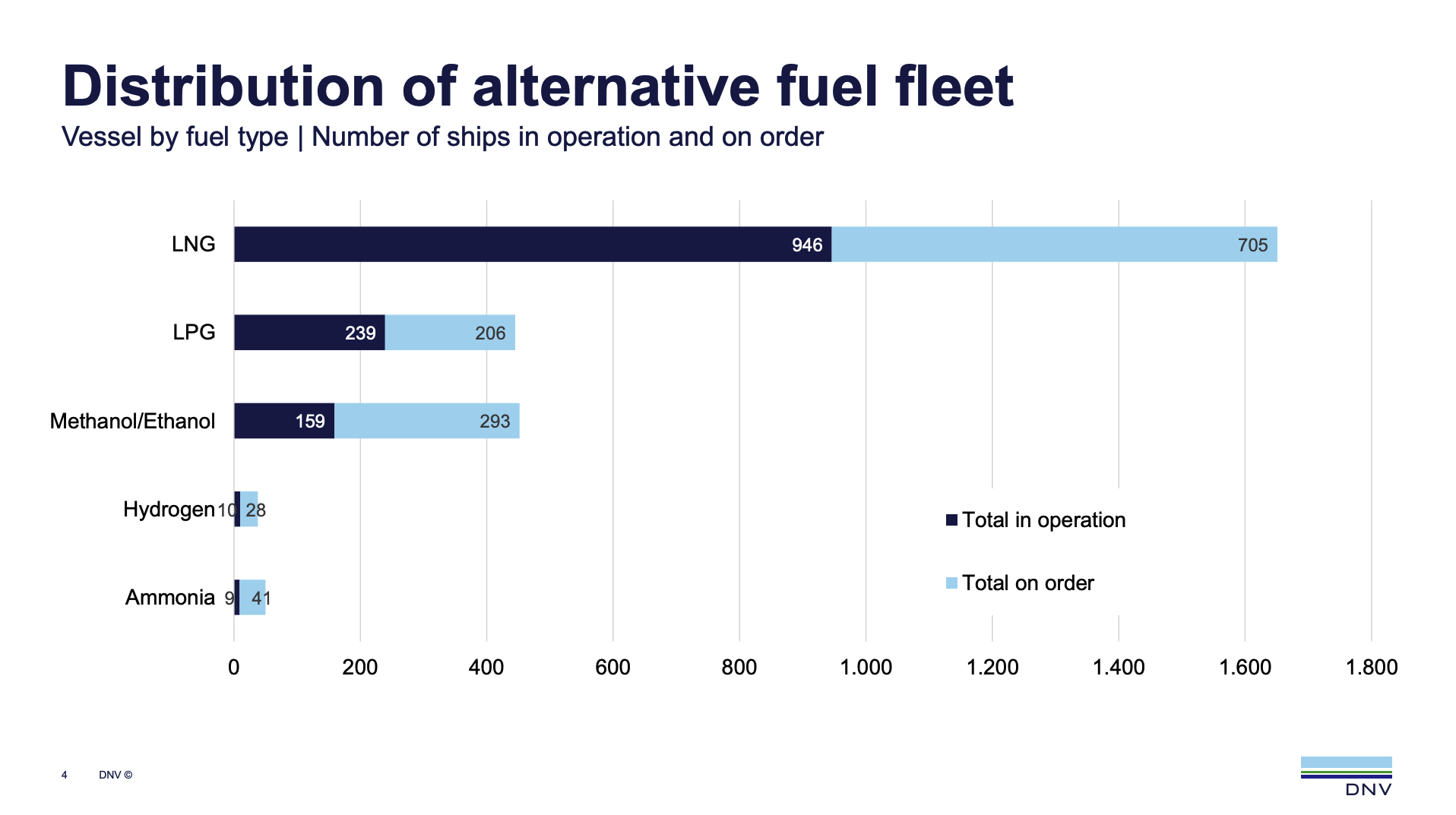
Photo credit: DNV
Published: 4 September, 2026

OUR INDUSTRY PARTNERS

APPEC 2026: Panellists navigate maritime decarbonisation and alternative marine fuel strategies

High Court of Singapore issues winding up order against Hengli Petrochemical International

Goldwind green methanol facility completes trial production, ships first 500 mt

LDA’s methanol-powered “Spirit of Toulouse” gets Norsepower rotor sail in Shanghai

Tenerife achieves first truck-to-ship LNG bunkering operation

IMO technical seminar to focus on ammonia production, bunkering and safety

Viking floats out second hydrogen-powered ship, delivery set for May 2027

Rajah & Tann: Bunker disputes are won in the first 48 hours

Malaysia: MMEA detains two vessels over suspected illegal ship-to-ship transfer off Johor

Singapore strengthens LNG bunkering framework with new SS 727 standard

Yang Ming orders six LNG dual-fuel, ammonia-ready containerships from Hanwha Ocean

Ahti Climate and DNV connect verified emissions data to FuelEU pooling platform

TFG Marine advances global MFM rollout with two US Gulf bunker barges

Auramarine: Marine fuel flexibility will be key to shipping’s energy transition
-
 Bunker Claim2 weeks ago
Rajah & Tann: Bunker disputes are won in the first 48 hours
-
 Vessel Arrest2 weeks ago
Malaysia: MMEA detains two vessels over suspected illegal ship-to-ship transfer off Johor
-
 LNG Bunkering2 weeks ago
Singapore strengthens LNG bunkering framework with new SS 727 standard
-
 Alternative Fuels1 week ago
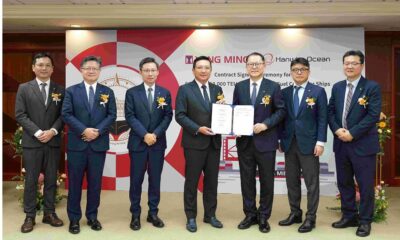
Yang Ming orders six LNG dual-fuel, ammonia-ready containerships from Hanwha Ocean
-
 FuelEU2 weeks ago
Ahti Climate and DNV connect verified emissions data to FuelEU pooling platform
-
 Mass Flowmeter1 week ago
TFG Marine advances global MFM rollout with two US Gulf bunker barges
-
 Alternative Fuels1 week ago
Auramarine: Marine fuel flexibility will be key to shipping’s energy transition
-

 Bunker Fuel Availability2 weeks ago
ENGINE: Europe & Africa Fuel Availability Outlook (2 Sep 2026)