
Ammonia
BIMCO poll: Tanker industry express growing interest in ammonia as bunker fuel
Over 52% at BIMCO Tanker Safety Network meeting identified ammonia as the most viable fuel pathway by 2040, reflecting growing interest in its zero-carbon potential despite known safety challenges.

Alternative Fuels
DNV data shows shift in alternative-fuelled vessel ordering patterns
DNV says shipowners are adopting more varied fuel strategies, reflecting a growing emphasis on optionality, regulatory compliance and risk management in long-life vessel investments.
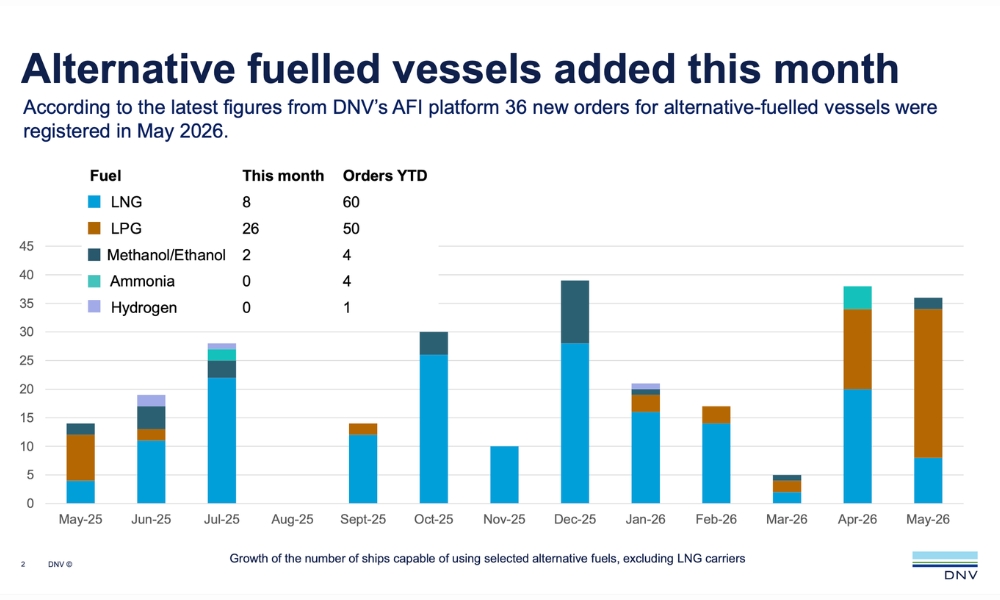
Latest data from classification society DNV’s Alternative Fuels Insight (AFI) platform showed a total of 36 new orders for alternative-fuelled vessels were placed in May 2026.
Activity was primarily driven by LPG/ethane carriers, which accounted for 26 of the orders. A further eight LNG-fuelled vessels were ordered, including six container vessels and two car carriers, alongside two ethanol-fuelled bulk carriers.
So far in 2026, a total of 119 orders have been placed for alternative-fuelled vessels. Of these, LNG-fuelled vessels (60) account for the largest share of the orderbook, with the majority of these (42) coming from the container segment, and a smaller share (12) from car carriers.
A further 50 orders have been placed for LPG/ethane carriers, while activity in other fuel types remains limited, with orders for methanol/ethanol (4), ammonia (4), and hydrogen (1).
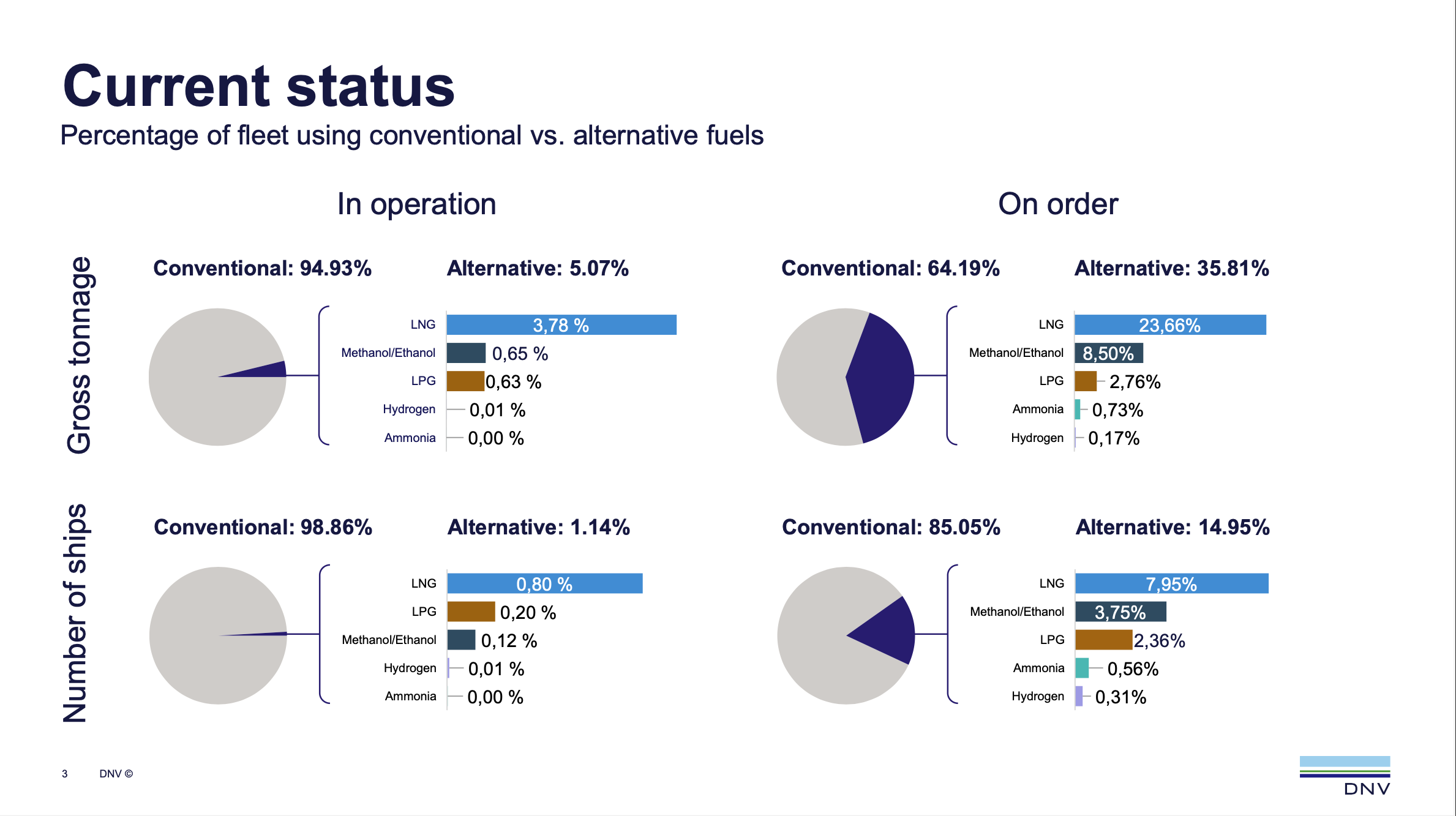
By the end of May, the share of alternative-fuelled vessels in total tonnage was notably lower than over the same period in 2025.
Jason Stefanatos, Global Decarbonization Director at DNV Maritime, said: “While the pace of alternative-fuelled contracting has varied compared to 2025, the industry continues to move forward in its transition, with owners advancing fuel and technology decisions against a backdrop of evolving regulatory and market conditions.
“As in previous years, ordering of alternative-fuelled vessels has been led by the container segment, but dynamics are shifting. While activity remains strong, the focus has moved towards smaller vessels, with fewer very large container ships, which are historically more likely to adopt alternative fuels, being ordered. At the same time, we are seeing increased activity in tanker and bulker segments.
“What is also becoming clearer is that fuel choice is no longer approached as a single bet. Owners are increasingly treating it as a portfolio decision, managing fuel optionality, timing of investment, and exposure to future regulation as they navigate long-life asset decisions.
“This is reflected in more varied ordering patterns, reinforcing that the transition is not progressing in a straight line.”
Photo credit: DNV
Published: 5 June, 2026
Shipping Corridor
Industry partners launch Brazil-Belgium e-fuel green shipping corridor initiative
A new consortium facilitated by the Global Maritime Forum and RMI will work to establish a green shipping corridor between the Port of Açu in Brazil and the Port of Antwerp-Bruges in Belgium.
Ammonia
AM Green plans to build green ammonia plant at Indian port
Initiative also includes development of green ammonia handling, storage and bunkering infrastructure, pilot bunkering operations, safety procedures and training programmes, says VOC Port Authority.

OUR INDUSTRY PARTNERS

Singapore: Notice of intended dividend issued for Parakou Shipping Pte Ltd

Chinese firms form pact for 20,000 cbm LNG bunkering vessel project

India’s Agastya inks green methanol offtake agreement with SAR Group

DNV data shows shift in alternative-fuelled vessel ordering patterns

“K” Line orders four LNG dual-fuel car carriers from Chinese yard

Industry partners launch Brazil-Belgium e-fuel green shipping corridor initiative

ENGINE: Americas Fuel Availability Outlook (4 June 2026)

DNV on IMO MSC 111: Interim guidelines for using hydrogen, ammonia as marine fuels approved

Singapore: Notice of intended dividend issued for Xihe Capital Pte Ltd

DNV: Making emissions data verification manageable at scale

X-Press Feeders, METHANAVE complete first ethanol-methanol bunkering op in Rotterdam

Kamei completes first STS HVO 100 bunkering operation in Japan

Hercules Tanker Management acquires five product and chemical tankers

StormGeo: Smarter voyage decisions can boost payback amid market swings
-
 Alternative Fuels2 weeks ago
DNV on IMO MSC 111: Interim guidelines for using hydrogen, ammonia as marine fuels approved
-
 Winding up2 weeks ago
Singapore: Notice of intended dividend issued for Xihe Capital Pte Ltd
-
 EU ETS2 weeks ago
DNV: Making emissions data verification manageable at scale
-
 Alternative Fuels2 weeks ago
X-Press Feeders, METHANAVE complete first ethanol-methanol bunkering op in Rotterdam
-
 Biofuel2 weeks ago
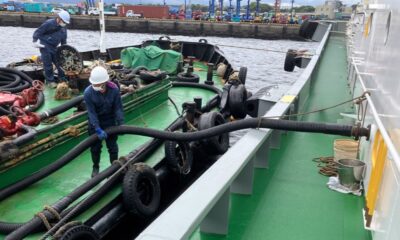
Kamei completes first STS HVO 100 bunkering operation in Japan
-
 Business5 days ago
Hercules Tanker Management acquires five product and chemical tankers
-
 Bunker Fuel1 week ago
StormGeo: Smarter voyage decisions can boost payback amid market swings
-

 Technology1 week ago
Ofiniti acquires Teqplay in push towards end-to-end bunkering visibility