Connect with us

Business

MAN Energy Solutions opens largest service hub in Singapore

New facility able to meet demand for repairs, maintenance and training services for MAN Energy Solutions’ alternative-fuel engines, such as two-stroke methanol dual-fuel engines.

Admin

Published

on

MAN ES MPA

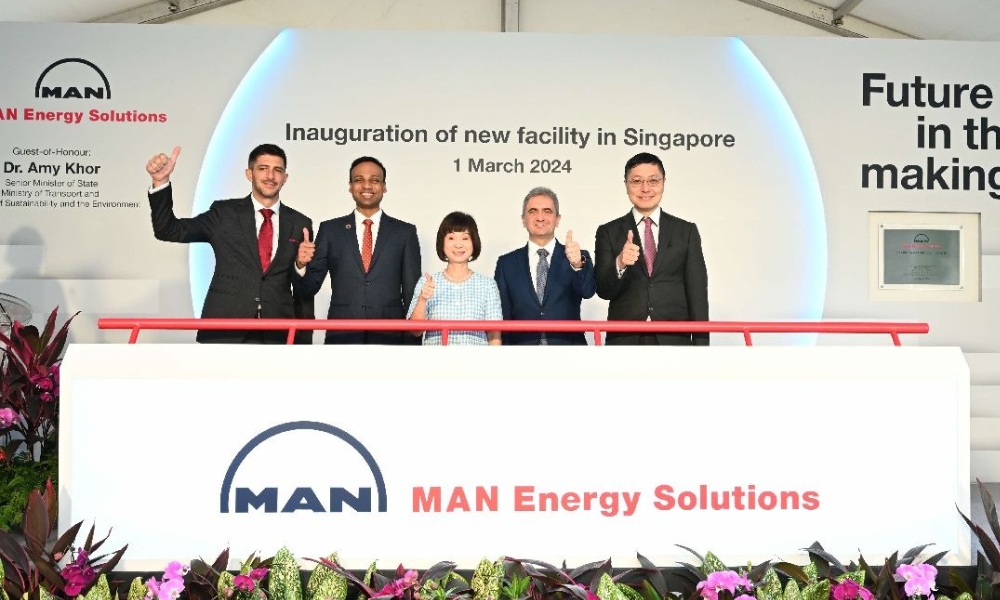
Singapore on Friday (1 March) welcomed the opening of MAN Energy Solutions’ new mixed purpose facility today that will expand their local business activities.

MAN Energy Solutions is one of the global engine makers of alternative-fuel engines, and is driving the maritime energy transition by enabling the use of cleaner fuels in ships around the world.

Located in Tuas, MAN Energy Solutions’ EUR 20 mil (SGD30 mil) investment will include a new MAN PrimeServ training academy for customers and employees, a logistics centre to serve as the warehouse for Asia, and a PrimeServ workshop to provide maintenance and repair services, including for MAN Energy Solutions’ alternative-fuel engines.

The new facility will serve as the largest service hub for MAN Energy Solutions’ activities and engagements outside of Europe, and will allow shipowners and ship managers to gain round-the-clock access to technical services for MAN Energy Solutions products such as repairs and maintenance of their alternative-fuel two-stroke engines, reduce turnaround times for ships due to quicker access to spare parts, and providing training for seafarers on the safe operation, maintenance, and troubleshooting of all MAN Energy Solutions equipment.

The new facility would also be timely to cater to the demand for repairs, maintenance and training services for MAN Energy Solutions’ alternative-fuel engines, such as the two-stroke methanol dual-fuel engines that are already available and for the two-stroke ammonia dual-fuel engines that are currently in development.

The mixed-purpose facility was launched by Dr Amy Khor, Senior Minister of State, Ministry of Transport and Ministry of Sustainability and the Environment.

SMS Khor said: “MAN Energy Solutions has been a long-time partner for Maritime Singapore since its establishment here in 1977. I am heartened that MAN Energy Solutions has placed a strong vote of confidence in Singapore by setting up its second hub outside of Europe here, setting the stage for collaboration in maritime decarbonisation, digitalisation, and talent development.”

“The expansion of MAN Energy Solutions’ workshop and warehouse activities will provide much needed capacity to support the maintenance of ocean-going vessels that adopt engines fuelled by new marine fuels.”

“MAN Energy Solutions’ expanded training academy will also support Singapore’s drive to upskill and reskill of our workforce, to build confidence for maritime workers to safely handle new marine fuels. I look forward to many more years of meaningful collaboration, especially in these emerging areas.”

Dr Uwe Lauber, CEO MAN Energy Solutions, said, “With over 9,000 square metres of floor space, Singapore is our largest hub outside of Europe in what is one of the most important maritime centres globally. We intend for this mixed-purpose facility to advance the maritime energy transition locally through education, logistics, and a comprehensive after-sales portfolio. Ultimately, we are ‘moving big things to zero’ and leading our customers towards a multi-fuel, decarbonised future.”

Mr Teo Eng Dih, Chief Executive Officer of the Maritime and Port Authority of Singapore, said, “As the world’s largest bunkering port and major transhipment hub, Singapore is committed to the maritime digitalisation and the green transition. We have been long-time partners with MAN Energy Solutions and have been working closely together in various methanol and ammonia shipping consortiums and also in skills development.”

“MAN Energy Solutions’ new maintenance and training facility here will add deep expertise and experience to the growing and vibrant new fuels ecosystem here and also upskilling of our maritime workforce, especially in the area of new methanol and ammonia engines.”

Nicolas Brabeck, Managing Director, MAN Energy Solutions, Singapore, said: “This new facility represents one of the biggest investments that we have made outside of our product centres within recent years. It forms a key part of our company’s Triple 10+ business strategy that aims for growth through green technologies. In this context, we intend to equip our personnel with the right skillsets to handle the new technologies coming online and drive our business forward. We therefore expect to significantly increase staff numbers on-site to some 400 people by 2027, and look forward to cultivating great relationships with our customers and the various, Singaporean authorities.”

MAN Energy Solutions’ Singapore office is its largest service hub outside Europe, and currently employs 250 staff.


Photo credit: Maritime and Port Authority of Singapore
Published: 4 March 2024

Continue Reading

Alternative Fuels

DNV at SMM: Chinese shipbuilders, European owners seek closer ties on alternative bunker fuels

Chinese shipbuilders and European shipowners called for closer collaboration on vessel development, alternative fuels and digitalization during the inaugural China-Europe Maritime Summit at SMM 2026.
Admin

Published

on

By

32 1

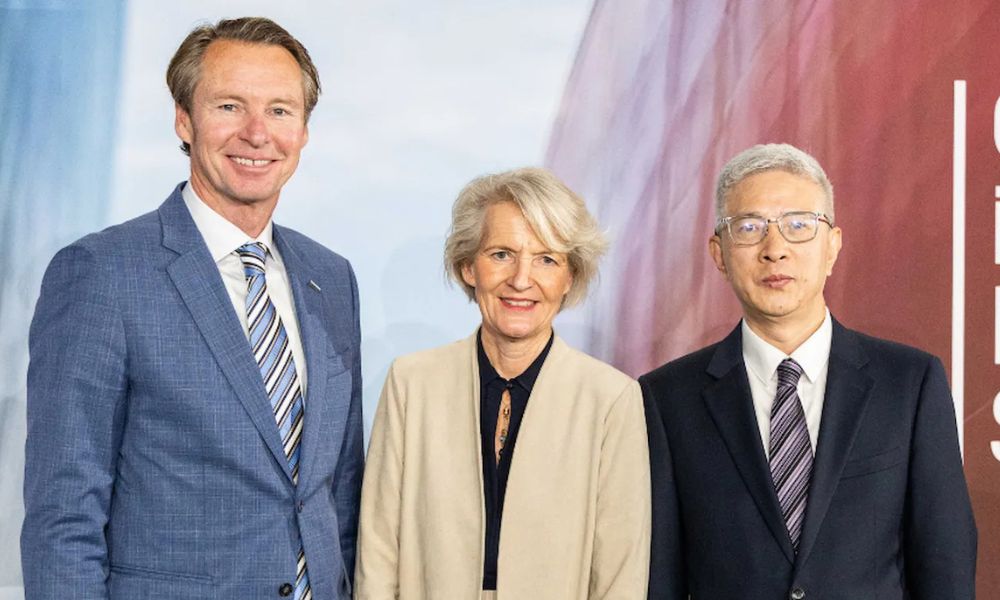
Chinese shipbuilders and European shipowners called for closer collaboration on vessel development, alternative fuels and digitalization during the inaugural China-Europe Maritime Summit at SMM 2026, according to classification society DNV on Friday (4 September). 

The summit, jointly organized by the China Association of the National Shipbuilding Industry (CANSI), the German Shipowners’ Association (VDR) and DNV, brought together leaders from two maritime sectors that collectively shape a significant share of the global fleet. 

Energy efficiency, operational flexibility and digital innovation were highlighted as key areas for the industry as it navigates decarbonization targets, evolving regulation and uncertainty around future fuel pathways.

Knut Ørbeck-Nilssen, Group President and CEO at DNV, said: “Gathering leaders from across Chinese shipbuilding, European shipping and the wider maritime value chain in one room is both timely and important. The decisions being made across our industry today will shape shipping for decades to come, and this summit demonstrates a shared commitment to shaping the future of our industry together.”

Xu Peng, Chairman of China State Shipbuilding Corporation (CSSC), said: “China and Europe’s maritime sectors share aligned missions, complementary strengths and promising prospects. This summit can serve as a starting point for deeper cooperation between China’s shipbuilding industry and Europe’s shipping community, and help broaden the boundaries of full‑chain collaboration and build an interconnected ecosystem.”

Dr. Gaby Bornheim, President of the German Shipowners’ Association (VDR), said: “For shipowners, a new vessel is never an investment for the next quarter. It is a commitment for decades. Long-term investments require trusted partnerships, and many of the world’s most advanced commercial vessels are the result of cooperation between European shipowners and Chinese shipbuilders. Excellence is rarely achieved in isolation.”

China’s shipbuilding industry accounts for around 70% of the global orderbook, while European shipowners operate more than one-third of the world’s fleet capacity. As the global shipping industry faces increased uncertainty, finding solutions that provide flexibility is essential. 

The summit featured two high-level panel discussions moderated by Dr. Martin Kröger, CEO of VDR, and Li Yanqing, Vice Chairman and Secretary General of CANSI, bringing together senior executives from leading Chinese shipbuilders, including China Merchants Industry (CMI), Guangzhou Shipyard International (GSI), Shanghai Waigaoqiao Shipbuilding (SWS), and Shanghai Merchant Ship Design & Research Institute (SDARI), alongside European shipowners and operators such as Vogemann Reederei, Briese Schiffahrt, Bernhard Schulte, MPC Containerships, and Grieg Edge, as well as DNV. 

Discussions further highlighted the importance of close China-Europe collaboration to support shipping’s transformation.


Photo credit: DNV
Published: 7 September, 2026

Continue Reading

Alternative Fuels

Auramarine: Marine fuel flexibility will be key to shipping’s energy transition

Operators who adapt best will be the ones who built in the flexibility to their marine fuel strategy to respond as conditions change, says CEO John Bergman.
Admin

Published

on

By

31 1

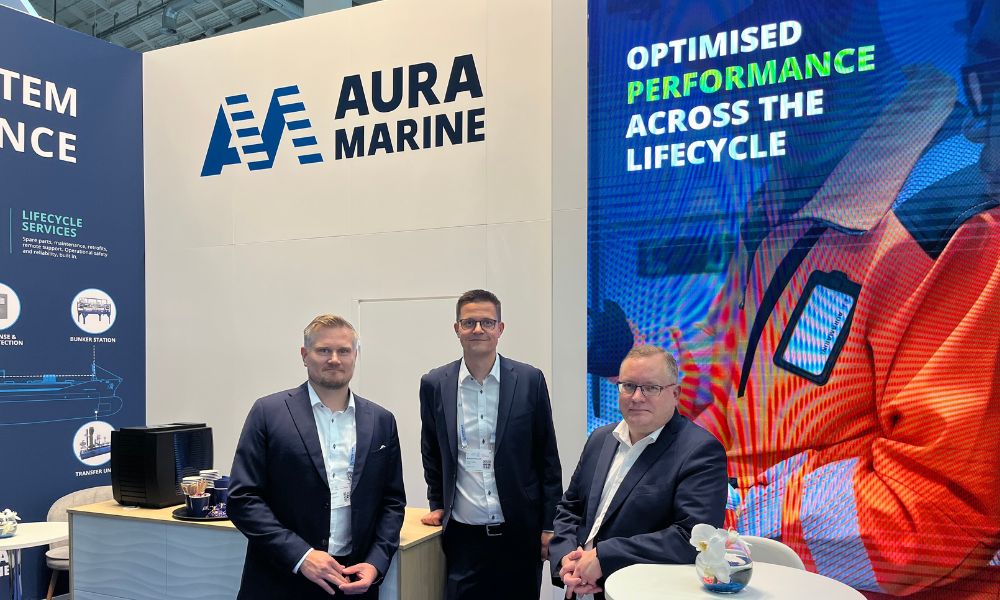
Finland-based fuel supply systems provider Auramarine on Wednesday (2 September) said it believes shipping’s energy transition is entering a phase where flexibility, not fuel choice, will determine which operators adapt successfully. 

With fuel price volatility, inconsistent alternative availability and tightening environmental regulation at different speeds across regions, Auramarine argued that the right approach to fuel supply infrastructure is now as strategically important as the fuel itself.

“The industry has spent years asking which fuel will win,” said John Bergman, CEO, Auramarine. 

“That may be the wrong question. No operator today can predict with confidence what will be available, compliant or commercially viable in five years. The operators who adapt best will be the ones who built in the flexibility to their fuel strategy to respond as conditions change.”

Auramarine’s own fuel split technology, first delivered in 2019 and now installed on around 20 vessels, reflects this thinking in practice. The retrofit system adds a fuel booster module onboard, allowing a ship to run different fuels through the same engine without the extended changeover procedures dual-fuel systems typically require.

This lets operators switch to MGO or biofuel, for example, to meet an ECA requirement, support maintenance schedules, or respond to fuel pricing shifts, without taking a vessel out of service. Delivered in sections through existing doors and hatches, it can be retrofitted to vessels already in operation.

Bergman sees this need for adaptability sharpening in sectors under the most operational and regulatory pressure. 

“Cruise and ferry operators feel this earliest and most acutely,” he said. 

“These vessels constantly move between regulatory zones and environmentally sensitive waters, so the ability to switch fuel supply without disrupting a schedule is an operational necessity. What’s notable is how many operators in this space still don’t know infrastructure like this exists, despite how directly it addresses what they’re already dealing with.”

Reliable flexibility requires a tailored approach, not just adding equipment. “The best results come from scoping flexibility to an owner’s actual fuel strategy, not adding complexity for its own sake,” Bergman added. 

Automated fuel changeover systems are designed to keep multi-fuel operations straightforward for crews, while a structured maintenance approach ensures inspection, testing and servicing can be carried out safely throughout the vessel’s lifecycle. This is where Auramarine’s lifecycle services play a central role, supporting operators well beyond initial installation with the ongoing servicing, spares and technical support needed to keep flexible fuel systems performing reliably for the long term, whatever the fuel landscape looks like in years to come.

“Over the next few years, operators who succeed will be the ones who stopped waiting for certainty and started building optionality instead,” Bergman added

“In a transition this uncertain, adaptability matters more than any single fuel bet. That’s the conversation we want the industry to have.”


Photo credit: Auramarine
Published: 7 September, 2026

Continue Reading

Alternative Fuels

Yang Ming orders six LNG dual-fuel, ammonia-ready containerships from Hanwha Ocean

Each of the six new vessels will have a capacity of up to 13,650 TEU and feature LNG dual-fuel propulsion and Ammonia Fuel Ready specifications.
Admin

Published

on

By

Yang Ming orders six LNG dual-fuel, ammonia-ready containerships from Hanwha Ocean

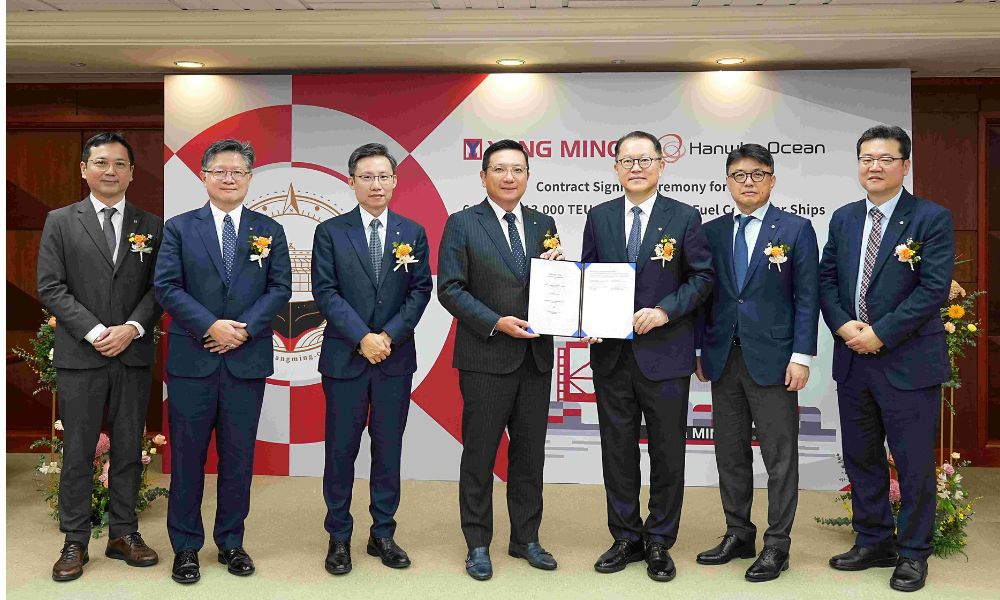
Taiwanese shipping firm Yang Ming Marine Transport Corporation (Yang Ming) and South Korean shipbuilder Hanwha Ocean on Wednesday (2 September) signed a shipbuilding contract for six 13,000 TEU class LNG dual-fuel container vessels. 

The contract was signed by Dr. Chuck Tsai, Chairman of Yang Ming, and Mr. Charles Kim, CEO of Hanwha Ocean. The vessels are scheduled for delivery between 2028 and 2029. 

They will complement Yang Ming’s existing fleet of 10,000+ TEU vessels and serve as key vessels on East-West services, with deployment flexibility across trade lanes connecting Asia with the East and West Coasts of North America, South America, and the Mediterranean. 

Each of the six new vessels will have a capacity of up to 13,650 TEU and feature LNG dual-fuel propulsion and Ammonia Fuel Ready specifications.

“As Yang Ming transitions toward net-zero emissions, LNG provides a relatively mature and economically viable alternative fuel solution, capable of reducing greenhouse gas emissions by approximately 20%,” the company said. 

“At the same time, ammonia can serve as a carbon-free fuel by utilising converted LNG storage facilities, while offering relatively lower conversion costs and comparatively well-developed supply chains and infrastructure. The Ammonia Fuel Ready design will therefore provide Yang Ming with greater flexibility in responding to increasingly stringent international regulations on greenhouse gas emissions.”

In addition, the vessels will be equipped with Type B LNG fuel tanks with a design pressure of 1.0 bar to enhance the safety and efficiency of LNG operations, together with a range of energy-saving technologies, including Wind Shields, Rudder Bulbs, Pre-Swirl Stators, and Shore Power Systems. Smart ship technologies and cybersecurity protection features will also be incorporated to enhance operational efficiency, safety, and reliability while effectively reducing fuel consumption and greenhouse gas emissions.

Deliveries under Yang Ming’s next-generation fleet optimization plan commenced earlier this year. By 2030, a total of 24 new vessels are expected to enter service. 

This includes 18 LNG dual-fuel vessels—comprising five 15,500 TEU, seven 16,000 TEU, and the six 13,000 TEU vessels under this contract—alongside six 8,000 TEU methanol dual-fuel-ready ships. 


Photo credit: Yang Ming Marine Transport
Published: 4 September, 2026

Continue Reading
Advertisement

OUR INDUSTRY PARTNERS


Trending