
Hydrogen
Norwegian Hydrogen will soon supply green hydrogen to world’s first hydrogen-powered fishing vessel
Firm has inked an agreement with Vestland County Council that enables emission-free sailing with green hydrogen as soon as “MS Skulebas” is ready for hydrogen operation during summer 2024.

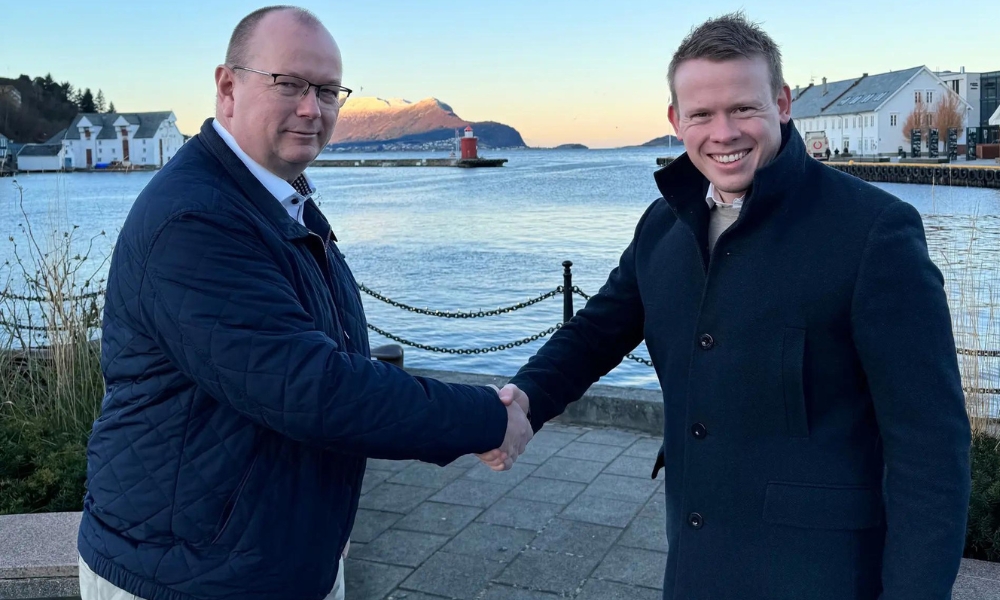
Norwegian Hydrogen on Monday (27 November) said it has entered into an agreement with the Vestland County Council that enables emission-free sailing with green hydrogen as soon as MS Skulebas is ready for hydrogen operation during summer 2024.
Based in Måløy, Skulebas will soon be able to fill locally sourced, green hydrogen produced at Norwegian Hydrogen’s factory in Hellesylt.
The fishing vessel Skulebas was delivered to Vestland County Council earlier this autumn. The vessel is used in the training of students at Måløy High School’s program for fisheries, aquaculture and maritime subjects and is equipped with the latest innovative technology. This includes a propulsion system with a hydrogen-powered fuel cell in combination with a battery pack.
Norwegian Hydrogen has entered into an agreement with the county council that enables emission-free sailing with green hydrogen as soon as Skulebas is ready for hydrogen operation during summer 2024.
Based in Måløy, Skulebas will soon be able to fill locally sourced, green hydrogen produced at Norwegian Hydrogen’s factory in Hellesylt, which will be operational next year. With this factory, green hydrogen is now made available to maritime customers and other industries in the region who want to lead the way in the green transition.
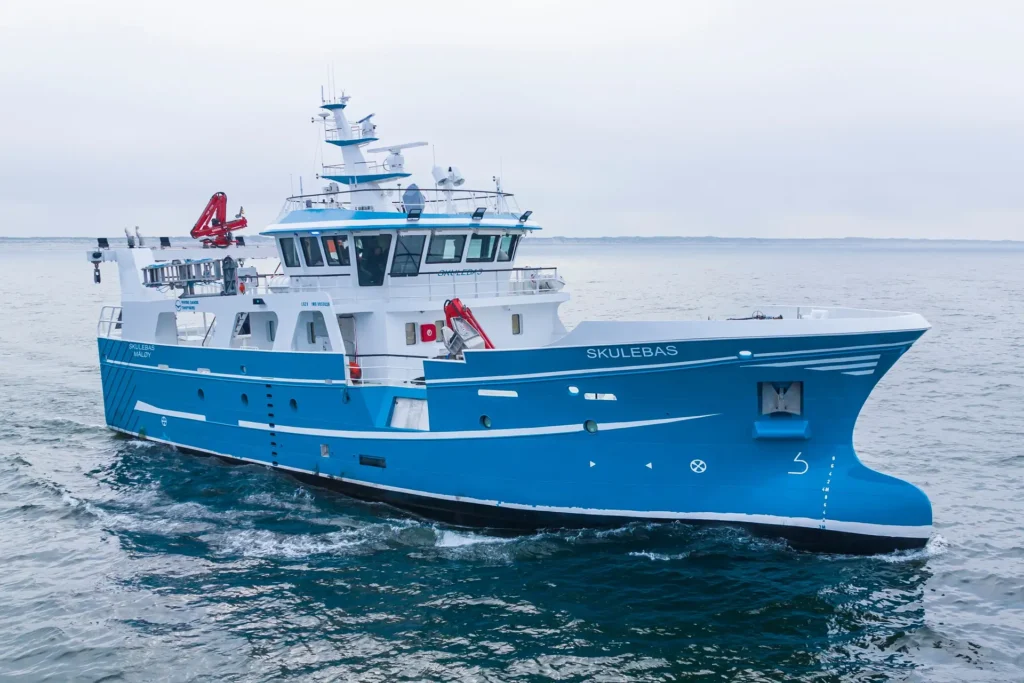
Jørgen Kopperstad, Head of Maritime at Norwegian Hydrogen, said: “Skulebas is the first fishing vessel in the world that will sail on green hydrogen, completely emission-free. This will be a milestone, not only for us in Norwegian Hydrogen, but also for the maritime and fisheries industry. And not least for Måløy High School and the students there. We find it inspiring to supply hydrogen to a training vessel that will educate future seafarers, as it is precisely these that will propel these new technologies further.”
“MS Skulebas has secured an agreement for access to green hydrogen. This hydrogen will be used in the fuel cell installed on board around mid-2024. For MS Skulebas, it is of the utmost importance that the hydrogen is produced in an environmentally friendly way using green power. Local production at Hellesylt is also a key requirement, as it limits the need for transport to and from the vessel,” said Stig Antonsen, project manager for MS Skulebas.
The Norwegian maritime industry supplies the complete hydrogen solution to Skulebas. Corvus will deliver the fuel cell system, while Hexagon Purus will deliver a hydrogen storage solution for the school vessel built by Hvide Sande Shipyard in Denmark.
“This is a very important contract for us. First and foremost, we are grateful that Vestland County Council has chosen us as the supplier for a ship that is so prestigious and important for both the county municipality, Måløy High School, and everyone who works to promote green shipping. This makes us proud, and we are really looking forward to getting started,” says Jens Berge, CEO of Norwegian Hydrogen.
Photo credit: Norwegian Hydrogen
Published: 29 November, 2023
Hydrogen
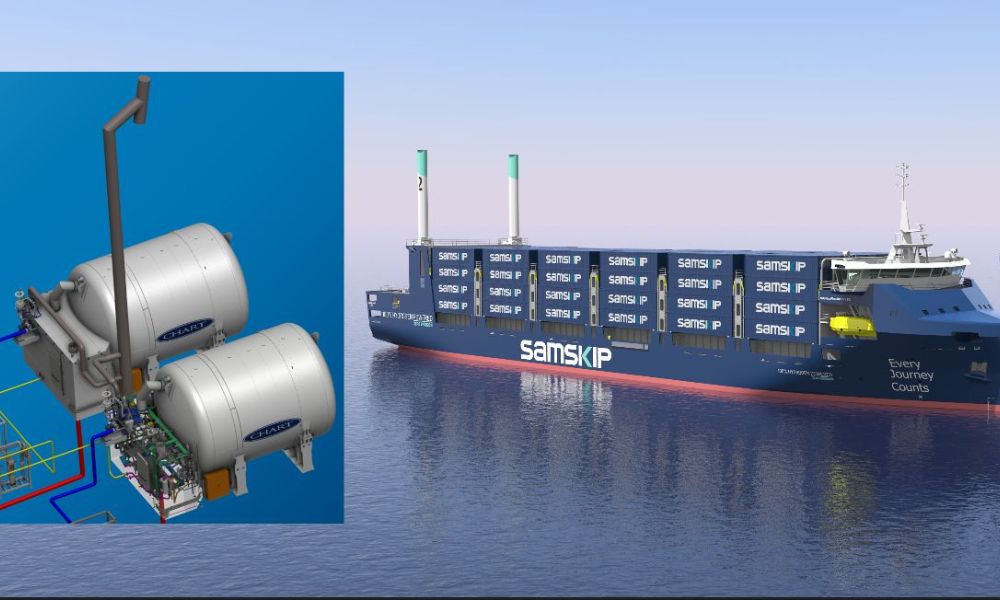
Chart Industries to supply liquid hydrogen fuel systems for Samskip boxships
Project will bring together advanced storage technology, fuel conditioning systems, bunkering interfaces, and safety solutions to support reliable vessel operations.
Alternative Fuels
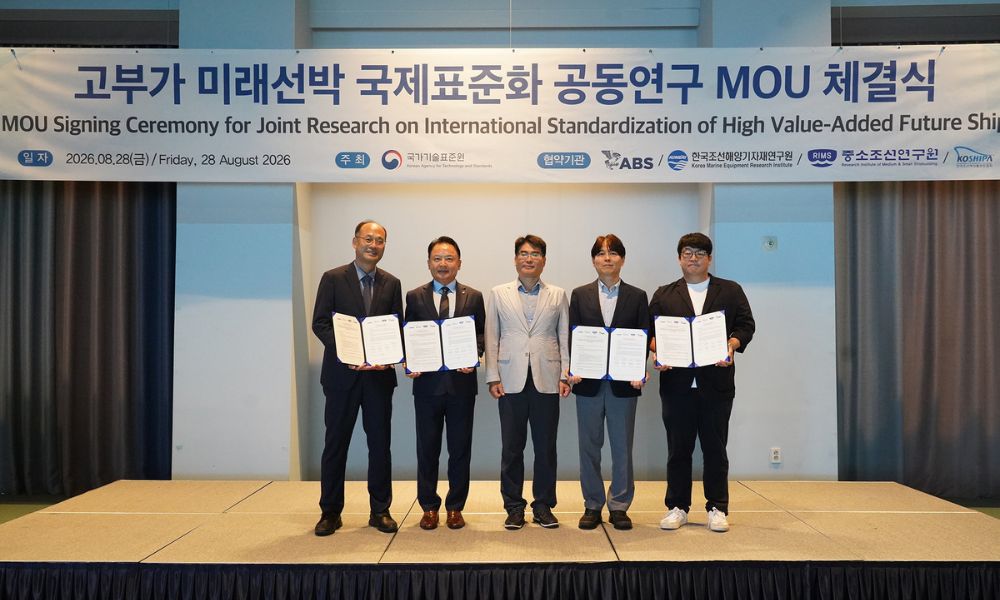
ABS joins Korean initiative to develop standards for hydrogen-fuelled ships
ABS has signed a MoU with three Korean maritime organisations, targeting ISO standards for hydrogen ships, smart shipyards and future maritime technologies.
Hydrogen
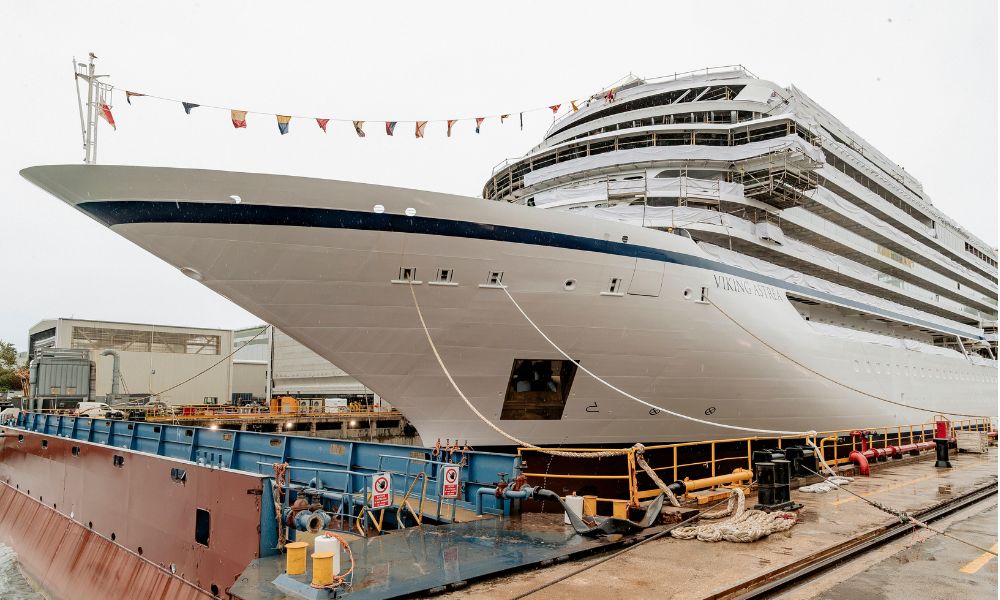
Viking floats out second hydrogen-powered ship, delivery set for May 2027
“Viking Astrea” is a sister ship in Viking’s ocean fleet and will have a propulsion system based partially on liquefied hydrogen and fuel cells.

OUR INDUSTRY PARTNERS

Singapore: Liquidator of Da Xin Tankers, Nan Chiau Maritime issues notices of dividend

GCMD, BCG: Engine choices today to shape shipping’s fuel pathways through 2050

Yang Ming names 15,500 TEU LNG dual-fuel container vessel “YM Weight”

Peninsula: Missing “Hercules Star” crew member found dead after Dubai incident

DNV: Existing ammonia shipping and safety expertise key to scaling new supply chains

Baltic Exchange: Bunker Report (17 September 2026)

ENGINE: Americas Bunker Fuel Availability Outlook (17 Sep 2026)
Peninsula confirms one fatality, crew member missing from bunker tanker “Hercules Star”

Singapore: Marine fuel testing firm CCIC Singapore faces winding up application

Auramarine: Marine fuel flexibility will be key to shipping’s energy transition
Singapore: Liquidators of Nan Ho Maritime, Nan Xin Maritime issue notices of dividend

Singapore: MPA working with industry on next phase of digital bunkering, says Deputy CE

Amogy and LOTTE Fine Chemical to explore ammonia bunkering in South Korea

Kongsberg Maritime to buy Finnish marine propulsion designer Steerprop
-
 Incident1 week ago
Peninsula confirms one fatality, crew member missing from bunker tanker “Hercules Star”
-
 Winding up5 days ago
Singapore: Marine fuel testing firm CCIC Singapore faces winding up application
-
 Alternative Fuels2 weeks ago
Auramarine: Marine fuel flexibility will be key to shipping’s energy transition
-
 Winding up2 weeks ago
Singapore: Liquidators of Nan Ho Maritime, Nan Xin Maritime issue notices of dividend
-
 Technology1 week ago
Singapore: MPA working with industry on next phase of digital bunkering, says Deputy CE
-
 Ammonia1 week ago
Amogy and LOTTE Fine Chemical to explore ammonia bunkering in South Korea
-
 Business2 weeks ago
Kongsberg Maritime to buy Finnish marine propulsion designer Steerprop
-

 Winding up6 days ago
High Court of Singapore issues winding up order against Hengli Petrochemical International