Connect with us

Methanol

VPS shares its experience with methanol as a bunker fuel

Steve Bee, VPS Group Commercial Director, provides an insight on the firm’s experience of testing methanol as a marine fuel including the very first methanol bunker quantity survey.

Admin

Published

on

295 1

Steve Bee, Group Commercial Director of marine fuels testing company VPS, provides an insight on the firm’s experience of testing methanol as a marine fuel including the very first methanol bunker quantity survey:

Introduction

As the shipping industry looks to decarbonise and become net zero by 2050, ship owners and operators are looking at alternative fuels with a lower carbon footprint in order to reduce overall emissions from their fleet. In Europe this is linked to the EU ETS scheme coming in 2024 and also the FuelEU Maritime[1] legislation coming in 2025. As part of the ever-changing marine fuel mix, methanol is now being seriously considered as a low-carbon fuel to assistshipping in achieving its decarbonisation targets.

Methanol (CH3OH) is a liquid chemical used in thousands of everyday products, including plastics, paints, cosmetics and fuels. Liquid methanol is made from synthesis gas, a mix of hydrogen, carbon dioxide and carbon monoxide. These components can be sourced from a wide range of feedstocks, using different technologies.

Renewable methanol is an ultra-low carbon chemical produced from sustainable biomass,often called bio-methanol, or from carbon dioxide and hydrogen produced from renewable electricity.

Renewable methanol can be made from numerous and plentiful sources which are globally available. The carbon molecules required to make synthesis gas for methanol production can be obtained from CO2 via industrial exhaust streams, or even captured from the air. Synthesisgas also can be produced from the gasification of any carbon source, such as municipal solid waste or forestry residues. Biogas, obtained through fermentation, from landfills, wastewater treatment, plants or animal wastes can also be used as a feedstock for methanol production.Additionally, renewable energy can power the electrolysis process to generate clean hydrogen for the production of renewable methanol.

Methanol is the world’s most commonly shipped chemical commodity and more than 95 billion litres are manufactured every year. It has been stored, transported and handled safely for over100 years. Since it remains liquid at ambient temperature and pressure, the infrastructure required to deploy it as a fuel, is largely in place: combustion engines, fuel cells and powerblocks can easily be adapted to use methanol.

Methanol as a Marine Fuel

The attraction of methanol to shipping, is that renewable methanol can significantly reduce greenhouse emissions to atmosphere including, reducing carbon dioxide (CO2) by up to 95%and nitrogen oxide (NOx) by up to 80%, and eliminating sulphur oxide (SOx) and particulate matter (PM) emissions.

However, there are numerous considerations regarding the use of methanol as a marine fuel.Firstly, methanol exhibits good burn characteristics, but will require a pilot fuel for ignition, eg a gas oil, or a biofuel. Further positives are, it is a liquid at atmospheric pressure, its bio-degradable and can run well in existing engine technologies.

However, methanol has a Flash Point of only 12ºC, which immediately raises questions relating to the Safety of Life at Sea (SOLAS) requirements. SOLAS states no marine fuel with a flashpoint less than 60ºC should be onboard a vessel. Methanol has a low energy content,approximately 40%-50% of the more traditional fossil fuels used within the maritime sector.Methanol is highly reactive and therefore materials with which methanol may contact, should be inert, eg stainless steel.

In order to achieve the Tier III NOx requirements, pure water must be added to methanol prior to burning. This allows for approximately 30% less NOx emissions compared to fossil fuels.

VPS Completes the First Methanol Bunker Quantity Survey, Sampling and Testing

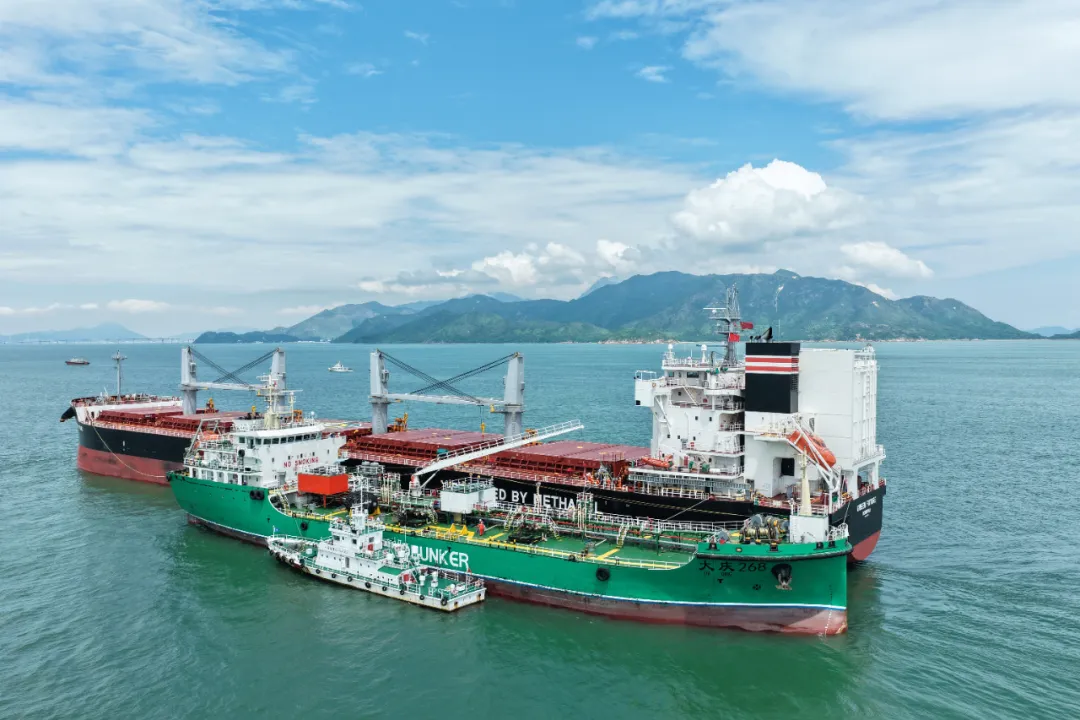
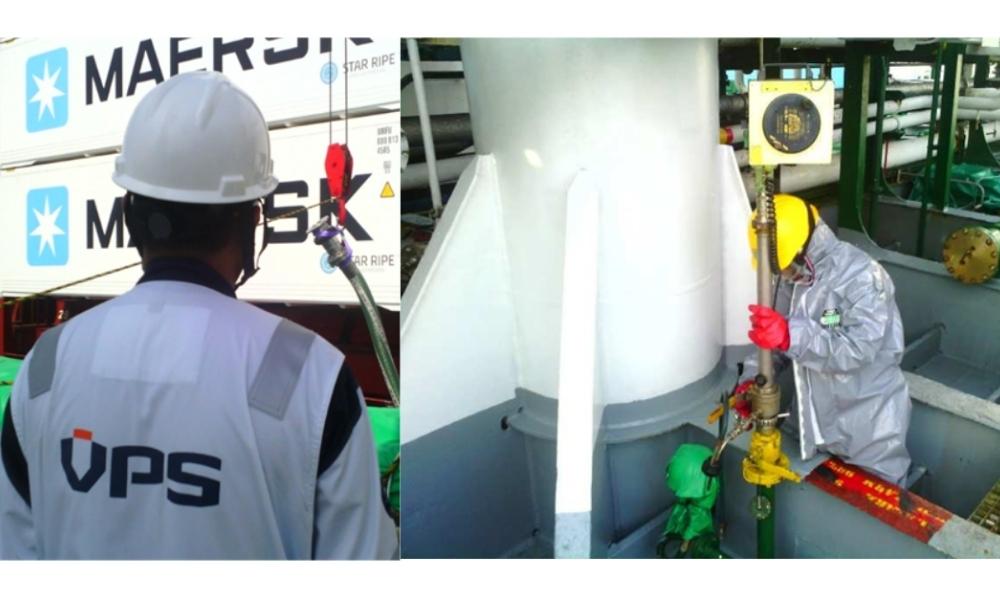
In July 2023 VPS were requested by Maersk to undertake the very first methanol bunker quantity survey (BQS). This took place in Singapore for Maersk’s first methanol-powered container ship, the Laura Maersk.

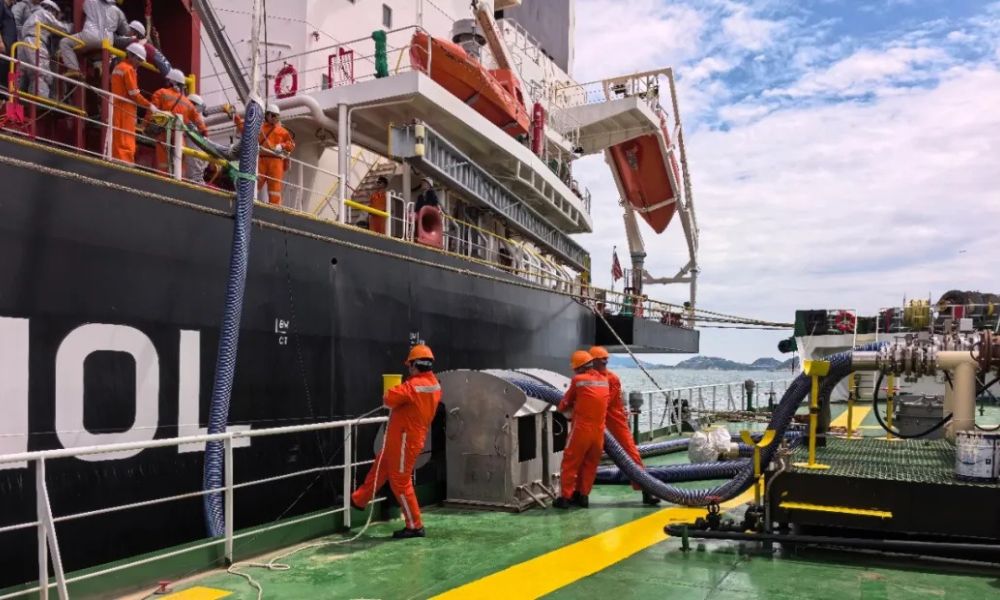
Prior to this first methanol delivery, various levels of pre-delivery work were required including,the delivery barge tank-cleaning operation and a part loading of methanol to the barge, to ensure no cross-contamination could take place, during the actual delivery. VPS, as part of theBQS operation, also undertook the required closed-sampling procedure, to safely harvest representative samples of the methanol delivered to the vessel, which were then transferred toa VPS Laboratory for quality testing.

In the 12 months leading up to this BQS, VPS invested heavily into new laboratory equipment and R&D in order to provide a comprehensive testing and advisory service in relation to methanol as a marine fuel.

In order to safely transport methanol samples to the VPS laboratory, the transfer via aeroplane,had to comply with the International Air Transport Association (IATA), rules for the transportation of dangerous goods. It is worth noting when considering using methanol as a marine fuel, it is the person sending methanol samples for testing, who must be trained and accredited to the IATA standards, ie the vessel crew, or vessel agent.

The testing of the samples from the Laura Maersk bunkering, was conducted to theInternational Methanol Producers and Consumers Association (IMPCA) test slate. The key test considerations here were, the purity of the methanol, the presence of ethanol, water content,the presence of acetone, chlorides, the acidity of the fuel, sulphur content and numerous other impurities, which could be detected.

Following the Singapore bunkering the Laura Maersk set sail for Port Said, Egypt, where VPSrepeated the BQS, Sampling and Testing of the methanol delivered to the vessel. The final bunkering stop took place in Rotterdam, where VPS once again completed the BQS operation,sampling and testing.

The VPS surveying and testing of these three methanol bunker stems, showed the fuel delivered matched the Bunker Delivery Note (BDN) and the Certificate of Quality (CoQ).

VPS and Methanol Bunker Fuel

VPS have proven that safe, accurate and reliable, quantity surveys and sampling of methanol can be undertaken. Plus, following significant investment in state-of-the-art laboratory equipment, plus analyst and advisory training, VPS can also provide accurate analytical testing of methanol samples to determine the quality of the fuel and provide the necessary and valuable marine engineering advice, to support ship owners and operators when they look to use methanol as their low-carbon marine fuel of choice.

VPS are currently working with numerous shipping companies, suppliers and engine manufacturers on testing their methanol samples and sharing our experience, expertise and innovative approach in helping them gain a greater understanding of this low-carbon fuel.

With more than 160 methanol-powered vessels currently on order, it is inevitable that methanol use will significantly increase within the maritime sector and VPS have proven high-levelperformance to support the industry in this aspect of it’s decarbonisation journey.

Related: Dr. Nicholas Clague shares VPS’ experience with alternative bunker fuels

Photo credit: VPS
Published: 16 October, 2023

Continue Reading

Methanol

China: Zhejiang’s first inland methanol-powered boxship completes trial voyage

The 64-TEU new container vessel, “Ding Li Ji 001”, departed from the Zhebei Shipyard in Guangchen Town, Pinghu City on 22 July for trial operation.

Admin

Published

on

By

China: Zhejiang's first inland methanol-powered boxship completes trial voyage

Haining Communications, a government entity of Haining City, on Monday (27 July) said Zhejiang Province’s first inland methanol-powered container vessel has completed its trial operations, marking a milestone in the province’s adoption of methanol as a clean marine fuel for inland shipping.

The 64-TEU new container vessel, Ding Li Ji 001, departed from the Jiaxing Zhebei Shipbuilding’s shipyard in Guangchen Town, Pinghu City on 22 July for trial operations along the Hangzhou-Pinghu-Shenjia section of the Beijing-Hangzhou Grand Canal.

During the trials, engineers conducted comprehensive testing and verification of the vessel’s propulsion and manoeuvring performance, methanol fuel supply system, and onboard safety systems, validating both the safety of the vessel’s design and its operational suitability for inland waterways.

Jiaxing Zhebei Shipbuilding said the achievement marks a new stage in the application of methanol as a clean energy source for inland shipping and supports Zhejiang’s broader green and low-carbon shipping transition under its “Shipping Zhejiang” initiative.

The vessel measures 64.9 metres in length with a beam of 12.6 metres and a moulded depth of 3.5 metres. It has a designed service speed of 15.62 km/h and is certified to carry 64 TEU with a maximum cargo capacity of 1,883 tonnes, enabling it to serve bulk cargo transport on major inland waterways.

Powered by two dedicated 180-kW methanol engines, the vessel is equipped with a 10-cubic-metre methanol storage tank, providing a cruising range of up to 1,000 kilometres on a full tank. The design aims to address limitations associated with battery-electric vessels, particularly restricted range and charging infrastructure for long-distance inland transport.

Unlike conventional diesel-powered vessels, Ding Li Ji 001 employs direct methanol propulsion, using methanol as the primary fuel rather than traditional marine diesel.


Photo credit: Jiaxing Zhebei Shipbuilding
Published: 29 July, 2026

Continue Reading

Bunker Fuel

Port of Rotterdam publishes bunker fuel sales data for Q2 2026

Ethanol as a bunker fuel was reported in Rotterdam for the first time with 1,025 mt delivered in Q2 2026, following an ethanol-methanol blend bunkering operation of container vessel Eco Levant in May.

Admin

Published

on

By

RESIZED port of rotterdam

The Port of Rotterdam Authority recently published bunker fuel sales data for the second quarter (Q2) of 2026.

Deliveries of ultra low sulphur fuel oil, very low sulphur fuel oil, high sulphur fuel oil, marine gas oil and marine diesel oil in Q2 2026 (against on year) recorded respectively 123,190 metric tonnes (mt) (+33%  from 162,142 mt), 354,448 mt (-9.1% from 439,804 mt), 704,637 mt (+10.9% from 619,010 mt), 266,570(+18% from 273,696 mt), 64,777 mt (-8.2% from 86,821 mt). 

Bio-blended variants of ultra low sulphur fuel oil, very low sulphur fuel oil, high sulphur fuel oil, marine gas oil and marine diesel oil in Q2 2026 (against on year) recorded respectively 22,032 mt (-28.3% from  24,573 mt), 144,665 mt (-57% from 68,271 mt), 30,191 mt (+15.3% from 38,490 mt), 34,574 mt (+627.7% from 31,663 mt) and 8,413 mt (-30.2% from 2,223 mt).

Port data showed 273,021 m3 of liquefied natural gas (LNG) being delivered as a marine fuel in Q2 2026, down by 17.4% from 207,658 m3 in Q2 2025. Bio-methanol and bio-blended LNG recorded 2,845 mt and 7,506 m3 respectively in Q2 2026.

Ethanol as a bunker fuel was reported in Rotterdam for the first time with 1,025 mt delivered in Q2 2026,  following an ethanol-methanol blend bunkering operation of container vessel Eco Levant in May.

Manifold Times previously reported Evos Rotterdam holding a ground-breaking ceremony for its methanol and ethanol expansion project at the Port of Rotterdam, formally starting the construction phase of a major investment in additional terminal capacity.

Once operational in early 2028, the expansion will give Evos Rotterdam greater capacity to handle methanol and ethanol for industrial customers, as well as for the developing market in cleaner, low-carbon marine fuels and bunkering.

Shipping giant A.P. Moller – Maersk (Maersk) recently announced a new milestone in its marine fuel trials, with its dual-fuel feeder vessel Laura Maersk successfully operating on 100% ethanol for a second time.

The latest trial marked a significant step forward from earlier tests, as the vessel was supplied through a larger-scale bunkering operation conducted by barge in Rotterdam.

Related: X-Press Feeders, METHANAVE complete first ethanol-methanol bunkering op in Rotterdam
Related: Maersk advances ethanol fuel trials with larger-scale Rotterdam bunkering


Photo credit: Port of Rotterdam
Published: 29 July, 2026

Continue Reading

Methanol

Tsuneishi Solutions Tokyobay delivers first methanol fuel supply system for bulker

The LFSS is the first unit of T-SOL’s proprietary LFSS developed in-house and will be installed on a Kamsarmax bulk carrier, marking its first application on an actual vessel following a ClassNK AiP.

Admin

Published

on

By

Tsuneishi Solutions Tokyobay delivers first methanol fuel supply system for bulker

Tsuneishi Solutions Tokyobay (T-SOL) on Friday (24 July) said it delivered the first Low-flashpoint Fuel (MeOH) Supply System (LFSS) for medium- and low-speed diesel engines at the end of May 2026. 

The LFSS received Approval in Principle (AiP) from ClassNK in April 2024. It is the first unit of T-SOL’s proprietary LFSS developed in-house and will be installed on a Kamsarmax bulk carrier, marking its first application on an actual vessel following the AiP granted by ClassNK.

An LFSS is designed to safely and reliably supply alternative fuels with low flashpoints, such as methanol, to a vessel’s main engine.

The LFSS delivered by T-SOL has been developed specifically for medium- and low-speed diesel engines and features a simple and compact design in terms of its main components, dimensions and weight. The system is equipped with key components manufactured by Japanese suppliers, enabling the provision of instruction manuals in Japanese as well as prompt and flexible responses to customer enquiries.

As the LFSS is assembled in Japan, customers adopting T-SOL’s LFSS are not required to attend Factory Acceptance Tests (FAT) overseas or arrange for engineers from overseas equipment manufacturers to travel to Japan, thereby helping reduce both costs and operational burdens for customers. T-SOL also provides on-site technical support during commissioning and testing.

With the tightening and introduction of environmental regulations, marine fuels are entering a period of transition from heavy fuel oil to alternative fuels, including methanol. 

“The transition requires new expertise and considerable time for technical evaluation, increasing the burden on customers. Drawing on the expertise of its experienced engineers, T-SOL provides comprehensive support throughout each customer’s transition to alternative fuels,” the company said. 

Following the delivery of its first LFSS, T-SOL will continue to work to ensure a stable supply of LFSS units while advancing the research and development of technologies that contribute to greenhouse gas (GHG) emissions reduction, including engineering solutions for other alternative fuels. 


Photo credit: Tsuneishi Solutions Tokyobay
Published: 27 July, 2026

Continue Reading

Trending