
Environment
DNV: Monitoring of CII Rating and how to stay compliant
DNV elaborates on CII, importance of reliable emission monitoring, and gives recommendations to ship owners and managers on how to stay compliant.


Classification society DNV on Tuesday (27 June) released a statutory news for ship owners and managers on Carbon Intensity Indicator (CII) and carbon intensity rating with its recommendations for compliance:
From 1 January 2023, it is mandatory for all ships to collect emissions data for reporting their annual operational CII and CII rating. This statutory news aims to raise awareness of CII, the importance of reliable emission monitoring, and give recommendations on how to stay compliant.
Carbon Intensity Indicator (CII) and carbon intensity rating
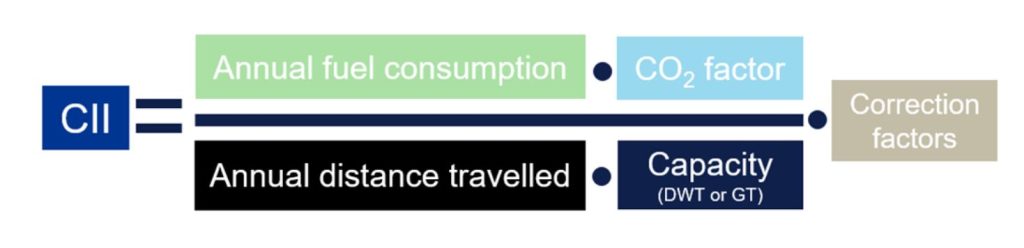
The attained CII is a value reflecting the energy efficiency of a ship for a given calendar year based on the verified DCS data. For certain ship types and operations, the attained CII may be further adjusted by applying correction factors as agreed by the IMO, as illustrated below:
Taking into consideration the type and the size of the ship and the relevant year the required CII is determined, the required CII gradually becomes stricter over time. The requirement is that the attained CII should not exceed the required CII.
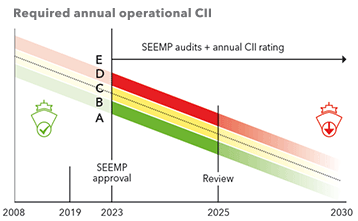
Based on the attained and the required CII, a ship is awarded its annual carbon intensity rating. The rating spans from A to E, where A is the best and the required CII is the middle point of the C rating. The rating is noted on the Statement of Compliance (SoC) issued each year by the DCS verifier.
The SEEMP Part III (the 3-year plan)
Every ship required to comply with the CII requirement shall have a plan on how to achieve the required CII for the next three years. This plan, known as the SEEMP Part III, includes measures to be implemented together with a timeline and responsibilities for the implementation.
Another important aspect of the plan is that it is subject to self-evaluation, by evaluating the effectiveness of the planned measures over time and continuously improving the plan as needed. To achieve this, knowing the current CII status of the ship is key, and, hence, having a proper monitoring tool is essential.
Monitoring of CII ratings
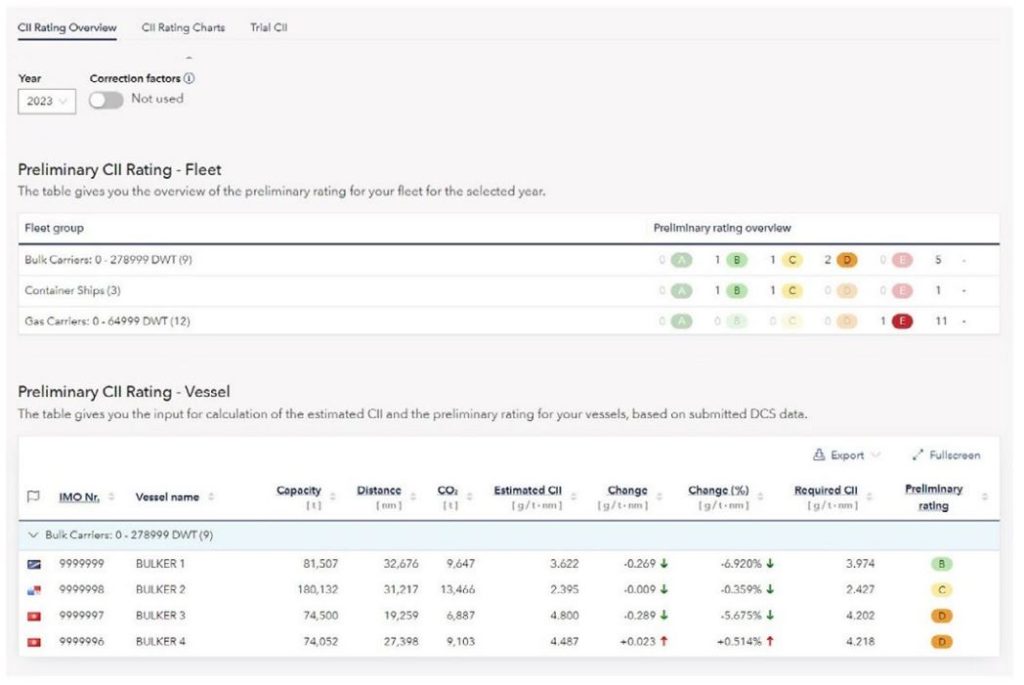
DNV provides the monitoring tool Emissions Insights, which provides an overview of your fleet and confirms where you are with respect to your CII, showing the preliminary year-to-date ratings based on your DCS data uploads so far. The tool is available through My Services on Veracity for our existing DCS customers. The accuracy will, of course, depend on the frequency of your DCS data uploads. Emission Insights also shows the corrected CII in case correction factors have been applied and reported. Emissions Insights is illustrated below:
If you require a more comprehensive solution including, for instance, emission performance simulation and verified voyage statements, we recommend you to look into DNV’s Emissions Connect, which is a separate subscription service (Emissions Connect is also available for companies not using DNV as a DCS verifier).
Continued CII compliance
The implementation of the SEEMP Part III will be followed up through periodical company audits. Failing to achieve the objectives of the SEEMP and receiving an inferior rating, in other words an E rating or three consecutive D ratings, will trigger actions by the ship manager in the form of a corrective action plan (CAP). This includes planned actions to increase the energy efficiency sufficiently to achieve the required CII (C rating). To remain compliant and receive the SoC, the CAP needs to be reviewed and verified.
Recommendations
For your SEEMP Part III plan to work and to ensure that you are on the right track, it is important to evaluate and monitor your vessels’ CII rating. Here are some steps you can follow to stay compliant:
- Review performance data by collecting data on key performance indicators, such as maintenance records, fuel consumption, voyage reports, and inspection reports. Use this information to identify trends and areas for improvement.
- Conduct regular assessments of your vessels’ operations and performance, including safety inspections, risk assessments, and operational audits. These assessments can help identify potential problems and provide an opportunity to address them before they escalate.
- Engage stakeholders including crew, management and customers in the evaluation process. Encourage them to share their perspectives and experiences and use this feedback to identify areas for improvement.
- Use benchmarking tools such as Emissions Insights to compare your vessel’s performance against industry standards and best practices. This can help you identify areas for improvement.
- Monitor progress regularly and track the results of your efforts to improve your vessel’s CII rating. This will help you determine the effect of selected actions and identify areas where additional efforts are needed.
- Continuously improve and assess your vessel’s operations, processes and procedures. Regularly review and update your safety procedures and incorporate new technology and best practices as they become available.
Photo credit: Venti Views on Unsplash / DNV
Published: 30 June, 2023
Methanol
GENA Solutions: Total renewable and low-carbon methanol project pipeline increases from 61.8 to 62.2 Mt by 2032
Information shared by MI – the Global Methanol Alliance meant to assist the maritime industry in the adoption of methanol as a mainstream marine fuel heading into IMO 2030/2050.
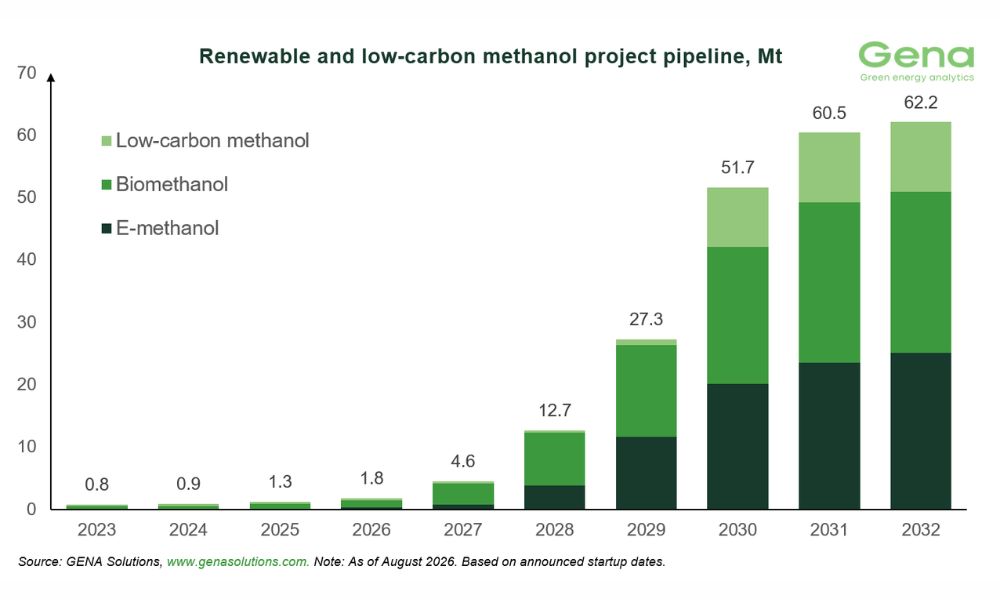
MI – the Global Methanol Alliance recently shared with Manifold Times the renewable and low-carbon methanol project pipeline August 2026 release produced by GENA Solutions Oy.
Information from the release is meant to provide the bunkering publication’s readers with insight on renewable methanol availability, and to assist the maritime industry in the adoption of methanol as a mainstream marine fuel heading into IMO 2030/2050.
Key takeaways from GENA’s August 2026 Methanol release are as follows:
- As of the end of August 2026, GENA tracks 286 renewable and low carbon methanol projects, representing 62.2 Mt of capacity by 2032. This includes 25.1 Mt of e-methanol, 25.9 Mt of biomethanol, and 11.2 Mt of low carbon methanol capacity.
- Two new projects were added to Project Navigator last month, while one frozen project was excluded. The project pipeline increased by 0.4 Mt month on month.
- Four new offtake agreements were registered during August, including two biomethanol and two e-methanol agreements.
- About 8% of the cumulative renewable methanol project pipeline capacity has reached FID so far, with another 11% at the FEED stage.
- Considering the current uncertainty around regulatory developments and demand growth, GENA projects that renewable methanol capacity could reach 6 Mt to 12 Mt by 2031.
Note: The full article can be viewed here.
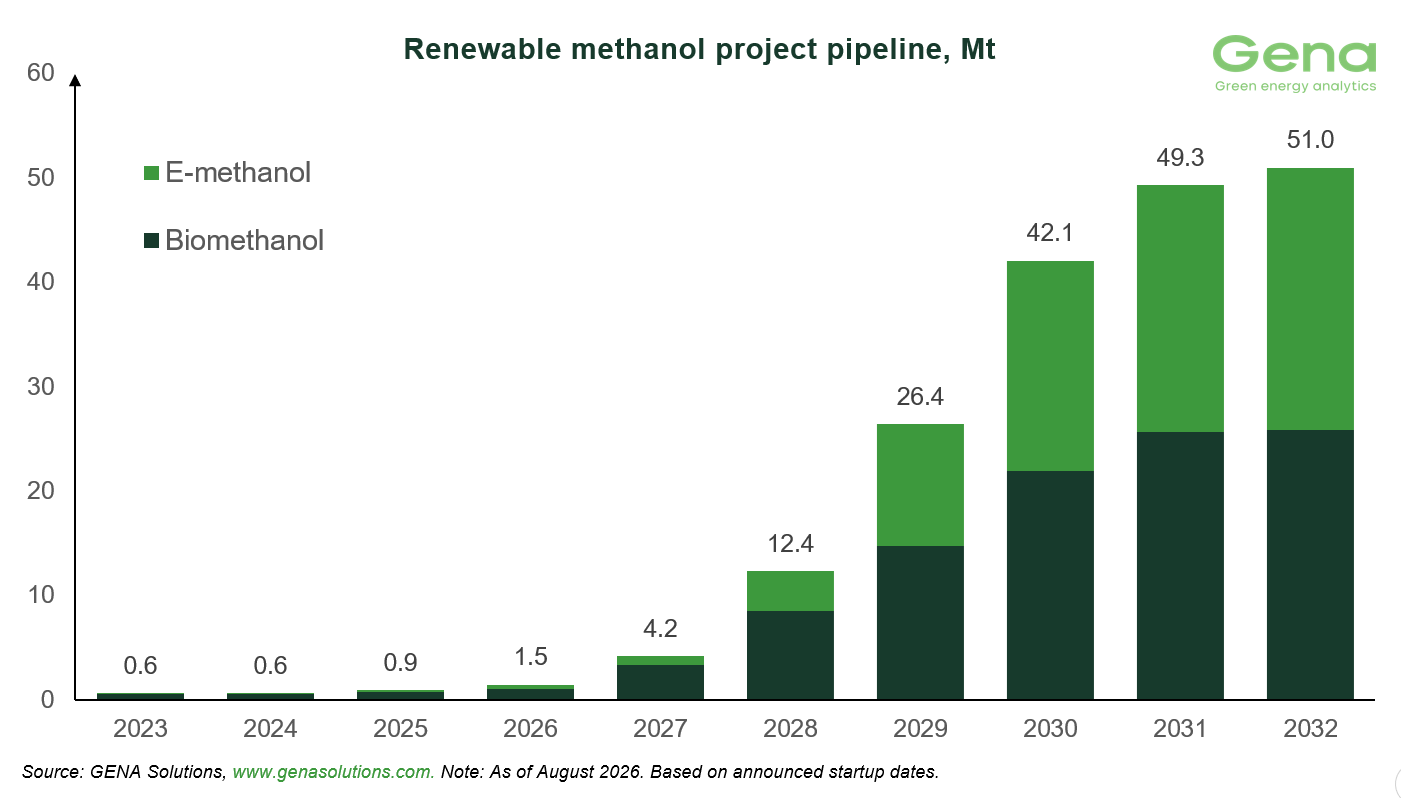
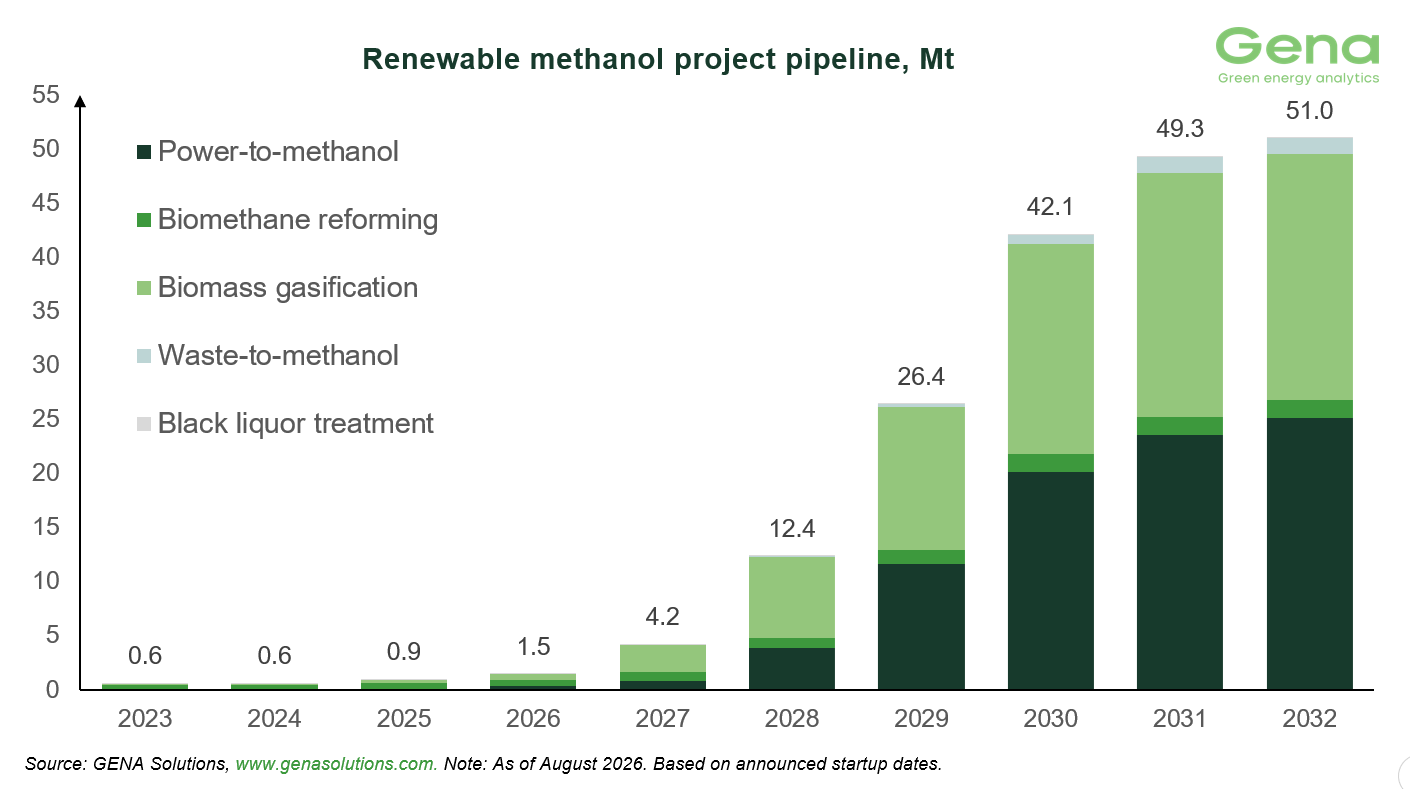
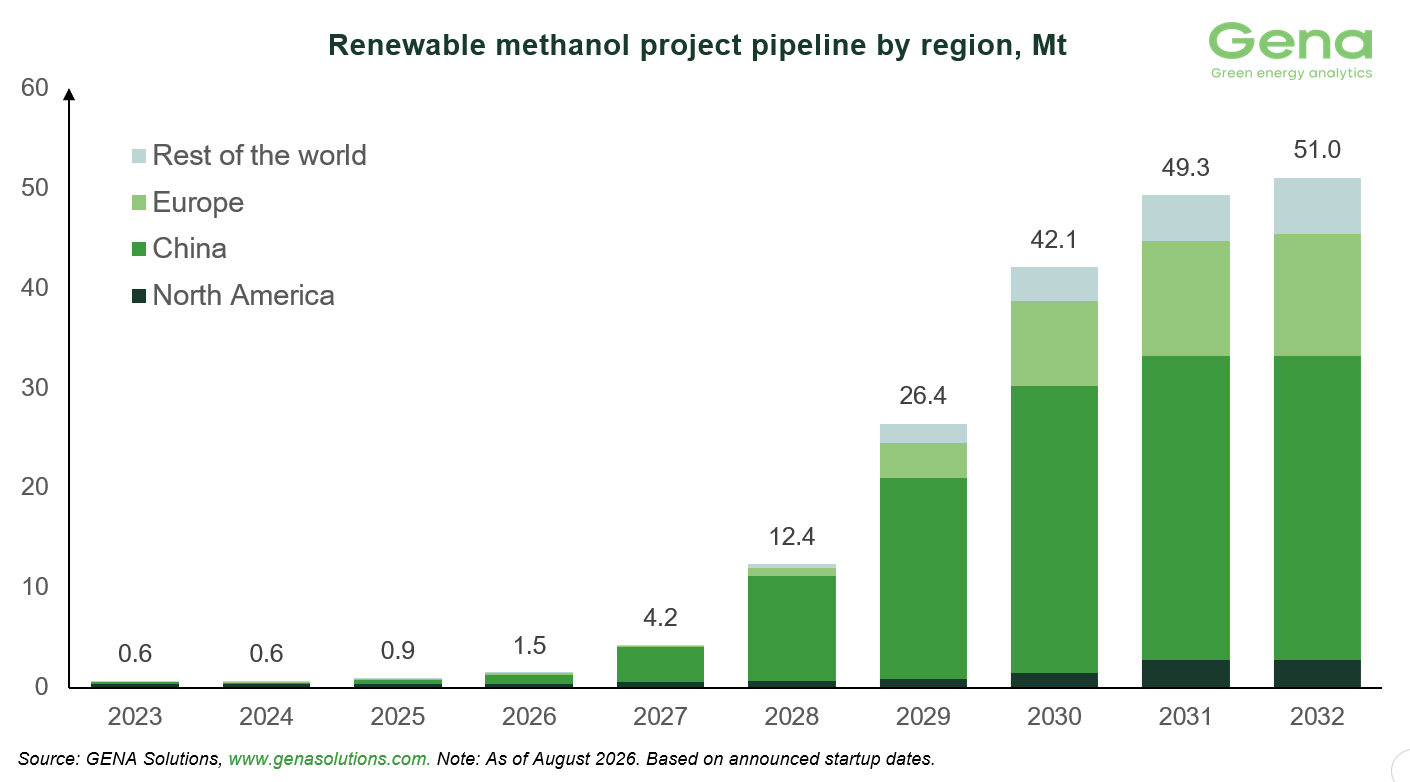
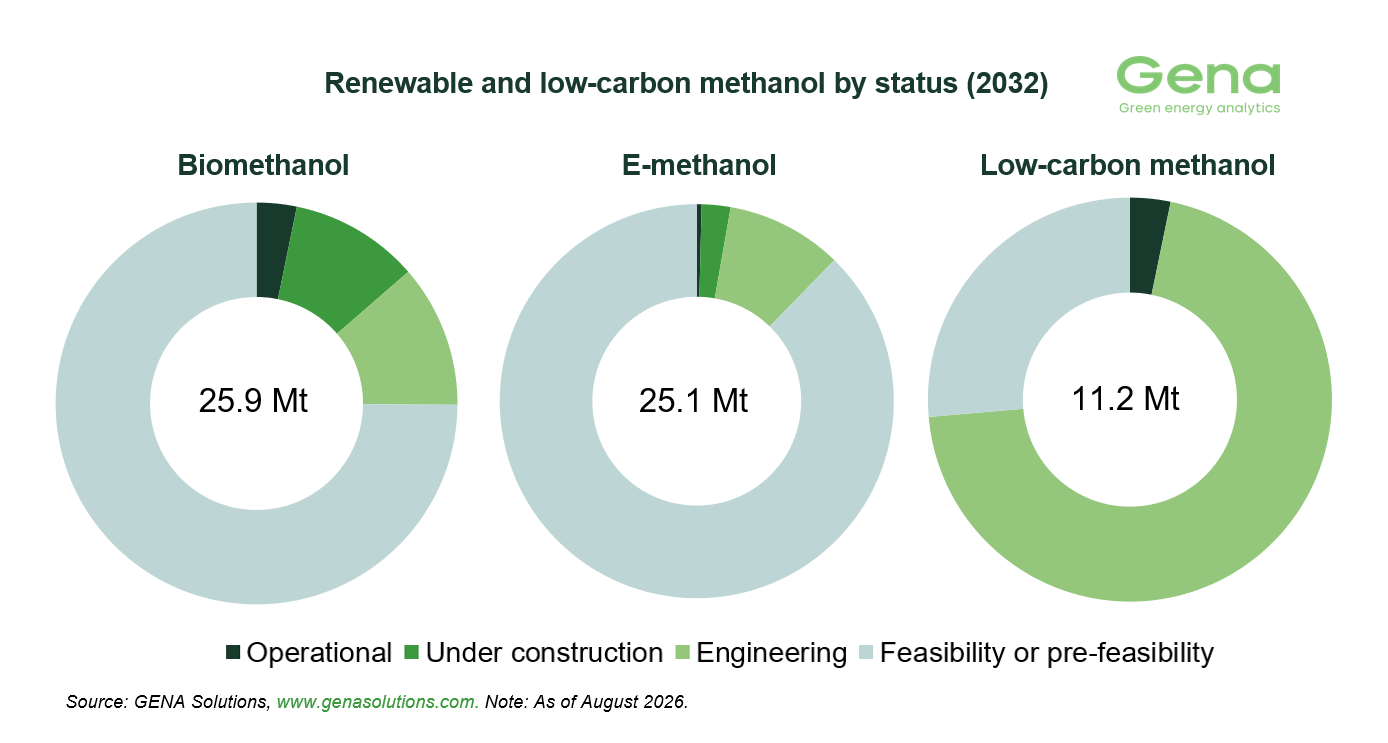
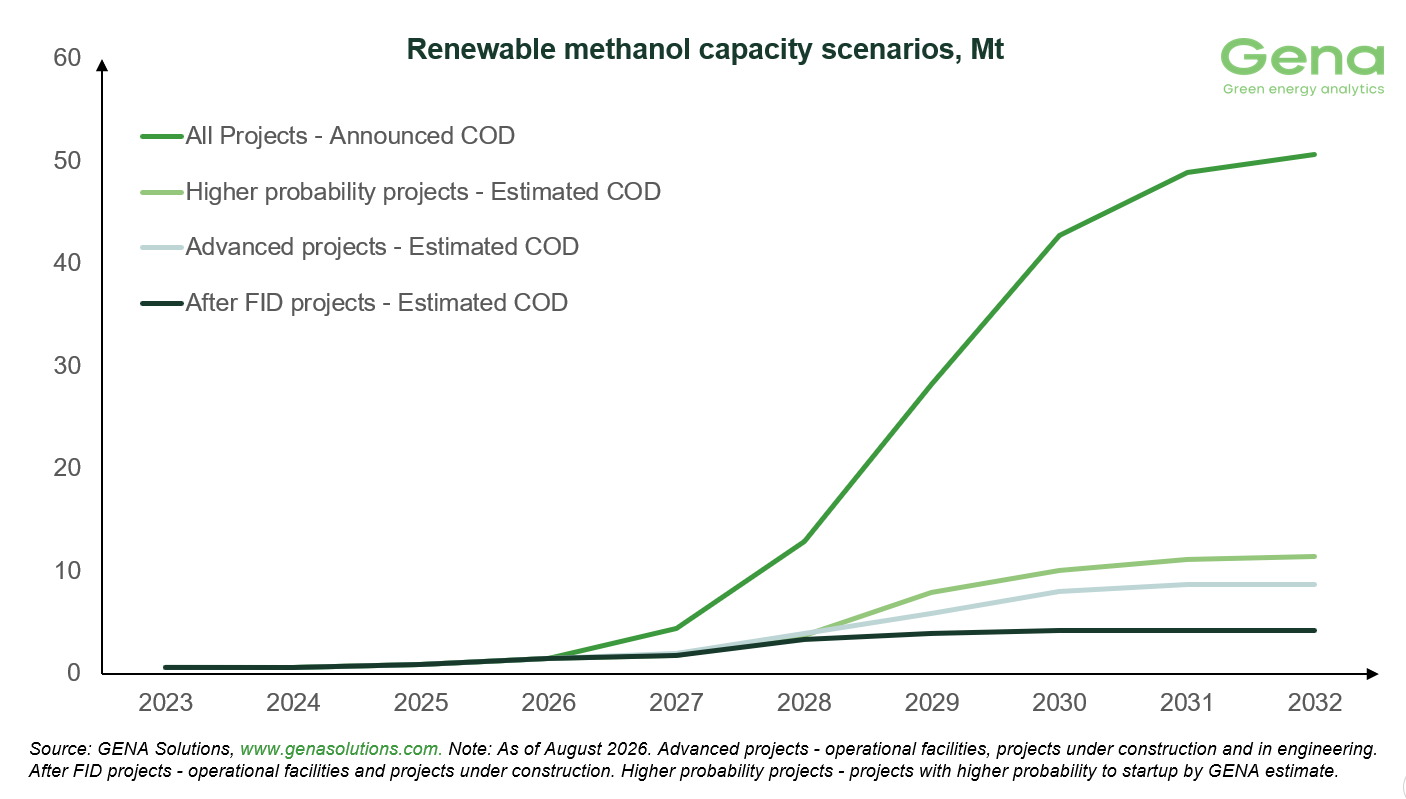
Photo credit: GENA Solutions
Published: 4 September, 2026
Business
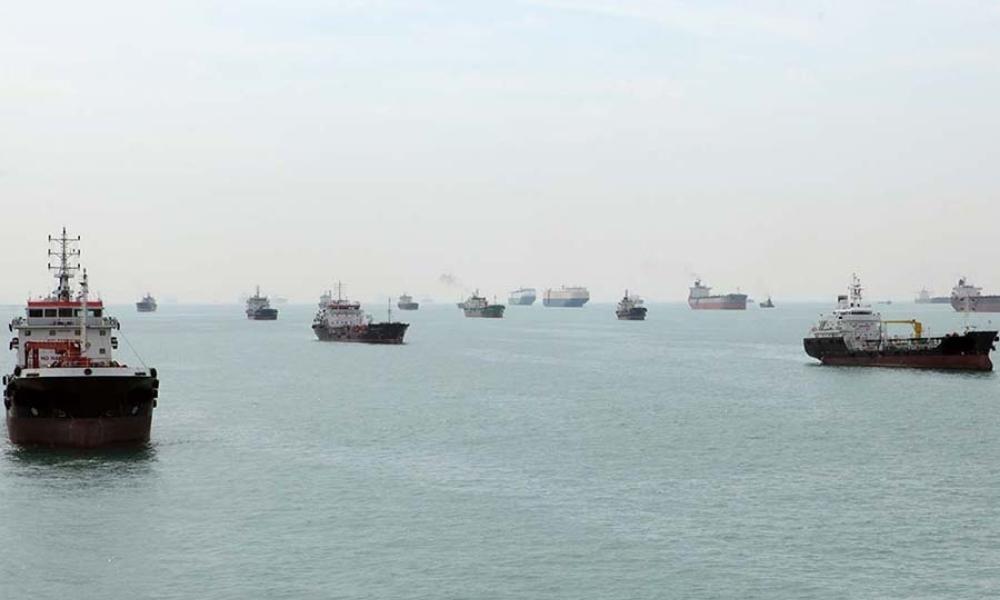
Singapore: MPA urges maritime firms to prepare for potential haze with plan
MPA encourages all maritime companies, especially those with workers performing outdoor work to maintain a business continuity plan for haze.
Alternative Fuels
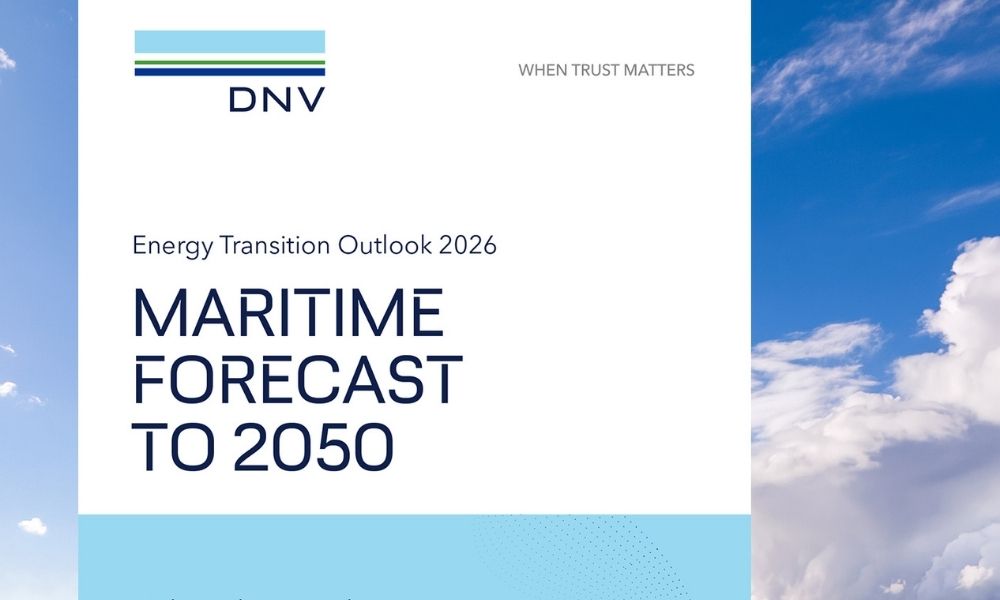
DNV report: Regulatory uncertainty demands fleet strategies built for multiple futures
Report examines four regulatory scenarios, ranging from adoption of IMO NZF in its current form to its outright rejection, energy efficiency uptake, and long-term bunker fuel and technology strategies.

OUR INDUSTRY PARTNERS

Yang Ming orders six LNG dual-fuel, ammonia-ready containerships from Hanwha Ocean

LR, China’s MARIC unveil tanker concept ready for three future bunker fuels

DNV: Alternative-fuelled vessel orders hit highest monthly level since October 2024

TFG Marine advances global MFM rollout with two US Gulf bunker barges

GENA Solutions: Total renewable and low-carbon methanol project pipeline increases from 61.8 to 62.2 Mt by 2032

Baltic Exchange: Bunker Report (3 September 2026)

ENGINE: Americas Fuel Availability Outlook (3 September 2026)

Singapore-flagged tugboat “Kim Heng 3203” placed under Sheriff’s arrest

US targets five bunker companies in latest sanctions campaign against Iran

Singapore bunkering community supports Living Hope Evangelism’s 7th anniversary outreach for residents in need

China’s bunker market reshaped by tax rebates, trade flows and refining changes, says economist

Hengli Petrochemical’s ex-Singapore trading arm faces winding up application

Rajah & Tann: Bunker disputes are won in the first 48 hours

Report: GCMD outlines practical approach to quantity assurance in marine biofuel supply chains
-
 Vessel Arrest1 week ago
Singapore-flagged tugboat “Kim Heng 3203” placed under Sheriff’s arrest
-
 Sanctions2 weeks ago
US targets five bunker companies in latest sanctions campaign against Iran
-
 Events2 weeks ago
Singapore bunkering community supports Living Hope Evangelism’s 7th anniversary outreach for residents in need
-
 Interview1 week ago
China’s bunker market reshaped by tax rebates, trade flows and refining changes, says economist
-
 Winding up2 weeks ago
Hengli Petrochemical’s ex-Singapore trading arm faces winding up application
-
 Bunker Claim4 days ago
Rajah & Tann: Bunker disputes are won in the first 48 hours
-
 Biofuel1 week ago
Report: GCMD outlines practical approach to quantity assurance in marine biofuel supply chains
-
 Winding up2 weeks ago
Singapore: Notices of intended dividend issued for Ocean Bunkering Services, Hin Leong Marine