Connect with us

Business

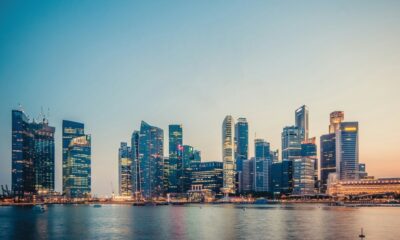
Singapore: PIL engages LR to digitalise and optimise fleet using i4 Insight platform

‘Being a more operationally efficient shipping line would significantly help us to reduce our carbon footprint,’ says Abhishek Chawla, PIL General Manager, Operations & Procurement.


Admin

Published

on

MT pix 2023 3

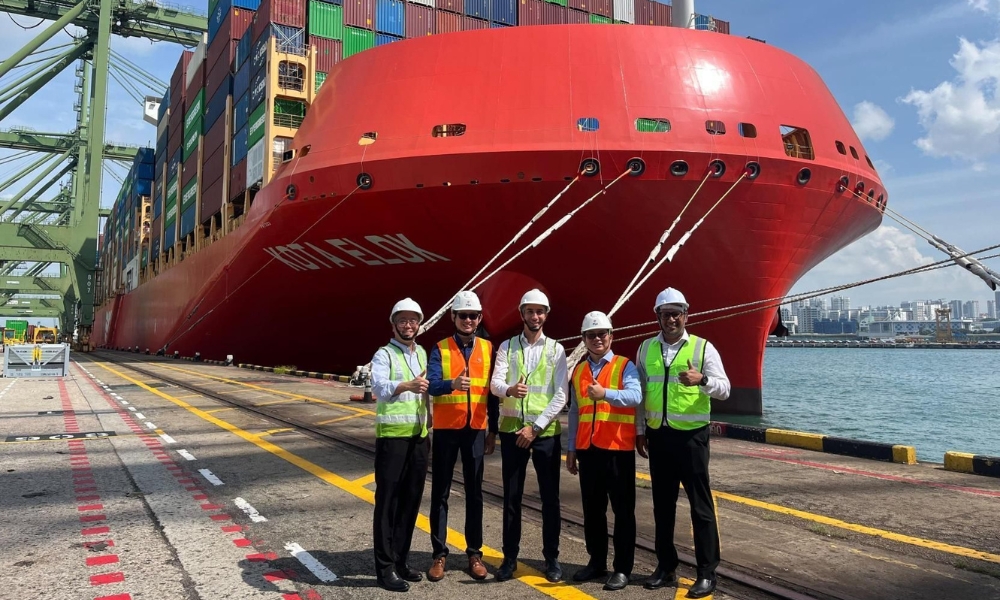
Singapore shipping line Pacific International Lines (PIL) has engaged Lloyd’s Register fleet optimisation experts, i4 Insight, to help it reduce emissions and maximise fleet performance with a four-year fleet wide agreement, Lloyd’s Register said on Monday (30 January). 

To deliver on its commitment to reduce emissions and improve fleet performance, PIL recently opened a ‘Centre for Maritime Efficiency (CME) which is powered by the i4 Platform and uses shoreside routing services as the technological backbone for achieving its goals.

LR Digital Solutions division CEO, Martin Taylor, said: “The CME relies on the i4 fleet optimization platform to better manage its fleet, to evaluate vessel performance, and ensure the shipping line is making the best decisions to maximise revenue potential. We are proud that PIL has selected us to help them digitalise and optimise its fleet and look forward to a long relationship over the coming years.”

“Our goal is to solve our customer’s challenges and support their objective to offer the most competitive service to their own customers. To create the best platform, we have focused on bringing together the most experienced, knowledgeable, and talented minds in the sector. Our solutions are developed by a team of maritime experts, technical innovators and problem solvers”, Taylor added.

PIL General Manager, Operations & Procurement, Abhishek Chawla, said; “As PIL continues to grow our container shipping business in key regions around the world, sustainability is also a key focus. Being a more operationally efficient shipping line would significantly help us to reduce our carbon footprint. With LR as one of our partners in the CME, we are aligned in our goal to leverage technology and digitalisation in our operations for enhanced operational effectiveness.”


Photo credit: Lloyd’s Register
Published: 31 January, 2023

Continue Reading

LNG Bunkering

Chinese firms form pact for 20,000 cbm LNG bunkering vessel project

CM Energy Tech, Seacon Shipping Group and China Merchants Heavy Industry (Jiangsu) signed a joint venture agreement for 1+1 20,000 cubic meter LNG bunkering vessels.

Admin

Published

on

By

China Flag

CM Energy Tech Co Ltd, Seacon Shipping Group Holdings Limited and China Merchants Heavy Industry (Jiangsu) Co Ltd on Tuesday (26 May) signed a joint venture agreement for the construction of 1+1 20,000 cubic meter liquefied natural gas (LNG) bunkering vessels. 

The parties also signed a shipbuilding contract for the first vessel, which will be constructed by China Merchants Heavy Industry.

The project combines CM Energy Tech’s access to the China Merchants Group ecosystem, Seacon Shipping Group’s expertise in ship management and operations, and China Merchants Heavy Industry’s shipbuilding capabilities. The partners said the initiative is intended to address the shortage of large-capacity LNG bunkering vessels in the Chinese market.

The newbuild LNG bunkering vessel will feature dual C-type independent cargo tanks and is designed with a boil-off rate of just 0.16% per day. It will also be capable of delivering LNG at a bunkering rate of up to 2,000 cbm per hour, enabling efficient refuelling of large LNG-fuelled vessels.

The vessel will be powered by Wärtsilä dual-fuel engines and will comply with IMO Tier III emissions requirements. The first vessel is scheduled for delivery in 2028.

The three companies said they plan to further expand cooperation across the LNG value chain, strengthen their presence in the marine energy sector and provide customers with integrated LNG bunkering services focused on safety, operational efficiency and lower carbon emissions.


Photo credit: David Yu from Pixabay
Published: 5 June, 2026

Continue Reading

Methanol

India’s Agastya inks green methanol offtake agreement with SAR Group

Agastya Green Fuels and SAR Group will work together to enable green methanol storage, bunkering, and marine fuel infrastructure across Sri Lanka.

Admin

Published

on

By

RESIZED CHUTTERSNAP on Unsplash

India’s clean energy conglomerate Agastya Group on Wednesday (3 June) said Agastya Green Fuels signed a long-term green methanol offtake agreement with Sri Lankan bunker supplier SAR Maritime Agencies, a SAR Group company, for the supply of 250,000 metric tonnes (mt) per annum of EU RFNBO RED III Compliant green methanol.

Agastya said the agreement establishes one of the largest green methanol supply partnerships in the Indian Ocean Region and marked a major step toward creating a new green maritime energy corridor connecting India and Sri Lanka.

The green methanol will be supplied from the Agastya Green Fuels Hub at Mulapeta Port, Andhra Pradesh, India, where Agastya is developing a green methanol export-oriented facility with a planned investment of USD 6 billion over the next six years. The facility is expected to produce 1 million mt per annum. 

“Through this partnership, Agastya Green Fuels and SAR Group will work together to enable green methanol storage, bunkering, and marine fuel infrastructure across Sri Lanka, positioning Colombo, Hambantota, and Trincomalee as future clean-fuel hubs for global shipping,” the company said in a social media post. 

“The Indian Ocean is emerging as the world’s next green fuel corridor. Agastya Green Fuels intends to be at its center,” said Shashi K Reddy Arjula, Founder and Group CEO of Agastya. 


Photo credit: CHUTTERSNAP on Unsplash
Published: 25 May, 2026

Continue Reading

Alternative Fuels

DNV data shows shift in alternative-fuelled vessel ordering patterns

DNV says shipowners are adopting more varied fuel strategies, reflecting a growing emphasis on optionality, regulatory compliance and risk management in long-life vessel investments.

Admin

Published

on

By

DNV data shows shift in alternative-fuelled vessel ordering patterns

Latest data from classification society DNV’s Alternative Fuels Insight (AFI) platform showed a total of 36 new orders for alternative-fuelled vessels were placed in May 2026.

Activity was primarily driven by LPG/ethane carriers, which accounted for 26 of the orders. A further eight LNG-fuelled vessels were ordered, including six container vessels and two car carriers, alongside two ethanol-fuelled bulk carriers.

So far in 2026, a total of 119 orders have been placed for alternative-fuelled vessels. Of these, LNG-fuelled vessels (60) account for the largest share of the orderbook, with the majority of these (42) coming from the container segment, and a smaller share (12) from car carriers.  

A further 50 orders have been placed for LPG/ethane carriers, while activity in other fuel types remains limited, with orders for methanol/ethanol (4), ammonia (4), and hydrogen (1).  

By the end of May, the share of alternative-fuelled vessels in total tonnage was notably lower than over the same period in 2025.

DNV data shows shift in alternative-fuelled vessel ordering patterns

Jason Stefanatos, Global Decarbonization Director at DNV Maritime, said: “While the pace of alternative-fuelled contracting has varied compared to 2025, the industry continues to move forward in its transition, with owners advancing fuel and technology decisions against a backdrop of evolving regulatory and market conditions.  

“As in previous years, ordering of alternative-fuelled vessels has been led by the container segment, but dynamics are shifting. While activity remains strong, the focus has moved towards smaller vessels, with fewer very large container ships, which are historically more likely to adopt alternative fuels, being ordered. At the same time, we are seeing increased activity in tanker and bulker segments.  

“What is also becoming clearer is that fuel choice is no longer approached as a single bet. Owners are increasingly treating it as a portfolio decision, managing fuel optionality, timing of investment, and exposure to future regulation as they navigate long-life asset decisions.

“This is reflected in more varied ordering patterns, reinforcing that the transition is not progressing in a straight line.”


Photo credit: DNV
Published: 25 May, 2026

Continue Reading

Trending