Connect with us

Alternative Fuels

SIBCON 2022: Major shipping and energy players dive into green methanol, biomethane and biofuel bunker fuels

Maersk, CMA CGM, BP and Stena Bulk give insights on availability of the three potential bunker fuel types, their plans, transition from fuel oil and LNG to alt fuels, how important sustainable marine fuels are to shipowners and more.

Admin

Published

on

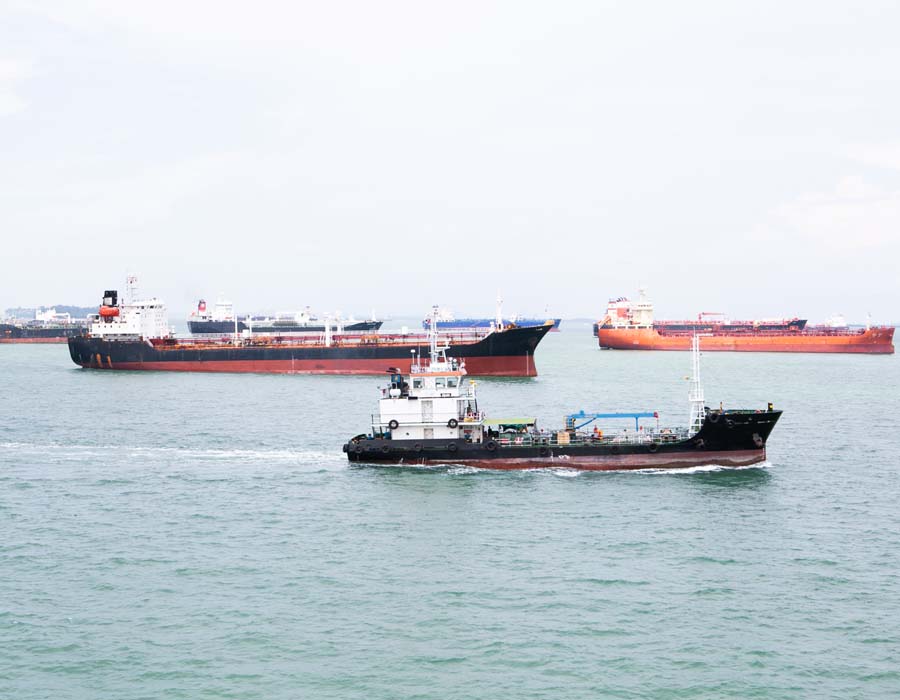
SG bunker tanker sailing

Major shipping and energy players took the stage to discuss their respective companies’ plans in the coming years at the 22nd edition of Singapore International Bunkering Conference, also known as SIBCON 2022, on Thursday (6 October). 

Bart Hellings, Director, GoodFuels, who was moderating the session Alternatives Business Case: Green Methanol, Biomethane and Biofuels asked panellists on the transition from fuel oil and LNG to green methanol, biomethane and biofuels. 

He also posed questions on availability and infrastructures for alternative bunker fuels, including business cases for the use of green fuels and how important sustainable marine fuels are to shipowners.

Questions answered by panellists included: If shipowners are willing to share with charterers the cost of more expensive lower emission fuels, and how will green methanol avails impact the route flexibility of Maersk’s future methanol-powered vessels, and more. 

A.P. Moller – Maersk

“Maersk has a goal of being carbon neutral in 2040 and we are working on three main pathways,” said Berit Hinnemann, Head of Decarbonisation Business Development and interim Head of Green Fuels Sourcing, A.P. Moller – Maersk. 

“The first is biofuels which we are already using now and is part of our green shipping product as well.

“The second is green methanol which we have 19 vessels on order; and though the solution is technically ready the challenge is still fuel supply.”

Hinnemann further explained Maersk is exploring green ammonia but did not see it being “technically ready” just yet. 

“There are efforts to focus on technical and safety aspects of this. For green methanol, we have formed green methanol partnerships and are working full speed ahead on implementing that solution,” she said.  

On 5 October, Maersk announced it has ordered a further six large ocean-going vessels that are able to sail on green methanol. The six vessels will be built by Hyundai Heavy Industries (HHI) and have a nominal capacity of approx. 17,000 TEUs to replace existing capacity of the Maersk fleet.

When asked if the availability of green methanol will impact Maersk vessel flexibility in routes, Hinnemann replied the vessels’ tank size is sufficient to provide enough fuel for a full round trip on methanol.

“This gives us some flexibility in the beginning, but in terms of infrastructure and so on it is new,” she explains.

“This, of course, means different challenges for us especially in the beginning as to how we deploy our vessels. Usually deployment is not affected by where fuel is available.

“But of course, infrastructure will be a challenge in the beginning. But again, the ability to make a full round trip gives us some options here.”

CMA CGM

Farid Trad, Vice President Bunkering and Energy Transition of CMA CGM, said although it was well understood that liquified natural gas (LNG) is a great option as a transitional fuel, the global player in sea, land, air and logistics solutions believes all fuel alternatives need to be explored. 

 “We are investing in assets in energy power and methanol, scaling up bioenergy and optimising operation and processes,” he stated.

“We believe there are huge gains in reducing the carbon intensity of our assets. Recently, we announced the launch of a special energy fund of USD 1.5 billion spanned over five years to invest in the scaling up and acceleration of CMA CGM’s energy transition.” 

While the cost of alternative fuels have been more expensive, he said the change will also bring value for stakeholders. 

“It will be an investment that will bring other investments. Investments will be the way of doing business for everybody. At the end of the journey, there will be new value created for everybody and I think this will be the conviction of everybody taking this on.”

Stena Bulk 

Peter Björkborg, Sustainability and Transformation Manager of Stena Bulk said the tanker shipping company is focusing on two main marine fuels which are biofuels and methanol in the coming years. 

“Biofuel is definitely one of the fuel options we’re looking into where we have been running a number of projects on it as we did with BP and GoodFuels as well as with other bunker suppliers. I believe it works and we should be able to get past the trial phase of biofuel by now,” he said. 

He noted the firm was not concerned on technological and operational issues of running biofuel as a bunker fuel, but more worried on the scale of biofuel production on the commercial end and establishment of quality standards for the material. 

“We have experience of using methanol going back to 2015, so we know it works and that it’s a very good fuel in many aspects,” he shared. 

“This has been a focus area for us not because we believe it’s the only option but it is the option we know best and that we believe in.”

“We also believe it has a credible pathway in the long run not only to address the SOx and NOx issues but also to seriously tackle greenhouse gas emissions. So I think the most critical part of our strategy is to be very open, agile and adaptive.” 

He recommended partnerships between marine fuel suppliers and customers to form long term commitments for risk sharing and costs on the back of building up the availability and infrastructure of alternative bunker fuels. 

Björkborg said as a shipowner, Stena was willing to share the cost of decarbonising when in charter with more expensive low emission fuel on board. 

BP 

Biofuels have remained as a main focus for major energy company BP, stated Hugh Roberts, Regional Marine Manager – EU & SA of BP, during the panel discussion.

He said biofuels will be a massive part of the firm’s portfolio in its short to mid-term plans and also shared the oil major if looking into solutions to scale up other low carbon fuels such as hydrogen and ammonia. 

“These are areas that I know a lot of large companies are looking into at the moment. But for us to get to that stage, cross sector engagement is absolutely critical,” he believed. 

He shared availability of alternative fuels such as biofuels have been challenged with significantly different mandates as seen in Europe despite massive amounts of voluntary demand for biofuels. 

Another challenge the product faces is also the production and sourcing of feedstock.

“But to diversify, it requires massive engagement across a range of parties such as manufacturers, customers, and regulators which is a highly complex task on the back of competition between different sectors,” he said. 

Concluding remarks from moderator

To conclude, moderator Hellings said: “Overall it was inspiring to hear from all participating panellists that these major shipowners and industry leaders have each individually built impressive track records when it comes to experimenting with alternative fuel options over the past few years, focusing on decarbonising their fleet.”

“Even though the fuel types they invest in differ from company to company, it was interesting to conclude that these three fuels play a big role as a transition fuel for every panellist, probably for the next decade or two.”

“Especially given that all panellists agreed that these fuels have proven their technological and operational readiness and are ready to be scaled up today already. Overall it was encouraging to zoom in to all these different decarbonisation strategies and to discuss important factors like logistics and technological readiness. We know for a fact that there is no one single solution when it comes to decarbonising global shipping, but dedicated panel discussions like these give us a glimpse into what this probable portfolio of solutions might look like.”

Related: Maersk orders further six methanol-fuelled 17,000 TEU newbuilds for delivery by 2025

Manifold Times was an official media partner of SIBCON 2022; a series of articles related to the event written by the Singapore bunkering publication are as follows:

Related: SIBCON 2022: KPI OceanConnect host Maritime Energy Transition Symposium 2022
Related: SIBCON 2022: Stolt-Nielsen’s Head of Sustainability talks on scalability of future fuels
Related: SIBCON 2022: Stakeholders discuss the future of Singapore’s bunkering landscape at session finale
Related: Singapore: MPA develops framework to support biofuel bunker fuel deliveries
Related: SIBCON 2022: SGTraDex enters MOU with six bunkering sector tech providers
Related: SIBCON 2022: S&P Global Market Intelligence and Bunkerchain in MoU
Related: SIBCON 2022: Singapore sets out to drive transformation in bunkering
Related: SIBCON 2022: Development of ISO 8217:2024 in progress; but ‘ineffective’ without industry adoption, foresees VPS
Related: SIBCON 2022 Interview: ExxonMobil to invest more than USD $15bn on GHG reduction initiatives by 2027
Related: SIBCON 2022 Interview: Eaglestar discusses challenges and possible solutions in embracing ammonia as a bunker fuel
Related: SIBCON 2022 Interview: Digitalisation in bunkering ops, can lower costs and enable decarbonisation, says StormGeo
Related: SIBCON 2022 Interview: Co-Convenors offer insights into Singapore’s upcoming Digital Bunker Document Standard
Related: SIBCON 2022 Interview: MFMs relevant for custody transfer of future liquid-based marine fuels, confirms Endress+Hauser
Related: SIBCON 2022 Interview: Clyde & Co discusses handling of bunker fuel quality disputes, alt fuels contracts
Related: SIBCON 2022 Interview: Singapore Bunkering TC Chairman shares republic’s direction on future marine fuel


Photo credit: Manifold Times
Published: 2 November, 2022

Continue Reading

Biofuel

BHP and GCMD trial multi-feedstock B100 bio bunker fuel on bulk carrier

Bio-blend in the BHP and GCMD pilot is being used on a BHP-chartered bulk carrier “Berge Lyngor”, which was bunkered in Singapore in early May.

Admin

Published

on

By

BHP and GCMD trial multi-feedstock B100 bio bunker fuel on bulk carrier

BHP and the Global Centre for Maritime Decarbonisation (GCMD) on Wednesday (3 June) said they have blended biofuels from two distinct feedstocks—used cooking oil and waste animal fats —and introduced the lower-emissions marine fuel into a BHP-chartered bulk carrier as part of a pilot project.

The bio-blend in the BHP and GCMD pilot is being used on a BHP-chartered bulk carrier Berge Lyngor, owned and operated by Berge Bulk, transporting BHP iron ore from Western Australia to China. When run on bio-blend, the vessel has the potential to reduce well-to-wake greenhouse gas emissions by approximately 79 per cent per voyage compared to sailing on very low sulphur fuel oil (VLSFO).

The vessel bunkered in Singapore in early May with a B100 bio-blend comprising 50 percent tallow-derived biodiesel, sourced and supplied by HAMR Energy, and 50 per cent used cooking oil (UCOME) supplied by Mitsui & Co Energy Trading Singapore (METS).

Mitsui also blended the fuel and Dan-Bunkering coordinated and executed the bunkering operation, which was performed by Global Energy’s barge MT Maple.

The BHP and GCMD pilot will assess how biofuels from multiple feedstocks can be blended, handled, and introduced under real-world operating conditions using existing used cooking oil bunkering infrastructure.

At the same time, insights from this pilot will help identify solutions to challenges related to fuel quality, handling, traceability, and onboard vessel performance.

Biofuels for global shipping today rely heavily on used cooking oil – a feedstock whose availability is approaching its projected limits. Biofuel from waste animal fats presents a promising option to expand the supply of lower-emissions marine fuels.

The outcomes of the pilot are expected to shed light on the practical steps to integrate biofuel blends from different feedstocks into existing supply chains. The diversity of biofuels will provide shipowners and operators with greater flexibility to optimise fuel procurement based on cost, availability, and lifecycle emissions performance.

Biofuels derived from different feedstocks can exhibit varying properties that may impact operations, including potential corrosion from oxidation, fuel system clogging caused by wax formation, which this pilot aims to assess.

The pilot will trace and verify the biofuel blend’s integrity aimed at bolstering confidence in emissions reductions reporting. The pilot will also provide insights into how robust tracing can support future marine fuel supply chains where biofuels from multiple feedstocks with varying lifecycle greenhouse gas emissions footprints are blended together.

This project is co-funded by the Maritime and Port Authority of Singapore under the Maritime Innovation and Technology Fund (MINT).


Photo credit: Global Centre for Maritime Decarbonisation
Published: 3 June, 2026

Continue Reading

Biofuel

NYK starts one-year B100 bio bunker fuel trial on car carrier

In this trial, NYK will operate a car carrier continuously on B100 for one year to evaluate the impact on engines, fuel supply systems, and operational practices.

Admin

Published

on

By

NYK starts one-year B100 bio bunker fuel trial on car carrier

Japanese shipping firm NYK on Tuesday (2 June) said it has commenced a one-year long-term trial involving the continuous use of 100% biofuel (B100) on an NYK-operated car carrier. 

In this trial, NYK will operate a car carrier continuously on B100 for one year to evaluate the impact on engines, fuel supply systems, and operational practices. High-purity biofuels such as B100 are known to be susceptible to degradation from oxygen, light, and heat, raising concerns about the stability of such fuels during long-term use.

In this trial, the biofuel primarily comprises FAME (Fatty Acid Methyl Ester) derived from used cooking oil and similar feedstocks.

The initiative is designed to evaluate the fuel’s effects on the vessel’s equipment and verify operational safety under real-world conditions. 

Through this effort, NYK seeks to accumulate technical expertise that will support the broader use of high-purity biofuels and further accelerate efforts to reduce greenhouse gas (GHG) emissions.

NYK has been advancing the use of biofuels through various initiatives. In 2024, the company conducted a trial using biofuel blend B24 and subsequently expanded practical usage to B30. However, the company said there remains limited global experience with the long-term continuous use of B100.

“By collecting long-term operational data through this trial, NYK aims to accumulate valuable technical insights to support both the safe operation of vessels and the wider adoption of high-purity biofuels,” it said. 


Photo credit: NYK
Published: 3 June, 2026

Continue Reading

Ammonia

AM Green plans to build green ammonia plant at Indian port

Initiative also includes development of green ammonia handling, storage and bunkering infrastructure, pilot bunkering operations, safety procedures and training programmes, says VOC Port Authority.

Admin

Published

on

By

india flag

VO Chidambaranar (VOC) Port Authority on Friday (29 May) said it has signed a Memorandum of Understanding (MoU) with India’s ammonia producer AM Green Ammonia to collaborate in the development of a green ammonia production plant.

The plant will have a capacity of one million tonnes per annum (MTPA) at Tuticorin.

The initiative also includes development of green ammonia handling, storage and bunkering infrastructure, pilot bunkering operations, safety procedures and training programmes. 

The project is expected to support the development of green fuel corridors connecting VOC Port with major ports in Europe and Asia, thereby strengthening India’s position in the global green fuels value chain.

VOC Port also signed a Memorandum of Understanding (MoU) with Bureau Veritas (India) Pvt. Ltd., to collaborate on Green Port certification, emissions accounting, ESG reporting, safety validation, development of green bunkering practices, and establishment of a Centre of Excellence for green fuels and sustainability.

The port also plans for an upcoming 750 m³ green methanol bunkering facility.


Photo credit: Naveed Ahmed on Unsplash
Published: 3 June, 2026

Continue Reading

Trending