Connect with us

Alternative Fuels

GCMD-led consortium to establish supply chain of green marine fuels

With 18 industry partners including BHP Singapore, this pilot will help to shape national and international standards of biofuels bunkering, amongst others.

Admin

Published

on

MT pix 25 july 2022 2 1

The Global Centre for Maritime Decarbonisation (GCMD) on Tuesday (26 July) said it is leading a consortium of 18 industry partners to launch a drop-in biofuels pilot project with a combined contribution of USD 18 million in cash and in-kind to establish an assurance framework for ensuring the supply chain integrity of current and future green marine fuels, bringing genuine benefits to end-users and the climate.

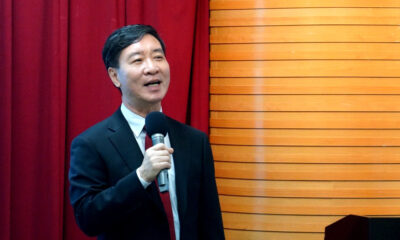
On the launch of this pilot project Professor Lynn Loo, CEO of GCMD, said: “GCMD is leading this route-based pilot to help align stakeholders in the supply chain for the adoption of biofuels. By facilitating and creating an optimised drop-in green fuels supply chain, this pilot will help to shape national and international standards of biofuels bunkering and lower the barrier for their wider adoption to reduce greenhouse gas (GHG) emissions from a lifecycle perspective. In curating and executing this first-of-its-kind drop-in biofuels pilot, GCMD is positioned to address stakeholder pain points in the complexities of the supply chain of green marine fuels in a meaningful way.”

Addressing the gap for the maritime industry

To meet the International Maritime Organisation’s (IMO) 2030 and 2050 decarbonisation targets, shipowners as well as cargo owners and charterers are exploring the purchase and use of green bunker fuels. Biofuels can be a near-term measure to reduce GHG emissions as they are available today, and they can be deployed in the same way as marine fuels with minimal changes to the existing distribution infrastructure, shipboard technologies, and operational norms of ships. However, there is no industry-wide assurance framework that addresses concerns on the quantity, quality and GHG emissions abatement of biofuels, nor one that safeguards their premium and value. 

To address this gap, the GCMD-led pilot aims to establish an assurance framework that ensures supply chain transparency of drop-in biofuels, whose applicability can be extended to future drop-in fuels, such as bio-LNG, biomethanol and green ammonia, when they become available in meaningful quantities.

Recent IMO decisions to eliminate the need to apply for waivers for using fuel blends with up to 30% biofuels (B30) for propulsion, and to allow the use of B30 in accordance with MARPOL Annex VI, have lowered regulatory hurdles for adopting biofuels. To this end, the assurance framework that will be the outcome of this pilot will increase stakeholder confidence in the full value of the premium paid for such green fuels, and further lower the barrier to wider adoption of biofuels in the maritime industry by addressing concerns on the integrity of the biofuels supply chain.

The vessels in this pilot are all equipped with MAN ES’s two-stroke engines. In response to participating in this pilot, Bjarne Foldager, Senior Vice President and head of Two Stroke Business, said: “This is a very important initiative by GCMD, and we are honoured to contribute. At MAN Energy Solutions we believe several solutions are required to decarbonise shipping, however all solutions needs to be verified and their scalability tested. This is best done in partnerships aligning the various actors in projects like this where we can share knowledge and build transition strategies together.”

Supporting the green corridors framework

GCMD is undertaking a bottom-up approach by convening like-minded partners across the maritime industry to participate in this pilot. Altogether, the ship owners, charterers and operators participating in this pilot project represent approximately 2,300 vessels across the container, tanker and bulker segments, and are responsible for transporting 8.4 million TEUs or 80.6 million DWT globally. With 12 vessels bunkering at three ports across three continents, the learnings from these route-based pilots will support the green corridors framework that was put forth by the Clydebank Declaration at COP26 in October 2021, of which 24 states are signatories including Singapore, the Netherlands and the US where bunkering ports for this pilot project reside.

Targeting the complex supply chain of green fuels

A first-of-its-kind in extent and complexity, the pilot aims to optimise the entire supply chain of bunker fuels by building on the learnings of past shipboard trials involving biofuels. Designed through the lens of the shipowner, piloting will start with fuel blends involving existing biofuels, such as hydrotreated vegetable oil (HVO) and fatty acid methyl esters (FAME) blended with either very low sulphur fuel oil (VLSFO), high-sulphur fuel oil (HSFO) or marine gas oil (MGO) in blends up to 30% biofuels (B30).

“There are so many good elements in this pilot,” said Unni Einemo, Director of the International Bunker Industry Association (IBIA)

“A variety of biofuels and biofuel blends have already been successfully tested, but this comprehensive pilot can help address remaining uncertainties about how these fuels work in practice by getting extensive enduser operational experiences with products involving FAME and HVO, and hopefully also crude algae oil.”

Using BunkerTrace’s digital and synthetic DNA tracing products to track marine fuels from production to vessel propulsion, the pilot will validate the authenticity of sustainable biofuels through molecular verification tests conducted on fuel samples that are collected at numerous identified points along the supply chain. Hence, the pilot will address traceability of drop-in biofuels from production, distribution, transportation, storage, and bunkering to shipboard application, providing end-to-end supply chain transparency.

Einemo continued: “The tracing element in this pilot is also really exciting. Biofuels have the potential to help the existing fleet meet IMO’s GHG reduction targets by taking lifecycle emissions into account, but one of the challenges will be certification of product origin as the sustainability of biofuels can vary significantly depending on production pathways. Biofuels can be blends coming from feedstock with different sustainability profiles, so it will be interesting to see if the DNA tracing will show mainly single-source origin products or biofuels of multiple origins. This could give us some really useful insights into the complexities of documenting the full supply chain of fuels, which will become increasingly important.”

Testing laboratories will play a crucial role in evaluating the biofuels and biofuel blends. Strategically located in Singapore, the world’s largest bunkering hub and second largest container port, GCMD also participates in the work of the Singapore Standards Council’s Chemical Standards Committee (CSC) in developing national standards for the bunkering industry. 

On this GCMD pilot, Capt. Rahul Choudhuri, Chairman of the CSC’s Technical Committee for Bunkering (Ambient Liquid Fuels), said: “GCMD’s project scope involves a detailed quality assessment of biofuels, including ascertaining their shelf life and long-term stability. As such, the involvement of global laboratory services companies in this project will provide such information that will strengthen the efforts of the Technical Committee’s Working Group on Marine Fuel Specifications and contribute to developing acceptable industry standards and practices for the use of biofuels in Singapore and eventually elsewhere.”

Adding to the pilot’s complexity is coordinating the sailing schedules of participating vessels. The aggregation of demand for biofuels at ports will result in cost savings for shipowners and fuel purchases through optimised use of land-side storage facilities and bunkering vessels and facilitate assessments of GHG emissions abatement on a well-to-wake basis of individual vessels and across fleets. Furthermore, testing these fuel blends across the container, tanker and bulker segments travelling on fixed and tramp routes and bunkering at the ports of Singapore, Rotterdam, and Houston under business-as-usual conditions will demonstrate the compatibility and stability of these biofuels in actual operating environments, thereby strengthening the overall robustness of the assurance framework.

Calling for crude algae oil supply

In an effort to further accelerate biofuels adoption as a near-term measure to reduce GHG emissions, GCMD will be leveraging this project to be the first in trialling and assessing the use of crude algae oil (CAO) as a marine fuel. CAO is a third-generation biofuel that promises substantially reduced carbon footprint, but unlike HVO and FAME, its utility has not been tested nor its supply chain established. For this part of the pilot, GCMD has assembled fuel purchasers who are committed to trialling CAO, and is inviting CAO producers with existing commercial production capacities to participate by reaching out to [email protected] by 22 August. GCMD will link up CAO fuel producers with pre-identified fuel suppliers to test and provide CAO for this pilot on a commercial basis.

In the run-up to the launch of this pilot project, GCMD is finalising the agreement details with the 18 project partners. The pilot will commence on 1 August 2022, and is expected to take 12 to 18 months to complete. 

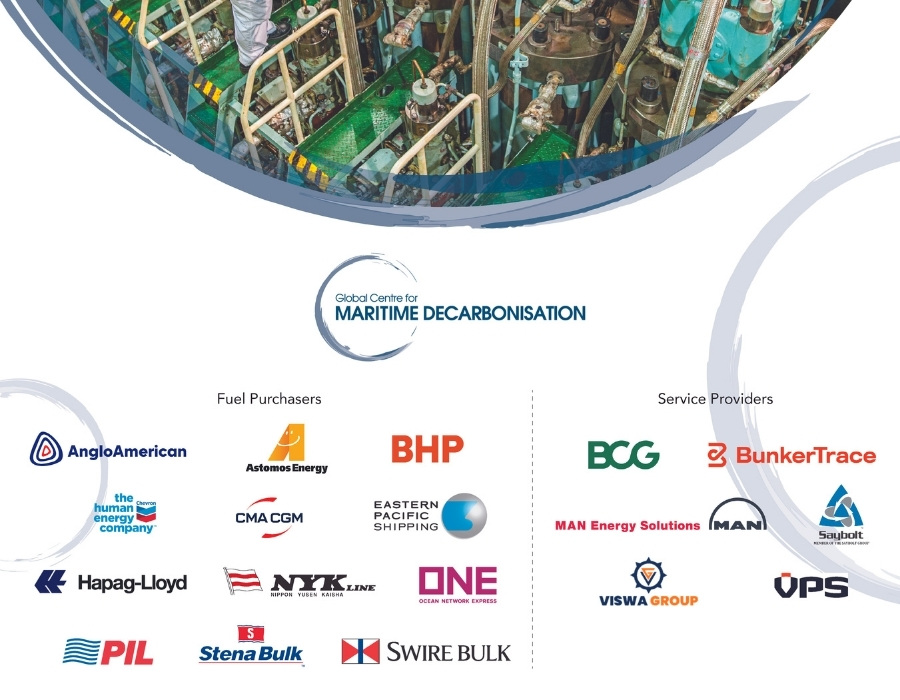
GCMD industry partners for this project are:

  • Anglo American
  • Astomos Energy Corporation
  • Boston Consulting Group
  • BHP Singapore Pte Limited
  • BunkerTrace Limited
  • Chevron Corporation
  • CMA CGM S.A.
  • Eastern Pacific Shipping Pte. Ltd.
  • Hapag-Lloyd AG
  • MAN Energy Solutions SE
  • Nippon Yusen Kabushiki Kaisha
  • Ocean Network Express Pte. Ltd.
  • Pacific International Lines (Pte) Ltd.
  • Saybolt (Singapore) Pte Ltd
  • Stena Bulk AB
  • Swire Bulk Pte. Ltd.
  • VG (Viswa Group)
  • VPS


Photo credit: Global Centre for Maritime Decarbonisation
Published: 26 July, 2022

Continue Reading

Alternative Fuels

MPA and MSC ink MoU to support adoption of alternative bunker fuels

MPA and MSC will explore new routes and services to strengthen connectivity, support the adoption of alternative marine fuels such as bio-LNG, and advance technologies to improve vessel energy efficiency.

Admin

Published

on

By

MPA and MSC ink MoU to support adoption of alternative bunker fuels

The Maritime and Port Authority of Singapore (MPA) on Wednesday (3 June) said it signed a Memorandum of Understanding (MoU) with MSC Mediterranean Shipping Company to strengthen collaboration in maritime decarbonisation, digitalisation, innovation, and manpower development. 

The MoU was signed on 25 May 2026 by Mr Ang Wee Keong, Chief Executive of MPA, and Mr Soren Toft, Chief Executive Officer of MSC.

The MoU underscores the shared commitment of MPA and MSC to foster a sustainable, digital, and future-ready maritime sector, while enhancing MSC’s operational and business activities in Singapore. This year also marks the 30th anniversary of MSC establishing its Asia Regional Office and local office in Singapore.

Under the MoU, MPA and MSC will explore new routes and services to strengthen connectivity, support the adoption of alternative marine fuels such as bio-LNG, and advance technologies to improve vessel energy efficiency and operational performance.

MPA and MSC will also collaborate on maritime digitalisation initiatives to improve operational efficiency, including streamlining vessel arrivals and port operations. 

On manpower development, MSC will support internship and scholarship opportunities through Singapore Maritime Foundation’s Maritime Outreach Network (MaritimeONE) platform, an industry-led tripartite partnership comprising industry, government and institutes of higher learning that aims to raise awareness of the maritime industry and attract quality talent into the maritime sector.

Mr Ang Wee Keong, Chief Executive of MPA, said: “This partnership reflects the strong collaboration between MPA and MSC in driving sustainability and digitalisation in the maritime sector. By working together on decarbonisation, operational efficiency and talent development, we aim to strengthen Maritime Singapore’s position as a trusted and future-ready global maritime hub.”

Mr Soren Toft, Chief Executive Officer of MSC, said: “Singapore is a strategically important hub for MSC and a key gateway to the broader Asia region. As we mark 30 years in Singapore, this MOU reinforces our long-term commitment to strengthening our presence here. MSC and Singapore are closely aligned on the priorities shaping the future of global shipping, and we look forward to deepening this partnership to drive the continued growth and resilience of the maritime industry.”


Photo credit: Maritime and Port Authority of Singapore
Published: 4 June, 2026

Continue Reading

Methanol

Seaspan and Hapag-Lloyd complete first of five methanol vessel retrofit

Following “Seaspan Yangtze”, the remaining vessels planned for retrofit under the methanol retrofit programme are “Seaspan Amazon”, “Seaspan Ganges”, “Seaspan Thames”, and “Seaspan Zambezi”.

Admin

Published

on

By

Seaspan and Hapag-Lloyd complete first of five methanol vessel retrofit

Seaspan Corporation (Seaspan) and Hapag-Lloyd on Wednesday (3 June) announced the successful completion of the first of the five vessel conversions under their methanol retrofit programme with the delivery of Seaspan Yangtze.

From the early SAVER (Seaspan Action for Vessel Energy Reduction) programme to today’s CleanBlue initiative, Seaspan has committed over USD 230 USD million across 86 vessels, executing more than 550 efficiency and retrofit projects.

Following Seaspan Yangtze, the remaining vessels planned for retrofit under the programme are Seaspan Amazon, Seaspan Ganges, Seaspan Thames, and Seaspan Zambezi. Each retrofit is expected to reduce well-to-wake CO₂e emissions by approximately 30,000 to 50,000 metric tonnes per vessel annually when operating on low-carbon methanol, while also extending vessel lifespan and enhancing fuel flexibility.

“Decarbonisation is not just about building the fleet of tomorrow, it is also about unlocking the full potential of the fleet we have today. Retrofitting and upgrades on existing fleets play a practical, immediate, and economical role in accelerating shipping’s decarbonization journey,” said Bing Chen, Chairman, President and CEO of Seaspan. 

“Project SAVER CleanBlue highlights Seaspan’s strong customer partnerships, deep technical expertise, and unique platform integrated with JV partners, such as WattSpan Maritime Technology, in executing complex and large-scale retrofit projects.”

“The successful conversion of the Seaspan Yangtze together with the planned retrofit of its four sister vessels is another important step on our ambitious path towards net-zero fleet operations by 2045,” said Silke Lehmköster, Managing Director, Fleet, Hapag-Lloyd. 

“Together with Seaspan, we are demonstrating that retrofitting existing vessels for low-carbon methanol can be a practical way to reduce emissions in shipping.”


Photo credit: Seaspan
Published: 4 June, 2026

Continue Reading

Nuclear

South Korean-led nuclear car carrier design secures LR backing

LR is working with HHI, KSOE, Hyundai Glovis, G- Marine Service and KAERI on a joint development project exploring an advanced small modular reactor (SMR) installation on a PCTC.

Admin

Published

on

By

South Korean-led nuclear car carrier design secures LR backing

Classification society Lloyd’s Register (LR) on Tuesday (2 June) said it has teamed up with South Korean shipbuilding, marine services and nuclear research organisations to advance the development of a nuclear‑assisted car carrier concept. 

LR is working with Hyundai Heavy Industries, Korea Shipbuilding & Offshore Engineering (KSOE), Hyundai Glovis, G- Marine Service and the Korea Atomic Energy Research Institute (KAERI) on a joint development project (JDP) exploring an advanced small modular reactor (SMR) installation on a pure car and truck carrier (PCTC). 

The study focused on how a Molten Salt Reactor (MSR) could be physically and operationally integrated into a large vehicle carrier. Work examined the internal arrangement and segregation of the reactor system, shielding requirements, and the impact on cargo deck layout and vehicle capacity, alongside stability and trim implications linked to the reactor’s weight and positioning. 

The partners also assessed propulsion system configuration and power delivery, as well as operational flexibility compared with conventionally fuelled PCTCs, where trade routes and port calls can be tightly constrained. 

A key focus of the project has been safety. LR led hazard identification (HAZID) and preliminary risk assessment work, focusing on containment, onboard safety systems and potential operability constraints tied to nuclear technology at sea. 

The partners will mark the project milestone with an Approval in Principle (AiP) granting ceremony on 2 June at the LR stand during Posidonia 2026. 

Sung-Gu Park, President – North East Asia, Lloyd’s Register, said: “While nuclear propulsion is still at an early stage of development, this project shows the importance of building technical understanding now to support future progress. 

“Establishing feasibility at concept stage is a valuable step forward, particularly in areas such as cargo optimisation, vessel stability and integrated safety design.” 

Hong-Ryeul Ryu, CTO and Senior Executive Vice President at HD HHI, said: “With global environmental regulations becoming increasingly stringent and no definitive net-zero fuel yet available, SMR-powered ships can serve as a highly effective alternative, representing a pioneering next-generation maritime technology capable of complying with GHG emission regulations while allowing lifetime operation without refuelling, and HD HHI will remain at the forefront of sustainable maritime technology development.”


Photo credit: Lloyd’s Register
Published: 4 June, 2026

Continue Reading

Trending