Connect with us

Business

Lloyd’s Register: Why organic chlorides are fuelling shipping concerns

Robust bunker checks are essential as compounds can lead to a myriad of operational challenges, as well as engine damage, writes FOBAS spokesperson.

Admin

Published

on

post 51936

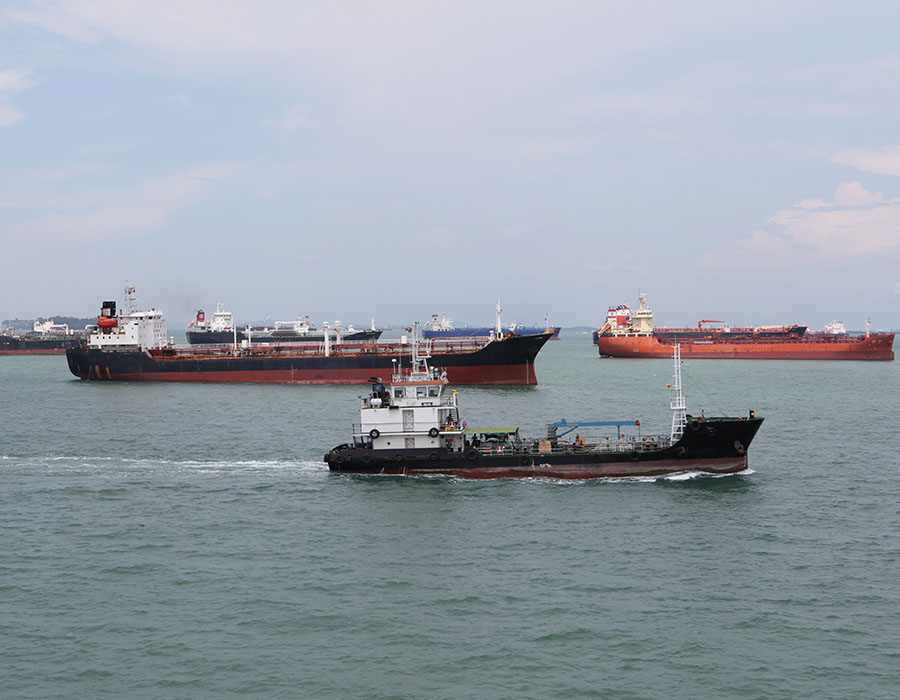
Classification society Lloyd’s Register on Monday (25 April) published an update written by Naeem Javaid, Global Operations Manager – Fuel Oil Bunker Advisory Services (FOBAS), Maritime Performance Services, regarding recent bunker fuel contamination cases at Singapore port.

The recent organic chloride incident in Singapore, where the external contamination of marine fuel oil rendered the fuel unacceptable for use, is a cause for concern to ship operators and the industry as a whole.

Several cases of organic chloride contamination have been reported by ships bunkering High Sulphur Fuel Oil (HSFO) from Singapore in February. They have led to various operational problems onboard such as sludging at purifiers, blocked filters, corrosive wear of fuel pumps and injectors and other damage to fuel oil system components.

To contextualise the problem, marine fuels are bought and sold mostly under the international fuel standard ISO 8217. This sets a number of descriptive parameters, such as maximum limits on viscosity, density, water and catalytic fines content, but doesn’t include descriptions of all the possible impurities or contamination that might cause an adverse reaction to the ship’s machinery plant and thus should not be in the fuel.

These are covered under Clause 5 of ISO 8217, which goes on to say that “fuel should be free from any material that renders the fuel unacceptable for use and… If damage has shown to be the case, then the fuel has failed to meet the ISO 8217 in its entirety.”

Furthermore MARPOL Annex VI clearly states that fuel should not contain any added substance or chemical waste that jeopardises the safety of the ship, adversely affects performance of machinery or harmful to personnel or environment.

It is also important to remember that residual marine fuels are not one of the refined products from the petroleum refining process. The residual fuels supplied to the ship are a blend of residual fuel and other feedstocks from the main refinery products that are then formulated to meet the requirements of ISO 8217 for use on ships. This gives enough flexibility to marine fuel oil suppliers to produce fuels for the marine market but this flexibility can result in a lack of bunker fuel oil quality management control in the supply chain, leading to an increased risk of unacceptable blend products being used for the formulation of these fuels, such as in this case of the organic chlorides found in HSFO bunkers.

Organic chlorides – compounds containing carbon and chloride bonds – don’t naturally occur in crude oils and are typically the result of additives used in oil recovery as a detergent. These have different boiling points and under temperature and pressure conditions, organic chlorides can decompose to hydrochloric acid, specifically in the presence of water, leading to the corrosion and damage of the fuel system equipment. Some organic chlorides have the property to harden the metallic surfaces making surfaces prone to erosion, possibly due to lower boiling points of these volatile organic compounds, they could vaporize off within a fuel service system and remove the lubrication on metallic surfaces, causing scuffing and cavitation, leading to reduce engine performance and, in the worst case, total loss of power.

This is an important cause for concern, because an uninterrupted supply to engine and functional fuel injection equipment are vital for keeping a ship running. Any damage can compromise the safe navigation of the vessel, putting the ship’s cargo and personnel onboard at much higher risk. Furthermore, in some recent incidents, vessels have experienced a complete loss of power because of a failure of all fuel injection systems onboard ship caused by these chlorides.

What is LR doing about the problem?

On the face of it, recent contaminated fuels comply with the initial suite of ISO 8217 table 1 or 2 tests prescriptive limits. However, based on the operational feedback from ships, the fuel would seem not to have met the ISO 8217 requirements in their entirety under Clause 5.

What we’ve done at FOBAS is to adopt more detailed testing using GC/MS (Gas Chromatography/Mass Spectrometry) analysis to identify different types of organic chlorides present. Ships can then be alerted not to use these fuels.

Secondly, using initial prescriptive analysis, LR has identified some properties that are specific to these contaminated bunkers – based on which LR identified vessels bunkered with the same fuel – and we have alerted them not to use same fuels.

Thirdly, LR is working with industry stakeholders, such as ISO and CIMAC, to accelerate the process of getting these specific organic chlorides included into the more-detailed standardised test of ASTM D7845, so they are universally accepted to make tests and results acceptable for all parties.

We’ve also raised awareness among clients about the legal and contractual obligations that work in their favour – such as ISO 8217 Clause 5, Revised MARPOL Annex VI Regulation 18.3 – which gives suitable protection to the end users against the presence of these contaminations in fuel.

Finally, we’re liaising with fuel suppliers and port states, and are participating in industry forums to stress the need to have a robust bunker quality management system throughout the marine fuels value chain. Robust control on the bunker quality and acceptable criteria for blend components will help increase user confidence and payback to the fuel supply business in the long run.


Photo credit: Manifold Times
Published: 26 April, 2022

Continue Reading

Legal

Singapore withdraws remaining 127 charges against Hin Leong founder OK Lim

Lim Oon Kuin, also known as OK Lim, was issued a stern warning and a district court granted him a discharge amounting to an acquittal for these charges on 17 July.

Admin

Published

on

By

RESIZED Sora Shimazaki on Pexels

Founder of collapsed oil trader Hin Leong Trading, Lim Oon Kuin, also known as OK Lim, has had the remaining 127 charges against him withdrawn, according to The Straits Times on Monday (20 July). 

OK Lim was issued a stern warning and a district court granted him a discharge amounting to an acquittal for these charges, including those for cheating, on 17 July. The discharge means Lim cannot be prosecuted again for the same offences.

Lim, 84, is currently serving a 13½-year prison sentence after the High Court reduced his original 17½-year jail term in March 2026. He was convicted in 2024 on two cheating charges and one count of abetting forgery in a case prosecutors described as one of Singapore’s most serious trade finance frauds.

Lim was convicted in May 2024 of two charges of cheating the Hongkong and Shanghai Banking Corporation (HSBC) and one count of abetting forgery that proceeded to trial out of a total of 130 criminal charges.

He was first charged in court on 14 August 2020, and was subsequently handed further charges in court on 25 September 2020, 30 April 2021 and 24 June 2021 for his role in perpetuating fraud on various financial institutions. 

A total of 130 charges were eventually brought against him for cheating and forgery-related offences.

Related: Singapore: Hin Leong Founder OK Lim gets jail term slashed to 13.5 years


Photo credit: Sora Shimazaki
Published: 21 July, 2026

Continue Reading

Winding up

Singapore: Coastal Logistics Pte Ltd to be wound up voluntarily

Coastal Logistics was reportedly affiliated with troubled Singapore bunker player Coastal Oil (Singapore) Pte Ltd.

Admin

Published

on

By

RESIZED Drew Beamer

Several resolutions for Coastal Logistics Pte Ltd were made during an extraordinary general meeting held on 14 July, according to a notice in the Government Gazette on Friday (4 July).

The following resolutions were duly passed during the meeting:

As Special Resolution

  • That it has been proved to the satisfaction of the meeting that the Company cannot by reason of its liabilities continue its business and accordingly the Company be wound up voluntarily pursuant to Section 160(1)(b) of the Insolvency, Restructuring and Dissolution Act 2018 (No. 40 of 2018);

As Ordinary Resolutions

  • that Mr. Wong Pheng Cheong Martin and Ms. Koay May Yee, both care of FTI Consulting (Singapore) Pte Ltd, One Raffles Quay, #27-10 South Tower, Singapore 048583 be appointed as the joint and several Liquidators of the Company for the purpose of such winding up; and
  • that the Liquidators be at liberty to open, maintain and operate any bank account(s) or account(s) for monies received by them as Liquidators with such bank(s) as they deem fit; and
  • that a Committee of Inspection will not be formed.

Manifold Times previously reported Nicholas James Gronow, director of Heng Tong Fuels & Shipping and Coastal Logistics, filed statutory declarations for both companies stating the firms cannot continue their businesses due to liabilities.

Both companies were reportedly affiliated with troubled Singapore bunker player Coastal Oil (Singapore) Pte Ltd. 

In 2019, several vessels owned by both firms entered the sale & purchase (S&P) market in Singapore.

Related: Singapore: Director declares Heng Tong Fuels & Shipping’s inability to continue business
Related: Heng Tong Fuels & Shipping in court over DBS Bank bunker tanker loan
Related: Singapore: Bunker tanker “Coastal Neptune” arrested
Related: Heng Tong Fuels & Shipping, Coastal Logistics tankers enter S&P market


Photo credit: Drew Beamer
Published: 21 July, 2026

Continue Reading

LNG Bunkering

PIL’s LNG dual-fuel boxship “Kota Elok” arrives in Singapore on maiden call

As the first of 13 new 13,000 TEU vessels joining its fleet, Kota Elok is equipped to operate on LNG and low-sulphur fuel oil that helps reduce our greenhouse gas emissions.

Admin

Published

on

By

PIL's LNG dual-fuel boxship “Kota Elok” arrives in Singapore on maiden call

Singapore-based Pacific International Lines Pte Ltd on Monday (20 July) said its first 13,000 TEU LNG dual-fuel container vessel, Kota Elok, recently made her maiden call to Singapore on 15 July.

As the first of 13 new 13,000 TEU vessels joining its fleet, Kota Elok is equipped to operate on liquefied natural gas (LNG) and low-sulphur fuel oil that helps reduce our greenhouse gas emissions. 

The vessel also incorporated energy-saving features and digital technologies to reduce fuel consumption and enhance operational performance, as well as a bow windshield to improve aerodynamics, contributing to improved fuel efficiency and lower emissions over the course of long-haul voyages.

“Following Singapore, Kota Elok will continue her voyage on our East Coast Service 1 (ES1) route to South America, calling at ports in Brazil, Uruguay, and Argentina before returning to Asia,” the company said in a social media post. 

Kota Elok also became PIL’s first vessel to receive Lloyd’s Register certification for compliance with the IACS UR E26 and UR E27 cyber security requirements.

Developed by the International Association of Classification Societies (IACS), UR E26 and UR E27 are mandatory cyber resilience requirements for newbuild vessels contracted from 1 July 2024. 


Photo credit: Pacific International Lines
Published: 21 July, 2026

Continue Reading

Trending