
Environment
Japan’s first LNG-fuelled ferry “Sunflower Kurenai” undergoes naming ceremony
Vessel slated to enter service on Osaka-Beppu route operated by Ferry Sunflower Co., Ltd. from January 2023, according to Mitsui O.S.K. Lines.

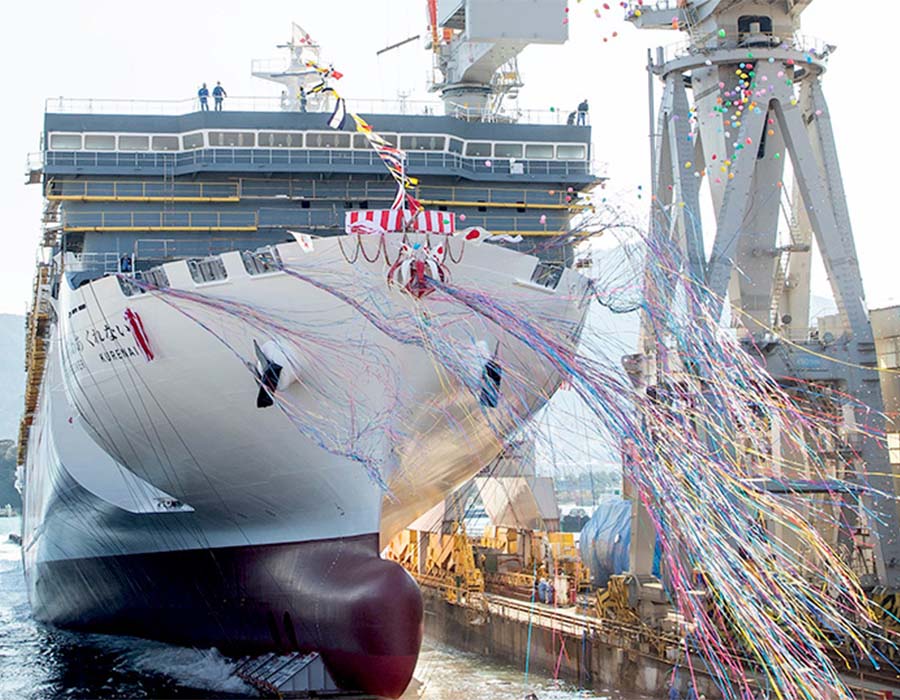
A naming and launching ceremony for Sunflower Kurenai, the first of Japan’s first two LNG-fuelled ferries, was held at the Mitsubishi Heavy Industries, Ltd. Shimonoseki Shipyard & Machinery Works Enoura Plant on Thursday (3 March), according to Mitsui O.S.K. Lines.
The vessel is slated to enter service on the Osaka-Beppu route, operated by Ferry Sunflower Co., Ltd. as an alternative of the vessel currently in service in January 2023, after it is delivered from Mitsubishi Shipbuilding.
It will be Japan’s first ferry, adopting environmental-friendly specifications as it is equipped with high-performance dual-fuel engine, which can run on both liquefied natural gas (LNG) and heavy fuel oil.
Mitsui O.S.K. Lines announced plans to construct the first two LNG-fuelled ferries in Japan, the Sunflower Kurenai and the Sunflower Murasaki in November 2019.
The vessels, which use technology from Wärtsilä, have earned the top rating of five stars from the Japanese Ministry of Land, Infrastructure, Transport and Tourism’s energy conservation rating system for coastal ships.
Around 50 tons of LNG fuel per day will be supplied via truck-to-ship to these ferries berthed in Beppu Port (the northside wharf at the third pier) in Oita Prefecture under a bunkering contract.

Related: Mitsui O.S.K. Lines concludes first transition loan contract for two LNG-fuelled ferries
Related: MOL & Kyushu Electric enter LNG bunker fuel supply agreement for Ferry Sunflower Ltd
Related: Three MOL LNG-fuelled ships rated five stars from Japan ministry for vessel performance
Related: Wärtsilä technology solutions conscripted for Japan’s first LNG powered ferries
Related: Mitsui O.S.K. Lines to order Japan’s first two domestic LNG-fuelled ferries
Photo credit: Mitsui O.S.K. Lines
Published: 4 March, 2022
Methanol
GENA Solutions: Total renewable and low-carbon methanol project pipeline increases from 61.8 to 62.2 Mt by 2032
Information shared by MI – the Global Methanol Alliance meant to assist the maritime industry in the adoption of methanol as a mainstream marine fuel heading into IMO 2030/2050.
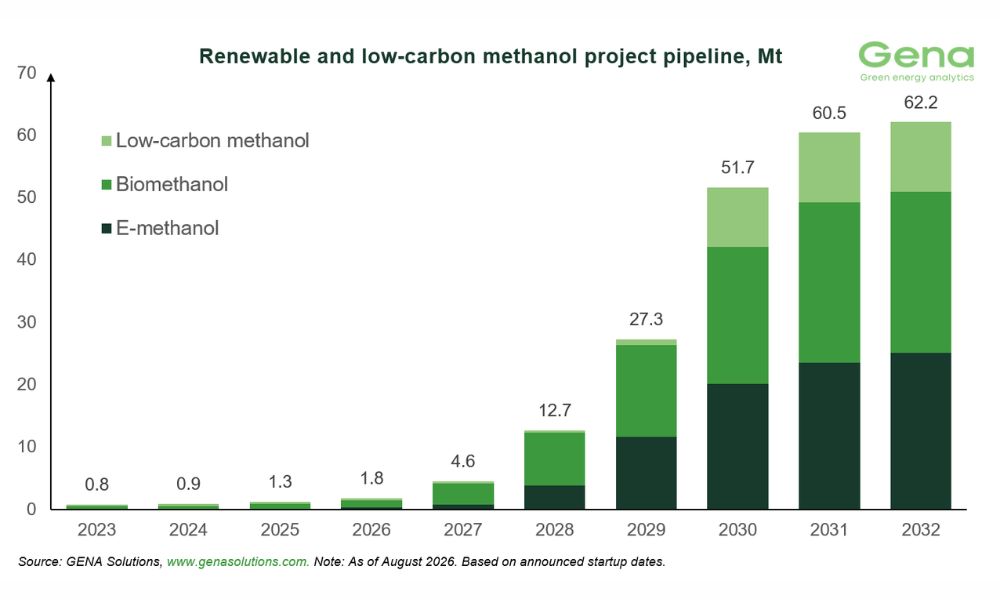
MI – the Global Methanol Alliance recently shared with Manifold Times the renewable and low-carbon methanol project pipeline August 2026 release produced by GENA Solutions Oy.
Information from the release is meant to provide the bunkering publication’s readers with insight on renewable methanol availability, and to assist the maritime industry in the adoption of methanol as a mainstream marine fuel heading into IMO 2030/2050.
Key takeaways from GENA’s August 2026 Methanol release are as follows:
- As of the end of August 2026, GENA tracks 286 renewable and low carbon methanol projects, representing 62.2 Mt of capacity by 2032. This includes 25.1 Mt of e-methanol, 25.9 Mt of biomethanol, and 11.2 Mt of low carbon methanol capacity.
- Two new projects were added to Project Navigator last month, while one frozen project was excluded. The project pipeline increased by 0.4 Mt month on month.
- Four new offtake agreements were registered during August, including two biomethanol and two e-methanol agreements.
- About 8% of the cumulative renewable methanol project pipeline capacity has reached FID so far, with another 11% at the FEED stage.
- Considering the current uncertainty around regulatory developments and demand growth, GENA projects that renewable methanol capacity could reach 6 Mt to 12 Mt by 2031.
Note: The full article can be viewed here.
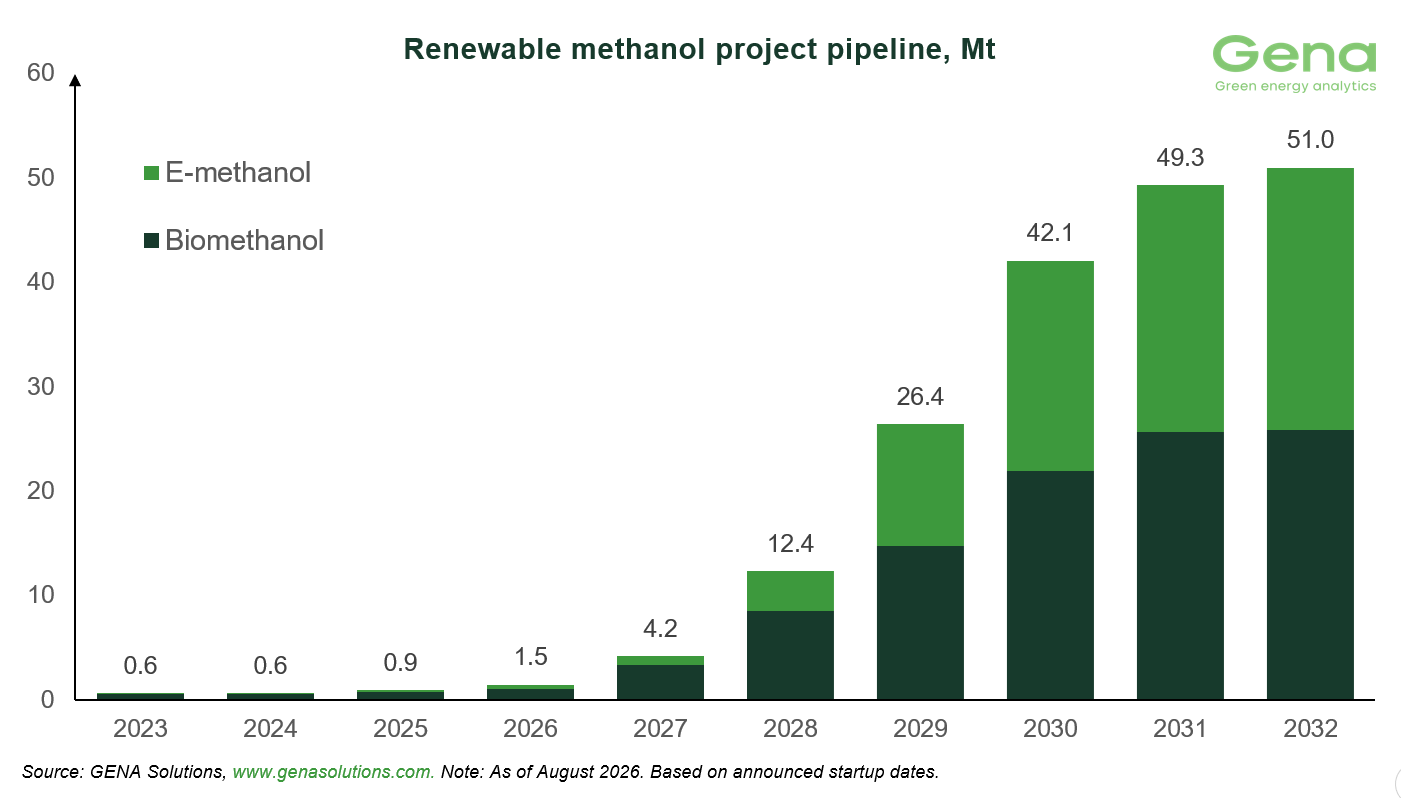
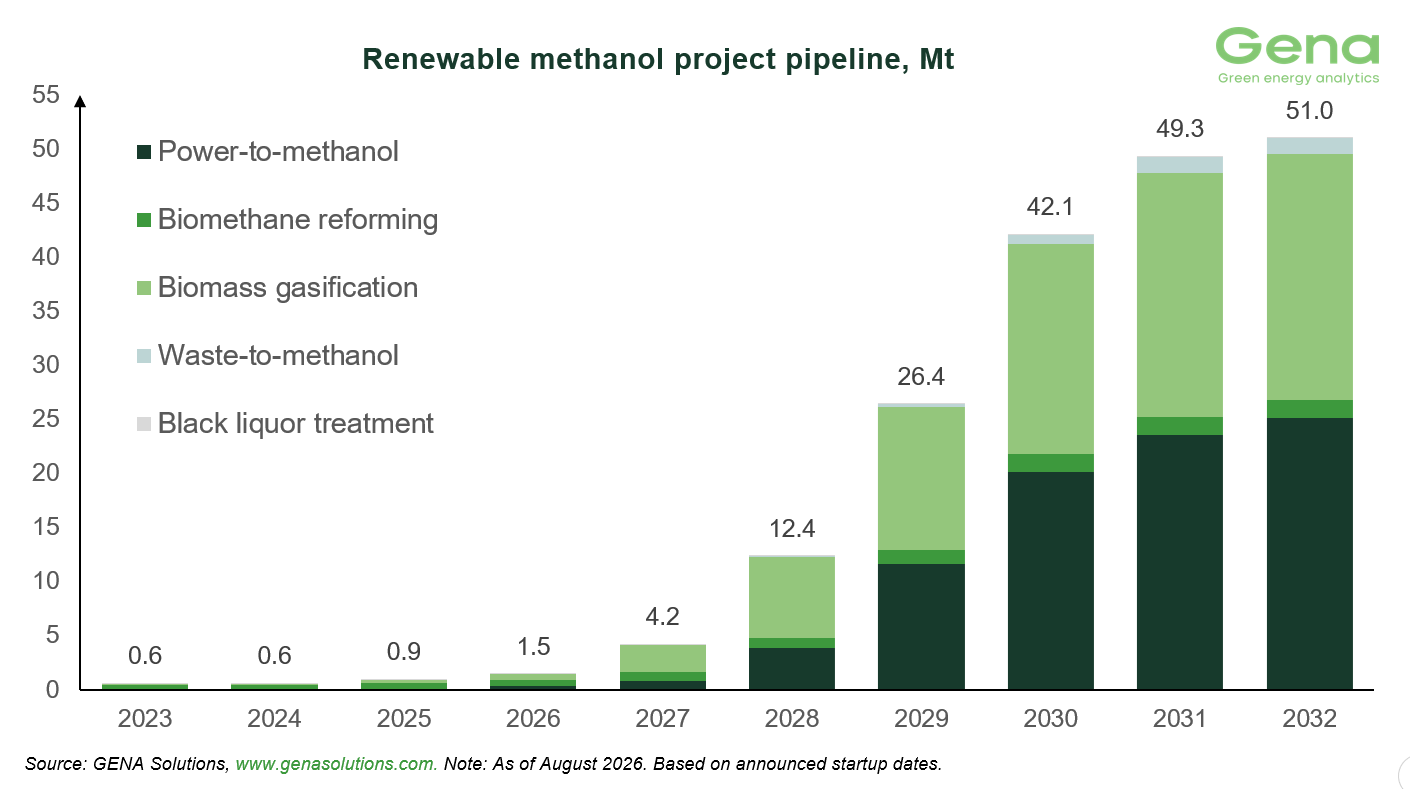
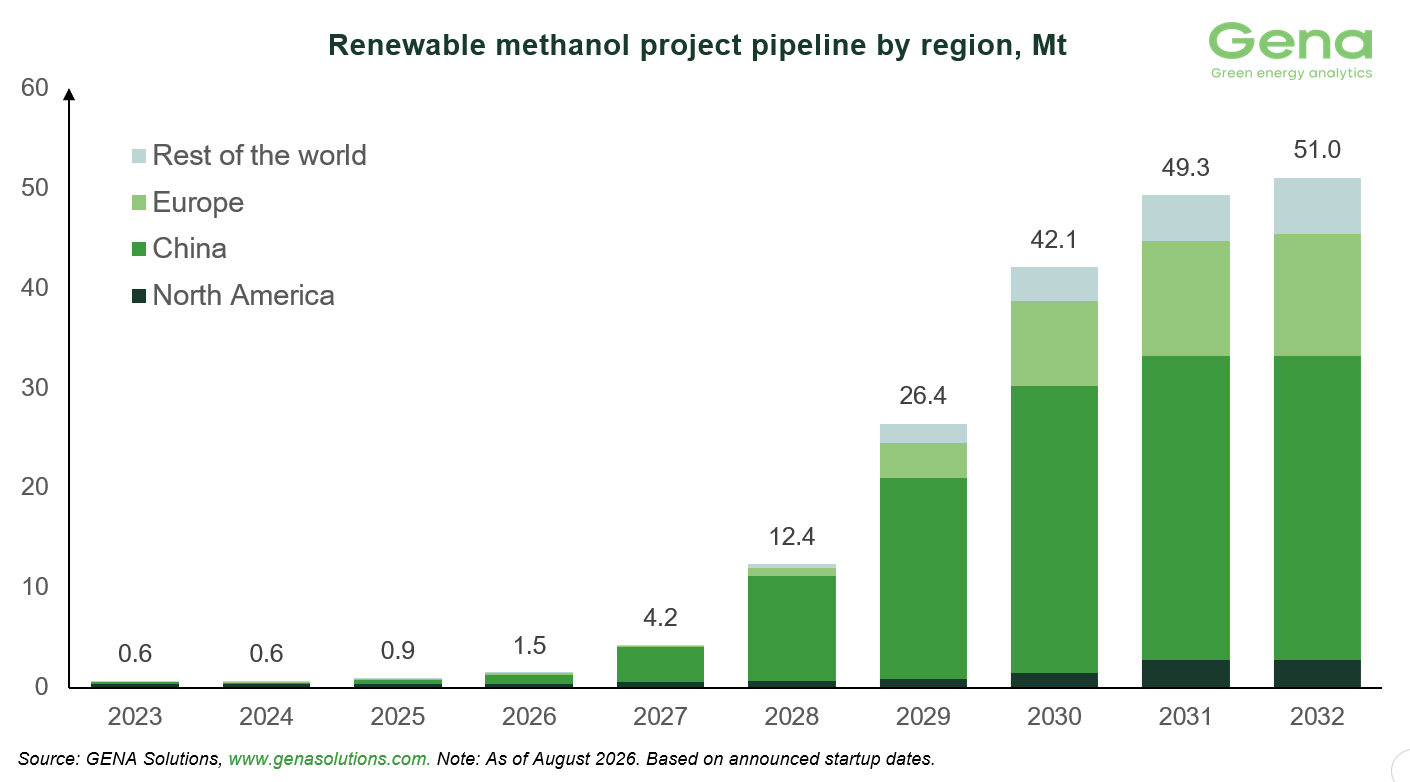
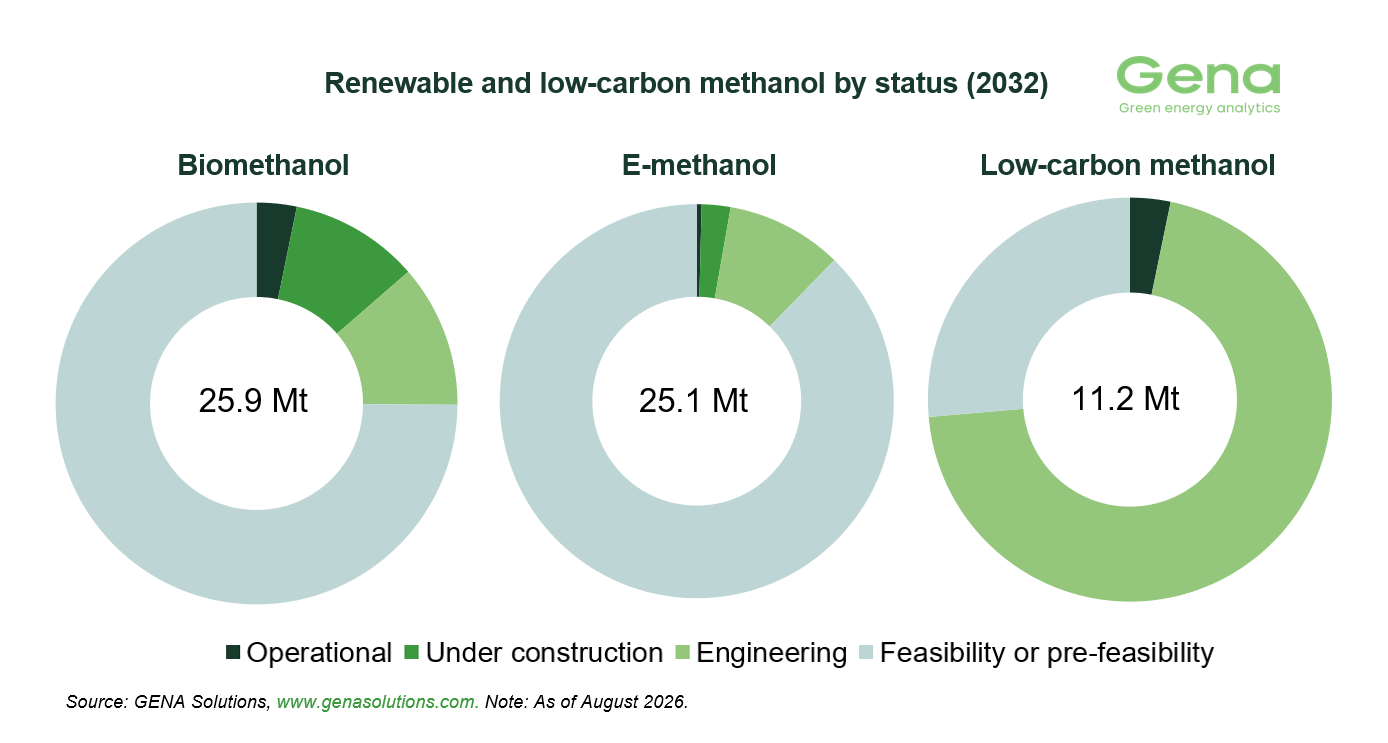
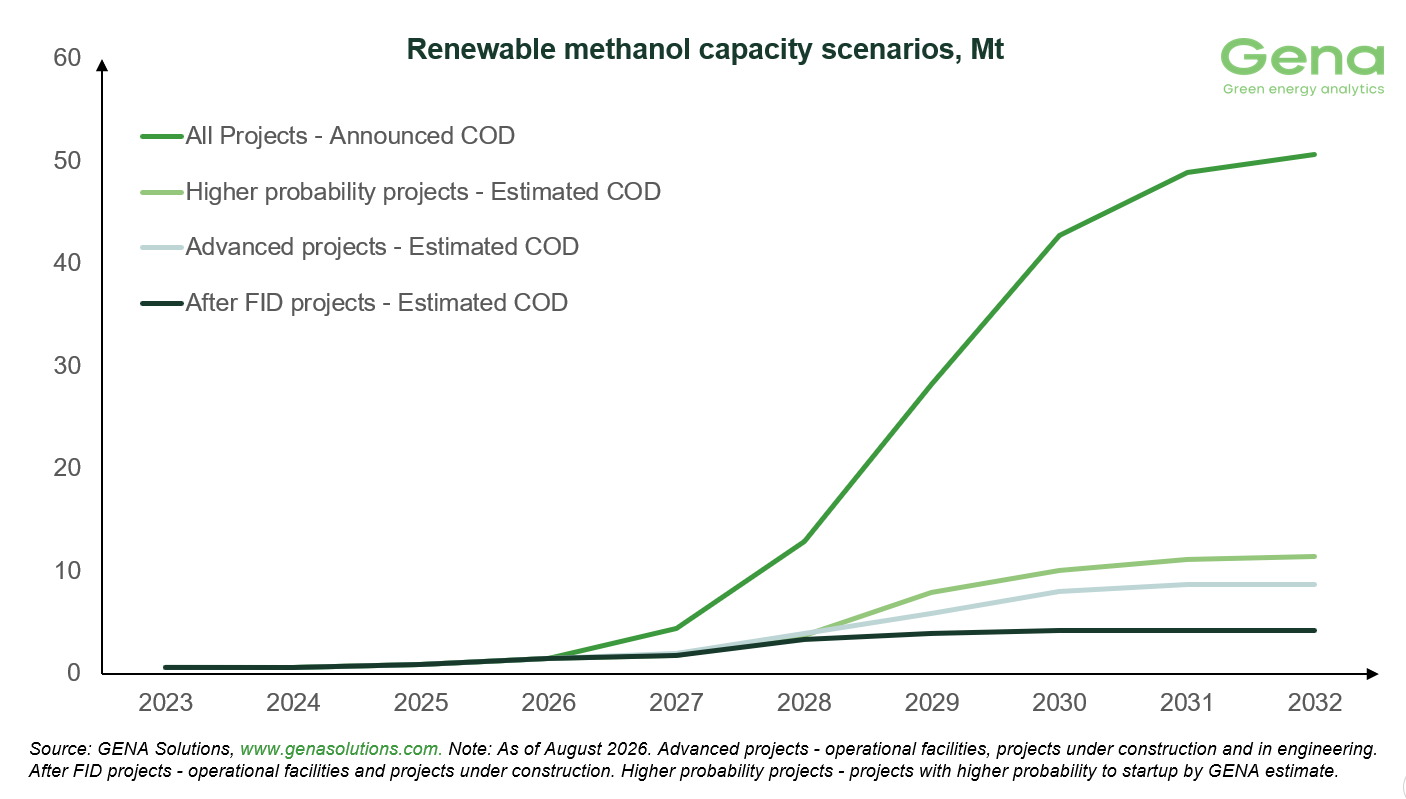
Photo credit: GENA Solutions
Published: 4 September, 2026
Business
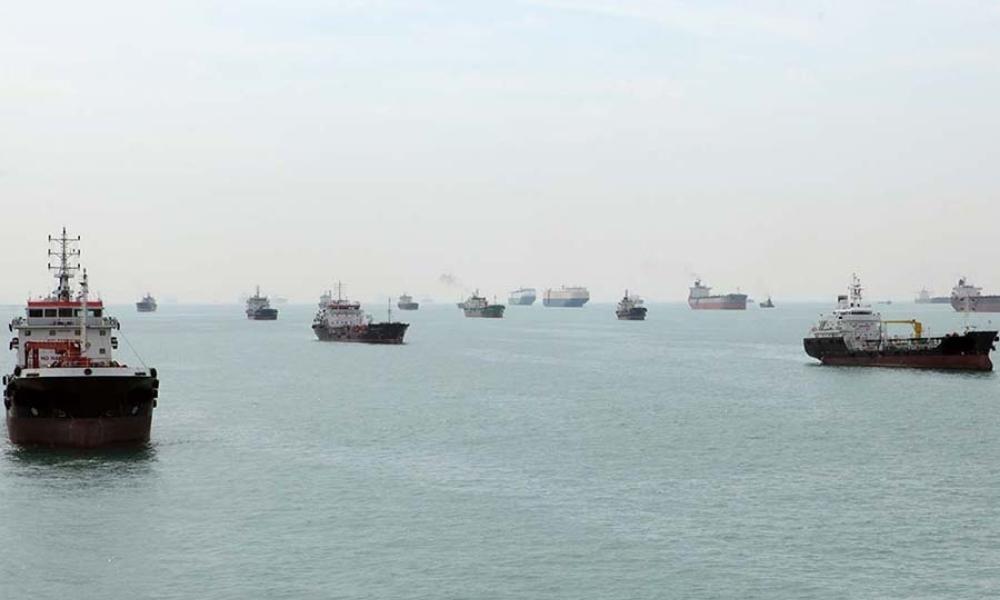
Singapore: MPA urges maritime firms to prepare for potential haze with plan
MPA encourages all maritime companies, especially those with workers performing outdoor work to maintain a business continuity plan for haze.
Alternative Fuels
DNV report: Regulatory uncertainty demands fleet strategies built for multiple futures
Report examines four regulatory scenarios, ranging from adoption of IMO NZF in its current form to its outright rejection, energy efficiency uptake, and long-term bunker fuel and technology strategies.

OUR INDUSTRY PARTNERS

Yang Ming orders six LNG dual-fuel, ammonia-ready containerships from Hanwha Ocean

LR, China’s MARIC unveil tanker concept ready for three future bunker fuels

DNV: Alternative-fuelled vessel orders hit highest monthly level since October 2024

TFG Marine advances global MFM rollout with two US Gulf bunker barges

GENA Solutions: Total renewable and low-carbon methanol project pipeline increases from 61.8 to 62.2 Mt by 2032

Baltic Exchange: Bunker Report (3 September 2026)

ENGINE: Americas Fuel Availability Outlook (3 September 2026)

Singapore-flagged tugboat “Kim Heng 3203” placed under Sheriff’s arrest

US targets five bunker companies in latest sanctions campaign against Iran

Singapore bunkering community supports Living Hope Evangelism’s 7th anniversary outreach for residents in need

China’s bunker market reshaped by tax rebates, trade flows and refining changes, says economist

Hengli Petrochemical’s ex-Singapore trading arm faces winding up application

Report: GCMD outlines practical approach to quantity assurance in marine biofuel supply chains

Rajah & Tann: Bunker disputes are won in the first 48 hours
-
 Vessel Arrest1 week ago
Singapore-flagged tugboat “Kim Heng 3203” placed under Sheriff’s arrest
-
 Sanctions1 week ago
US targets five bunker companies in latest sanctions campaign against Iran
-
 Events2 weeks ago
Singapore bunkering community supports Living Hope Evangelism’s 7th anniversary outreach for residents in need
-
 Interview1 week ago
China’s bunker market reshaped by tax rebates, trade flows and refining changes, says economist
-
 Winding up1 week ago
Hengli Petrochemical’s ex-Singapore trading arm faces winding up application
-
 Biofuel1 week ago
Report: GCMD outlines practical approach to quantity assurance in marine biofuel supply chains
-
 Bunker Claim4 days ago
Rajah & Tann: Bunker disputes are won in the first 48 hours
-
 Winding up2 weeks ago
Singapore: Notices of intended dividend issued for Ocean Bunkering Services, Hin Leong Marine