
Business
DNV Decarbonisation Insights: Singapore’s pathway to Net Zero and the role of Ammonia
“By working together as an industry, embracing fuel flexibility and consulting with expert partners,such as class, shipping can, and indeed must, reach its destination,” says the CEO of DNV Maritime.

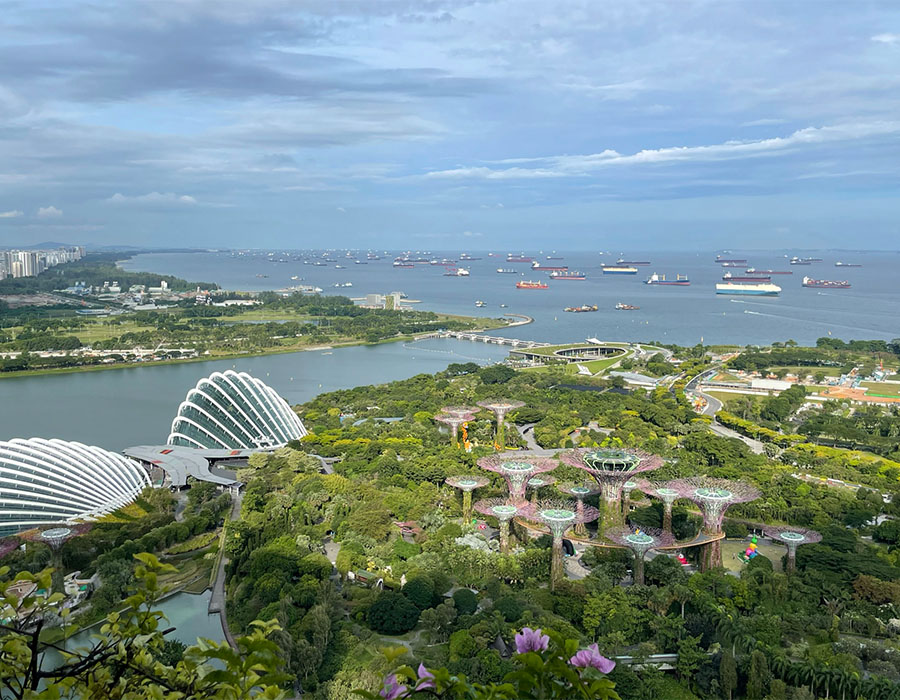

“With COP26, along with many commitments and collaboration projects recently announced, it’s clear we are heading for carbon zero, but the route there is far from it. The grand challenge of our time remains: how to fuel shipping’s transition to a carbon neutral future?”.1
Cristina Saenz de Santa Maria, Regional Manager South East Asia, Pacific & India, DNV Maritime
It is not surprising that Singapore is getting ready to play a major role in the decarbonisation of the global maritime industry.
Ninety percent of all goods around the globe are transported by sea, with Singapore being one of the most important hubs worldwide. And while doing so shipping is the most efficient means of transportation per cargo tonne, the sector still causes almost three percent of global CO2 emissions.2
To contribute to the pathway to Net Zero, Singapore is now exploring a portfolio of alternative fuels and strategies that would enable shipping to significantly reduce its greenhouse gas emissions.
Besides being the world’s largest bunkering hub, with almost 50 million metric tonnes (mt) of bunker fuels delivered annually, Singapore currently imports all the gas it needs to power its local economy. So, it is in the city state’s own interest to drive the transition and keep its leading edge in a decarbonised world.
Earlier this year, Singapore established the Global Centre for Maritime Decarbonisation (GCMD) and DNV stepped up to be a partner in this important collaboration initiative.3
Dr Sanjay Kuttan, GCMD Chief Technology Officer, notes that new fuels on the horizon include sustainable biofuels, biodiesel, bio-LNG, methanol, hydrogen, and ammonia, amongst others.
“However, these new fuels must be greener than the incumbent fuels, i.e. they must have a lower carbon life cycle, otherwise it would be a waste of resources to venture into such investments, as it will not reduce overall carbon burden on the environment,” Dr Kuttan asserts.4
Showing that it is clearly open to explore alternatives to existing fuels, GCMD announced in October 2021 that it was inviting proposals to commission a technical evaluation to define the safety and operational envelopes for ammonia bunkering in Singapore.
The expected outcomes of the evaluation will support the establishment of regulatory sandboxes for pilots and demonstration projects, with a view of enabling ammonia bunkering in the future.
So, how viable is ammonia and is it safe enough for widespread use as a marine fuel in Singapore, or anywhere, for that matter?
From DNV’s own studies and from pilot programmes conducted in Europe in particular, ammonia comes clean as an ideal marine fuel for long-haul shipping, as part of a wider mix of fuel options.
As a global organisation headquartered in Norway – recognised as the world’s leading classification society and respected advisor to the maritime industry – DNV is well positioned to weigh up all the clean and green fuel options which could take their place, alongside LNG, and even replace it one day, as an alternative shipping fuel, as outlined in detail in DNV’s Maritime Forecast to 2050.5
Not only does ammonia burn CO₂-free, like hydrogen, but it has a higher energy density and is easier to store and transport, as it doesn’t require cryogenic – or ultra-cool – storage.
As ammonia has advantages over the direct use of hydrogen for long-distance shipping, the International Energy Agency (IEA) states in its Net Zero Emissions Scenario that ammonia could meet around 45 percent of global shipping fuel demand. IEA also sees green ammonia as the lowest cost option as an alternative fuel for the future (by 2050).6
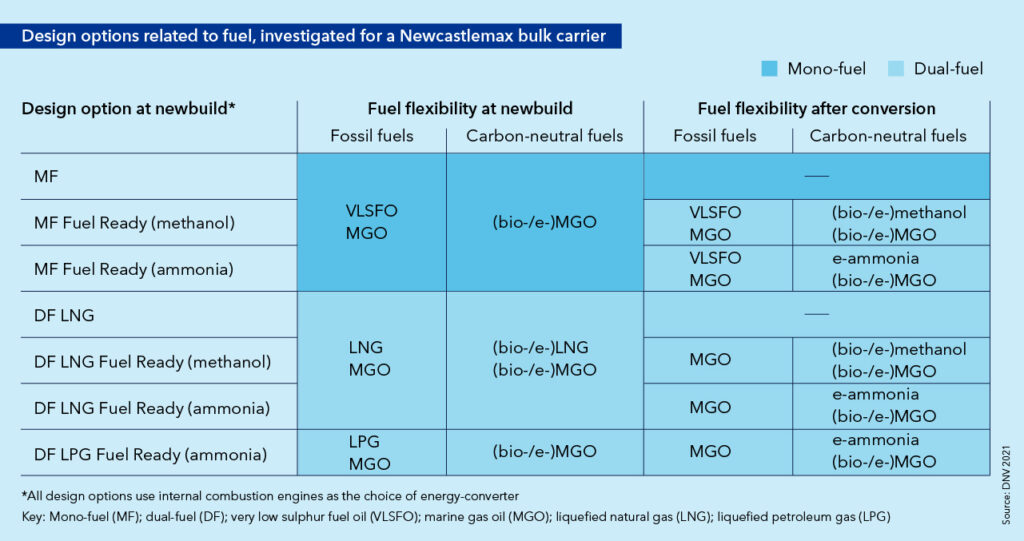
An evaluation of a Newcastlemax bulk carrier newbuild by DNV experts has shown that ammonia would likely be the cheapest carbon-neutral fuel for this ship type under certain scenarios – adding that Fuel Ready (ammonia) and dual-fuel designs are becoming valid options for shipowners already now.7
DNV has also been involved in ammonia trials with Color Line in Norway, as part of the Green Shipping Programme (GSP), which found that ammonia can be safely deployed even in passenger vessels, since no “incomprehensible technical or safety barriers” could be identified.8
After exploring all potential inhibiting factors for a widespread adoption of ammonia as a maritime fuel for the future, DNV has come up with some convincing answers:
- What about the cost of green ammonia?
DNV would expect a higher cost initially for ammonia compared to LNG or hydrogen. But as with any green or clean energy being introduced, there are higher costs until production and use is scaled up sufficiently. If we look at the experience with solar and wind energy to produce electricity on land or on water, we see that initially it was very expensive, but now solar and wind are on price parity with any other sources of energy, even coal. - What about safety factors?
While ammonia’s toxicity is well known, trials in Europe have shown it can be safely stored and used on board vessels of all types, whether carrying passengers or freight. DNV has not only produced an “Ammonia as a Marine Fuel Safety Handbook” for the GSP but also developed Gas Fuelled ammonia class rules, and a Fuel Ready notation which allows later fuel retrofits. DNV further invests heavily in ammonia R&D and runs related HAZID workshops with customers and industry stakeholders.9 - Where is it sourced?
While ammonia is currently going through marine fuel trials in Europe and Japan, DNV sees that one of the best Asia Pacific sources for green ammonia (and/or green hydrogen) could be Australia, as the country is acknowledged as the world’s leading LNG exporter. Green ammonia can be produced from green hydrogen, which is a known renewable energy source. Australia already has plans for major green hydrogen plants. In addition, ammonia is widely used there in agriculture, most commonly as a fertiliser. - What about supply chain challenges?
DNV forecasts that ammonia can be safely shipped, stored and used on vessels wherever they operate. They could be fuelled in Europe, Australia, Japan, Singapore or elsewhere in Asia. The classification society doesn’t foresee any limit to the amount of ammonia that could be produced in time, but of course it would be wise for Singapore to not just rely on one source for its ammonia supply chain. - What about attaining scale in the production of ammonia?
Almost all ammonia in use today is made from hydrocarbons, so production of clean and green ammonia definitely needs to scale up considerably to decarbonise the shipping industry’s fuel supply. Green ammonia could well become one of the predominant marine fuels in the future. It can be produced – at scale – by electrolysis, powered by renewables, ideally green hydrogen. There are a number of trials under way in Europe and Japan, so it’s feasible to expect that in four to five years’ time, the maritime industry will be in a position to start using ammonia as a marine fuel, alongside LNG or hydrogen.Already ship engines are being designed and built by Wärtsila and MAN, which will be able to be fuelled by ammonia and LNG. Wärtsila anticipates having an engine concept capable of operating fully on ammonia in 2023.10 - What about setting standards for ammonia’s maritime use?
As DNV is actively involved in driving business forward through the development of standards, specifications and guidelines, it is working with others inside and outside themaritime industry to collaborate on research and technical evaluation of ammonia – and other potential marine fuels – to ensure that it can be safely deployed on vessels around the world. For more information see the DNV white paper on “Ammonia as a marine fuel”.11
To sum up, Dr Shahrin Osman, Regional Head of Maritime Advisory for DNV, doesn’t see any “showstoppers” for ammonia to prevent it from playing a primary role as a marine fuel in the future.

“From our studies and from industry trials conducted in many parts of the world, there is no obstacle that we can see that’s in the way of ammonia.”
“Taking all these factors into consideration, we think ammonia is one of the best options for the decarbonisation of the maritime industry. And we could feasibly see ammonia playing a key role as a marine fuel out of Singapore, too”, Dr Osman affirms.
Just as DNV played a significant role in pioneering the use of LNG in shipping, he believes green ammonia is in line to go through a similar development, just quicker.
“With the right level of commitment and concentrated effort, we think it is possible that ammonia could replace LNG as the dominant alternative shipping fuel. By collaborative effort – governments and industry – we can see this getting well on the way by 2030,” he believes.
As always there are challenges, but also considerable opportunities, points out Dr Osman’s colleague Linda Sigrid Hammer, the lead author of DNV’s Maritime Forecast to 2050:
“Shipowners need strategies and practical solutions to stay compliant and commercially competitive, while meeting regulatory and stakeholder requirements for decarbonising vessel and fleet operations. Correctly assessing the technology, fuel and energy production/infrastructure landscape can enable owners to comply with prescribed or even more ambitious carbon reduction trajectories.”12
Could green ammonia be “the major disrupter” for the maritime industry, as it embarks on its decarbonisation journey to attain Net Zero?
While increasingly convinced of the viability of green ammonia, DNV sees it as but one of a range of alternative fuels and strategies which need to be put to the test.
It’s equally important to keep in mind a number of essential measures towards maritime industry decarbonisation, including greater energy efficiency, fuel flexibility and weighing up all Fuel Ready solutions. Hence, the last word must go to Knut Ørbeck-Nilssen, the CEO of DNV Maritime:
“By working together as an industry (and beyond), embracing fuel flexibility and consulting with expert partners, such as class, shipping can, and indeed must, reach its destination. The true fuel of the future is collaboration.”13
References:
[1] Podcast: In Conversation with DNV and the Global Centre for Maritime Decarbonisation
[2] IMO Fourth Greenhouse Gas study 2020
[3] Foundation Det Norske Veritas contributes S$10 million to help launch a maritime decarbonization centre in Singapore
[4] Singapore: A model for a decarbonised maritime sector by Dr Sanjay Kuttan
[5] Maritime Forecast to 2050. DNV’s Energy Transition Outlook 2021
[6] IEA’s Ammonia Technology Roadmap
[7] Findings from the Newcastlemax bulk carrier evaluation
[8] Norway’s Green Shipping Programme (GSP) “Ammonia as a fuel pilot” with Color Line
[9] Ammonia as a Marine Fuel Safety Handbook
[10] Wärtsilä’s role in developing engines for operation on future clean fuels
[11] DNV: Group Technology & Research, White Paper 2020: Ammonia as a marine fuel
[12] Evaluating future fuel strategies and their design implications for newbuilds. Case study
[13] The true fuel of the future is collaboration, DNV Maritime CEO in Maritime Forecast to 2050
Photo credit: DNV
Published: 10 December, 2021
Winding up
Singapore: Liquidators of Nan Ho Maritime, Nan Xin Maritime issue notices of dividend
Nan Ho Maritime’s second interim dividend and Nan Xin Maritime’s second and final dividend are payable from 4 September, according to Government Gazette notices.

LNG Bunkering
Singapore-based EPS takes delivery of three LNG dual-fuel bulk carriers
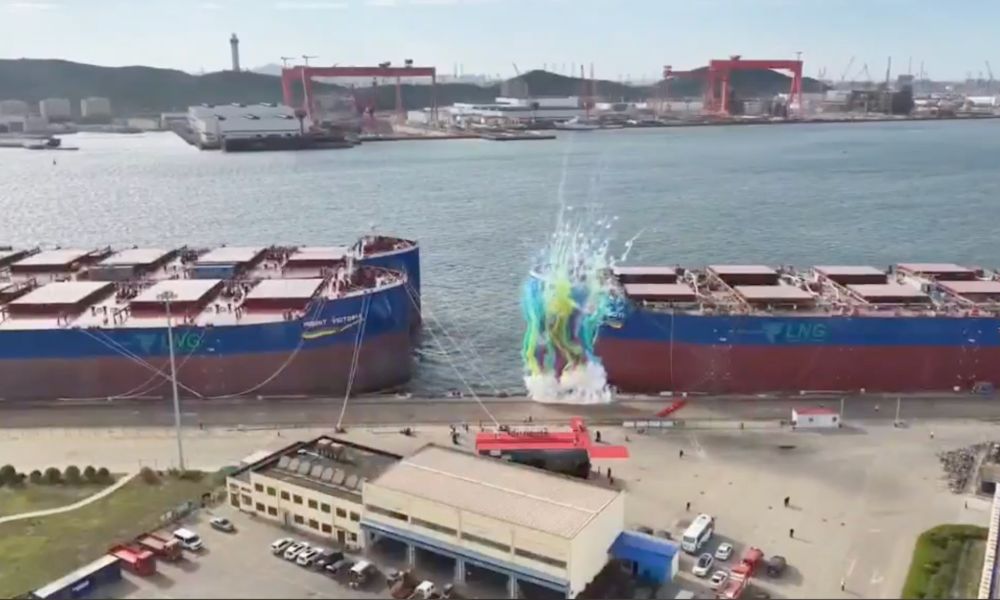
Three vessels are the third, fourth and fifth in the company’s series of 14 Newcastlemaxes being built at the yard, and were delivered five months ahead of their contracted delivery dates.
Port & Regulatory
ISWG-GHG 22: IMO working group aims to present NZF text at MEPC 85
The Chair expressed his observation of a genuine willingness within the Group to make concrete further progress at the next ISWG-GHG meeting and work towards presenting text to MEPC 85.

OUR INDUSTRY PARTNERS

Singapore: Liquidators of Nan Ho Maritime, Nan Xin Maritime issue notices of dividend

Singapore-based EPS takes delivery of three LNG dual-fuel bulk carriers

ISWG-GHG 22: IMO working group aims to present NZF text at MEPC 85

UCL on ISWG-GHG 22: Majority back GHG pricing, centralised fund in IMO NZF talks

LR awards AiP to CSSC Huangpu Wenchong for 12,500 m³ LNG bunker vessel design

DNV at SMM: Chinese shipbuilders, European owners seek closer ties on alternative bunker fuels

Auramarine: Marine fuel flexibility will be key to shipping’s energy transition

Singapore-flagged tugboat “Kim Heng 3203” placed under Sheriff’s arrest

US targets five bunker companies in latest sanctions campaign against Iran

China’s bunker market reshaped by tax rebates, trade flows and refining changes, says economist

Rajah & Tann: Bunker disputes are won in the first 48 hours

Hengli Petrochemical’s ex-Singapore trading arm faces winding up application

Report: GCMD outlines practical approach to quantity assurance in marine biofuel supply chains

Singapore: Notices of annual meeting issued for Vroon Shipping Asia and related firms
-
 Vessel Arrest2 weeks ago
Singapore-flagged tugboat “Kim Heng 3203” placed under Sheriff’s arrest
-
 Sanctions2 weeks ago
US targets five bunker companies in latest sanctions campaign against Iran
-
 Interview1 week ago
China’s bunker market reshaped by tax rebates, trade flows and refining changes, says economist
-
 Bunker Claim5 days ago
Rajah & Tann: Bunker disputes are won in the first 48 hours
-
 Winding up2 weeks ago
Hengli Petrochemical’s ex-Singapore trading arm faces winding up application
-
 Biofuel2 weeks ago
Report: GCMD outlines practical approach to quantity assurance in marine biofuel supply chains
-
 Winding up1 week ago
Singapore: Notices of annual meeting issued for Vroon Shipping Asia and related firms
-
 Alternative Fuels2 weeks ago
GEA to provide global ethanol fuel data for DNV’s AFI platform