Connect with us

Business

Clyde & Co: After Wakashio, is the Bunker Convention fit for purpose?

It is time to reconsider the Bunker Convention’s applicable limits given the devastating effect that as little as 1,000 tonnes of heavy fuel oil can cause, says lawyer.

Admin

Published

on

50236896003 d016a06a87 o

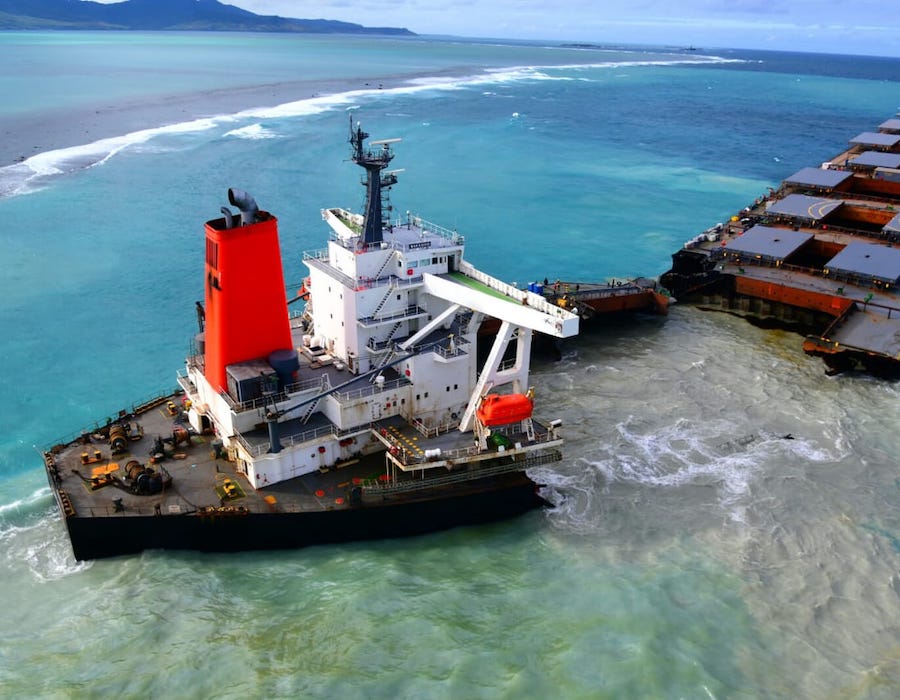
Martin Hall, Head of Marine Casualty, Associate Legal Executive and Partner Equivalent at international law firm Clyde & Co on Tuesday (18 August) published an article explaining how the 2001 Bunker Convention is insufficient cover for clean-up operations and pollution damage and questions its relevance given the impact of Wakashio’s oil spill in a sensitive marine environment:

What has happened in the Indian Ocean provides confirmation that increased payouts cannot come soon enough, and governments of coastal states should enact any available increased limits in their own jurisdiction without delay.

As the ecological and environmental disaster that has resulted from the grounding of Wakashio unfolds in Mauritius, questions are already being raised as to how this could have happened.

But thoughts will ultimately turn towards compensation for those who are cleaning up the mess and have suffered the consequences of pollution from the vessel’s bunkers.

The owners have been quoted as saying that they will respond “in good faith” to any damages “in accordance with applicable law”. However, this may not be as comforting as it first seems.

As Wakashio is not a laden tanker, the well-established compensation regime under the Civil Liability Convention 1992 — as topped up if required by the IOPC Fund Convention 1992 — will not apply, and any compensation claims seem likely to be dealt with under the 2001 Bunker Convention.

The Bunker Convention applies to vessels carrying bunkers not covered by the CLC and IOPC Fund Conventions.

It provides for mandatory third-party insurance cover, and allows claims of third parties for clean-up expenses and other losses caused by pollution from bunkers to be made directly against the insurers.

The convention also imposes strict liability on the part of the vessel owners and their insurers for such losses, which means there is no need to prove responsibility for the pollution, only that the pollution emanated from the vessel.

Consequently, if more than one party was potentially involved in causing the pollution, there would be joint and several liability if the original source was from the stricken vessel (Article 3 of the convention).

The owners of the vessel are, under Article 6 of the convention, entitled to limit their liability in accordance with the Convention for Limitation of Liability for Maritime Claims 1976 or as amended.

Many countries have now enacted the 1996 Protocol, which significantly increases the limitation fund that was originally applied in the 1976 Limitation Convention.

The limit is based on the gross tonnage of the vessel, which in this case appears to be 101,932 tonnes.

That means that currently under the 1976 Limitation Convention the limit for third-party claims including costs of prevention and clean up following the grounding of Wakashio would be around $18m, whereas under the 1996 Protocol the limitation fund would be just over $43m.

By contrast, the IOPC supplementary fund can pay out as much as $1bn in certain circumstances.

All claims of third parties must be brought against the owner or directly against the insurer in the country where the pollution has occurred, in this case Mauritius. Therefore the law of Mauritius will apply.

According to the latest IMO published data, Mauritius has enacted the Bunker Convention and the 1976 Limitation Convention. It does not appear that Mauritius has enacted the 1996 Protocol.

If this is correct then the lower limit of around $18m would apply, which seems hardly enough to cover the sort of losses that might now be envisaged from the impact of some 1,000 tonnes of heavy fuel oil on the pristine ecological environment of Mauritius.

One can anticipate a significant impact not only on the environment but also the wildlife and fishing industry on which Mauritius so heavily relies, as well as on the tourist industry.

The logic behind the lower limits that apply under the Bunker Convention compared with the combination of CLC and IOPC Fund limits is, presumably, because the quantities of bunkers that could potentially cause pollution are significantly less than would be the case than for an oil cargo.

However, that is of no comfort to those in Mauritius who are already suffering the consequences and may continue to do so for a long time to come.

There is only one means of breaking the limit in the event that claims exceed the limitation fund under the 1976 Limitation Convention (or indeed under the 1996 Protocol if enacted).

That entails proving that “the loss resulted from his [the owner’s] personal act or omission, committed with the intent to cause such loss, or recklessly and with knowledge that such loss would probably result”. This is a very difficult burden to discharge.

The authorities’ investigations in Mauritius will presumably determine whether or not there is any prospect of breaking the limit, so that any compensation to be obtained could exceed the level of the limitation fund.

Although the Bunker Convention is dated 2001, it only came into force as recently as 2008.

Nevertheless, it is perhaps already time to reconsider the applicable limits, given the devastating effect that as little as 1,000 tonnes of heavy fuel oil can cause in a sensitive environment, as we are now seeing.

There has already been recognition that the 1996 Protocol limit is inadequate. The International Maritime Organization — in the 2016 edition of Limitation of Liability for Maritime Claims — advised that it had adopted a resolution increasing the limits under the 1996 Protocol.

This was due to the Pacific Adventurer incident, which occurred in the waters of southern Queensland in Australia in March 2009. In the case of Wakashio this would have increased the limit for pollution claims to almost $65.2m.

The UK enacted the increased limits to the 1996 Protocol in November 2016.

But what has happened in the Indian Ocean provides confirmation that such further increases cannot come soon enough, and highlights the need for governments of coastal states to enact any increased limits in their own jurisdiction without delay.


Source:
Clyde & Co
Photo credit: International Maritime Organisation
Published: 19 August, 2020

Continue Reading

Legal

Singapore withdraws remaining 127 charges against Hin Leong founder OK Lim

Lim Oon Kuin, also known as OK Lim, was issued a stern warning and a district court granted him a discharge amounting to an acquittal for these charges on 17 July.

Admin

Published

on

By

RESIZED Sora Shimazaki on Pexels

Founder of collapsed oil trader Hin Leong Trading, Lim Oon Kuin, also known as OK Lim, has had the remaining 127 charges against him withdrawn, according to The Straits Times on Monday (20 July). 

OK Lim was issued a stern warning and a district court granted him a discharge amounting to an acquittal for these charges, including those for cheating, on 17 July. The discharge means Lim cannot be prosecuted again for the same offences.

Lim, 84, is currently serving a 13½-year prison sentence after the High Court reduced his original 17½-year jail term in March 2026. He was convicted in 2024 on two cheating charges and one count of abetting forgery in a case prosecutors described as one of Singapore’s most serious trade finance frauds.

Lim was convicted in May 2024 of two charges of cheating the Hongkong and Shanghai Banking Corporation (HSBC) and one count of abetting forgery that proceeded to trial out of a total of 130 criminal charges.

He was first charged in court on 14 August 2020, and was subsequently handed further charges in court on 25 September 2020, 30 April 2021 and 24 June 2021 for his role in perpetuating fraud on various financial institutions. 

A total of 130 charges were eventually brought against him for cheating and forgery-related offences.

Related: Singapore: Hin Leong Founder OK Lim gets jail term slashed to 13.5 years


Photo credit: Sora Shimazaki
Published: 21 July, 2026

Continue Reading

Winding up

Singapore: Coastal Logistics Pte Ltd to be wound up voluntarily

Coastal Logistics was reportedly affiliated with troubled Singapore bunker player Coastal Oil (Singapore) Pte Ltd.

Admin

Published

on

By

RESIZED Drew Beamer

Several resolutions for Coastal Logistics Pte Ltd were made during an extraordinary general meeting held on 14 July, according to a notice in the Government Gazette on Friday (4 July).

The following resolutions were duly passed during the meeting:

As Special Resolution

  • That it has been proved to the satisfaction of the meeting that the Company cannot by reason of its liabilities continue its business and accordingly the Company be wound up voluntarily pursuant to Section 160(1)(b) of the Insolvency, Restructuring and Dissolution Act 2018 (No. 40 of 2018);

As Ordinary Resolutions

  • that Mr. Wong Pheng Cheong Martin and Ms. Koay May Yee, both care of FTI Consulting (Singapore) Pte Ltd, One Raffles Quay, #27-10 South Tower, Singapore 048583 be appointed as the joint and several Liquidators of the Company for the purpose of such winding up; and
  • that the Liquidators be at liberty to open, maintain and operate any bank account(s) or account(s) for monies received by them as Liquidators with such bank(s) as they deem fit; and
  • that a Committee of Inspection will not be formed.

Manifold Times previously reported Nicholas James Gronow, director of Heng Tong Fuels & Shipping and Coastal Logistics, filed statutory declarations for both companies stating the firms cannot continue their businesses due to liabilities.

Both companies were reportedly affiliated with troubled Singapore bunker player Coastal Oil (Singapore) Pte Ltd. 

In 2019, several vessels owned by both firms entered the sale & purchase (S&P) market in Singapore.

Related: Singapore: Director declares Heng Tong Fuels & Shipping’s inability to continue business
Related: Heng Tong Fuels & Shipping in court over DBS Bank bunker tanker loan
Related: Singapore: Bunker tanker “Coastal Neptune” arrested
Related: Heng Tong Fuels & Shipping, Coastal Logistics tankers enter S&P market


Photo credit: Drew Beamer
Published: 21 July, 2026

Continue Reading

LNG Bunkering

PIL’s LNG dual-fuel boxship “Kota Elok” arrives in Singapore on maiden call

As the first of 13 new 13,000 TEU vessels joining its fleet, Kota Elok is equipped to operate on LNG and low-sulphur fuel oil that helps reduce our greenhouse gas emissions.

Admin

Published

on

By

PIL's LNG dual-fuel boxship “Kota Elok” arrives in Singapore on maiden call

Singapore-based Pacific International Lines Pte Ltd on Monday (20 July) said its first 13,000 TEU LNG dual-fuel container vessel, Kota Elok, recently made her maiden call to Singapore on 15 July.

As the first of 13 new 13,000 TEU vessels joining its fleet, Kota Elok is equipped to operate on liquefied natural gas (LNG) and low-sulphur fuel oil that helps reduce our greenhouse gas emissions. 

The vessel also incorporated energy-saving features and digital technologies to reduce fuel consumption and enhance operational performance, as well as a bow windshield to improve aerodynamics, contributing to improved fuel efficiency and lower emissions over the course of long-haul voyages.

“Following Singapore, Kota Elok will continue her voyage on our East Coast Service 1 (ES1) route to South America, calling at ports in Brazil, Uruguay, and Argentina before returning to Asia,” the company said in a social media post. 

Kota Elok also became PIL’s first vessel to receive Lloyd’s Register certification for compliance with the IACS UR E26 and UR E27 cyber security requirements.

Developed by the International Association of Classification Societies (IACS), UR E26 and UR E27 are mandatory cyber resilience requirements for newbuild vessels contracted from 1 July 2024. 


Photo credit: Pacific International Lines
Published: 21 July, 2026

Continue Reading

Trending