Connect with us

Uncategorized

Singapore: Bunker sales declined 2.3% on year in June, in line with market expectations

A total 3.82 million metric tonnes (mt) of bunkers was sold at the republic in June, 2.3% less than 3.91 million mt posted during June 2019.

Admin

Published

on

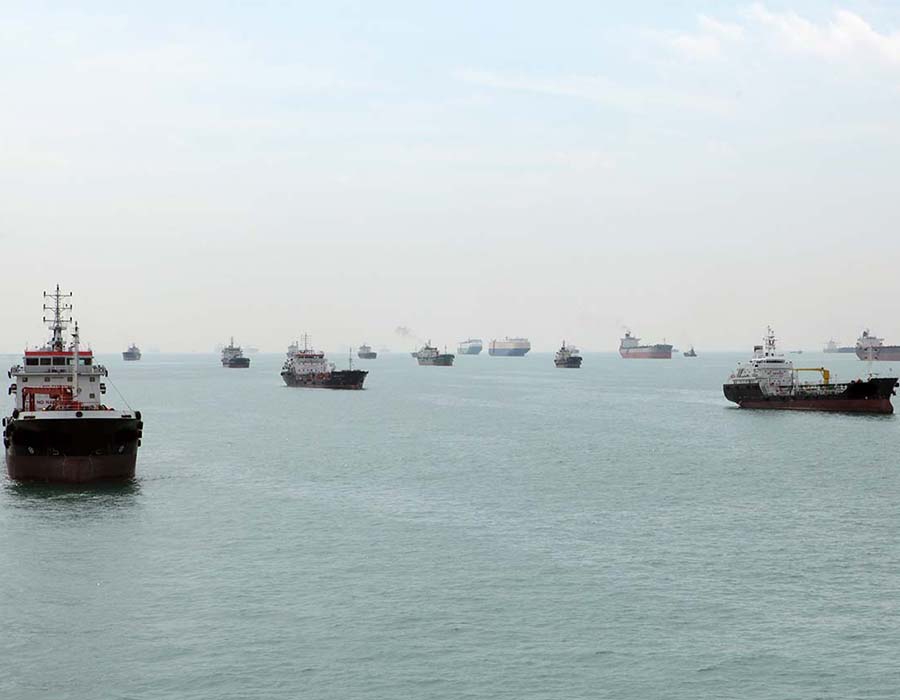
Singapore bunker tankers

Bunker sales at Singapore port marginally fell by 2.3% on year in June 2020, according to Maritime and Port Authority of Singapore (MPA) data.

The current market development was in line with earlier market expectations, according to industry experts providing commentary to Manifold Times.

“The downtrend in volume for the month of May and June have already been forecasted and we expect the uptrend, if any, to start from August onwards,” shared Simon Neo, Executive Director at marine fuels consultancy SDE International.

Neo, who considered demand for bunkers at Singapore to be “weak” in June, offered an explanation for the lower sales volumes despite the 1.8% increase in vessel arrival figures (by number) where a total 6,701 ships visited Singapore port in June compared to 6,582 vessels in May.

“Oil prices have gone up since April and the incentive is no more there for shipowners who have already stocked up on fuel in the earlier part of 2020 to build more inventories at this point of time,: he said.

“Furthermore, the global economy is still seen as very weak. Though market has opened from lockdown, it is still done in a cautious manner and everybody is worried of a second wave of the pandemic.

“Moving forward, any recovery will be slow as we head towards year end. Optimistically, we may see Singapore bunker sales improve from August due to increased import and export activity coming from preparations for the year end festive season. July’s bunker sales volume is expected to be similar to May and June.”

Dennis Ho, Director & Founder of Azure Strategic Resources, meanwhile painted a more positive picture.

“Considering we are in an unprecedented global pandemic crisis, June figures, dipping by just around 3% compared to May or compared to the same period last year overall has shown bunker demand is still quite resilient,” he notes.

“The dip in demand can also be attributed to the continued increase in prices. From May to June, prices have gone up by 18%. 

“If this trend continues, demand for the year would have dipped by around 4.5% compared to 2019; a figure higher than the 8% estimated earlier in the year.

“Going forward, I expect demand to gradually increase towards the end of the year.”

Singapore bunker volume in June 2020

A total 3.83 million metric tonnes (mt) (exact: 3,829,000 mt) of bunkers was sold at the port in June, less than 3.92 million mt (exact: 3,919,900 mt) posted during June 2019.

Deliveries of 500 centistokes (cSt), 380 cSt and 180 cSt grades in June 2020 (against on year), were respectively 58,800 mt (-91.8% from 717,100 mt), 744,700 mt (-73.2% from 2.78 million mt), while 180 cSt product recorded no sales  (-100% from 30,100 mt).

Low sulphur 500 cSt, 380 cSt and 180 cSt products respectively recorded 56,800 mt sales (compared to zero), 1.93 million mt (significantly up from 24,800 mt), and 48,100 mt (+9.4% from 43,600 mt).

The latest data introduced new categories, namely low sulphur 100 cSt, and ULSFO respectively recorded 616,600 mt and 59,800 mt of sales in June.

Low sulphur marine gas oil (LS MGO) sales were posted at 254,000 mt (+10.5% from 230,800 mt) and MGO at 56,200 mt (-2.4% from 54,900 mt).

Related: Bunker fuel sales dipped 2% at Singapore port in May, experts provide opinion and forecast
Related: Marine fuel consultants explain Singapore’s 10.8% on year bunker sales increase in April
Related: Singapore: March 2020 bunker fuel sales rise 5.7% on year
Related: Singapore: February 2020 bunker sales volume up 2.5% on year
Related: Singapore: January 2020 bunker sales volume up 7.5% on year


Photo credit:
Manifold Times
Published: 14 July, 2020


Continue Reading

Bunker Fuel Availability

ENGINE: Europe & Africa Bunker Fuel Availability Outlook (1 April 2026)

East Mediterranean ports see high demand; Malta sees rough weather; high demand increases lead times in West Africa.
Admin

Published

on

By

RESIZED ENGINE Europe and Africa

The following article regarding Europe and Africa bunker fuel availability has been provided by online marine fuel procurement platform ENGINE for post on Singapore bunkering publication Manifold Times:

  • East Mediterranean ports see high demand
  • Malta sees rough weather
  • High demand increases lead times in West Africa

Northwest Europe

Availability of all fuel grades is stable in the ARA bunkering hub, but buyers are recommended to enquire about stems around five days ahead to get competitive offers from a wide selection of suppliers, a trader said.

The ARA’s independently held fuel oil stocks slumped 20% lower in March, according to Insights Global data.

The region imported around 160,000 b/d of fuel oil in March, down from 192,000 b/d imported in February, according to cargo tracker Vortexa. Most supplies have arrived from Denmark (21%), Poland (14%) and Libya (13%).

The region’s independent gasoil inventories – which include diesel and heating oil – have dipped 1% lower in March, compared to February.

The ARA imported 289,000 b/d of gasoil, down from the 304,000 b/d in February, according to Vortexa data. Around 27% of cargo volumes have come from Kuwait, while the US has sent around 24%.

In Germany’s Hamburg, buyers are being advised to book stems with a lead time of five days, a trader said.

Bunker fuel availability is very tight in Sweden’s Gothenburg and off Denmark’s Skaw, a trader told ENGINE.

Mediterranean

Securing supplies promptly is challenging in the Gibraltar Strait ports, and buyers are advised to book around seven days in advance to secure supplies of any fuel grade, a trader said.

Demand is stable in the Port of Gibraltar, with around 40 vessels expected to call for bunkers between 1-8 April, shipping agent A Mateos & Sons said.

Congestion caused in the port last week due to rough weather conditions has completely cleared as of Wednesday morning, port agent MH Bland said.

In Barcelona, buyers are usually requested to give a week’s notice for any delivery, but supplies can be arranged sometimes on a prompt basis, a trader told ENGINE.

Bunker availability is tight in the Canary Islands bunkering hub of Las Palmas, a trader said. Suppliers are giving earliest delivery dates around 10 days out for stems with competitive prices, the trader added.

Bunkering operations are currently being conducted in the inner anchorage and at the berth due to rough seas, port agent MH Bland said.

Malta is experiencing rough winds of more than 25 knots and waves of more than 2.5 metres, and the conditions are expected to persist until 3 February.

Bunkering operations off Malta have been currently suspended, port agent MH Bland said.

Some operations can be conducted in the sheltered Area 1 and Area 4, and operations are expected to resume normally in the offshore area around Saturday, shipping agent WMR told ENGINE.

Bunker demand has decreased recently off Malta, a trader said.

Fuel availability is steady in the Greece’s Piraeus, but high demand for bunkers is causing operational challenges related to barge and berth availability, a local supplier said. The port may face tight product availability around late April or early May if the conflict continues and crude flows through the Strait of Hormuz continue to remain disrupted, the supplier added.

Fuel availability is stable in Turkey’s Istanbul and demand is very strong, a local supplier told ENGINE. Buyers are securing bunkers as they anticipate tight availability next month, the supplier added.

Africa

Ships re-routing around the Cape of Good Hope have increased bunker demand in African ports, suppliers and traders told ENGINE.

West African ports are experiencing low product availability as demand is rising and supply is not able to keep up, a major supplier in West Africa said.

Lead times have increased significantly in many bunkering hubs due to the additional demand.

In Togo’s Lome and off Namibia’s Walvis Bay, buyers are recommended to enquire about stems around 10-11 days ahead, a trader said.

In Angola’s Luanda, one supplier has stopped supplying VLSFO, while LSMGO supplies may need around 7-10 days of notice, a supplier told ENGINE.

Getting VLSFO supplies in Nigeria’s Lagos anchorage also requires around 10 days of notice, a local supplier said.

In South Africa, availability is stable off Algoa Bay, a trader said. In Durban, LSMGO is priced around $3000/mt.

By Nachiket Tekawade


Photo credit and source: ENGINE
Published: 2 April 2026

Continue Reading

Uncategorized

IMO: Caribbean maritime leaders draft policy recommendations to decarbonize shipping

Participants focused on moving from analysis to implementation by aligning policy, infrastructure planning, energy systems and finance.
Admin

Published

on

By

IMO: Caribbean maritime leaders draft policy recommendations to decarbonize shipping

The International Maritime Organization (IMO) on Tuesday (3 February) said Caribbean policymakers and financiers have emphasized that decarbonization will not succeed through isolated projects or technologies alone, but through coordinated action across sectors and countries, supported by evidence-based planning and investment-ready pathways. 

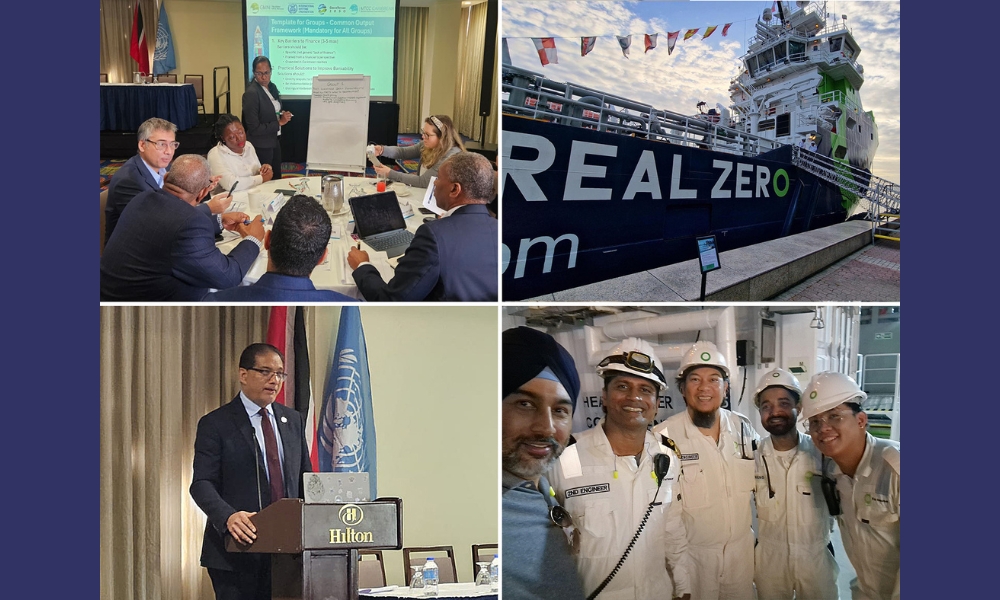
Senior representatives from Caribbean governments, maritime administrations, ports, energy authorities, development banks and financial institutions met for a regional roundtable convened in Port of Spain, Trinidad and Tobago (29 – 30 January) by IMO’s GreenVoyage2050 Programme, in collaboration with Global MTCC Network (GMN Phase II). 

The event, under the theme Unlocking maritime decarbonization, resulted in key draft policy recommendations for the region, including proposals for: 

  • enhanced regional coordination to harmonize national policies; 
  • knowledge-sharing; 
  • capacity building; and 
  • investment facilitation.  

Participants focused on moving from analysis to implementation by aligning policy, infrastructure planning, energy systems and finance. The participation of multilateral and regional development banks alongside policymakers and industry linked technical ambition with financial realism at an early stage. 

Dr Jose Matheickal, Director of the IMO’s Technical Cooperation and Implementation Division, underscored the need to bridge global ambition and national delivery: “The IMO GHG Strategy sets a clear global direction, but implementation happens at country and regional level. What is critical is creating the conditions, policy, institutional capacity and credible project pipelines, that allow finance to flow and turn ambition into action.” 

The first day of discussions connected the 2023 IMO GHG Strategy with delivery through technical cooperation and regional collaboration.  

Findings from the Jamaica Maritime Alternative Fuels Study, supported by the GreenVoyage2050 Programme, were shared to ground the regional dialogue in a concrete country example. The study illustrated how Caribbean States can assess future fuel demand, supply pathways, infrastructure needs and policy implications to inform investment and planning decisions. 

Building on this evidence, participants discussed credible fuel pathways for the region, barriers to adoption and where regional coordination could accelerate progress. Interactive mapping exercises captured existing initiatives, infrastructure gaps and opportunities for collaboration across the Caribbean, while practical examples demonstrated how policy intent is already translating into action through green port development, fleet initiatives and pilot projects. 


The second day of the roundtable focused on unlocking investment, with development banks and financial institutions outlining what is needed to improve project bankability and mobilize public and private finance.  

Discussions explored financial instruments, risk-sharing approaches and policy signals required to support investment in ports, clean fuels and maritime infrastructure, reinforcing the importance of aligning national priorities with financier expectations. 

Ms Thandi McAllister, Director – Legal Services, Maritime Administration Department, Guyana, said: “This Regional Roundtable provided a vital platform for States and other maritime stakeholders to gain valuable insights into the impact and opportunities that are optimizable by Caribbean SIDs and LDCs in their pursuit of decarbonisation goals.” 

Finally, the participants visited the ammonia-fuelled ship Fortescue Green Pioneer for a first-hand look at alternative fuel technology in use onboard.


Photo credit: International Maritime Organization
Published: 5 February, 2026

Continue Reading

Uncategorized

ICS and 47 governments submit GHG pricing mechanism proposal to IMO

Key purpose of mandatory GHG charge will be to reduce cost gap between zero/near-zero GHG emission fuels and conventional bunker fuels to incentivise accelerated uptake of green energy sources.
Admin

Published

on

By

IMO

The International Chamber of Shipping (ICS) on Thursday (9 January) said it has joined 47 governments in a joint submission to the final round of negotiations at the United Nations’ International Maritime Organization (IMO) to adopt a maritime greenhouse gas (GHG) emissions pricing mechanism to achieve net zero GHG emissions from international shipping by 2050. 

The joint text is supported by major shipping nations such as Greece, Japan, Korea and the United Kingdom, the world’s largest flag States including Bahamas, Liberia, Marshall Islands and Panama, all EU States (and the European Commission), other African countries such as Nigeria and Kenya, plus Small Island Developing States from the Caribbean and the Pacific.

The joint submission by governments sets out convergent regulatory text for amendments to the IMO MARPOL Convention, which will require shipping companies operating ships on international voyages to make GHG contributions per tonne of CO2e emitted to a new “IMO GHG Strategy Implementation Fund”.

ICS said the key purpose of this mandatory GHG charge will be to reduce the cost gap between zero/near-zero GHG emission (ZNZ) fuels such as green methanol, ammonia and hydrogen and conventional bunker fuels, to incentivise the accelerated uptake of green energy sources. 

Revenue generated will be used to reward the production and uptake of ZNZ marine fuels, whilst also providing billions of US dollars annually to support the maritime GHG reduction efforts of developing countries.

International Chamber of Shipping Secretary General, Guy Platten, said: “The industry fully supports the adoption by IMO of a GHG pricing mechanism for global application to shipping.”

“The joint text put forward by this broad coalition is a pragmatic solution and the most effective way to incentivise a rapid energy transition in shipping to achieve the agreed IMO goal of net zero emissions by or close to 2050.”

“We are very pleased that such a large and diverse group of nations now firmly supports a common approach to maritime carbon charging. This proposed joint text has been hard fought and is broadly based on ideas which ICS has been advocating for the past ten years.

“While a large number of governments now support a universal flat rate GHG contribution by ships – or something similar – a minority of governments continue to have concerns. Working in co-operation with all IMO Member States we will do our best to allay such concerns during the final stages of these critical negotiations about regulatory text.”

This mature regulatory proposal will be considered by a critical IMO meeting in February – in the week of 17 February 2025 at ISWG-GHG 18. 

If the MARPOL amendments are approved by IMO in April 2025, they should enter into force globally in early 2027, with the collection of annual GHG contributions from ships commencing in 2028.

Note: The joint proposal to IMO for a maritime GHG emissions pricing mechanism can be found here.


Photo credit: International Maritime Organization
Published: 10 January, 2025

Continue Reading

Trending