Connect with us

Business

WinGD future proofs X-DF2.0 to enable transition to carbon neutral bunker fuels

The iCER system minimises methane slip in expectation that these emissions will be regulated by IMO to help meet its 2050 greenhouse gas targets.


Admin

Published

on

imageedit 1 4364312601

CSSC subsidiary and engine manufacturer Winterthur Gas & Diesel Ltd. (WinGD) on Tuesday (16 June) unveiled a new technology designed to slash methane emissions and cut fuel consumption in its X-DF dual-fuel engines. 

The launch of Intelligent Control by Exhaust Recycling (iCER) is the first development to be introduced as part of X-DF2.0, WinGD’s second-generation dual-fuel engine platform, it said.

As shipowners factor greenhouse gas reduction targets into their upcoming newbuild projects, X-DF2.0 technologies will enable improved engine performance with both LNG and future carbon-neutral bunker fuels. 

The iCER system delivers enhanced combustion control through the use of inert gas. The result is a reduction in methane slip emissions of up to 50% when using LNG and a significant reduction of fuel consumption, of 3% in gas mode and 5% in diesel mode.

By advancing the performance of dual-fuel engines, X-DF2.0 will help shipowners prepare for shipping’s transition to carbon-neutral fuels, it noted.

Building on the successful X-DF platform, the next-generation technologies minimise methane slip in expectation that these emissions will be regulated by IMO to help meet its 2050 greenhouse gas targets. 

Improved fuel efficiency will also be a key factor in reducing emissions further during the first phase of the transition.

“By adjusting the recirculation rate of inert gas and controlling parameters like fuel admission and ignition timing, we can increase compression ratios for greater efficiency,” said Volkmar Galke, WinGD Global Director of Sales. 

“The result is optimized combustion through closed-loop control regardless of ambient conditions and load.” 

iCER is currently completing trials at one of WinGD’s dedicated test engine facilities – the final step in a two-year testing programme. The company is also finalising plans for a pilot installation.

As well as using fossil LNG, X-DF engines can also burn carbon-neutral synthetic or bio-derived LNG when it becomes available. 

Screen Shot 2020 06 17 at 1.06.14 PM


Photo credit: WinGD
Published: 17 June, 2020

Continue Reading

Port & Regulatory

UCL on ISWG-GHG 22: Majority back GHG pricing, centralised fund in IMO NZF talks

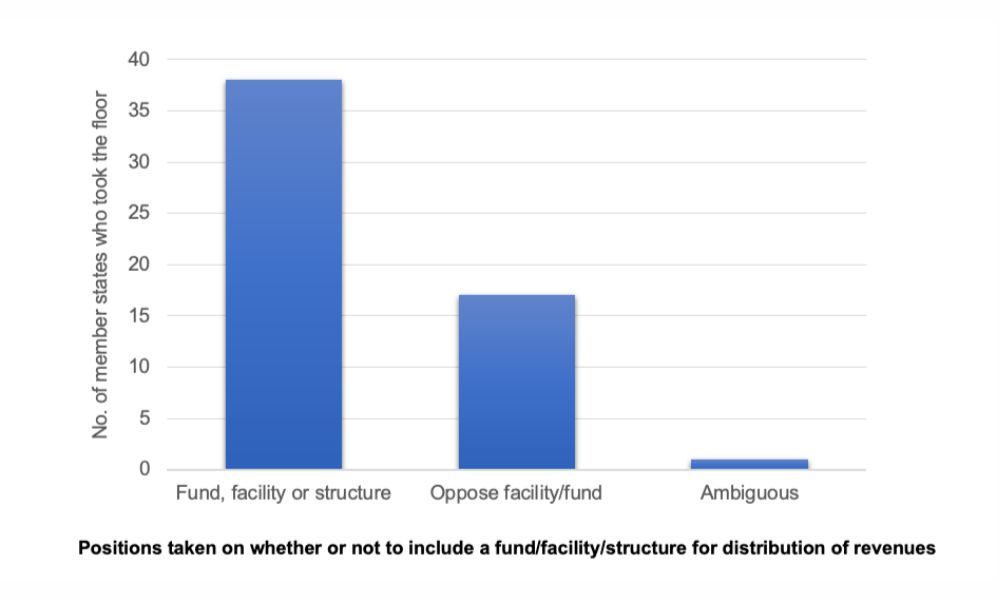
A significant majority of IMO member states backed a centralised system for collecting revenues to reward early adopters and support a just transition, according to UCL.
Admin

Published

on

By

34

UCL Shipping and Oceans Research Group on Friday (4 September) said the IMO’s 22nd Intersessional Working Group on GHG emissions has concluded with significant majority of member states supporting a centralised system for collecting revenues, operationalised through a GHG price (RU price), and disbursing it for rewards for early adopters and supporting a just and equitable transition. 

The group of member states focused on a technical-only solution and abandonment of GHG pricing, remained small and consistently composed of strongly fossil fuel aligned governments.

Just as at MEPC 84, the political dynamics observed at MEPC.ES2 did not occur in this meeting. 

The discussions were more representative of the ISWG-GHG 19 and MEPC 83 negotiating dynamics, but this does not rule out the potential for the dynamics that occurred at MEPC.ES2 returning in future meetings. That said, there was reassuring evidence from the week that reduces that risk, including in the contrast between strong public (press) positions taken against the IMO’s NZF, and the substance of how delegations negotiated in the meeting.

Dr Tristan Smith, Professor of Energy and Transport at UCL Shipping and Oceans Research Group, said: “Whilst there are many positives to take away – there is clear potential for a return to a strong policy solution and decision making this December, there remains high uncertainty in the extent that both industry’s transition and low-income countries’ transitions will be supported. 

“There remains high risk that in the effort to find a creative way forwards, the equilibrium between these two aspects, that enabled the NZF in the first place, is lost to the detriment of the outcome overall.”

In addition to the discussion on centralised system for revenue collection and disbursement, the meeting discussed a number of other items as guided by the chair, discussed in detail with member state positions in the readout. Some of these included:

  • GFI (Global Fuel Intensity) reduction pathway: GFI is likely to be softened initially (around 2030), but then steeper in the period to 2040. 
  • ZNZ rewards: ZNZ reward still broadly supported and a priority to many member states, but the broad support for a multiplier, despite it being taken off the table at the last meeting, could yet lead this to be incorporated to provide incentivisation. 
  • Compliance approaches
  • Most interventions confirmed support for the compliance mechanisms as setup in NZF ‘as is’. The strongest support was for the two least controversial options common to all proposals: reducing GHG intensity and pooling/transfer of SU. 
  • Direct contributions: Japan’s proposal to replace GHG pricing with shipowner-directed contributions was robustly rejected, particularly by the member states that would need to ‘swing’ to support it for this to start to build momentum. 
  • SU (Surplus Units) trading: Majority of member states opposed the inclusion of energy efficiency SU credits and the concept of printing SU’s to manage an SU price shock, citing various reasons, primarily a concern that this would destabilise the SU market and undermine investment predictability. 
  • Netting: China’s proposal to balance of RU and reward payments that could be netted to form a single transaction received broad support. However, the details of the concept will now need to be set out in guidelines and there remain a number of issues regarding this approach, as raised by several delegations.

Note: The full article can be read here


Photo credit: UCL Shipping and Oceans Research Group
Published: 7 September, 2026

Continue Reading

LNG Bunkering

LR awards AiP to CSSC Huangpu Wenchong for 12,500 m³ LNG bunker vessel design

Vessel design incorporates Type C LNG cargo tanks and has been evaluated against a range of class notations covering gas operations, automation, environmental performance and cyber resilience.
Admin

Published

on

By

33

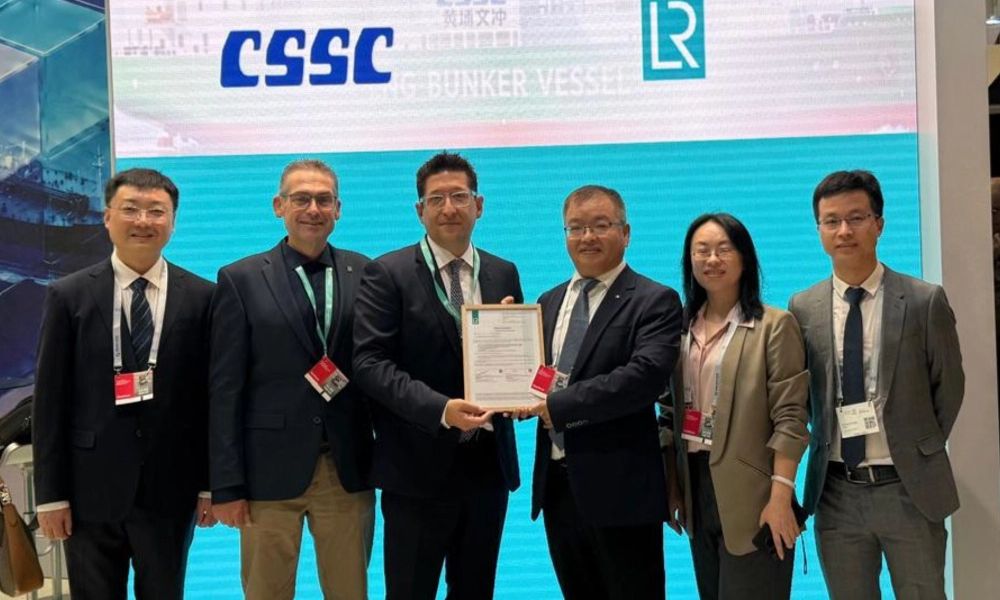
Classification society Lloyd’s Register (LR) on Thursday (3 September) said it has awarded Approval in Principle (AiP) to CSSC Huangpu Wenchong Shipbuilding Co., Ltd. for a new 12,500 m³ LNG bunkering vessel design.

The AiP was signed at SMM 2026 in Hamburg and confirms that the vessel concept has successfully completed an independent design assessment against LR’s latest classification requirements.

The new 12,500 m³ vessel design incorporates Type C LNG cargo tanks and has been evaluated against a comprehensive range of class notations covering gas operations, automation, environmental performance and cyber resilience.

LR’s assessment was carried out in accordance with its Rules and Regulations for the Classification of Ships and Rules and Regulations for the Construction and Classification of Ships for the Carriage of Liquefied Gas in Bulk.

Constantinos Chaelis, LR’s Global Gas Segment Director, said: “This project demonstrates the continued market confidence in LNG and the importance of building the supporting infrastructure that enables owners to make practical emissions reductions today, while maintaining flexibility for the future. Through early engagement between shipyard and class, we can accelerate the delivery of robust designs that meet both operational and regulatory requirements.”

A Huangpu Wenchong spokesperson, said: “This Approval in Principle from Lloyd’s Register validates the technical approach and provides a strong foundation for future development. We believe vessels of this type will play an increasingly important role in supporting the energy transition by helping ensure LNG is available where shipowners need it most.”


Photo credit: Lloyd’s Register
Published: 7 September, 2026

Continue Reading

Alternative Fuels

DNV at SMM: Chinese shipbuilders, European owners seek closer ties on alternative bunker fuels

Chinese shipbuilders and European shipowners called for closer collaboration on vessel development, alternative fuels and digitalization during the inaugural China-Europe Maritime Summit at SMM 2026.
Admin

Published

on

By

32 1

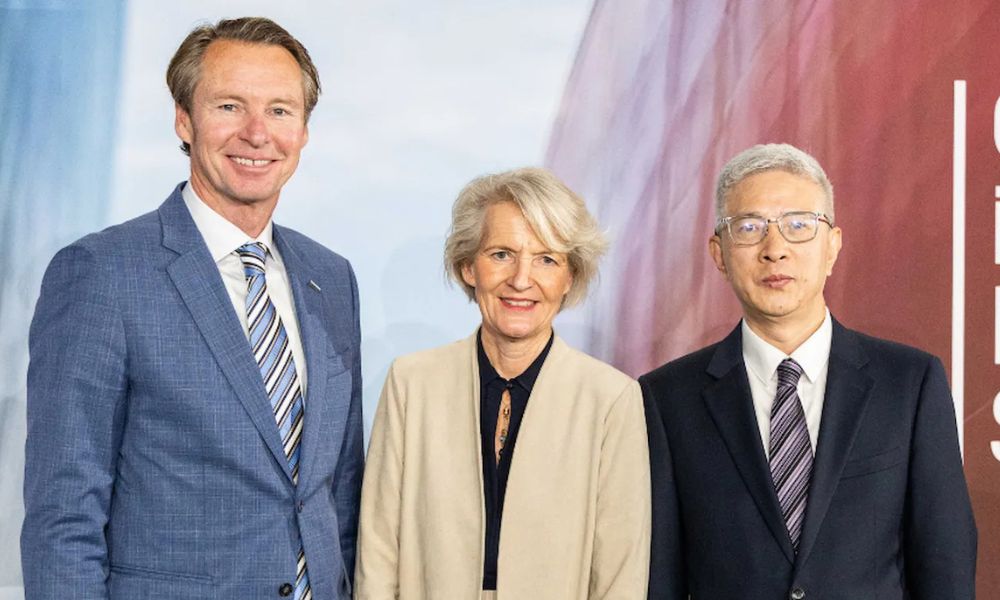
Chinese shipbuilders and European shipowners called for closer collaboration on vessel development, alternative fuels and digitalization during the inaugural China-Europe Maritime Summit at SMM 2026, according to classification society DNV on Friday (4 September). 

The summit, jointly organized by the China Association of the National Shipbuilding Industry (CANSI), the German Shipowners’ Association (VDR) and DNV, brought together leaders from two maritime sectors that collectively shape a significant share of the global fleet. 

Energy efficiency, operational flexibility and digital innovation were highlighted as key areas for the industry as it navigates decarbonization targets, evolving regulation and uncertainty around future fuel pathways.

Knut Ørbeck-Nilssen, Group President and CEO at DNV, said: “Gathering leaders from across Chinese shipbuilding, European shipping and the wider maritime value chain in one room is both timely and important. The decisions being made across our industry today will shape shipping for decades to come, and this summit demonstrates a shared commitment to shaping the future of our industry together.”

Xu Peng, Chairman of China State Shipbuilding Corporation (CSSC), said: “China and Europe’s maritime sectors share aligned missions, complementary strengths and promising prospects. This summit can serve as a starting point for deeper cooperation between China’s shipbuilding industry and Europe’s shipping community, and help broaden the boundaries of full‑chain collaboration and build an interconnected ecosystem.”

Dr. Gaby Bornheim, President of the German Shipowners’ Association (VDR), said: “For shipowners, a new vessel is never an investment for the next quarter. It is a commitment for decades. Long-term investments require trusted partnerships, and many of the world’s most advanced commercial vessels are the result of cooperation between European shipowners and Chinese shipbuilders. Excellence is rarely achieved in isolation.”

China’s shipbuilding industry accounts for around 70% of the global orderbook, while European shipowners operate more than one-third of the world’s fleet capacity. As the global shipping industry faces increased uncertainty, finding solutions that provide flexibility is essential. 

The summit featured two high-level panel discussions moderated by Dr. Martin Kröger, CEO of VDR, and Li Yanqing, Vice Chairman and Secretary General of CANSI, bringing together senior executives from leading Chinese shipbuilders, including China Merchants Industry (CMI), Guangzhou Shipyard International (GSI), Shanghai Waigaoqiao Shipbuilding (SWS), and Shanghai Merchant Ship Design & Research Institute (SDARI), alongside European shipowners and operators such as Vogemann Reederei, Briese Schiffahrt, Bernhard Schulte, MPC Containerships, and Grieg Edge, as well as DNV. 

Discussions further highlighted the importance of close China-Europe collaboration to support shipping’s transformation.


Photo credit: DNV
Published: 7 September, 2026

Continue Reading
Advertisement

OUR INDUSTRY PARTNERS


Trending