Connect with us

Business

‘Limited impact’ from WTI crude oil price drop on Singapore bunkering market, say players

Bunkering sector to enter downward correction of fuel prices on Tuesday due to negative value from sensation of WTI prices, forecasts Director & Founder of Azure Strategic Resources.

Admin

Published

on

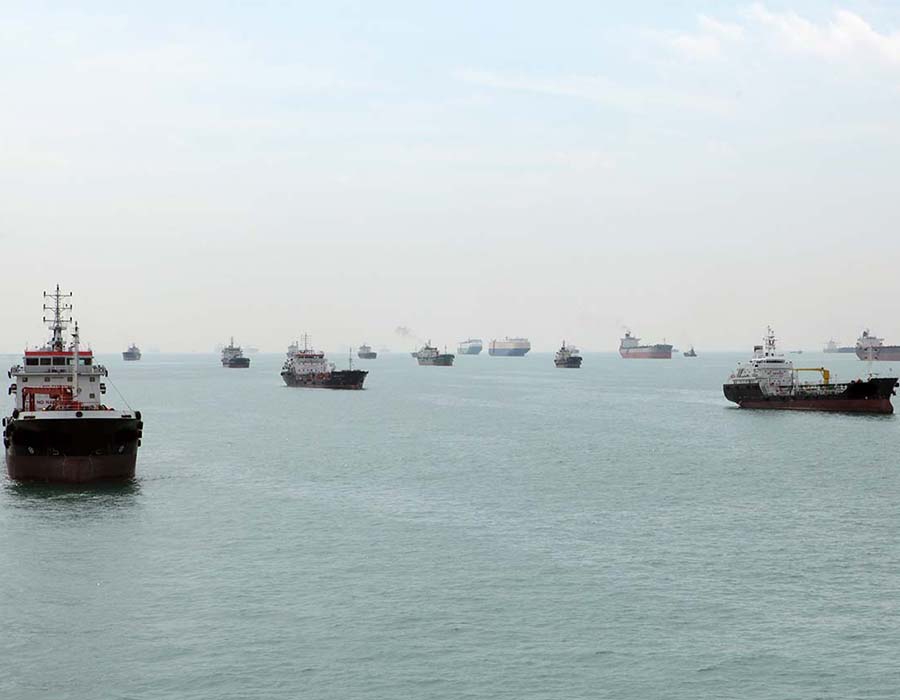
Singapore bunker tankers

The 300% price drop in the West Texas intermediate (WTI) contract price for May, from USD 17.85 a barrel to minus USD 37.63 on Monday night (Singapore time), will not significantly impact the overall Singapore bunkering market, learned Manifold Times.

The Singapore bunkering publication spoke with a variety of local marine fuel consultants, traders and suppliers on Tuesday to confirm the development; they provided the reason for the historical fall in WTI oil prices, while explaining its limited impact on the sector.

Azure Strategic Resources

“Nobody has seen it [a negative WTI price] before, and everybody gets excited,” said Dennis Ho, Director & Founder of Azure Strategic Resources, a boutique consultancy firm advising mainly on commercial aspects of the marine fuels sector.

Ho explained the main reason for the price drop on the WTI benchmark was mainly due to a flurry of sellers looking to close the May WTI contract expiring on Tuesday (21 April) before delivery.

“A lot of players were taking financial contracts through ETF [exchange-traded funds] for the May contract and when the price dropped they started panicking to clear their position. The new frontline contract for WTI in June is trading at around USD 21 per barrel and will be a better indicator of market value.

“However, if one takes things into perspective the situation is an indication of a near term problem of physical U.S. based players running out of storage as even when the WTI price is negative they cannot take on additional oil in the near term.”

According to Ho, the bunkering sector will be expecting a downward correction of bunker prices on Tuesday (21 April) due to the negative value coming from the sensation of the WTI prices and lower value of Brent crude, a global benchmark for oil prices mainly referenced by players from the fuel oil and bunkering sector [instead of the US-centric WTI].

“However, the overall concern for bunkers is still the ongoing unfortunate issues surrounding Hin Leong Trading. This will negatively impact the availability of credit for the bunkering market and is a bigger concern which most players are focusing on,” he states.

“With the COVID-19 pandemic, oil prices crashing, Hin Leong issues and credit tightening, we are all right in the middle of a perfect storm and not getting out anytime soon.”

SDE International

“Physical bunker players that may have already purchase fuel or already have them in stock will definitely be affected by the fall in the oil prices,” said Simon Neo, Executive Director at SDE International which focuses on consultancy work related to the marine fuels sector.

“They may have to sell at a loss unless they are able to hold it till the oil prices goes up again; but nobody knows given the current market conditions. If suppliers hold stocks, are they willing to sell at these kind of low oil prices?

“But what most players will be concerned in today’s market is the credit crunch due to the banks’ confidence level [with the bunkering sector]. This is something which will hit the bunker suppliers more than the oil price. Even if the oil price is low, banks may not finance a deal. So, we will have to wait and see how the whole situation pans out.”

Feedback from Bunker Traders

The fall in WTI benchmark oil prices will result in limited direct disruption to Singapore’s marine fuel trading operations due to the majority trading on Brent, said traders. However, the group was wary of being indirectly affected by developments from other related sectors.

“My side isn’t expecting any drastic changes as the Singapore marine fuels market trades bunker cargo on Brent and few people look at WTI for prices. Cargo wise, Brent is much more internationally recognised,” said the Director of a Singapore-based bunker trading firm.

“In a nutshell, there is not much effect for the trading side.”

The Marine Fuels Trading Manager of a foreign based oil commodity firm believed the fall in WTI benchmark oil prices could potentially affect bunker trading houses in two ways.

“The fall of the crude oil prices affects the price of bunkers directly. Hence, the cost of bunkers is much lower now, which means our credit exposure to our clients are also reduced, which is a good thing,” he told Manifold Times in an email statement.

“However, the fall in bunker prices could mean some physical suppliers may get caught out by it and face significant losses. We have to monitor all our suppliers closely on any red flags that show them to be facing financial difficulties.”

“The Singapore bunker market is aligned more to movement on the Brent oil benchmark. So, although the WTI dropped drastically, there wasn’t drastic movement in today’s local market,” shared a Senior Trader.

“Singapore remains one of the most competitive ports in Asia. Hence, price competitiveness is a key driver to generate demand, and demand for Singapore bunkers hasn’t really dampen with the COVID-19 issues as MPA recorded steady results [from March bunker sales].

“But with various ports that have excess oil and limited inventory storage, we could potentially see depressed bunker prices which will likely pose more competition to Singapore’s current bunker prices.”

A bunker trading source at an oil major offered a view of the current situation.

“Overall market sentiments remain bearish. We are witnessing demand destruction of an unprecedented scale with planes grounded and countries on lock down. These low absolute oil prices could see banks/lenders making margin calls,” said the source.

“Immediate near-term concerns would be the potential of another set of credit crunch leading to more defaults in an already troubled market.”

The development, overall, is generally good for the bunker trading sector but speaks otherwise of the situation at large, says the Director of a bunker trading firm.

“The fall in oil prices, though for not very good reasons, produces positive effects for the bunker trading business,” he says.

“Customers pay lesser for oil; cash flow for traders will be better as we can now utilise much more than before; and credit lines exposed to clients are less.

“However, it is not surprising that some bunker suppliers have taken positions and now will need to pay margin calls to banks. If you have 50kt of inventory and you have haven’t hedged it correctly, you are screwed.”

Viewpoint from Singapore Bunker Suppliers

Local bunker suppliers generally echoed sentiments of their bunker trading peers, but additionally suggested players involved in storage operations could be negatively affected by the fall in WTI benchmark oil prices.

“WTI dropped a lot due to players having to take physical delivery of stock prior to contract expiry,” the Director of a Singapore-based bunkering firm told Manifold Times.

“Whereas, the fuel oil market in Singapore is more correlated to the Brent index. In addition, we are not affected by the expiry date. Hence, there are limitations to the effects in the bunker market by the fall in WTI oil prices.”

A management level executive at another Singapore bunker supplier believed the fall in WTI prices will unlikely affect players who have not yet taken positions in the market.

“To some extent, the issue boils down to two types of bunker suppliers in the Singapore market; entities who actually take a position and firms who don’t,” he explained.

“Players who have bought and stored cargoes on their floaters or shore storages at an earlier date will be affected.

“The bulk of bunker suppliers in Singapore are the smaller ones who don’t take position and simply buy ex-wharf, and will not face much impact due to the time difference. In fact, the decrease in prices may offer a good position for me as I can buy and supply more with the existing credit line.”

The owner of a bunker supplier whose business predominantly focuses on providing barging services for oil majors says this is the first time he has encountered negative oil prices.

“I don’t think anyone can really predict how it’s going to pan out. It’s also unclear if this was related to the closing of some contracts by the end of the month or if this is going to be a prolonged situation,” he shared.

“There will be a lot more pressure on OPEC+ countries to reach a clear and aggressive agreement to limit production. And moving forward, those who gambled in the past month or two are in for a bumpy ride.”


Photo credit: Manifold Times
Published: 21 April, 2020

Continue Reading

Mass Flowmeter

Hong Kong backs MFM adoption with voluntary scheme to boost bunkering competitiveness

Hong Kong’s Marine Department launched the Quality Bunker Operator Scheme to encourage bunker operators to install and use mass flow meter systems on their bunker vessels.

Admin

Published

on

By

RESIZED EH dual mfm setup

Hong Kong’s Marine Department (MD) on Wednesday (3 June) launched the Quality Bunker Operator Scheme to encourage bunker operators to install and use mass flow meter systems (MFM systems) on their bunker vessels.

MD said the scheme aims to enhance Hong Kong’s bunkering service quality and the competitiveness of Hong Kong ports, thereby further consolidating Hong Kong’s position as an international maritime centre and a major bunkering port.

Under the Scheme, bunker operators of traditional maritime fuel and biodiesel that install and use MFM systems on their bunker vessels, with the MFM systems inspected and certified by an accredited body in accordance with the International Organization for Standardization’s ISO 22192 Standard or equivalent requirements, can apply to the MD for inclusion in the scheme’s “List of Quality Bunker Vessels”, provided they meet the relevant technical and operational requirements. 

Details of the bunker vessels successfully included in the List will be published on a dedicated page on the MD’s website for reference by shipping companies and relevant stakeholders.

Participation in the Scheme is voluntary. In addition to receiving recognition from the MD, participating bunker operators will benefit from enhanced corporate image and competitiveness through the adoption of MFM systems, thereby boosting customers’ confidence and helping to create new business opportunities.

 A spokesman for the MD, said: “As an international maritime centre supported by our country, Hong Kong has a strategic location adjacent to major international fairways. Coupled with years of development in marine fuel bunkering, Hong Kong possesses rich experience and talent in the field. For many years, Hong Kong has consistently ranked as the seventh-largest bunkering port globally, the second-largest in our country, and the largest in the Greater Bay Area, providing reliable and competitive fuel bunkering services to ocean-going vessels from around the world. 

“As the international shipping industry has an increasing demand for accuracy and transparency in bunkering services, service quality and measurement precision in bunkering operations have become important indicators of a bunkering port’s competitiveness. The Scheme will enhance bunkering accuracy and transparency, further enhancing the quality of Hong Kong’s bunkering services.

The spokesman added that comprehensive port services are one of Hong Kong’s key advantages as an international maritime centre.

“We will also mandate the use of MFM systems on all methanol bunker vessels this year to ensure that Hong Kong continues to provide high-quality bunkering services in the era of green maritime fuels.” 

Note: The application form for the Scheme can be found on the MD’s website. Interested bunker operators can download the application form from the website or contact the MD’s Green Maritime Fuel Team via email ([email protected]) for details.


Photo credit: Manifold Times
Published: 4 June, 2026

Continue Reading

Alternative Fuels

MPA and MSC ink MoU to support adoption of alternative bunker fuels

MPA and MSC will explore new routes and services to strengthen connectivity, support the adoption of alternative marine fuels such as bio-LNG, and advance technologies to improve vessel energy efficiency.

Admin

Published

on

By

MPA and MSC ink MoU to support adoption of alternative bunker fuels

The Maritime and Port Authority of Singapore (MPA) on Wednesday (3 June) said it signed a Memorandum of Understanding (MoU) with MSC Mediterranean Shipping Company to strengthen collaboration in maritime decarbonisation, digitalisation, innovation, and manpower development. 

The MoU was signed on 25 May 2026 by Mr Ang Wee Keong, Chief Executive of MPA, and Mr Soren Toft, Chief Executive Officer of MSC.

The MoU underscores the shared commitment of MPA and MSC to foster a sustainable, digital, and future-ready maritime sector, while enhancing MSC’s operational and business activities in Singapore. This year also marks the 30th anniversary of MSC establishing its Asia Regional Office and local office in Singapore.

Under the MoU, MPA and MSC will explore new routes and services to strengthen connectivity, support the adoption of alternative marine fuels such as bio-LNG, and advance technologies to improve vessel energy efficiency and operational performance.

MPA and MSC will also collaborate on maritime digitalisation initiatives to improve operational efficiency, including streamlining vessel arrivals and port operations. 

On manpower development, MSC will support internship and scholarship opportunities through Singapore Maritime Foundation’s Maritime Outreach Network (MaritimeONE) platform, an industry-led tripartite partnership comprising industry, government and institutes of higher learning that aims to raise awareness of the maritime industry and attract quality talent into the maritime sector.

Mr Ang Wee Keong, Chief Executive of MPA, said: “This partnership reflects the strong collaboration between MPA and MSC in driving sustainability and digitalisation in the maritime sector. By working together on decarbonisation, operational efficiency and talent development, we aim to strengthen Maritime Singapore’s position as a trusted and future-ready global maritime hub.”

Mr Soren Toft, Chief Executive Officer of MSC, said: “Singapore is a strategically important hub for MSC and a key gateway to the broader Asia region. As we mark 30 years in Singapore, this MOU reinforces our long-term commitment to strengthening our presence here. MSC and Singapore are closely aligned on the priorities shaping the future of global shipping, and we look forward to deepening this partnership to drive the continued growth and resilience of the maritime industry.”


Photo credit: Maritime and Port Authority of Singapore
Published: 4 June, 2026

Continue Reading

Emissions reporting

StormGeo and OceanScore link emissions data, compliance workflows

Cooperation combines StormGeo’s expertise in operational vessel and emissions data with OceanScore’s expertise in emissions compliance workflows across EU ETS, FuelEU Maritime and UK ETS requirements.

Admin

Published

on

By

StormGeo and OceanScore link emissions data, compliance workflows

Weather intelligence and decision support solutions provider StormGeo and Hamburg-based technology platform OceanScore on Wednesday (3 June) said they have deepened their ongoing cooperation through the signing of a collaboration agreement during Posidonia 2026 in Athens on 2 June.

The cooperation combines StormGeo’s expertise in operational vessel and emissions data with OceanScore’s expertise in emissions compliance workflows across EU ETS, FuelEU Maritime and upcoming UK ETS requirements.

Together, the companies aim to help shipping companies seamlessly navigate increasing regulatory complexity more efficiently — from emissions reporting and data validation to compliance exposure management, pooling and financial settlement.

As emissions regulation becomes an increasingly important part of commercial shipping operations, the need for reliable operational data and streamlined compliance processes continues to grow. The cooperation between StormGeo and OceanScore is designed to support shipping companies with more connected, transparent and actionable processes across operational and commercial teams.

“From the outside, companies like StormGeo and OceanScore may sometimes be perceived as competitors because both operate around emissions and compliance workflows,” said Albrecht Grell, Managing Director at OceanScore. 

“But in reality, the industry increasingly needs both perspectives working together: trusted operational emissions data on one side and commercial compliance execution on the other. Our cooperation reflects that shipping companies are no longer looking for isolated solutions — they need connected processes, automated across different systems and reliable decision-making throughout the full compliance chain.”

By connecting validated operational emissions data with commercial compliance management, the cooperation supports workflows across:

  • emissions reporting and validation 
  • compliance management across EU ETS, FuelEU Maritime and upcoming UK ETS requirements
  • exposure visibility and cost transparency
  • pooling, settlement and financial processes 

The cooperation also aims to improve commercial transparency and coordination across operational and commercial stakeholders.

“StormGeo plays a central role in helping shipping companies turn operational vessel and emissions data into trusted, decision-ready insights,” said Espen Martinsen, Chief Commercial Officer at StormGeo. 

“As emissions regulations become more complex, this data is essential for transparent and efficient compliance management. By working with OceanScore, we can help customers connect StormGeo’s validated operational data with commercial compliance processes, creating a more integrated and practical approach to emissions management.”

The signing ceremony took place at the StormGeo booth during Posidonia 2026 in Athens and was attended by representatives from both companies.

Both companies expect the cooperation to continue evolving alongside upcoming regulatory developments, including FuelEU Maritime, EU ETS, the upcoming UK ETS and future emissions-related frameworks affecting global shipping.


Photo credit: StormGeo
Published: 4 June, 2026

Continue Reading

Trending