Connect with us

LNG Bunkering

Study reveals ‘compelling investment case’ for LNG as a marine fuel

SEALNG commissioned analysis reveals scrubbers to be ‘significantly more expansive’ than widely reported.

Admin

Published

on

5c495b2c1e0e1 1548311340

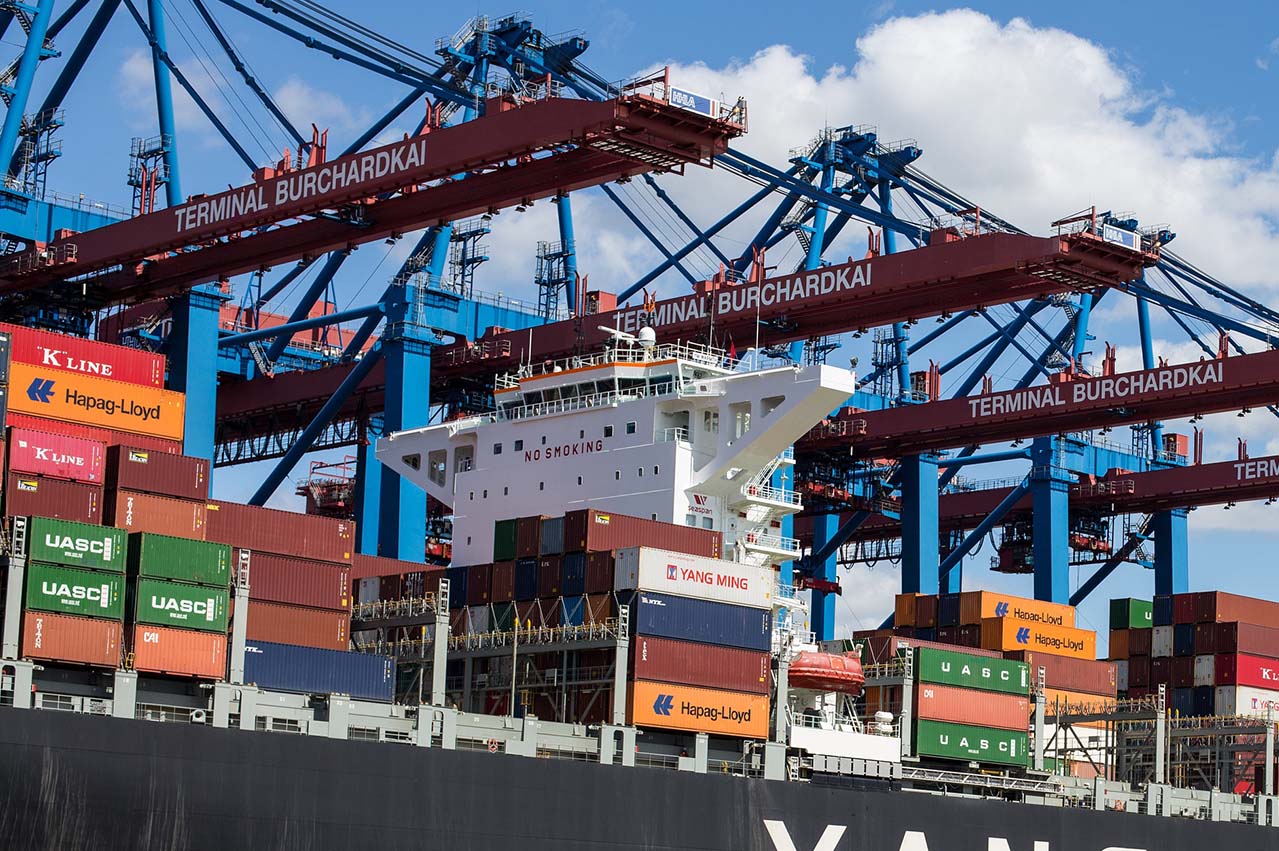
SEALNG, a multi-sector industry coalition aiming to accelerate the widespread adoption of liquefied natural gas (LNG) as a marine fuel, on Wednesday (23 January) released an independent study revealing a strong investment case for LNG as a marine fuel in the container shipping market.

“We commissioned this study from independent simulation and analytics expert Opsiana to support shipowners and operators in analysing their investment opportunities in an informed way, while simultaneously providing deeper analysis of the assumptions that go into the 2020 decision process,” said Peter Keller, Chairman, SEALNG.

 “The study unequivocally shows that for this vessel type, on this trade route, LNG as a marine fuel delivers the best return on investment on a net present value (NPV) basis over a conservative 10-year horizon, with fast payback periods ranging from one to two years.”

The results of the study, which analyses the case of a newbuild 14,000 TEU container vessel operating on an Asia-US West Coast (USWC) liner routing and compares six fuel pricing scenarios, challenge commonly held assumptions in relation to the economic performance of LNG bunkers.

The results are even more compelling given the investment scenarios are compiled and compared based upon on a route with very little voyage time (8%) in Emission Control Areas (ECAs). 

LNG is also proven to be the best investment across a broad spectrum of business climates from strong freight markets with elevated vessel operating speeds to weak freight markets where slow steaming is employed.

The study further indicates that LNG provides a greater ROI than alternative compliance solutions, including the installation of Exhaust Gas Cleaning Systems (EGCS), or scrubbers, across 5 out of 6 of the fuel scenarios explored.

It also reveals a diminishing CAPEX hurdle, competitive energy costs, the stability of LNG pricing, and the realistic cost of scrubbers. Moreover, these higher returns were achieved without factoring in the significant additional benefits gained (in terms of CO2 generated and pollutants produced per TEU transported) by choosing LNG as a more environmentally-friendly marine fuel.

The analysis is supported by SEALNG’s 36 member organisations, who contributed maritime expertise and current, timely background information and data from across the LNG value chain.

While this study focuses specifically on the investment case for LNG within a key liner trade route, the coalition is collaborating with third parties on further independent research which will analyse the investment case for different vessel types and additional liner trade routes.

“At a time when shipowners and operators deserve factual information with which to analyse options in an informed way, there have been too many unqualified assumptions about the investment case for LNG,” concludes Keller.

“While there remain many unanswered questions about the choice and prices of marine fuels going into 2020, SEALNG will continue its commercially-focused studies to provide authoritative intelligence regarding the investment case for LNG as a marine fuel for shipowners, shipyards, ports and wider stakeholders.”

To access the full investment case study LNG as a Marine Fuel – The Investment Opportunity please click here.

Published: 24 January, 2019
 

Continue Reading

LNG Bunkering

Osaka Gas conducts Osaka Bay’s first STS LNG bunkering operation

Acting through Singapore-based marine fuel trading firm Integr8 Fuels, Osaka Gas supplied LNG bunker fuel to an LNG-fuelled PCTC operated by an overseas shipping company calling at the Port of Kobe.
Admin

Published

on

By

Osaka Gas conducts Osaka Bay’s first STS LNG bunkering operation

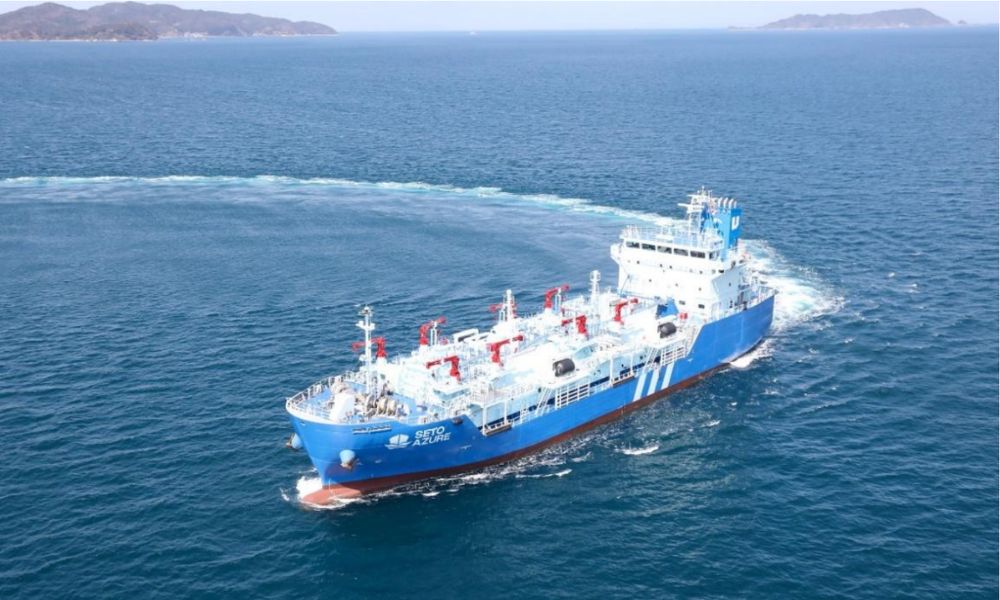
Japanese energy company Osaka Gas on Friday (4 September) said it has successfully completed the first-ever ship-to-ship LNG bunkering operation in Osaka Bay, supplying LNG fuel to an LNG-fuelled PCTC.

The operation was conducted using SETO AZURE, an LNG bunkering vessel owned by Osaka Bay LNG Shipping Co Ltd, an affiliated company of Osaka Gas. 

Acting through Integr8 Fuels Pte Ltd, a Singapore-based marine fuel trading company, Osaka Gas supplied LNG fuel to an LNG-fuelled PCTC operated by an overseas shipping company calling at the Port of Kobe.

Ship-to-ship bunkering will help ensure a stable supply of LNG fuel in the Osaka Bay area and support the development of the Port of Kobe as a Carbon Neutral Port.

In addition to ship-to-ship bunkering, Osaka Gas provides LNG fuel through truck-to-ship bunkering and port-to-ship bunkering. With capability covering all three major LNG bunkering methods, Osaka Gas provides flexible and reliable LNG fuel supply services to meet customers’ diverse needs.

The company said LNG bunkering infrastructure in Japan remains insufficient, highlighting the need to establish a stable fuel supply network to support the wider adoption of LNG-fuelled vessels.


Photo credit: Osaka Gas
Published: 8 September, 2026

Continue Reading

Alternative Fuels

ORLEN and Port of Gdynia to explore LNG and bio-LNG bunkering in Poland

Cooperation will examine market demand, the potential scale of LNG and bioLNG bunkering, required infrastructure, operating conditions and the regulatory framework needed to support future services.
Admin

Published

on

By

ORLEN and Port of Gdynia to explore LNG and bio-LNG bunkering in Poland

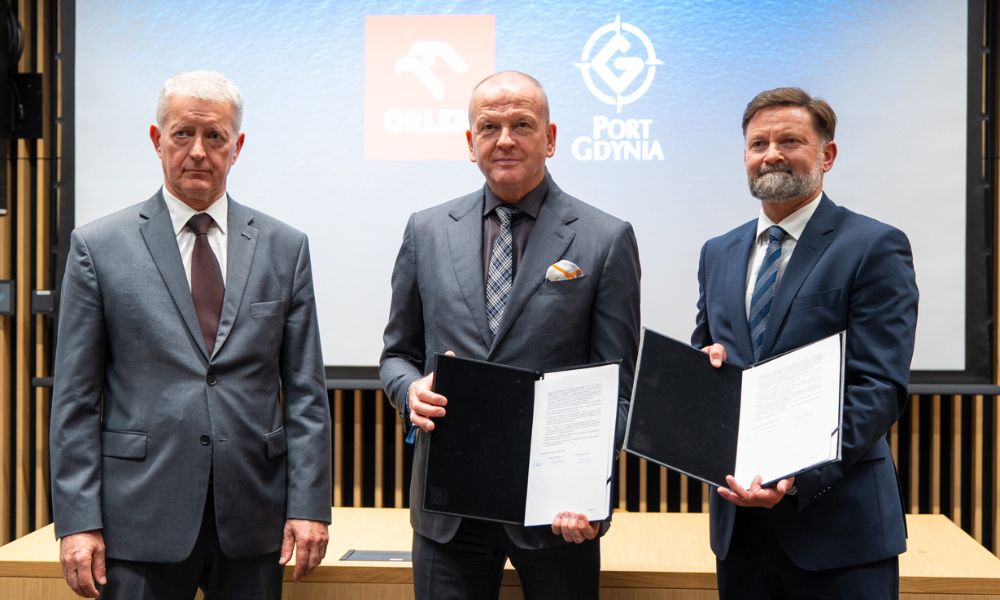
Polish energy company ORLEN on Friday (4 September) said it has signed an agreement with Port of Gdynia Authority to assess the development of LNG and bioLNG bunkering services for marine vessels, as both organisations explore infrastructure and market solutions that could expand access to alternative fuels along the Polish coast.

The cooperation will examine market demand, the potential scale of LNG and bioLNG bunkering, required infrastructure, operating conditions and the regulatory framework needed to support future services.

One of the main areas under consideration will be waterside bunkering, including ship-to-ship operations, where fuel is transferred directly from a bunker vessel to another ship while in port.

Robert Soszyński, Vice President of the ORLEN Management Board for Operations, said the cooperation with the Port of Gdynia forms part of the Group’s broader fuel portfolio transformation through 2035.

Under ORLEN’s strategy, natural gas, including LNG, is expected to retain an important role as a transitional fuel supporting energy security and transport decarbonisation.

The company is seeking to strengthen capabilities across the full value chain, including fuel sourcing, logistics and final use.

At the same time, ORLEN is developing renewable fuel capabilities, including bioLNG, which the company sees as a potential route for reducing emissions in heavy-duty road transport and shipping.

Soszyński said ORLEN’s ambition is to work with ports not only as a fuel supplier but also as a partner in developing infrastructure and market conditions for alternative marine fuels in Poland and the wider region.

Piotr Gorzeński, CEO of the Port of Gdynia Authority, said the shipping industry’s energy transition is already changing the fuel and technology requirements faced by ports.

“Shipowners are increasingly examining ways to reduce emissions, while ports need to be capable of serving vessels using a wider range of propulsion technologies and fuels,” he said. 

The cooperation will include knowledge sharing and an assessment of requirements among shipowners and port users, particularly operators of scheduled ferry, container and ro-ro services.

ORLEN and the Port of Gdynia will also analyse bunkering models used at other European ports.

Among the options under review will be the suitability of ship-to-ship bunkering for larger vessels and the possibility of supplying fuel while ships are alongside the berth.

The partners will also examine whether bunkering could take place in parallel with cargo-handling operations.


Photo credit: ORLEN
Published: 8 September, 2026

Continue Reading

LNG Bunkering

Singapore-based EPS takes delivery of three LNG dual-fuel bulk carriers

Three vessels are the third, fourth and fifth in the company’s series of 14 Newcastlemaxes being built at the yard, and were delivered five months ahead of their contracted delivery dates.
Admin

Published

on

By

35

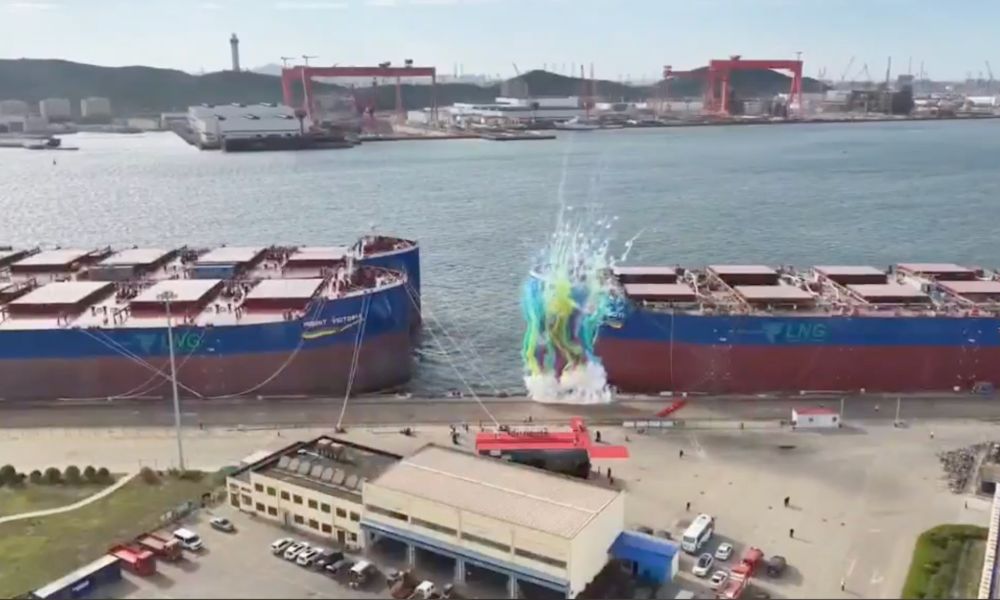
Singapore-based Eastern Pacific Shipping (EPS) on Friday (4 September) announced the naming and delivery of three new LNG dual-fuel Newcastlemax bulk carriers from China’s Qingdao Beihai Shipbuilding. 

Cyril Ducau, CEO of EPS, said the vessels were named Mount Victoria, Mount Yulong and Mount Wuyi

The three vessels are the third, fourth and fifth in the company’s series of 14 Newcastlemaxes being built at the yard, and were delivered five months ahead of their contracted delivery dates.

“A big thank you to CSSC Group and Qingdao Beihai Shipbuilding, working alongside our EPS team, for the tremendous collaboration and commitment behind this achievement,” Ducau said in a social media post.  


Photo credit: Eastern Pacific Shipping
Published: 7 September, 2026

Continue Reading

Trending