Connect with us

Alternative Fuels

Singapore: Nanyang Technological University studies methanol bunkers

Project will see proven marine engine installed in Singapore harbour craft for testing and evaluation.

Admin

Published

on

5c33e6891a6ee 1546905225

The Methanol Institute on Monday provided Manifold Times an update on a collaboration project with Nanyang Technological University at Singapore:

The Methanol Institute (MI) is backing a project at Nanyang Technological University (NTU) of Singapore which will be the first evaluation of Methanol as a marine fuel in Asia.

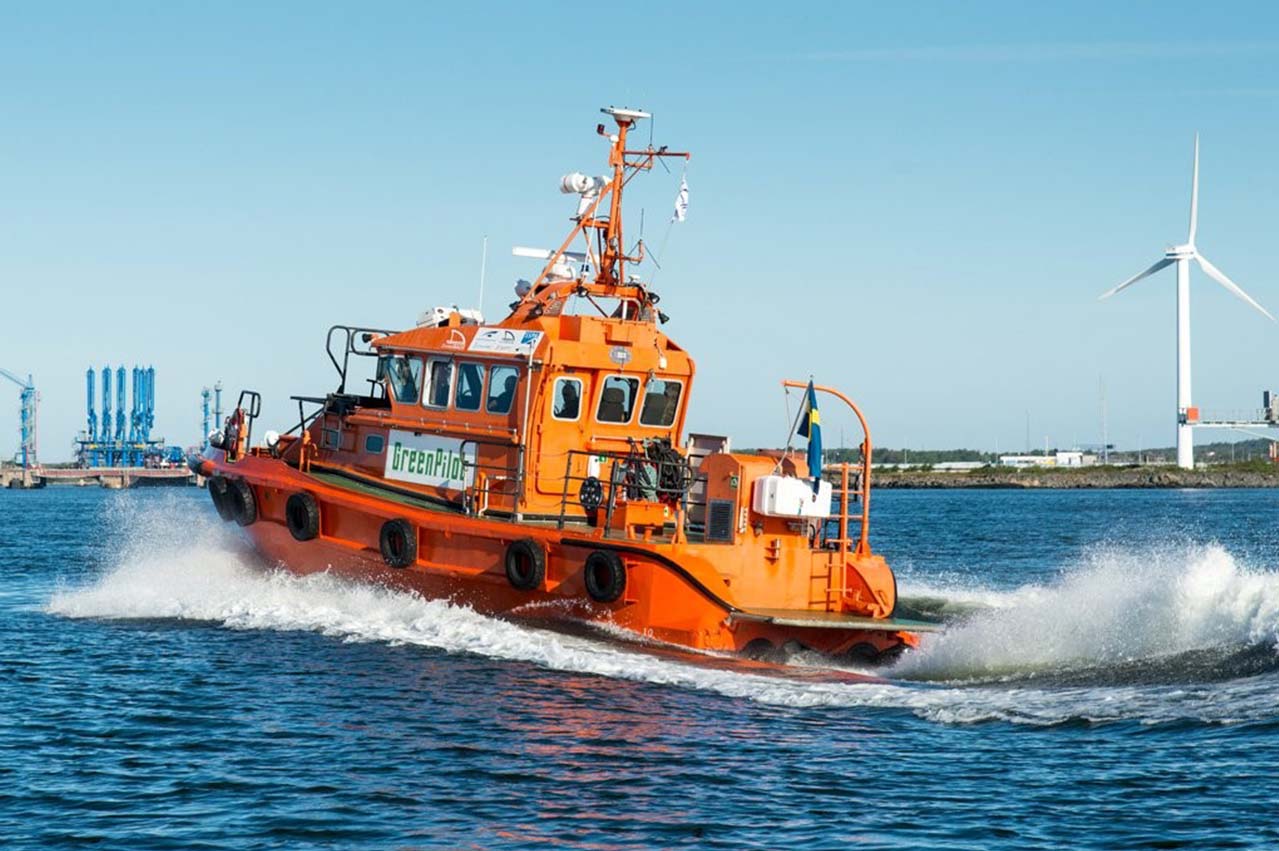
The project consists of two phases, with the first consisting of desktop and bench-testing the Methanol-powered engine employed in the GreenPilot evaluation programme in Gothenburg, Sweden. In the second phase, the engine will be shipped to Singapore for installation onboard a harbour craft vessel for service within a fleet for a six-month sea trial, followed by an engine ‘teardown’ to test clearances and material compatibility.

The costs of the pilot project are estimated at S$200,000 and will cover the installation of the engine, bunkering, training and subsequent sea trials. The data collected will be shared with a number of official observers to help to fill some of the knowledge gaps on Methanol, including its level of fuel efficiency and viability as marine fuel.

“For maritime players in Singapore, the project will be a useful demonstration of the benefits of Methanol as a marine fuel, encouraging them to consider it as an alternative fuel once they gain a better understanding,” says Methanol Institute Chief Operating Officer Chris Chatterton. “The GreenPilot project together with others such as the SUMMETH (Sweden) and Methaship (Germany) projects, have shown that Methanol can be easily adopted as a marine fuel at reasonable cost and without the complexity of other low emission alternatives.”

A team from NTU recently returned from Gothenburg, Sweden, where they spent a week assessing the technical and safety merits of methanol-fuelled engines in commercial applications with ScandiNAOS, Stena Line and Lund Technical University.

The GreenPilot project demonstrated that it is feasible to convert a pilot boat to methanol operation using available technology. Spark-ignited engines with port-injected methanol were found to have engine efficiency similar to diesel engines. Emissions reductions were substantial compared to conventional fuel oil: there is no sulphur in methanol and NOx emissions were reduced so that the engine could meet Tier III NOx emission standards.

Particulate emissions from combustion were 99% lower than those from conventional fuel oil and when methanol from fossil-free feedstock is used, greenhouse gas emissions can be reduced significantly. The results and findings from the GreenPilot project are considered to be applicable for many other types of smaller vessels, which could achieve similar emissions reductions from using methanol as fuel.
 
“The maritime industry is increasingly looking for more sustainable solutions to help deliver targeted emissions reductions and the prospect of renewable methanol offers a future proof answer,” adds Chatterton. “Methanol fuelled ships can already use existing fuel tanks or even ballast water tanks for storage, thereby lowering the investment risks of newbuilding or conversion, and the regulatory landscape is also moving in Methanol’s direction.”

The regulatory environment governing Methanol as marine fuel took a further step forward in December 2018 when the 100th meeting of IMO’s Maritime Safety Committee instructed its sub-committees to consider relevant parts of the draft interim guidelines prepared by the CCC 5 sub-committee for the safety of ships using methyl/ethyl alcohol as fuel.

The sub-committees will provide their feedback to CCC6 in September 2019 and the interim guidelines should be ready for formal approval by MSC in the first half of 2020. The guidelines provide requirements for the arrangement, installation, control and monitoring of machinery, equipment and systems using methyl/ethyl alcohol as fuel to minimize the risk to the ship, its crew and the environment, taking into account to the nature of the fuels involved.

Related: Beyond 2020: Why methanol will take its place in the marine fuels mix
Related: SUMMETH project approves of methanol as bunker fuel
Related: MethaShip Project: Renewable methanol is ‘fuel with a future’
Related: IMO makes progress towards including methanol in gas-fuelled ship code

Photo credit: Methanol Institute
Published: 8 January, 2019


Continue Reading

Biofuel

BHP and GCMD trial multi-feedstock B100 bio bunker fuel on bulk carrier

Bio-blend in the BHP and GCMD pilot is being used on a BHP-chartered bulk carrier “Berge Lyngor”, which was bunkered in Singapore in early May.

Admin

Published

on

By

BHP and GCMD trial multi-feedstock B100 bio bunker fuel on bulk carrier

BHP and the Global Centre for Maritime Decarbonisation (GCMD) on Wednesday (3 June) said they have blended biofuels from two distinct feedstocks—used cooking oil and waste animal fats —and introduced the lower-emissions marine fuel into a BHP-chartered bulk carrier as part of a pilot project.

The bio-blend in the BHP and GCMD pilot is being used on a BHP-chartered bulk carrier Berge Lyngor, owned and operated by Berge Bulk, transporting BHP iron ore from Western Australia to China. When run on bio-blend, the vessel has the potential to reduce well-to-wake greenhouse gas emissions by approximately 79 per cent per voyage compared to sailing on very low sulphur fuel oil (VLSFO).

The vessel bunkered in Singapore in early May with a B100 bio-blend comprising 50 percent tallow-derived biodiesel, sourced and supplied by HAMR Energy, and 50 per cent used cooking oil (UCOME) supplied by Mitsui & Co Energy Trading Singapore (METS).

Mitsui also blended the fuel and Dan-Bunkering coordinated and executed the bunkering operation, which was performed by Global Energy’s barge MT Maple.

The BHP and GCMD pilot will assess how biofuels from multiple feedstocks can be blended, handled, and introduced under real-world operating conditions using existing used cooking oil bunkering infrastructure.

At the same time, insights from this pilot will help identify solutions to challenges related to fuel quality, handling, traceability, and onboard vessel performance.

Biofuels for global shipping today rely heavily on used cooking oil – a feedstock whose availability is approaching its projected limits. Biofuel from waste animal fats presents a promising option to expand the supply of lower-emissions marine fuels.

The outcomes of the pilot are expected to shed light on the practical steps to integrate biofuel blends from different feedstocks into existing supply chains. The diversity of biofuels will provide shipowners and operators with greater flexibility to optimise fuel procurement based on cost, availability, and lifecycle emissions performance.

Biofuels derived from different feedstocks can exhibit varying properties that may impact operations, including potential corrosion from oxidation, fuel system clogging caused by wax formation, which this pilot aims to assess.

The pilot will trace and verify the biofuel blend’s integrity aimed at bolstering confidence in emissions reductions reporting. The pilot will also provide insights into how robust tracing can support future marine fuel supply chains where biofuels from multiple feedstocks with varying lifecycle greenhouse gas emissions footprints are blended together.

This project is co-funded by the Maritime and Port Authority of Singapore under the Maritime Innovation and Technology Fund (MINT).


Photo credit: Global Centre for Maritime Decarbonisation
Published: 3 June, 2026

Continue Reading

Biofuel

NYK starts one-year B100 bio bunker fuel trial on car carrier

In this trial, NYK will operate a car carrier continuously on B100 for one year to evaluate the impact on engines, fuel supply systems, and operational practices.

Admin

Published

on

By

NYK starts one-year B100 bio bunker fuel trial on car carrier

Japanese shipping firm NYK on Tuesday (2 June) said it has commenced a one-year long-term trial involving the continuous use of 100% biofuel (B100) on an NYK-operated car carrier. 

In this trial, NYK will operate a car carrier continuously on B100 for one year to evaluate the impact on engines, fuel supply systems, and operational practices. High-purity biofuels such as B100 are known to be susceptible to degradation from oxygen, light, and heat, raising concerns about the stability of such fuels during long-term use.

In this trial, the biofuel primarily comprises FAME (Fatty Acid Methyl Ester) derived from used cooking oil and similar feedstocks.

The initiative is designed to evaluate the fuel’s effects on the vessel’s equipment and verify operational safety under real-world conditions. 

Through this effort, NYK seeks to accumulate technical expertise that will support the broader use of high-purity biofuels and further accelerate efforts to reduce greenhouse gas (GHG) emissions.

NYK has been advancing the use of biofuels through various initiatives. In 2024, the company conducted a trial using biofuel blend B24 and subsequently expanded practical usage to B30. However, the company said there remains limited global experience with the long-term continuous use of B100.

“By collecting long-term operational data through this trial, NYK aims to accumulate valuable technical insights to support both the safe operation of vessels and the wider adoption of high-purity biofuels,” it said. 


Photo credit: NYK
Published: 3 June, 2026

Continue Reading

Ammonia

AM Green plans to build green ammonia plant at Indian port

Initiative also includes development of green ammonia handling, storage and bunkering infrastructure, pilot bunkering operations, safety procedures and training programmes, says VOC Port Authority.

Admin

Published

on

By

india flag

VO Chidambaranar (VOC) Port Authority on Friday (29 May) said it has signed a Memorandum of Understanding (MoU) with India’s ammonia producer AM Green Ammonia to collaborate in the development of a green ammonia production plant.

The plant will have a capacity of one million tonnes per annum (MTPA) at Tuticorin.

The initiative also includes development of green ammonia handling, storage and bunkering infrastructure, pilot bunkering operations, safety procedures and training programmes. 

The project is expected to support the development of green fuel corridors connecting VOC Port with major ports in Europe and Asia, thereby strengthening India’s position in the global green fuels value chain.

VOC Port also signed a Memorandum of Understanding (MoU) with Bureau Veritas (India) Pvt. Ltd., to collaborate on Green Port certification, emissions accounting, ESG reporting, safety validation, development of green bunkering practices, and establishment of a Centre of Excellence for green fuels and sustainability.

The port also plans for an upcoming 750 m³ green methanol bunkering facility.


Photo credit: Naveed Ahmed on Unsplash
Published: 3 June, 2026

Continue Reading

Trending