Connect with us

Legal

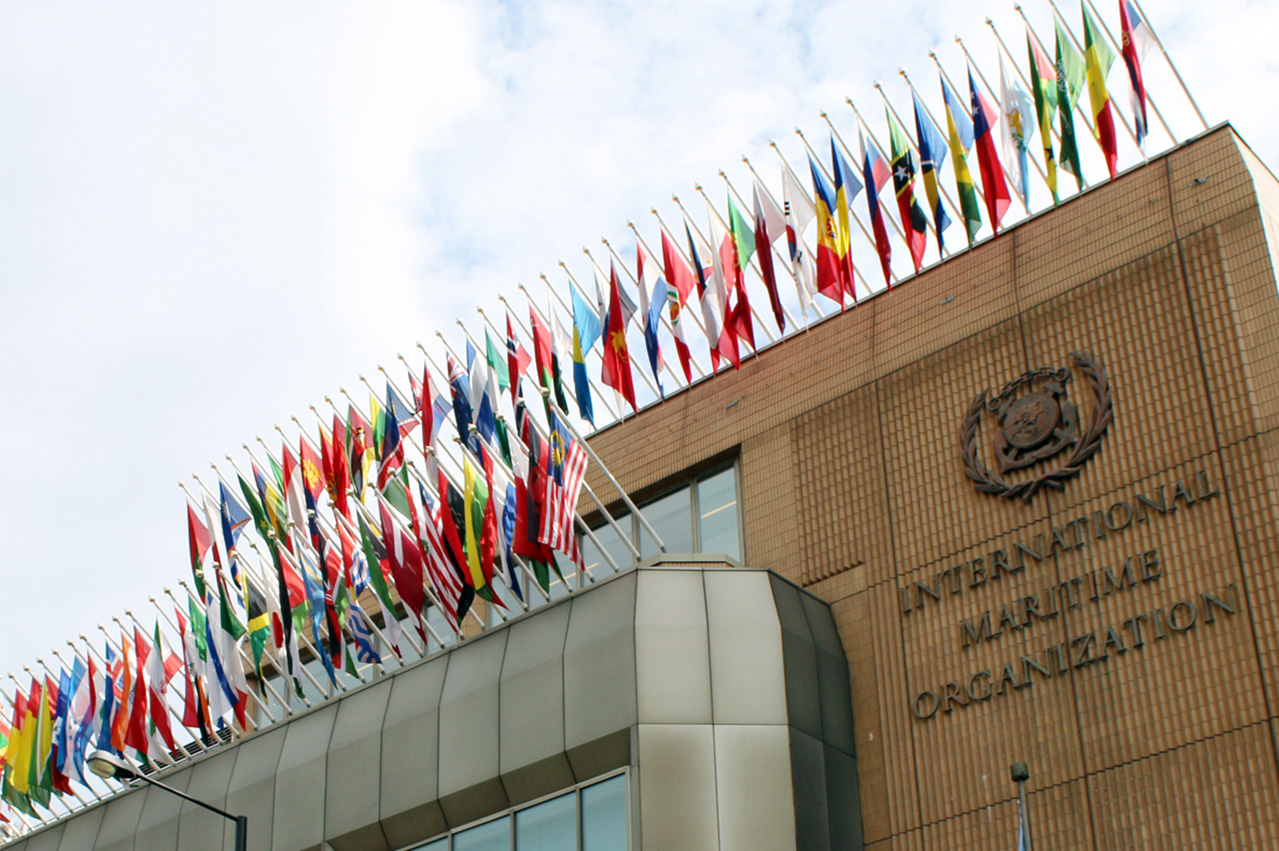
IBIA: Items of interest for members from the IMO legal committee

Unni Einemo reports on issues concerning industry stakeholders carrying bunkers as cargo or fuel on ships.

Admin

Published

on

5ae6917a291e6 1525059962

The below statement is a report written by Unni Einemo of IBIA:

Hello IBIA member. This is your IMO Representative reporting from the 105th session of the IMO’s Legal Committee (LEG 105), which met from 23-25 April, 2018 – to keep you informed on issues that may have an impact on bunker industry stakeholders, especially if you carry bunkers on your ship either as cargo or as fuel.

The last missing link in the global framework of liability and compensation conventions now looks like it may enter into force within the next few years. During LEG 105, Canada and Turkey deposited their instruments of ratification to the 2010 Protocol to the International Convention on Liability and Compensation for Damage in Connection with the Carriage of Hazardous and Noxious Substances by Sea, 1996 (2010 HNS Convention).

This was a significant step toward bringing it into force as they boosted the number of signatories to three (Norway was the first) and these three account for nearly 72% of the total quantity of contributing cargo required (40 million tonnes) in order for the instrument to enter into force.

IMO Secretary-General Kitack Lim welcomed the two deposits, noting that the 2010 Protocol now needed only nine more States to achieve entry into force. Several IMO member States declared their intention ratify the HNS Protocol within the next year or two during LEG 105.

When in force, the treaty will provide a regime of liability and compensation for damage caused by HNS cargoes transported by sea, similar in nature to those already covered by international liability and compensation regimes for oil as cargo under the International Convention on Civil Liability for Oil Pollution Damage (CLC Convention) and the associated International Oil Pollution Compensation Funds (IOPC Funds), and for bunker fuel held in ship’s tanks under the under the International Convention on Civil Liability for Bunker Oil Pollution Damage (Bunkers Convention).

The HNS Convention covers over 2,000 types of substances such as chemicals, refined oil, acids, fertilizers, alcohols, LNG and LPG. It seems to overlap with what is covered by the IOPC Funds, but may come into play for bunker tankers that carry large quantities of products that are not “contributing oil” as per the IOPC Fund definition, such as gas oil, lubricating oil, marine diesel and a range of other chemicals some bunker tankers may be involved in transporting, such as catalytic cycle oil, gas oil blend stocks and catalytic cracker feedstock, to mention some.

As with the other liability compensation schemes, the HNS Convention establishes the principle that the ‘polluter pays’ by ensuring that the shipping and HNS industries provide compensation for those who have suffered loss or damage resulting from an HNS incident. An HNS Fund will be established, to pay compensation once the shipowner’s liability is exhausted. This Fund will be financed through contributions paid post incident by receivers of HNS cargoes.

The HNS Protocol is fully developed and now just needs sufficient ratifications to enter into force. If you want to get on the front-foot to understand it, we recommend you visit this IMO webpage: http://www.imo.org/en/MediaCentre/HotTopics/Pages/HNS-2010.aspx

We have also learnt that Norway has started a project to develop a fully automated digital solution for issuing electronic CLC and Bunkers certificates.
LEG 105 was informed that these certificates were currently issued manually and that the process was both time-consuming and required a high degree of accuracy.
The proposed digital solution involves a machine-to-machine validation where the process of issuing and signing certificates is digital. This also means that the communication between the insurers and the flag State will be digital and largely automated. The electronic certificates would be issued in accordance with the Guidelines for the use of electronic certificates already established by the IMO (FAL.5/Circ.39/Rev.2).

The main benefits of digitalisation, Norway said, was that it reduces work load, reduces the risk of human errors, and we will no longer have a situation where ships are carrying outdated certificates. With digitalisation, issuance of new certificates can be done in minutes and all relevant parties can be informed at once.

Comments made in plenary were supportive with a handful of States saying they believe digitalisation can save a lot of time and resources for industry and issuing authorities – hence reducing their administrative burden.

LEG also agreed to add two so-called “new outputs” to its work programme, which in layman’s terms means adding a new item to the Committee’s agenda and invite submissions to move the work forward toward a successful conclusion.

One of these new agenda items will be called “Measures to prevent unlawful practices associated with the fraudulent registration and fraudulent registries of ships” – which will be in the 2018-2019 biennial agenda of the Legal Committee, with a target completion year of 2021.

The other new agenda item will be called “Regulatory scoping exercise and gap analysis of conventions emanating from the Legal Committee with respect to Maritime Autonomous Surface Ships (MASS)” – which will be in the biennial agenda of the Legal Committee and the provisional agenda for LEG 106, with a target completion year of 2022.

Published: 30 April, 2018
 

Continue Reading

Winding up

Singapore: Liquidators of Nan Ho Maritime, Nan Xin Maritime issue notices of dividend

Nan Ho Maritime’s second interim dividend and Nan Xin Maritime’s second and final dividend are payable from 4 September, according to Government Gazette notices.

Admin

Published

on

By

Resized benjamin child

Notices of dividend for Nan Ho Maritime Pte Ltd and Nan Xin Maritime Pte Ltd, which are currently in creditors’ voluntary liquidation, were published on the Government Gazette on Friday (4 September). 

The following are the details of the notice for Nan Ho Maritime:

Name of Company : Nan Ho Maritime (Pte.) Ltd. (In Creditors’ Voluntary Liquidation)
Unique Entity No. / Registration No. : 200814315C
Address of Former Registered Office : 21 Bukit Batok Crescent, #22-70 WCEGA Tower, Singapore 658065
Amount per centum : 2.305 per centum of all admitted ordinary claims
First and Final or otherwise : Second interim dividend
When Payable : 4 September 2026 onwards
Where Payable : c/o AAG Corporate Advisory Pte. Ltd., 11 Collyer Quay, #07-02 The Arcade, Singapore 049317

The following are the details of the notice for Nan Xin Maritime:

Name of Company : Nan Xin Maritime (Pte.) Ltd. (In Creditors’ Voluntary Liquidation)
Unique Entity No. / Registration No. : 201701966W
Address of Former Registered Office : 21 Bukit Batok Crescent, #22-70 WCEGA Tower, Singapore 658065
Amount per centum : 3.980 per centum of all admitted ordinary claims
First and Final or otherwise : Second and final dividend
When Payable : 4th day of September 2026 onwards
Where Payable : c/o AAG Corporate Advisory Pte. Ltd., 11 Collyer Quay, #07-02 The Arcade, Singapore 049317


Photo credit: Benjamin Child
Published: 7 September, 2026

Continue Reading

Vessel Arrest

Malaysia: MMEA detains two vessels over suspected illegal ship-to-ship transfer off Johor

Other than the vessels, MMEA also seized a cargo of oil, bringing the total value of the seizure to MYR 260 million (USD 61.9 million).
Admin

Published

on

By

Malaysia: MMEA detains two vessels over suspected illegal ship-to-ship transfer off Johor

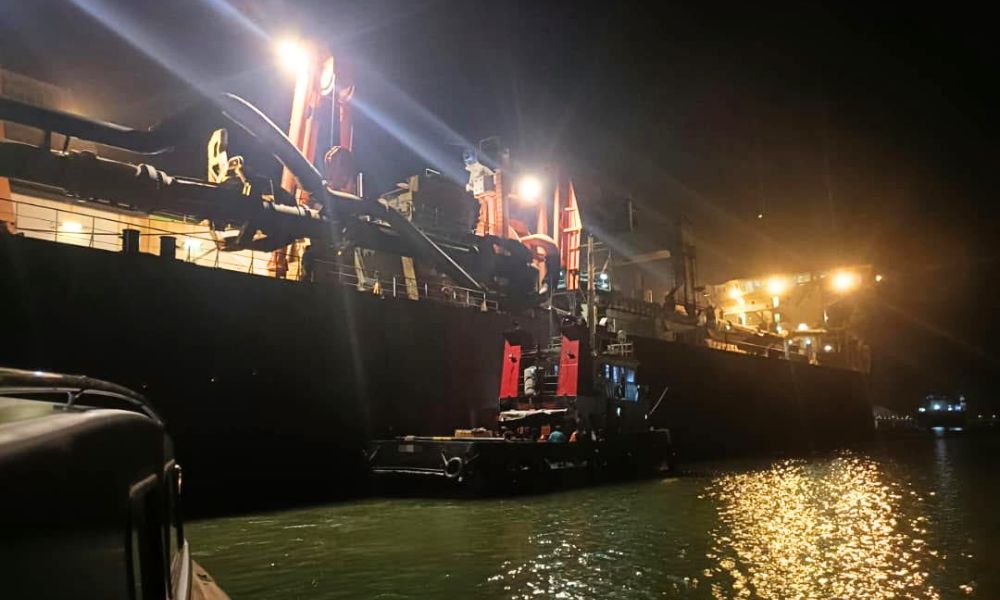
The Malaysian Maritime Enforcement Agency (MMEA) detained tugboat and dredger suspected of conducting an unauthorised ship-to-ship (STS) transfer in Malaysian waters.

The two Malaysian-registered vessels were detained at around 3.20am on Wednesday by an MMEA patrol boat after the agency received public information about two suspicious vessels seen operating alongside each other about 1.4 nautical miles northwest of Tanjung Buai.

MMEA Tanjung Sedili Zone Acting Director Maritime Commander Mohd Najib Sam said further inspection found that the tugboat was operated by five crew members, including its skipper, comprising Malaysian and Indonesian nationals aged between 26 and 58.

The dredger was operated by 13 crew members, including its skipper, all Malaysian nationals aged between 22 and 51.

“Further inspection also found a quantity of oil cargo believed to be without any documents relating to ownership and delivery,” Najib said.

Both vessels and the oil cargo have been seized for further investigation. The total value of the seizure, including the two vessels and the oil cargo, is estimated at MYR 260 million (USD 64 million).

The case is being investigated under Section 491B(1)(K) of the Merchant Shipping Ordinance (MSO) 1952 for allegedly conducting ship-to-ship activities without authorisation from the Malaysian Director of Marine.

The vessels are also being investigated under Section 491B(1)(L) of the MSO 1952 for allegedly anchoring without permission, as well as under the Customs Act 1967 in connection with the oil cargo suspected of lacking the required documentation.


Photo credit: Malaysian Maritime Enforcement Agency
Published: 3 September, 2026

Continue Reading

Bunker Claim

Rajah & Tann: Bunker disputes are won in the first 48 hours

Partner V Bala says bunker disputes depend heavily on evidence gathered in the first 48 hours, making disciplined preservation, accurate reporting and early expert involvement critical to protecting a claim or defence.

Admin

Published

on

By

Rajah & Tann: Bunker disputes are won in the first 48 hours

V Bala, a partner in Rajah & Tann Singapore’s Shipping & International Trade practice group, has highlighted the critical importance of preserving evidence in the first 48 hours of a bunker incident, outlining best practices for ship managers to protect potential claims and defences:

A vessel somewhere in the Indian Ocean reports abnormal fuel behaviour. Sludge is forming. Filters are clogging. Consumption looks wrong. Within hours, owners, charterers, managers, suppliers and insurers are exchanging messages. Everyone asks the same question: is there a claim? It is reasonable. It is also often premature. The better question is: what evidence will still exist in 48 hours to explain what happened?

For all the technical sophistication around modern bunker disputes, many are decided less by expert reports than by the first two days after trouble appears. The tribunal may sit years later. The factual foundation is usually laid before the vessel reaches its next port.

Bunker claims are commonly treated as technical contests about fuel specifications, ISO standards and competing laboratory results. They are that. But experienced litigators quickly notice a simpler pattern: the strongest cases are rarely built by the cleverest lawyers. They are built by the best recordkeepers.

The Vanishing Evidence Problem 

Unlike a collision, fire or grounding, bad bunkers leave few obvious visual traces. The evidence is scattered across tanks, samples, engine records, maintenance logs, performance data and electronic communications. Much of it can deteriorate, disappear or become contaminated with surprising speed.

A discarded sample cannot be recreated. A cleaned filter may tell a different story from one preserved immediately after failure. Electronic records overwritten in routine operations may never be recovered usefully. Crew change. Memories fade. The difficulty is that bunker incidents rarely feel like casualties when they first arise. They look like operational nuisances.

The Pressure to Move On 

A ship manager’s first duty is to keep the vessel trading. Engineers solve the immediate problem. Technical managers assess options. Owners watch delay. Charterers want assurance. The commercial pressure to restore normality is intense. It is also the moment when evidential mistakes are most easily made.

Fuel is blended before investigations are complete. Samples are mishandled. Machinery is repaired before it is properly photographed. Internal messages fill with theories. By the time experts arrive, the most useful evidence may already have changed.

The Danger of Instant Certainty 

Modern communication has made this harder. A concern raised in the engine room can reach executives across continents within minutes. The advantages are obvious. So are the risks.

The earliest explanations are often the least reliable. When machinery problems arise shortly after bunkering, the fuel is naturally blamed because it is the most visible recent change. Sometimes that is right. Sometimes it is not.

Yet once a theory enters circulation, it acquires momentum. Months later, early WhatsApp messages or emails written under pressure may be attached to witness statements, analysed by experts and scrutinised by lawyers. A passing operational remark can begin to look like a settled conclusion.

The Documentary Ship 

Shipping remains a documentary business. Despite digitalisation, disputes still turn on engine logs, maintenance reports, fuel transfer records, sounding measurements and superintendent correspondence.

What matters is not merely whether those records exist, but what story they tell together. Tribunals value contemporaneous documents because they were created before positions hardened. They are the closest thing to a real-time account.

Ship Managers at the Centre 

Ship managers sit at the centre of the network: owners, financiers, charterers, bunker suppliers, insurers and regulators. In bunker matters, their role now goes beyond technical operation. It includes preserving enough information to understand what happened if the matter becomes a claim.

What the Best Operators Do Differently 

If bunker disputes are won in the first 48 hours, what do the best operators do differently? They treat fuel incidents as evidential events as well as operational ones. While engineers restore function, someone asks: if this becomes a dispute, what will we wish we had preserved today?

They resist instant certainty. Communications distinguish facts from theories. There is a difference between recording that power loss followed consumption from a particular tank and declaring that the supplier delivered bad fuel.

They know samples are useful only if identity, seals, labels and custody can be proved. They keep samples alongside the full operational record: delivery documents, tank soundings, transfer history, engine logs, alarms, purifier settings, maintenance data and ship-to-shore messages.

They preserve physical evidence before routine work alters it. Filters, residues and affected components may contain information that disappears once cleaned or discarded. Photographs should capture the condition found, not just the condition after repair.

Finally, they bring the right expertise to the problem early. They also involve the right people early: surveyors, laboratories, technical experts, insurers and lawyers. A surveyor or technical expert can help identify what should be sampled, photographed, retained and recorded before the evidence changes. Lawyers and insurers can help ensure that notifications are made, communications remain measured and contractual deadlines are not overlooked. The point is not to turn every operational problem into litigation. It is to avoid discovering, months later, that the ingredients of a sound claim or defence were lost during the first voyage after the incident.

The first 48-hour discipline 

PRESERVE Segregate the suspect fuel where practicable. Secure representative samples, seals, labels and a documented chain of custody. Retain affected filters, residues and components before cleaning or disposal.
RECORD Capture tank soundings, transfer history, consumption sequence, engine parameters, alarms, purifier settings, maintenance data and photographs. Preserve original electronic records and contemporaneous logs.
COMMUNICATE Report observed facts, not untested conclusions. Keep a disciplined chronology of what happened, when it happened, who was informed and what action was taken.
NOTIFY Check contractual notice provisions and inform the relevant owner, charterer, supplier, manager, insurer or P&I club promptly. Delay can damage both evidence and rights.
DEPLOY Involve the appropriate surveyor, laboratory, technical expert and legal team before the condition of the evidence changes, not after positions have hardened.

The lesson is simple. In bunker disputes, the law often comes late. The evidence comes early. The party that preserves it calmly, completely and without premature blame gives itself the best chance of winning the argument when the dispute finally arrives.


Photo credit: Rajah & Tann Singapore
Published: 2 September, 2026

Continue Reading

Trending