Connect with us

Technology

Alfa Laval offers new ‘proof of compliance’ service

Offers PureSOx connectivity programme allowing customers to remotely monitor scrubber performance.

Admin

Published

on

5a9f44229a764 1520387106

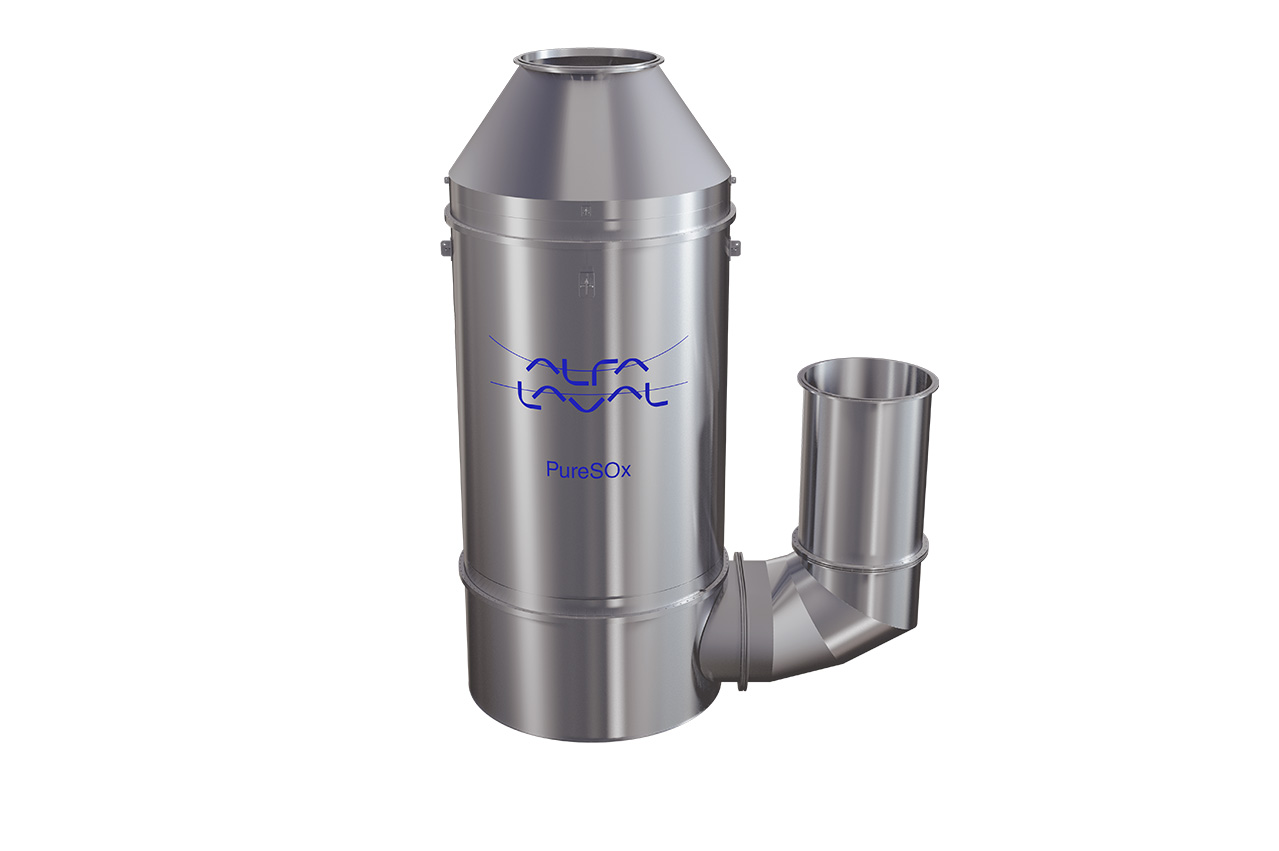
Scrubber technology firm Alfa Laval has launched the PureSOx connectivity programme to allow allows customers to simplify and remotely monitor scrubber performance.

The programme builds on the new Alfa Laval Remote Emission Monitor (ALREM), a data reporting and storage device that is part of all new PureSOx orders and also available for retrofit.

“Customers want to eliminate hassle and downtime, so that they can spend more time performing,” says Olaf Van Heerikhuizen, Manager Service Gas Systems.

“Connectivity is the key, as we’ve already seen in ALREM projects with major PureSOx customers. The ALREM lays the groundwork for a range of data-driven services that will make compliance – and life on board – much easier.”

The first service to be rolled out in the PureSOx connectivity programme simplifies proof of compliance through graph-based reports and is available on all vessels where the ALREM is installed.

“This is immediate pain relief for customers, whose scrubbers are legally required to log around 50 data signals every three minutes,” says Van Heerikhuizen.

“Instead of interpreting a hundred pages of raw sensor data for just a few days of operation, they get a finished compliance summary that they can hand over directly to authorities.”

If they choose, customers can also review the data for their vessel or fleet via an online portal.

Accessible on a subscription basis for a simple monthly fee, the portal lets them view their vessel’s route and receive a SOx compliance summary for the dates they select.

Photo credit: Alfa Laval
Published: 7 March, 2018
 

Continue Reading

Engine

BeHydro secures LR’s first class approval for 100% hydrogen marine engine

Engine has been developed and tested at ABC Engines’ facility in Ghent and is designed to operate entirely on hydrogen, without the need for pilot fuels.

Admin

Published

on

By

BeHydro secures LR’s first class approval for 100% hydrogen marine engine

Classification society Lloyd’s Register (LR) on Wednesday (17 June) said it has issued the first Type Approval Certificate for a 100% hydrogen-fuelled, spark-ignited marine engine.

The approval has been awarded to the hydrogen engine developed by BeHydro and confirms the design meets LR’s requirements for safety, performance and reliability in marine applications.

The engine has been developed and tested at ABC Engines’ facility in Ghent and is designed to operate entirely on hydrogen, without the need for pilot fuels. This simplifies system design and removes onboard carbon emissions at source, positioning the technology as a practical option for operators exploring zero-carbon propulsion.

Claudene Sharp-Patel, Global Technical Director, Lloyd’s Register, said: “The issue of this Type Approval Certificate demonstrates that hydrogen-fuelled internal combustion engine technology is continuing to mature as a viable option for maritime applications.

“For shipowners and operators, independent certification is essential in building confidence that emerging fuel technologies can meet the industry’s expectations for safety, reliability and operational performance.”

Tim Berckmoes, CEO at ABC Engines, said: “This LRS type approval of our BeHydro 100% hydrogen engines with zero emissions is a confirmation of the future proof technology that BeHydro can offer to innovative shipowners worldwide.

“The 100% hydrogen engine range is available from 900 kW till 2670 kW for different marine applications.”

LR previously awarded Type Approval to BeHydro for its hydrogen-powered dual-fuel engine in 2023, which was the first Type Approval for a dual-fuel hydrogen engine. 


Photo credit: Lloyd’s Register
Published: 19 June, 2026

Continue Reading

Mass Flowmeter

MFM-equipped CPN barge first listed under Hong Kong quality bunker scheme

Chimbusco Pan Nation’s bunker barge “Zhong Ran 23” has become the first vessel in Hong Kong listed on Marine Department’s official List of Quality Bunker Vessels, under a newly-launched scheme.

Admin

Published

on

By

MFM-equipped CPN barge first listed under Hong Kong quality bunker scheme

Hong Kong-based marine fuel supplier Chimbusco Pan Nation (CPN) on Tuesday (16 June) announced that its bunker barge Zhong Ran 23 has become the first vessel in Hong Kong listed on the Marine Department’s official List of Quality Bunker Vessels.

The list under the Quality Bunker Operator Scheme launched on 3 June.

“The Scheme is a voluntary initiative designed to raise the standard of bunkering accuracy, transparency, and service quality in Hong Kong,” CPN said in a social media post.

“To be listed, a bunker vessel must have its Mass Flow Meter (MFM) system independently certified under ISO 22192, the international benchmark for mass flow metering in bunkering operations.”

CPN added it has operated the MFM system across our fleet of fuel oil barges since 2015. 

Manifold Times previously reported Hong Kong’s Marine Department (MD) launching the Quality Bunker Operator Scheme to encourage bunker operators to install and use mass flow meter systems (MFM systems) on their bunker vessels.

MD said the scheme aims to enhance Hong Kong’s bunkering service quality and the competitiveness of Hong Kong ports, thereby further consolidating Hong Kong’s position as an international maritime centre and a major bunkering port.

Under the Scheme, bunker operators of traditional maritime fuel and biodiesel that install and use MFM systems on their bunker vessels, with the MFM systems inspected and certified by an accredited body in accordance with the International Organization for Standardization’s ISO 22192 Standard or equivalent requirements, can apply to the MD for inclusion in the scheme’s “List of Quality Bunker Vessels”, provided they meet the relevant technical and operational requirements. 

Related: Hong Kong backs MFM adoption with voluntary scheme to boost bunkering competitiveness


Photo credit: Chimbusco Pan Nation
Published: 17 June, 2026

Continue Reading

Retrofit

DNV on key lessons learned from a 20,000 TEU methanol retrofit delivered by global partners

DNV demonstrated how complex methanol retrofits can be carried out in practice through a project involving COSCO Shipping, CHI Shanghai, MARIC, suppliers, and DNV.

Admin

Published

on

By

DNV on key lessons learned from 20,000 TEU methanol retrofit

Classification society DNV recently highlighted how complex methanol retrofits can be carried out in practice through a project involving COSCO Shipping, CHI Shanghai, MARIC, suppliers, and DNV. 

Its latest Maritime Impact article detailed challenges in design integration, construction, commissioning, and operations, while demonstrating how close collaboration and early planning support more efficient delivery and knowledge transfer: 

The world’s first methanol conversion project for a mega container carrier was completed at CHI‑Shanghai’s yard in September 2025. At nearly 400 metres in length and with a capacity of 20,000 TEU, the seven‑year‑old vessel became the first ship of its kind to be retrofitted to run on methanol. 

Delivered through close coordination between COSCO Shipping, CHI Shanghai, designers, suppliers, and DNV, and supported by a process of continuous learning, the project demonstrated that deep, first‑of‑a‑kind retrofits can be executed safely, on time, and at industrial scale.

Designing a methanol conversion for a megaship

The vessel’s fuel system, designed only for conventional fuels, required fundamental changes to enable safe and compliant methanol operation across propulsion, auxiliaries, storage, and safety systems.

The general design was developed by MARIC, while CHI Shanghai carried out the detailed engineering and served as EPC contractor. The scope included conversion of the ship’s MAN B&W 11S90 main engine and two of its four Wärtsilä auxiliary engines to dual‑fuel operation. In parallel, new methanol fuel tanks with a total capacity exceeding 15,000 cubic metres were installed forward of the engine room, together with new fuel preparation and supply systems.

Coordinating the complexity of retrofitting

Delivering this as a retrofit rather than a newbuild added complexity that is often underestimated. Existing structural arrangements could not simply be replaced, and new systems had to be integrated into confined spaces, requiring innovative construction sequences and tight interface management between suppliers. 

“This was a very complex project involving many parties, including engine makers, fuel system suppliers, and automation and safety specialists,” says Yan Hao, Commercial Director at CHI‑Shanghai. “It was also the first time all of these suppliers had worked together on a methanol retrofit of this scale. Coordination was critical.”

Note: The full article by DNV can be read here.


Photo credit: DNV and COSCO Shipping
Published: 15 June, 2026

Continue Reading

Trending