Connect with us

Engine

Wärtsilä to supply future-ready engine for Allseas heavy transport vessel

Wärtsilä will supply the engines for a new purpose-built semi-submersible Heavy Transport Vessel which is designed to minimise exhaust emissions and maximise fuel efficiency.

Admin

Published

on

Wärtsilä to supply future-ready engine for Allseas heavy transport vessel

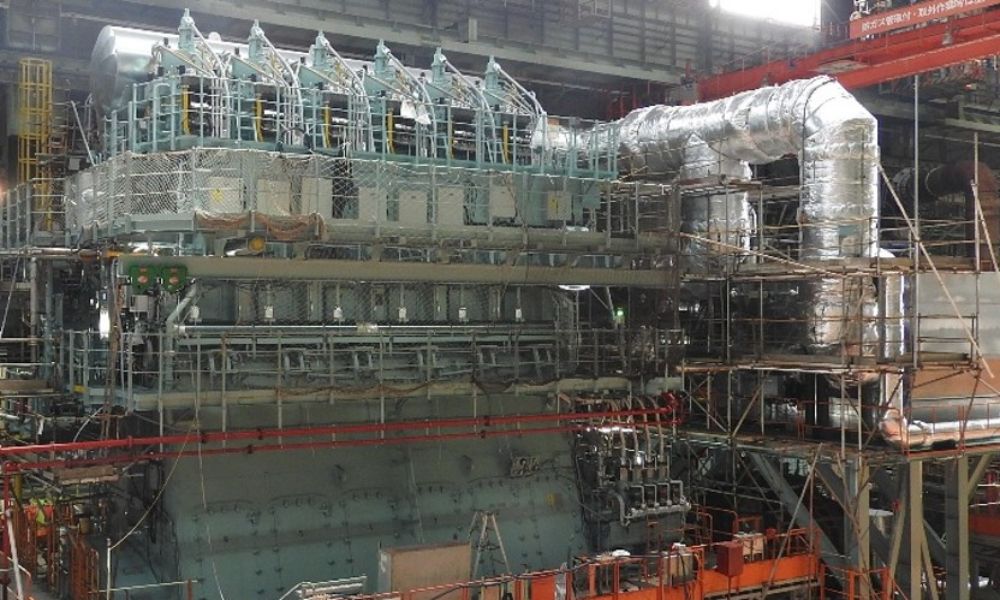
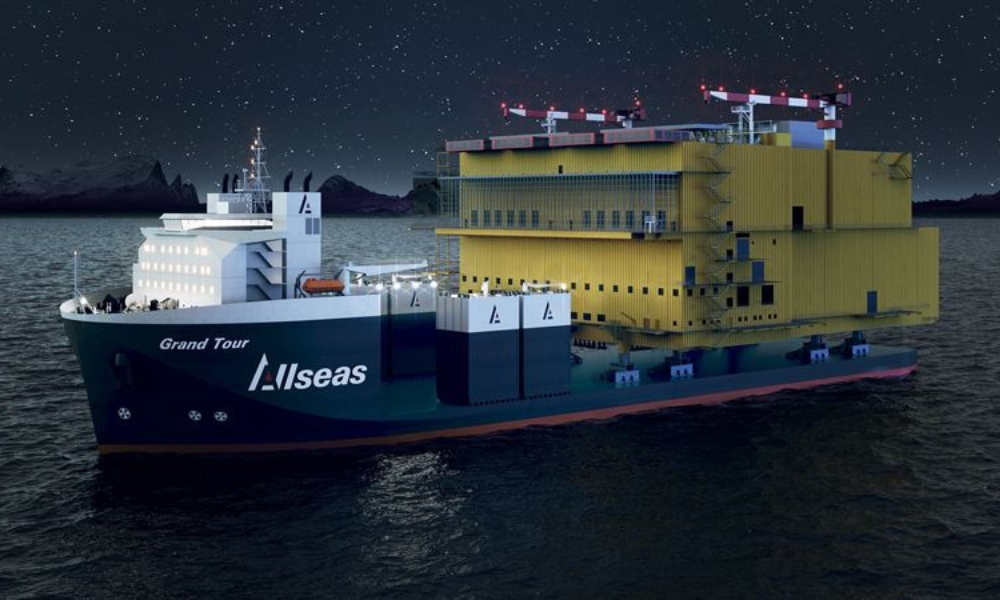
Technology group Wärtsilä on Thursday (22 January) said it will supply the engines for a new purpose-built semi-submersible Heavy Transport Vessel (HTV) which is designed to minimise exhaust emissions and maximise fuel efficiency. 

The ship is being built for Switzerland-based offshore contractor Allseas Group at the Guangzhou Shipyard International (GSI) facilities in China. The engine order was booked by Wärtsilä in Q4 2025.

The future-proof Wärtsilä 31 engine was selected because of its modular design, which enables a significant reduction in maintenance requirements and costs, and its readiness to use alternative sustainable fuels.

“This new HTV strengthens the flexibility of our fleet and how we deliver projects. We selected the Wärtsilä 31 engine for its high efficiency, future-ready design and ability to transition to low- and zero-carbon fuels, which supports both operational adaptability and our long-term sustainability ambitions,” said Sytske de Groot, Manager, Naval Architecture – Allseas.

The vessel will operate with four Wärtsilä 31 engines, each fitted with a Wärtsilä NOx Reducer for emissions abatement. Delivery is scheduled for the first quarter of 2028.

“The Wärtsilä 31 engine delivers what the industry needs today and prepares operators for tomorrow. Its exceptional fuel efficiency reduces operating costs immediately, while its capability to convert to sustainable fuels ensures a clear path toward decarbonisation. This makes it one of the most future-ready propulsion solutions available,” commented Stefan Nysjö, Vice President, Power Supply, Wärtsilä Marine.

Wärtsilä has already supplied equipment to a number of vessels for Allseas, including the engines for Allseas’ purpose-built cargo barge, Braveheart.


Photo credit: Wärtsilä
Published: 23 January, 2026

Continue Reading

Engine

WinGD lands debut ethanol-fuelled engine orders for Vale-chartered ore carriers

Engines will be the first of the X-DF-M/E platform optimised for primarily ethanol use with the fuel supply and injection pressure will be modified from WinGD’s methanol-fuelled engine concept.

Admin

Published

on

By

WinGD lands debut ethanol engine orders for Vale-chartered ore carriers

Swiss marine power company WinGD on Tuesday (19 May) said its first ethanol-fuelled X-DF-M/E engines have been ordered for two ore carriers to be built for Chinese owner Shandong Shipping Corporation and to operate under long-term charters for Brazil-headquartered global mining company Vale. 

The two Newcastlemax (325,000 DWT) vessels will be built by Beihai Shipbuilding in China, and will each be powered by a six-cylinder, 820mm-bore 6X82DF-M/E engine intended to run primarily on ethanol fuel.

The engines will be the first of the X-DF-M/E platform optimised for primarily ethanol use. The fuel supply and injection pressure will be modified from WinGD’s methanol-fuelled engine concept already in service to account for the difference in energy density between the two fuels, which otherwise share very similar properties and combustion characteristics. The contract includes options for further engine deliveries should the vessel series be extended.

WinGD Executive Director Sales Volkmar Galke, said: “These first ethanol-fuelled X-DF-M/E engines build on more than a decade of intensive investigation into alcohol fuels including ethanol and methanol. Securing orders for a top-tier charterer and ship operator is the best possible validation of those efforts. This is a clear signal that the shipboard technology and fuel infrastructure around ethanol as a marine fuel are ready, giving confidence to others considering ethanol as an option for maritime decarbonisation.”

Ethanol is gaining attention as a ship fuel due to its widespread and cost-competitive availability in several markets. These markets include Brazil, from where the vessels will deliver iron ore to China. According to Vale’s own investigations, the use of ethanol can reduce greenhouse gas emissions by around 90% compared with heavy fuel oil, depending on the fuel type and lifecycle assumptions.

Vale Director of Shipping Rodrigo Bermelho, said: “The adoption of ethanol as an alternative fuel is part of Vale’s strategy to combine flexibility and efficiency in the ships that transport our ore and places the company in a unique position for the energy transition in global shipping over the coming decades, whilst driving similar initiatives in the sector.  We are pleased to partner with Shandong and WinGD on the world’s first newbuilding order for ethanol-fueled ocean-going vessels.”

With the addition of ethanol-fuel capability for its X-DF-M/E platform, WinGD now offers unparalleled fuel flexibility across Diesel-cycle two-stroke engines. X-DF-M/E, alongside the ammonia-fuelled X-DF-A and high-pressure LNG-fuelled X-DF-HP platforms, are all based on the same robust engine architecture and injection concept – ensuring efficient conversion capability that does not lock owners into a single fuel option.

The engine deliveries are scheduled to take place in early 2029 depending on shipyard requirements.


Photo credit: WinGD
Published: 20 May, 2026

Continue Reading

Engine

Everllence Mk10.7 engine orders rise as shipowners prioritise bunker fuel flexibility

Mk10.7 platform represents Everllence’s latest generation of two‑stroke engine design that supports conventional fuel operation (ME‑C) as well as dual‑fuel configurations, including methanol.

Admin

Published

on

By

Everllence Mk10.7 engine orders rise as shipowners prioritise bunker fuel flexibility

Engine manufacturer Everllence on Tuesday (19 May) reported continued momentum for its Mk10.7 two‑stroke engine platform, reflecting a market where shipowners are increasingly seeking to balance long‑term decarbonisation ambitions with near‑term energy security, fuel availability and operational resilience.

The Mk10.7 platform represents Everllence’s latest generation of two‑stroke engine design, developed around classic design principles and a modular architecture that supports conventional fuel operation (ME‑C) as well as dual‑fuel configurations, including methanol (ME‑LGIM) and methane (ME‑GI). 

This approach enables shipowners to make robust investment decisions today, while retaining the flexibility to adapt to evolving fuel supply-chains, regulatory frameworks and decarbonisation pathways over a vessel’s lifetime.

Bjarne Foldager, Head of Two-Stroke Business, Everllence, said: “Today’s shipowners are navigating a dual challenge: advancing the energy transition while safeguarding energy security and commercial resilience. What we are seeing with Mk10.7 is not a shift towards a single fuel but a clear preference for flexibility. Owners want solutions that allow them to move forward on decarbonisation without locking themselves into one pathway prematurely.”

Recent orders confirm the strong uptake of Mk10.7 single‑fuel engines, alongside adoption of dual‑fuel variants within the same engine architecture. As of April 2026, Everllence’s orderbook comprises more than 160 × Mk10.7 engines, underscoring strong market confidence in the platform. Everllence views this momentum as clear validation of the Mk10.7 platform’s role as a strategic foundation for modern newbuilding projects.

Most recently, the Yantai CIMC Raffles shipyard in China ordered 8 × 6G70ME-C 10.7 LGIM (Liquid Gas Injection Methanol) engines in connection with the construction of eight containerships for Hapag-Lloyd. Hanwha Engine will build the engines in Korea; an option for six further engines exists.

Christian Ludwig, Vice President, Head of Global Sales & Promotion, Two-Stroke Business, Everllence, said: “The Mk10.7 platform is designed precisely for this flexible market reality. By offering a common, robust engine architecture across conventional fuel and multiple dual‑fuel options, we enable shipowners to balance efficiency, reliability and future optionality. This combination is increasingly becoming a cornerstone of energy security in newbuilding projects.”


Photo credit: Everllence
Published: 20 May, 2026

Continue Reading

Technology

DNV gives nod to Kongsberg Maritime’s new ship engine room simulator

Kongsberg Maritime received a DNV Simulator Statement of Compliance for its new Engine Room Simulator model based on Höegh Aurora (CO₂ Pilot), a flagship vessel in Höegh Autoliners’ Aurora Class.

Admin

Published

on

By

DNV gives nod to Kongsberg Maritime’s new ship engine room simulator

Kongsberg Maritime on Wednesday (13 May) said it has received a DNV Simulator Statement of Compliance for its new Engine Room Simulator (ERS) model based on Höegh Aurora (CO₂ Pilot), a flagship vessel in Höegh Autoliners’ Aurora Class.

The approval follows a full demonstration and audit of the simulator model, confirming compliance with DNV’s maritime simulator requirements and validating the model’s fidelity for advanced training applications.

Designed to support Höegh Autoliners’ ambition to reach net-zero emissions by 2040, the vessels combine multi-fuel capability with readiness for zero-carbon fuels such as ammonia, alongside a suite of energy-efficient technologies and advanced onboard systems. 

With capacity for up to 9,100 vehicles and enhanced capabilities for electric vehicle transport, Höegh Aurora sets a new benchmark for future-ready car carriers.

“This achievement reflects close collaboration across teams and partners and underlines our commitment to delivering high-fidelity simulator models for the industry’s most advanced vessels,” said Leif Pentti Halvorsen, VP Engine Room and Cargo Handling, Maritime Simulation, Kongsberg Maritime.

“Independent verification from DNV demonstrates the accuracy and quality of our simulator models,” said Are Føllesdal Tjønn, Managing Director Maritime Simulation, Kongsberg Maritime. 

“At the same time, it strengthens our ability to support customers as they introduce new vessel designs and transition to more sustainable operations.”

Kongsberg Maritime has played a key role in enabling the Aurora Class through its integrated technology suite, including automation, propulsion optimisation and digital solutions that support more efficient and lower-emission operations throughout the vessel lifecycle. Extending this capability into simulation ensures that crews can fully understand and operate these systems from day one.

With the Statement of Compliance in place, the Höegh Aurora ERS model is now part of Kongsberg Maritime’s standard simulator portfolio and available for deployment across training centres worldwide.


Photo credit: Kongsberg Maritime
Published: 18 May, 2026

Continue Reading

Trending