Connect with us

Nuclear

‘There is no net zero by 2050 without nuclear,’ says ABS Chairman and CEO

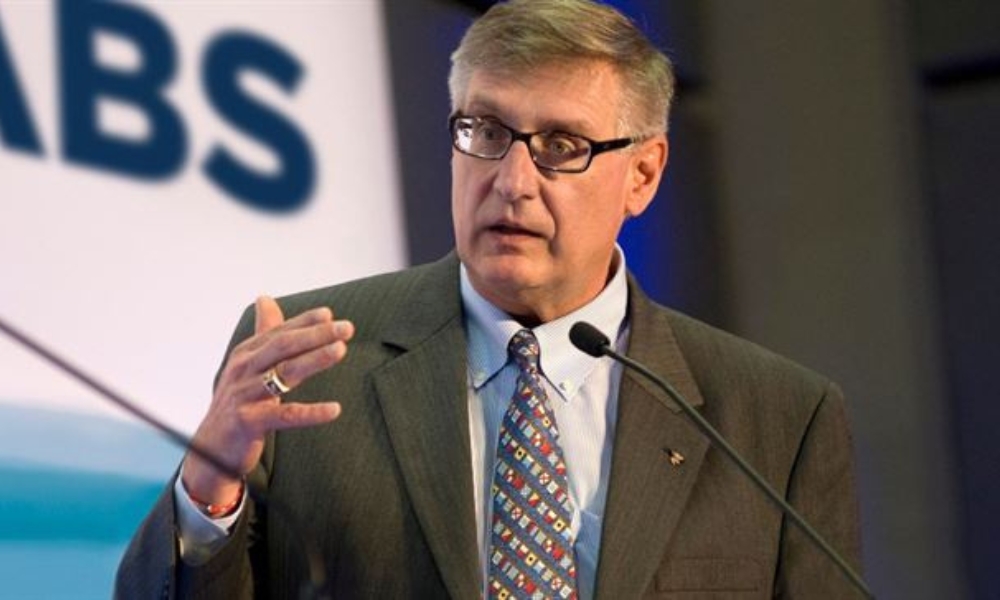
“New nuclear technology is a global decarbonization solution and a commercial shipping disruptor. There is no net zero by 2050 without nuclear,” Christopher J. Wiernicki said at a summit recently.

Admin

Published

on

‘There is no net zero by 2050 without nuclear,’ says ABS Chairman and CEO

Chairman and CEO of classification society ABS, Christopher J. Wiernicki, recently shared his views on nuclear technology in shipping, emphasising that nuclear is a must in order to achieve net zero. 

“New nuclear technology is a global decarbonisation solution and a commercial shipping disruptor. There is no net zero by 2050 without nuclear,” he said when speaking at the Core Power New Nuclear for Maritime Houston Summit.

“New nuclear is a transformational technology. It disrupts the commercial model, the economics of shipping, as well as the operation of vessels and of course their design,” said Wiernicki. 

“Not only does it offer zero carbon operations but higher power with faster transit speeds, increased cargo storage due to the elimination of fuel storage and it unlocks the potential for reverse cold ironing where the vessel powers the port. Finally, critically, it eliminates the need to bunker fuel potentially over the entire lifespan of the asset.”

Contrary to conventional wisdom about the high cost of nuclear technology, Wiernicki believes new nuclear can be highly competitive.

“The economics are compelling over the life of a vessel,” he said. “When you account for fuel differentials, the cost of compliance and residual value, it costs roughly the same as fossil options, only with zero carbon operations. And it gets much more attractive when compared to the high cost of green fuels.”

However, he highlighted that significant challenges remain beyond technological development.

“While the potential is undoubtedly significant, we will need a new public/private partnership and a new commercial model. It will require insurance to move from its legacy model, and we will need to close the regulatory gaps, develop global licensing standards and invest in crew training,” he said. 

“The ultimate boundary condition for this technology will be safety, and we need to ensure we engage and educate the public about the advanced safety performance of these new reactors.”


Photo credit: ABS
Published: 14 February, 2025

Continue Reading

Nuclear

ABS awards AiP to Korean institute for SMR-powered container ship concept design

KRISO says AiP recognises the technical feasibility and safety of its concept design, marking an important milestone toward the development of next-generation nuclear-powered commercial ships.

Admin

Published

on

By

ABS awards AiP to Korean institute for SMR-powered container ship concept design

Korea Research Institute of Ships & Ocean Engineering (KRISO) on Thursday (16 July) received Approval in Principle (AiP) from the American Bureau of Shipping (ABS) for its concept design of a 15,000 TEU Small Modular Reactor (SMR)-powered container ship utilising Molten Salt Reactor (MSR) technology.

KRISO said the AiP recognises the technical feasibility and safety of its concept design, marking an important milestone toward the development of next-generation nuclear-powered commercial ships.

“This achievement demonstrates international recognition of KRISO’s technological capabilities in the rapidly evolving field of nuclear-powered shipping, supporting the transition toward low-carbon maritime transport,” it said. 

Building on this milestone, KRISO will continue advancing basic and detailed ship design, paving the way for future demonstration and commercialisation of SMR-powered vessels. 

Through continued R&D and international collaboration, KRISO remains committed to strengthening next-generation maritime technologies and contributing to the safe deployment of nuclear propulsion in the maritime industry.


Photo credit: Korea Research Institute of Ships & Ocean Engineering
Published: 21 July, 2026

Continue Reading

Nuclear

LR: Rotterdam study sets out pathway for nuclear-powered commercial ship port calls

New joint study has found that existing port safety and risk-management frameworks could provide a credible starting point for assessing nuclear-powered ship calls within a major European port environment.

Admin

Published

on

By

RESIZED Shaah Shahidh on Unsplash

A new joint study using the Port of Rotterdam as a case study has found that existing port safety and risk-management frameworks could provide a credible starting point for assessing nuclear-powered commercial ship calls within a major European port environment, according to Lloyd’s Register (LR) on Thursday (11 June). 

The desktop study, Enabling Nuclear-Powered Feeder Ships: A Joint Development Project on Port Call Feasibility and Regulatory Pathways, carried out through a joint development project involving LR, the Port of Rotterdam Authority, CORE POWER and A.P. Moller – Maersk, sets out the questions that ports, regulators and industry would need to answer in order to assess nuclear-powered vessels in a structured and responsible way. 

It also identified further work that would be required before routine operation could be contemplated, including regulatory alignment, emergency preparedness, security, liability and public engagement.

Its publication comes at a time of growing pressure on the shipping industry to identify even more scalable zero-emission technologies capable of meeting increasingly demanding decarbonisation requirements while preserving operational reliability, endurance and flexibility.

The report argued that maritime nuclear propulsion should be evaluated as part of the wider discussion around shipping decarbonisation, energy resilience and long-term industrial competitiveness.

While much of the current EU policy discussion has focused on alternative fuels such as hydrogen, ammonia and e-fuels, the report notes that segments of global shipping may ultimately require additional propulsion solutions capable of supporting endurance, reliability and operational flexibility at scale.

The Port of Rotterdam participated as a case study because it provides a real-world European port environment through which to examine how emerging energy and shipping technologies could interact with existing port safety frameworks, operations and regulatory processes.

Importantly, the study concluded that existing risk-based port safety frameworks already familiar to European ports could provide a credible starting point for assessing nuclear-powered vessels, provided nuclear-specific safety, security and operational considerations are systematically integrated and supported by appropriate national and international guidance.

The findings suggested that the real challenge for future maritime nuclear propulsion is likely to centre on regulatory alignment, governance, integration between nuclear and maritime safety regimes, and public and institutional preparedness.

The study identifies several key findings:

  • Existing port safety and risk-management frameworks provide a credible starting point for the assessment of nuclear-powered commercial vessels within the defined case study scenario.
  • Further work is needed on regulatory alignment, governance coordination, nuclear-specific safety and security, emergency preparedness, liability and insurance, operational integration and public engagement before routine commercial operation could be contemplated.
  • Current IMO provisions relating to nuclear-powered ships were developed for an earlier era and require modernisation to support any future civil commercial nuclear propulsion pathway.
  • Current European maritime decarbonisation discussions remain heavily focused on alternative fuels, with comparatively limited consideration of high-density, zero-emission propulsion systems capable of supporting long-range and high-utilisation shipping operations.
  • Major ports and maritime Member States may play an important role in shaping how nuclear propulsion is assessed and potentially integrated into future shipping strategies.


Photo credit: Shaah Shahidh on Unsplash
Published: 16 June, 2026

Continue Reading

Nuclear

South Korean-led nuclear car carrier design secures LR backing

LR is working with HHI, KSOE, Hyundai Glovis, G- Marine Service and KAERI on a joint development project exploring an advanced small modular reactor (SMR) installation on a PCTC.

Admin

Published

on

By

South Korean-led nuclear car carrier design secures LR backing

Classification society Lloyd’s Register (LR) on Tuesday (2 June) said it has teamed up with South Korean shipbuilding, marine services and nuclear research organisations to advance the development of a nuclear‑assisted car carrier concept. 

LR is working with Hyundai Heavy Industries, Korea Shipbuilding & Offshore Engineering (KSOE), Hyundai Glovis, G- Marine Service and the Korea Atomic Energy Research Institute (KAERI) on a joint development project (JDP) exploring an advanced small modular reactor (SMR) installation on a pure car and truck carrier (PCTC). 

The study focused on how a Molten Salt Reactor (MSR) could be physically and operationally integrated into a large vehicle carrier. Work examined the internal arrangement and segregation of the reactor system, shielding requirements, and the impact on cargo deck layout and vehicle capacity, alongside stability and trim implications linked to the reactor’s weight and positioning. 

The partners also assessed propulsion system configuration and power delivery, as well as operational flexibility compared with conventionally fuelled PCTCs, where trade routes and port calls can be tightly constrained. 

A key focus of the project has been safety. LR led hazard identification (HAZID) and preliminary risk assessment work, focusing on containment, onboard safety systems and potential operability constraints tied to nuclear technology at sea. 

The partners will mark the project milestone with an Approval in Principle (AiP) granting ceremony on 2 June at the LR stand during Posidonia 2026. 

Sung-Gu Park, President – North East Asia, Lloyd’s Register, said: “While nuclear propulsion is still at an early stage of development, this project shows the importance of building technical understanding now to support future progress. 

“Establishing feasibility at concept stage is a valuable step forward, particularly in areas such as cargo optimisation, vessel stability and integrated safety design.” 

Hong-Ryeul Ryu, CTO and Senior Executive Vice President at HD HHI, said: “With global environmental regulations becoming increasingly stringent and no definitive net-zero fuel yet available, SMR-powered ships can serve as a highly effective alternative, representing a pioneering next-generation maritime technology capable of complying with GHG emission regulations while allowing lifetime operation without refuelling, and HD HHI will remain at the forefront of sustainable maritime technology development.”


Photo credit: Lloyd’s Register
Published: 4 June, 2026

Continue Reading

Trending