Connect with us

Alternative Fuels

Maersk partners with CCS on maritime carbon-neutral technologies and standards

Agreements focus on scientific and technological innovation projects, life-cycle green fuel availability and infrastructure, design for carbon-neutral vessels.

Admin

Published

on

CCS Capture

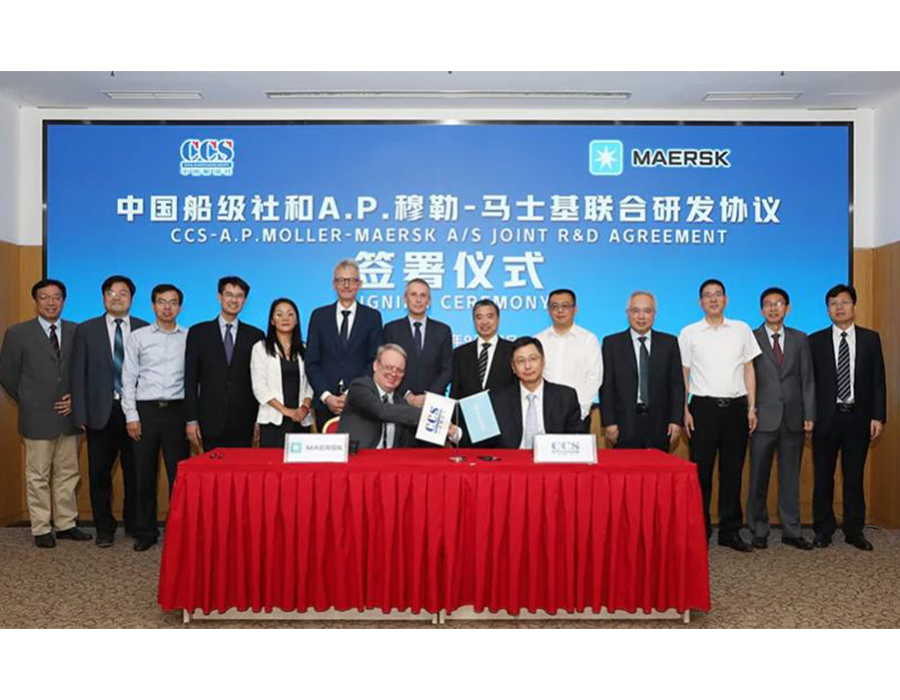
Shipping company A.P. Moller-Maersk on Monday (27 September) signed three separate cooperation framework agreements with China Classification Society (CCS) to partner on its decarbonisation journey. 

Jens Eskelund, Managing Director of Maersk China Limited signed the agreement with Sun Feng, CCS Vice President in witness of Thomas Østrup Møller, Danish Ambassador to China, and Mo Jianhui, CCS Chairman & President.

The agreements mainly focus on scientific and technological innovation projects, life-cycle green fuel availability and infrastructure, as well as design for carbon-neutral vessels. Both parties will invite research institutes to establish a joint force for the project.

“China and Denmark are natural partners as we are global leaders in the maritime industry. Maritime decarbonization can only be achieved successfully through strong international collaboration and exchange of knowledge. I wish CCS and Mærsk a very fruitful cooperation and look forward to hearing more about the progress and results achieved,” says Thomas Østrup Møller, Danish Ambassador to China.

“Maersk has set a clear and ambitious goal to become carbon neutral by 2050. China, as a globally leading maritime and shipbuilding nation, will be a crucial partner towards ensuring that our industry will be able to respond effectively to the climate change challenge. We are very pleased to join hands with CCS to collaborate on carbon-neutral technologies and standards and explore the opportunities for international cooperation within sustainable and zero carbon shipping,” says Jens Eskelund, Managing Director of Maersk China Limited.

“Maersk and CCS already have an established partnership. The extension of cooperation to research of green fuels and vessel development is adding a new and exciting dimension to our partnership. By leveraging CCS’ research capabilities, we believe we will have access to a broader range of high quality resources to enable our journey towards a zero carbon future,” says Ole Graa Jakobsen, Head of Maersk fleet technology.

Decarbonisation is a strategic imperative for the shipping industry and for Maersk. The company is accelerating efforts to decarbonize marine operations, most recently with the order of 8 large ocean-going container vessels capable of being operated on carbon neutral methanol. The first vessel will be introduced in the first quarter of 2024.

“Maersk is already a front runner in energy efficiency and decarbonisation. By joining hands with Maersk, I believe we can develop the right set of standards, rules, and technical solutions for the benefit of the whole industry. We believe that open-minded discussions and trusted partnerships are key to make that happen, which will also contribute to China’s ambition of realizing the pledge of reaching peak emissions before 2030 and carbon neutrality before 2060,” says Mo Jianhui, Chairman and President of China Classification Society.


Photo credit: A.P. Moller-Maersk
Published: 28 September, 2021

Continue Reading

LNG Bunkering

Singapore-based EPS takes delivery of three LNG dual-fuel bulk carriers

Three vessels are the third, fourth and fifth in the company’s series of 14 Newcastlemaxes being built at the yard, and were delivered five months ahead of their contracted delivery dates.
Admin

Published

on

By

35

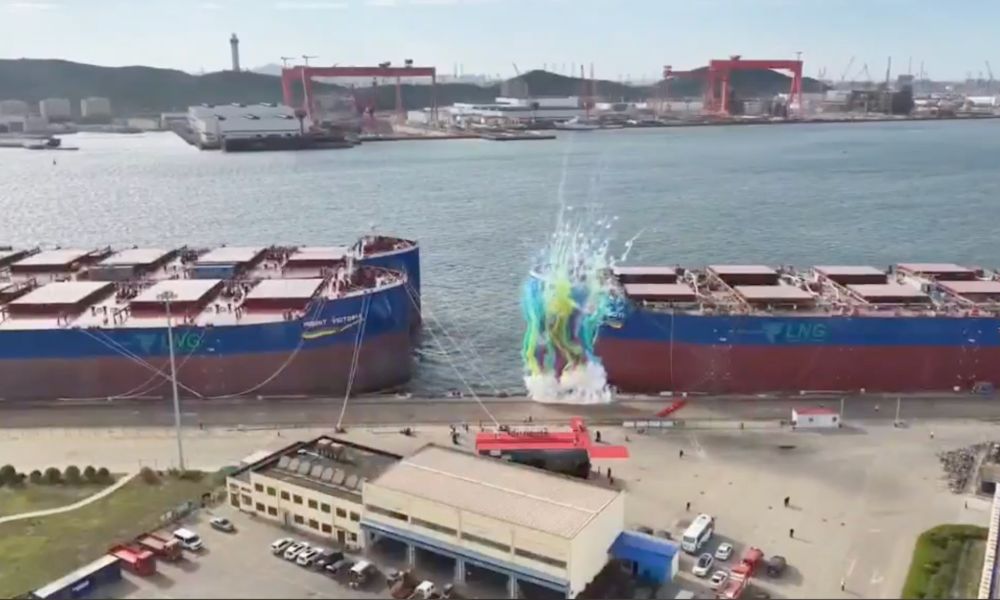
Singapore-based Eastern Pacific Shipping (EPS) on Friday (4 September) announced the naming and delivery of three new LNG dual-fuel Newcastlemax bulk carriers from China’s Qingdao Beihai Shipbuilding. 

Cyril Ducau, CEO of EPS, said the vessels were named Mount Victoria, Mount Yulong and Mount Wuyi

The three vessels are the third, fourth and fifth in the company’s series of 14 Newcastlemaxes being built at the yard, and were delivered five months ahead of their contracted delivery dates.

“A big thank you to CSSC Group and Qingdao Beihai Shipbuilding, working alongside our EPS team, for the tremendous collaboration and commitment behind this achievement,” Ducau said in a social media post.  


Photo credit: Eastern Pacific Shipping
Published: 7 September, 2026

Continue Reading

LNG Bunkering

LR awards AiP to CSSC Huangpu Wenchong for 12,500 m³ LNG bunker vessel design

Vessel design incorporates Type C LNG cargo tanks and has been evaluated against a range of class notations covering gas operations, automation, environmental performance and cyber resilience.
Admin

Published

on

By

33

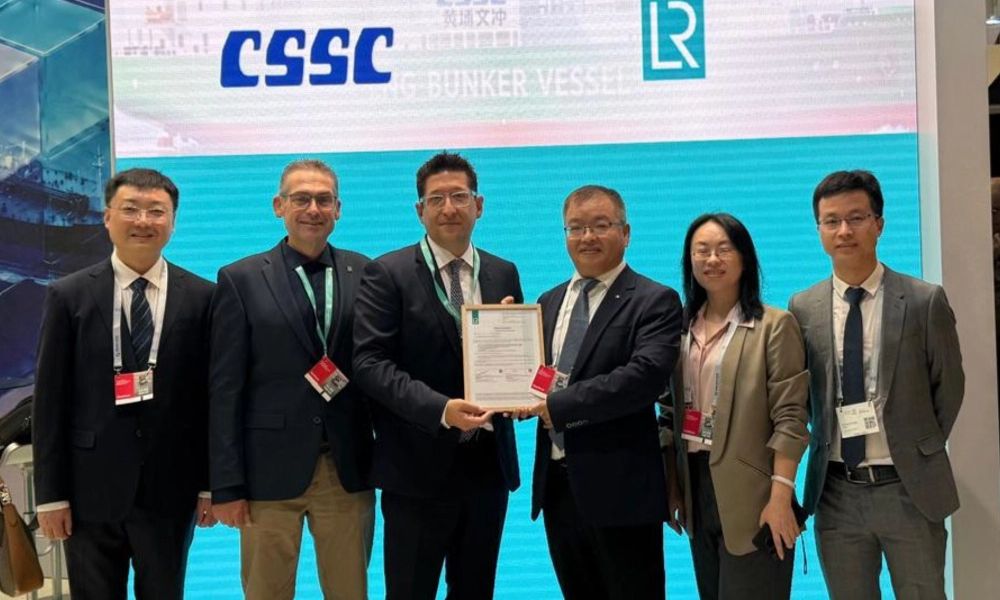
Classification society Lloyd’s Register (LR) on Thursday (3 September) said it has awarded Approval in Principle (AiP) to CSSC Huangpu Wenchong Shipbuilding Co., Ltd. for a new 12,500 m³ LNG bunkering vessel design.

The AiP was signed at SMM 2026 in Hamburg and confirms that the vessel concept has successfully completed an independent design assessment against LR’s latest classification requirements.

The new 12,500 m³ vessel design incorporates Type C LNG cargo tanks and has been evaluated against a comprehensive range of class notations covering gas operations, automation, environmental performance and cyber resilience.

LR’s assessment was carried out in accordance with its Rules and Regulations for the Classification of Ships and Rules and Regulations for the Construction and Classification of Ships for the Carriage of Liquefied Gas in Bulk.

Constantinos Chaelis, LR’s Global Gas Segment Director, said: “This project demonstrates the continued market confidence in LNG and the importance of building the supporting infrastructure that enables owners to make practical emissions reductions today, while maintaining flexibility for the future. Through early engagement between shipyard and class, we can accelerate the delivery of robust designs that meet both operational and regulatory requirements.”

A Huangpu Wenchong spokesperson, said: “This Approval in Principle from Lloyd’s Register validates the technical approach and provides a strong foundation for future development. We believe vessels of this type will play an increasingly important role in supporting the energy transition by helping ensure LNG is available where shipowners need it most.”


Photo credit: Lloyd’s Register
Published: 7 September, 2026

Continue Reading

Alternative Fuels

DNV at SMM: Chinese shipbuilders, European owners seek closer ties on alternative bunker fuels

Chinese shipbuilders and European shipowners called for closer collaboration on vessel development, alternative fuels and digitalization during the inaugural China-Europe Maritime Summit at SMM 2026.
Admin

Published

on

By

32 1

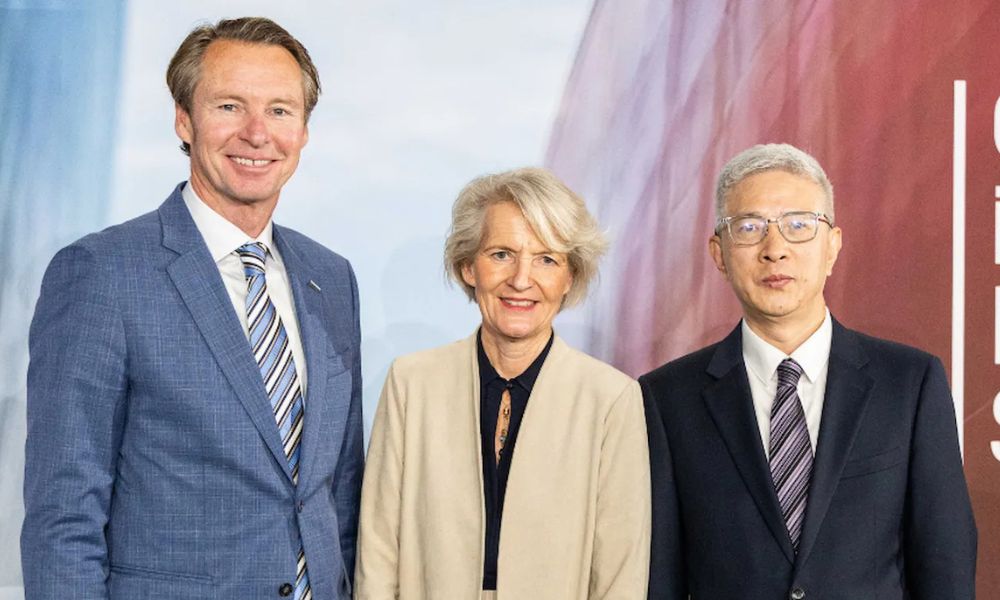
Chinese shipbuilders and European shipowners called for closer collaboration on vessel development, alternative fuels and digitalization during the inaugural China-Europe Maritime Summit at SMM 2026, according to classification society DNV on Friday (4 September). 

The summit, jointly organized by the China Association of the National Shipbuilding Industry (CANSI), the German Shipowners’ Association (VDR) and DNV, brought together leaders from two maritime sectors that collectively shape a significant share of the global fleet. 

Energy efficiency, operational flexibility and digital innovation were highlighted as key areas for the industry as it navigates decarbonization targets, evolving regulation and uncertainty around future fuel pathways.

Knut Ørbeck-Nilssen, Group President and CEO at DNV, said: “Gathering leaders from across Chinese shipbuilding, European shipping and the wider maritime value chain in one room is both timely and important. The decisions being made across our industry today will shape shipping for decades to come, and this summit demonstrates a shared commitment to shaping the future of our industry together.”

Xu Peng, Chairman of China State Shipbuilding Corporation (CSSC), said: “China and Europe’s maritime sectors share aligned missions, complementary strengths and promising prospects. This summit can serve as a starting point for deeper cooperation between China’s shipbuilding industry and Europe’s shipping community, and help broaden the boundaries of full‑chain collaboration and build an interconnected ecosystem.”

Dr. Gaby Bornheim, President of the German Shipowners’ Association (VDR), said: “For shipowners, a new vessel is never an investment for the next quarter. It is a commitment for decades. Long-term investments require trusted partnerships, and many of the world’s most advanced commercial vessels are the result of cooperation between European shipowners and Chinese shipbuilders. Excellence is rarely achieved in isolation.”

China’s shipbuilding industry accounts for around 70% of the global orderbook, while European shipowners operate more than one-third of the world’s fleet capacity. As the global shipping industry faces increased uncertainty, finding solutions that provide flexibility is essential. 

The summit featured two high-level panel discussions moderated by Dr. Martin Kröger, CEO of VDR, and Li Yanqing, Vice Chairman and Secretary General of CANSI, bringing together senior executives from leading Chinese shipbuilders, including China Merchants Industry (CMI), Guangzhou Shipyard International (GSI), Shanghai Waigaoqiao Shipbuilding (SWS), and Shanghai Merchant Ship Design & Research Institute (SDARI), alongside European shipowners and operators such as Vogemann Reederei, Briese Schiffahrt, Bernhard Schulte, MPC Containerships, and Grieg Edge, as well as DNV. 

Discussions further highlighted the importance of close China-Europe collaboration to support shipping’s transformation.


Photo credit: DNV
Published: 7 September, 2026

Continue Reading
Advertisement

OUR INDUSTRY PARTNERS


Trending