
Alternative Fuels
Hong Kong to mandate mass flow meters for methanol bunkering operations by next year
‘We will commence feasibility studies for ammonia and hydrogen bunkering and mandate mass flow meters for methanol operations by next year,’ says Secretary for Transport and Logistics Mable Chan.

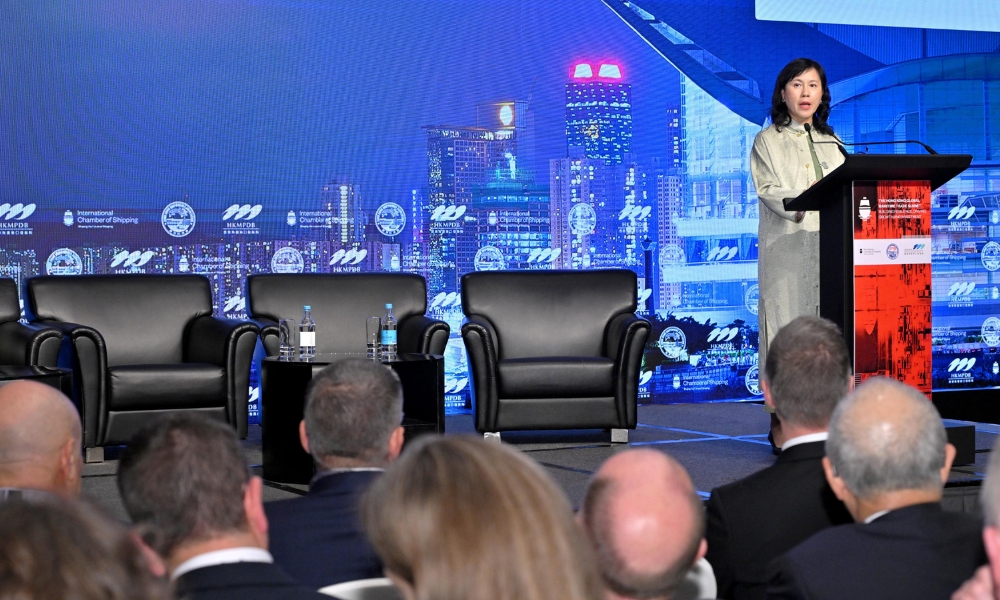
Hong Kong’s Secretary for Transport and Logistics Ms Mable Chan on Monday (17 November) said the city ranked seventh globally in bunkering, second in China and first in the Guangdong-Hong Kong-Macao Greater Bay Area.
Since the first LNG bunkering operation in February this year, she said over 200 000 metric tonnes (mt) of biodiesel and LNG have been bunkered in Hong Kong, involving a total of 13 LNG bunkering operations.
“Having established biodiesel and LNG bunkering, we are pioneering the next-generation fuels – including methanol, ammonia, and hydrogen,” Tan said when speaking at Hong Kong Global Maritime Trade Summit.
“We will commence feasibility studies for ammonia and hydrogen bunkering and mandate mass flow meters for methanol operations by next year,” she added.
“Further, leveraging our nation’s green fuel supply advantages and Hong Kong’s robust financial infrastructure, we are developing a global green maritime fuel trading centre, hosting various matchmaking events to catalyse supply chains and support our nation in reinforcing its leadership in this emerging sector.”
She added Hong Kong remains steadfast in advancing our pace to strengthen and solidify Hong Kong’s role as an international green maritime fuel bunkering and trading hub.
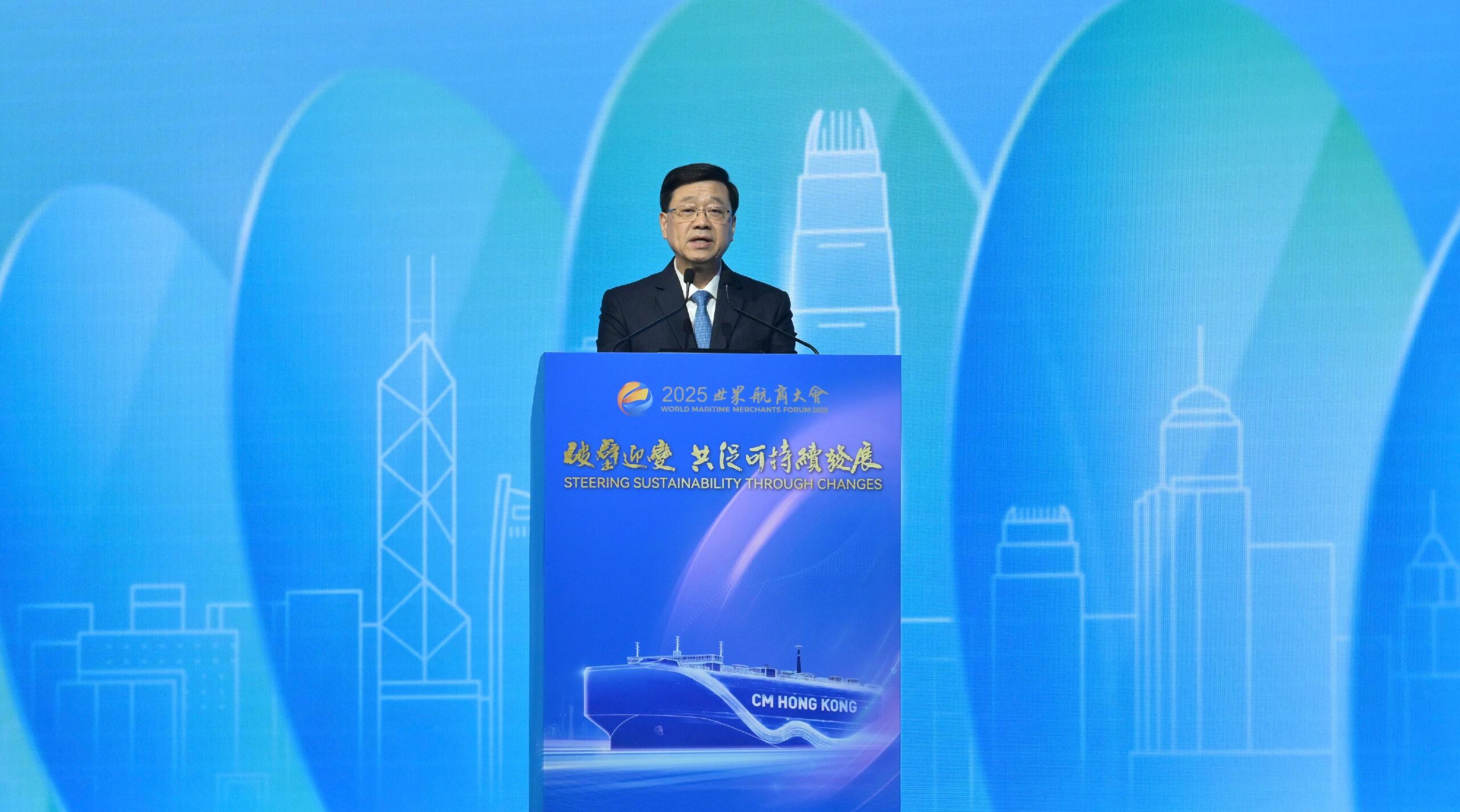
John Lee, Chief Executive of Hong Kong Special Administrative Region (HKSAR), said with the International Maritime Organization’s Net-Zero Framework targeting to achieve net-zero carbon emissions in international shipping by around the year 2050, Hong Kong is determined to be at the forefront, as a premier green maritime fuel-bunkering centre.
He said this at the Opening Ceremony of Hong Kong Maritime Week 2025 cum World Maritime Merchants Forum (WMMF) 2025.
“Since publishing our Action Plan on Green Maritime Fuel Bunkering a year ago, we have materialised regular commercial liquefied natural gas (LNG) and biodiesel bunkering,” he said.
“Our vision is to become the epicentre of the global green maritime fuel trade. And our proximity to the Chinese Mainland, the world’s largest producer of green maritime fuel, is a critical advantage. We will continue to collaborate with maritime associations and business partners globally to drive the transition towards sustainability.”
Photo credit: Government of the Hong Kong Special Administrative Region
Published: 18 November, 2025
Decarbonisation
DNV: New research shows how regulation could reshape shipping
DNV summarizes findings of its latest Maritime Forecast to 2050, exploring how future scenarios could affect marine fuel demand, technology uptake, fleet investments, and competitiveness.
Classification society DNV on Thursday (24 September) released a new article summarizing findings of its latest Maritime Forecast to 2050, exploring how future scenarios could affect marine fuel demand, technology uptake, fleet investments, and competitiveness:
Shipping’s energy transition has entered a new phase. The technology options are increasingly well understood. LNG, methanol, biofuels, wind-assisted propulsion, and emerging ammonia solutions are no longer concepts but commercial realities. Yet despite this progress, shipowners face a more difficult challenge than ever: making investment decisions amid unprecedented regulatory uncertainty.
The 2026 edition of DNV’s Maritime Forecast to 2050 argues that uncertainty itself is now becoming one of the most important drivers of fleet strategy.
“Decisions taken today on vessel design, retrofits, and fuel capability will determine competitiveness for decades, while the outcome of ongoing regulatory negotiations could significantly reshape the economics of shipping’s energy transition,” says Øyvind Sekkesæter, Senior Consultant at DNV and lead author of this year’s report. “Maritime Forecast to 2050 aims to assist that decision-making with our latest core insights and case study examples.”
Four regulatory scenarios could shape shipping very differently
This year’s Maritime Forecast takes a scenario-based approach, presenting four possible regulatory futures for shipping. These range from the full adoption of IMO’s initially approved Net-Zero Framework (NZF) to its rejection and prolonged political gridlock, while also exploring several intermediate outcomes, including a delayed or revised NZF and scenarios where regional regulations play a more prominent role in driving decarbonization. Rather than predicting which outcome is most likely, the scenarios illustrate how different regulatory futures could affect fuel demand, energy-efficiency uptake, investment signals, and fleet competitiveness.
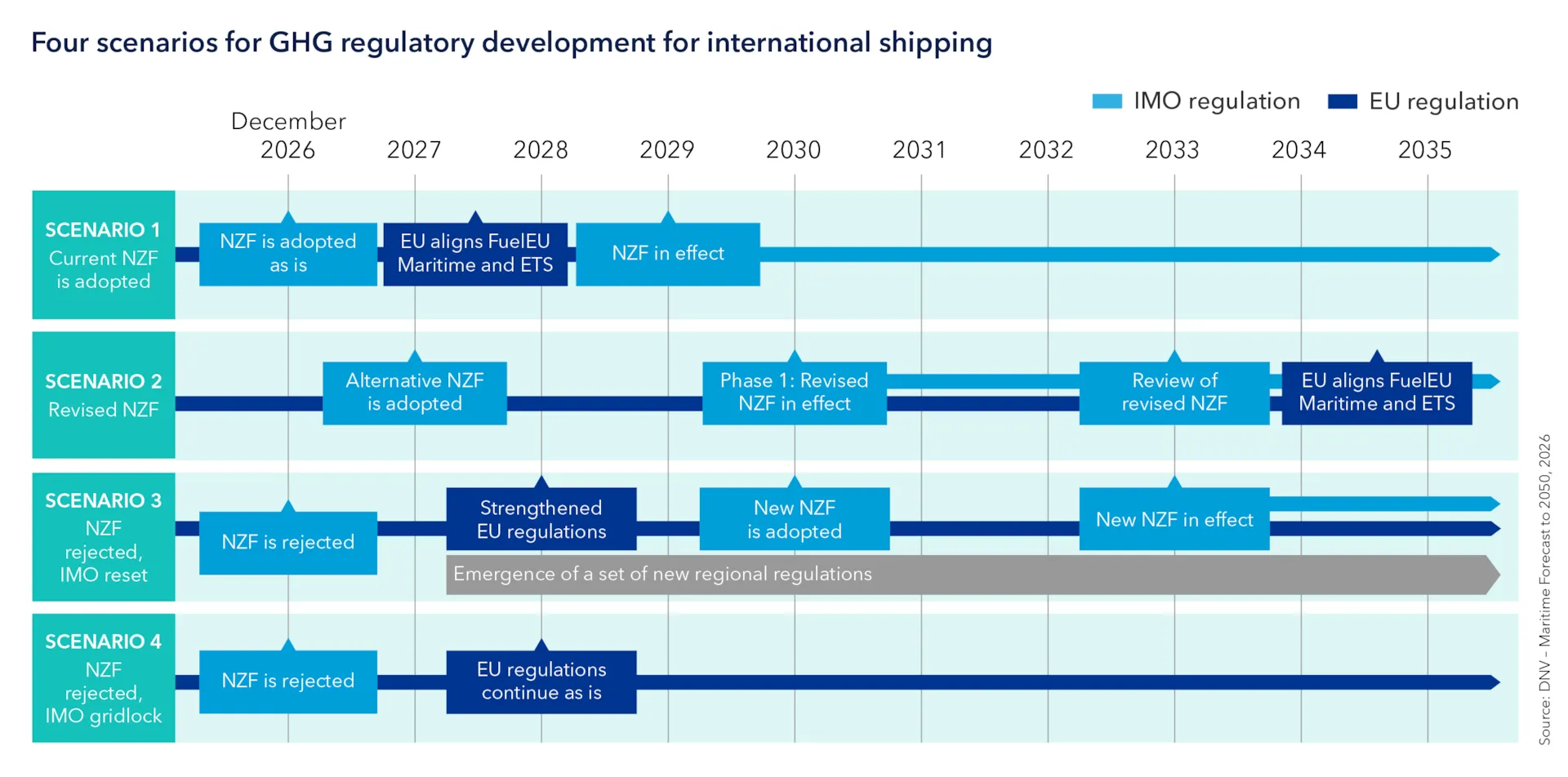
Stronger global regulation accelerates demand for low-GHG fuels and increases the attractiveness of energy-efficiency measures, while the absence of such regulation slows market development. The result is a transition whose pace may vary significantly depending on future policy decisions.
“For shipowners, this means the challenge is no longer identifying a single fuel pathway that fits the operational profile of their fleet. Instead, it is preparing fleets that remain competitive across multiple possible futures,” Sekkesæter concludes.
Tapping the fleet’s efficiency potential
Fully realizing the fleet’s energy-saving potential requires improvements not only to newbuilds but also to existing ships through retrofits.
Installing energy-saving devices during scheduled dry-docking can be a highly cost-effective decarbonization strategy, as illustrated by the Maritime Forecast’s case study of a hypothetical 15-year-old 5,000 TEU containership (built in 2013).
This envisages USD 2.35 million being invested to retrofit the ship with hydrodynamic enhancements including a bow retrofit, propeller upgrade, and a propeller boss cap fin.
The vessel can achieve estimated fuel savings of around 16% under the modelling assumptions. Evaluating the investment under three price scenarios for low sulphur heavy fuel oil (LSHFO) results in payback periods from 1.4 years to 4.2 years.
Note: The full Maritime Impact article by DNV can be found here.
Photo credit: DNV
Published: 25 September, 2026
Alternative Fuels
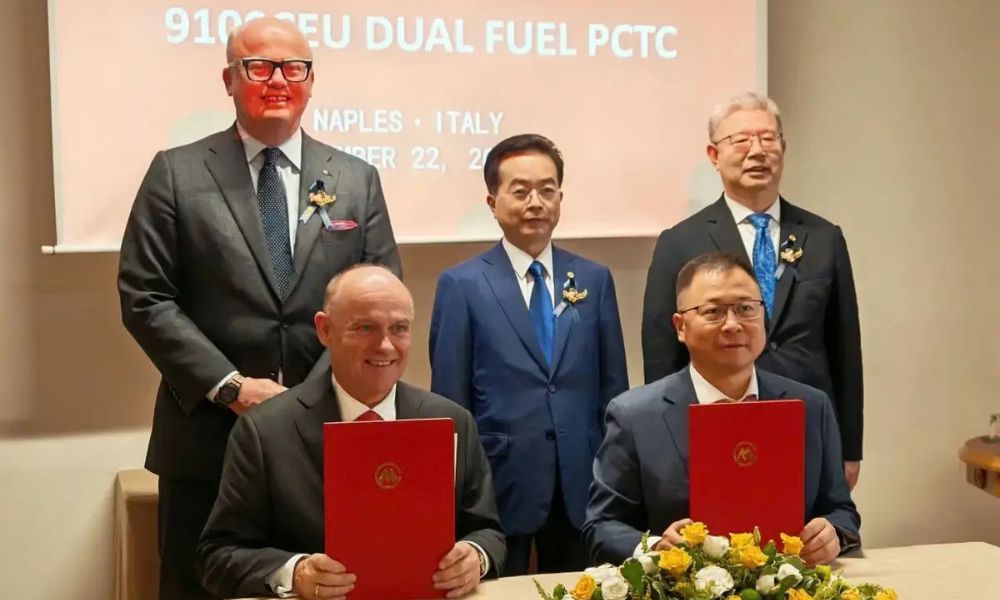
Höegh Autoliners orders six more ammonia, methanol-ready Aurora class PCTCs
Höegh Autoliner inked a contract with China Merchants Group for six additional Aurora class PCTCs, which will be built by China Merchants Heavy Industry (Jiangsu) and delivered between 2029 and 2031.
Newbuilding
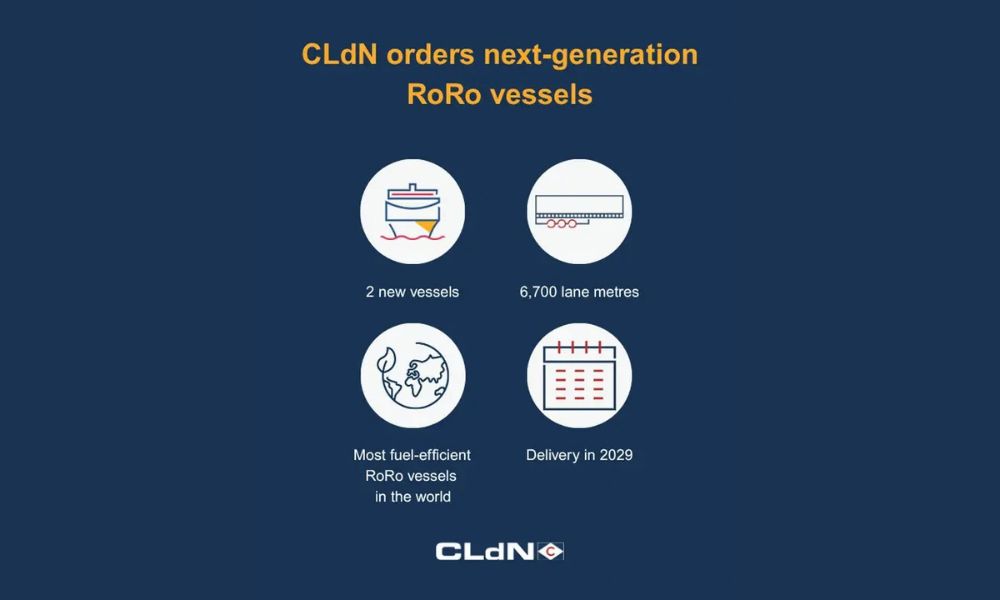
CLdN orders two LNG dual-fuel RoRo vessels from HD Hyundai Heavy Industries
New vessels will be built with space reserved for the future addition of larger electric shaft generators and batteries as the technology matures.

OUR INDUSTRY PARTNERS

Shell Singapore charged over Pulau Bukom oil leaks, reporting delays

MPA probes Singapore Strait collision involving fishing vessel, bulk carrier

TFG Marine deploys first MFM-equipped bunker barge in Jamaica

Seascale Energy names Gaetan Perret co-CEO as Olivier Josse prepares to retire

DNV: New research shows how regulation could reshape shipping

Stena Line orders two new hybrid ferries for Sweden – Denmark route

ENGINE: Americas Bunker Fuel Availability Outlook (24 Sep 2026)

Singapore: Marine fuel testing firm CCIC Singapore faces winding up application

High Court of Singapore issues winding up order against Hengli Petrochemical International

APPEC 2026: Digitalisation in bunkering not merely a ‘paper-to-screen’ swap, states panellists

APPEC 2026: Panellists navigate maritime decarbonisation and alternative marine fuel strategies

LDA’s methanol-powered “Spirit of Toulouse” gets Norsepower rotor sail in Shanghai

Goldwind green methanol facility completes trial production, ships first 500 mt

Singapore: Bunker fuel sales down by 4% on year in August 2026
-
 Winding up1 week ago
Singapore: Marine fuel testing firm CCIC Singapore faces winding up application
-
 Winding up2 weeks ago
High Court of Singapore issues winding up order against Hengli Petrochemical International
-
 Technology2 weeks ago
APPEC 2026: Digitalisation in bunkering not merely a ‘paper-to-screen’ swap, states panellists
-
 Alternative Fuels2 weeks ago
APPEC 2026: Panellists navigate maritime decarbonisation and alternative marine fuel strategies
-
 Wind-assisted2 weeks ago
LDA’s methanol-powered “Spirit of Toulouse” gets Norsepower rotor sail in Shanghai
-
 Methanol2 weeks ago
Goldwind green methanol facility completes trial production, ships first 500 mt
-
 Alternative Fuels1 week ago
Singapore: Bunker fuel sales down by 4% on year in August 2026
-
 Bunker Fuel2 weeks ago
APPEC 2026: Equatorial and Kuwait Petroleum Corporation discuss Middle East bunker market dynamics