
Bunker Fuel
FOBAS: Amendments to SOLAS flashpoint regulation
Prior to bunkering, fuel suppliers are now required to provide the ship’s representative a declaration that the fuel to be supplied meets the SOLAS flashpoint requirements.


Lloyd’s Register Fuel Oil Bunkering Analysis and Advisory Service (FOBAS) on Friday (6 February) released a bulletin regarding amendments to SOLAS flashpoint regulation:
Since 1st May 2024, it has been a MARPOL Annex VI requirement that the Bunker Delivery Note (BDN) also includes either the actual flashpoint of a fuel as supplied or a declaration that its flashpoint has been determined as being at or above 70°C. A subsequent amendment clarified that requirement only applied to fuels which were intended to have a flashpoint not less than 60°C as required by SOLAS II-2 regulation 2.1.1.
As advised by our FOBAS Bulletin dated 10th September 2024, the IMO Guidelines for the drawing, sealing and labelling of the MARPOL Delivered Sample, as required to be provided by the supplier, were revised to cover the potential that that sample may be required by the appropriate authorities in instances where the flashpoint was suspected as not complying with the SOLAS requirement.
SOLAS amendments which entered into force on 1st January 2026, now parallel the MARPOL requirement that the flashpoint details be provided on the BDN. However, those SOLAS amendments also require that, prior to bunkering, the fuel supplier is to provide to the ship’s representative a declaration that the fuel to be supplied meets the SOLAS flashpoint requirements.
Additionally, these SOLAS amendments now require that the appropriate authorities are to both advise IMO in instances where a fuel has been supplied which has been confirmed as not complying with the SOLAS flashpoint requirement and to take action against the supplier involved.
Consequently, there is the real potential that the relevant MARPOL Delivered Sample may be required by the appropriate authorities in instances where low flashpoint is confirmed from commercial testing such as that provided by FOBAS. As mentioned in our previous Bulletin, it is most important in those instances to maintain all relevant records where a MARPOL Delivered Sample is taken off the ship.
In view of these changes, FOBAS has taken this opportunity to update its guidance to ship owners and operators (see Appendix below), in the event that initial testing indicates a non-compliant flashpoint.
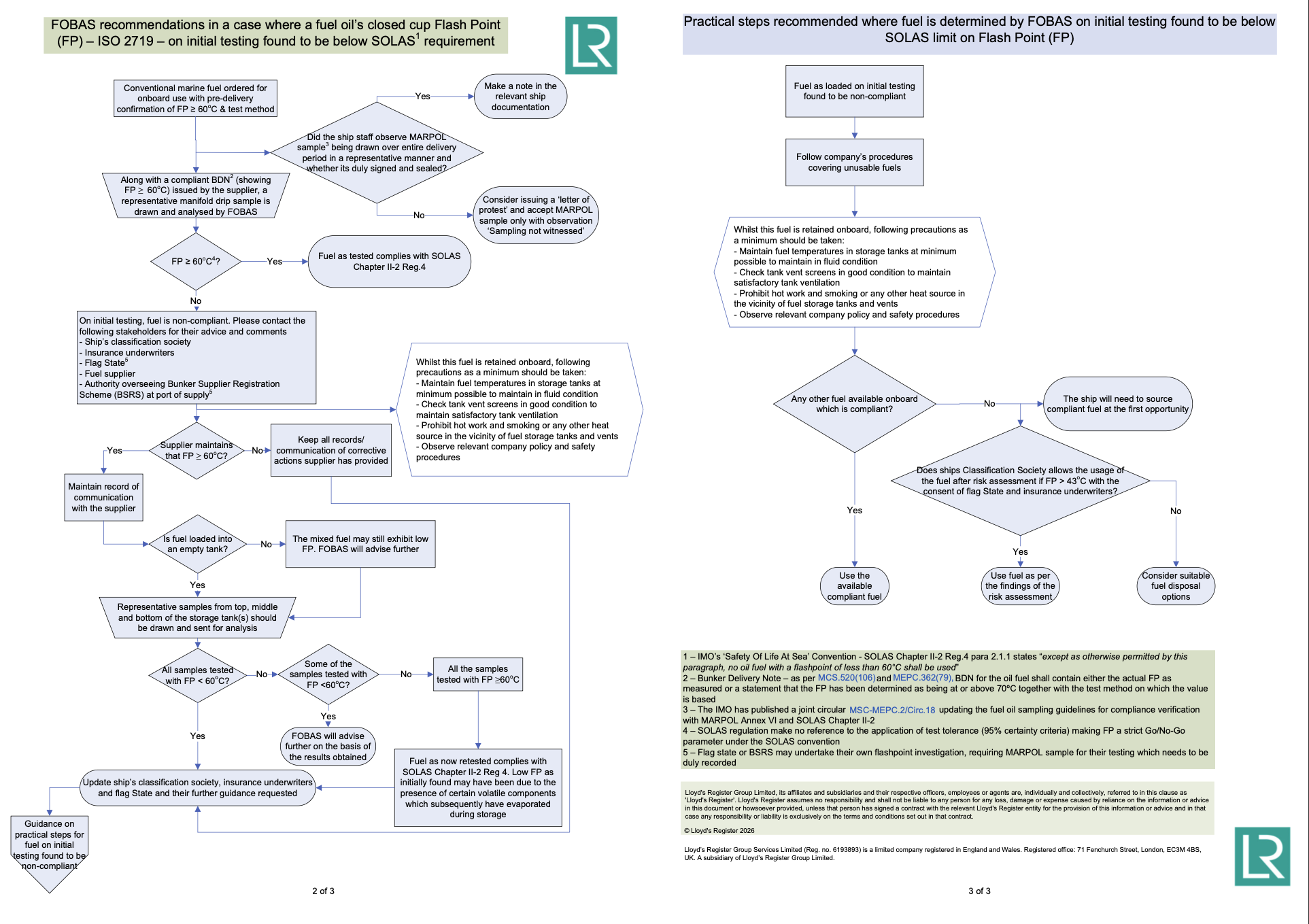
Photo credit: Louis Reed from Unsplash
Published: 9 February, 2026
LNG Bunkering
Singapore-based EPS takes delivery of three LNG dual-fuel bulk carriers
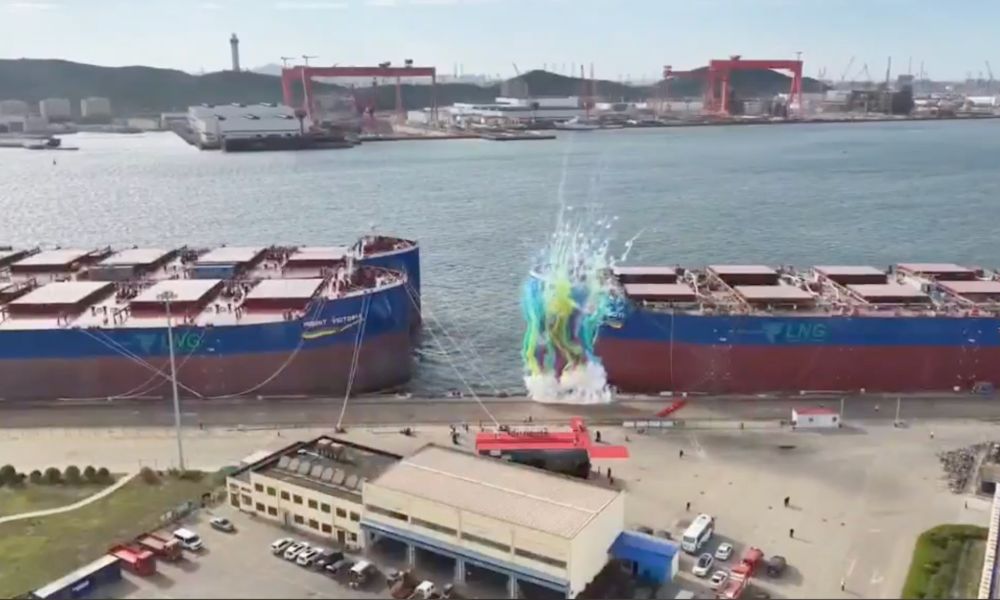
Three vessels are the third, fourth and fifth in the company’s series of 14 Newcastlemaxes being built at the yard, and were delivered five months ahead of their contracted delivery dates.
Port & Regulatory
UCL on ISWG-GHG 22: Majority back GHG pricing, centralised fund in IMO NZF talks
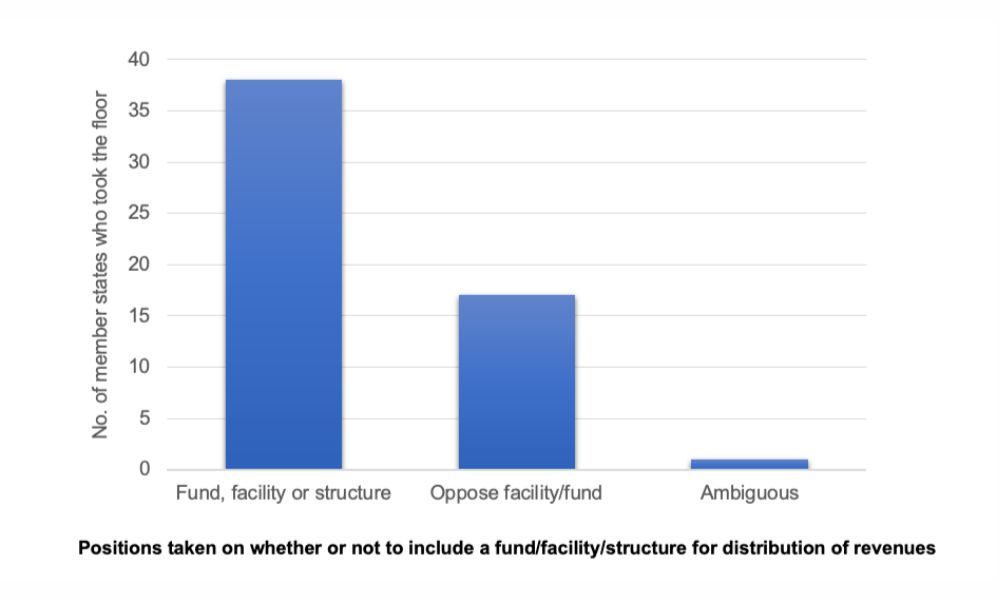
A significant majority of IMO member states backed a centralised system for collecting revenues to reward early adopters and support a just transition, according to UCL.
LNG Bunkering
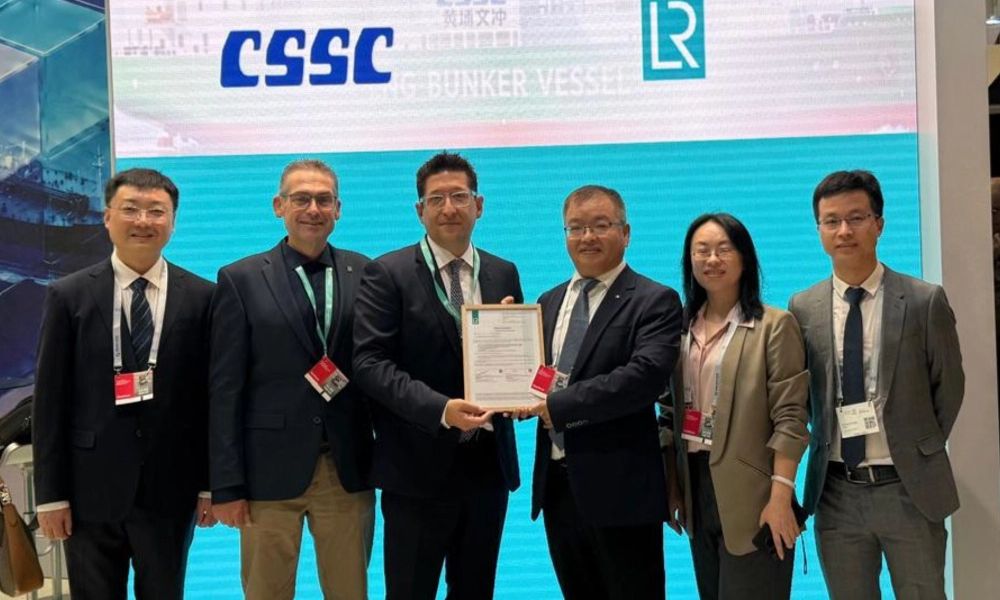
LR awards AiP to CSSC Huangpu Wenchong for 12,500 m³ LNG bunker vessel design
Vessel design incorporates Type C LNG cargo tanks and has been evaluated against a range of class notations covering gas operations, automation, environmental performance and cyber resilience.

OUR INDUSTRY PARTNERS

Singapore: Liquidators of Nan Ho Maritime, Nan Xin Maritime issue notices of dividend

Singapore-based EPS takes delivery of three LNG dual-fuel bulk carriers

ISWG-GHG 22: IMO working group aims to present NZF text at MEPC 85

UCL on ISWG-GHG 22: Majority back GHG pricing, centralised fund in IMO NZF talks

LR awards AiP to CSSC Huangpu Wenchong for 12,500 m³ LNG bunker vessel design

DNV at SMM: Chinese shipbuilders, European owners seek closer ties on alternative bunker fuels

Auramarine: Marine fuel flexibility will be key to shipping’s energy transition

Singapore-flagged tugboat “Kim Heng 3203” placed under Sheriff’s arrest

US targets five bunker companies in latest sanctions campaign against Iran

Singapore bunkering community supports Living Hope Evangelism’s 7th anniversary outreach for residents in need

China’s bunker market reshaped by tax rebates, trade flows and refining changes, says economist

Hengli Petrochemical’s ex-Singapore trading arm faces winding up application

Rajah & Tann: Bunker disputes are won in the first 48 hours

Report: GCMD outlines practical approach to quantity assurance in marine biofuel supply chains
-
 Vessel Arrest2 weeks ago
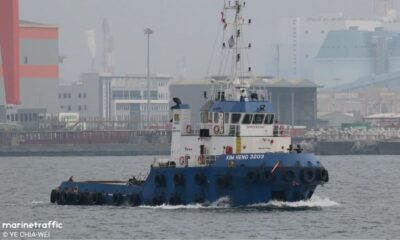
Singapore-flagged tugboat “Kim Heng 3203” placed under Sheriff’s arrest
-
 Sanctions2 weeks ago
US targets five bunker companies in latest sanctions campaign against Iran
-
 Events2 weeks ago
Singapore bunkering community supports Living Hope Evangelism’s 7th anniversary outreach for residents in need
-
 Interview1 week ago
China’s bunker market reshaped by tax rebates, trade flows and refining changes, says economist
-
 Winding up2 weeks ago
Hengli Petrochemical’s ex-Singapore trading arm faces winding up application
-
 Bunker Claim5 days ago
Rajah & Tann: Bunker disputes are won in the first 48 hours
-
 Biofuel2 weeks ago
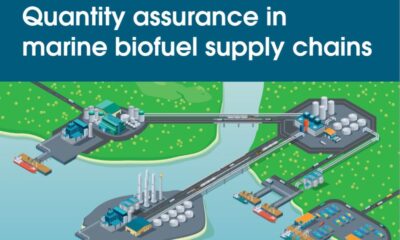
Report: GCMD outlines practical approach to quantity assurance in marine biofuel supply chains
-

 Winding up1 week ago
Singapore: Notices of annual meeting issued for Vroon Shipping Asia and related firms