Connect with us

Engine

Everllence and Vale ink agreement on development of ethanol as marine fuel

Companies will develop an advanced ethanol-powered engine designed to provide a sustainable and viable alternative to conventional fossil-fuel engines.

Admin

Published

on

Everllence and Vale ink agreement on development of ethanol as marine fuel

Everllence on Wednesday (25 February) said it signed a cooperation agreement with Brazilian mining company Vale to develop ethanol as a marine fuel.

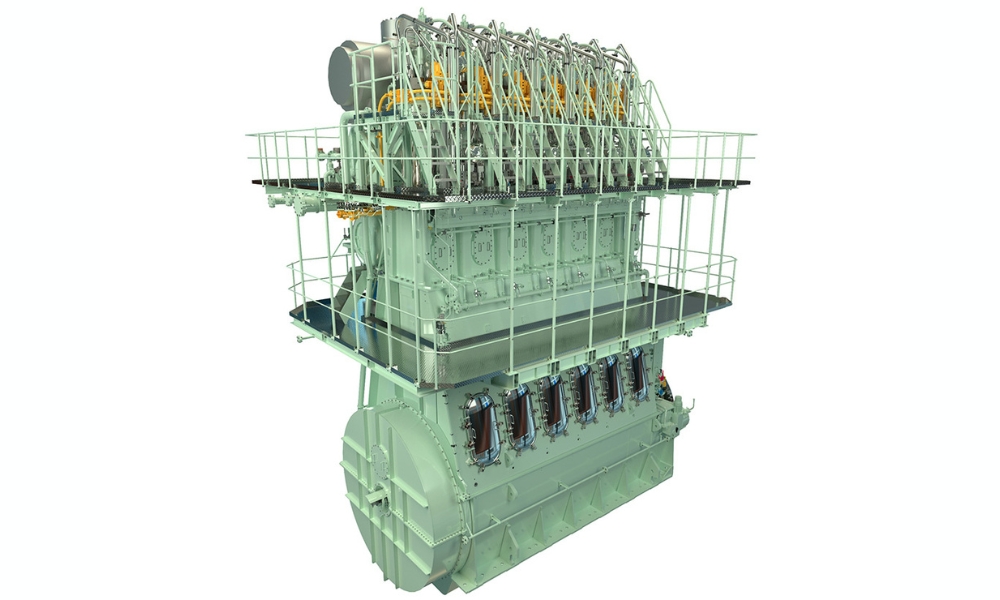
Under the terms of the agreement, the companies will develop an advanced ethanol-powered engine – based on the well-proven Everllence B&W ME-LGI (-Liquid Gas Injection) platform – designed to provide a sustainable and viable alternative to conventional fossil-fuel engines. 

The initiative aims to deliver a solution that combines environmental responsibility with market competitiveness by utilising ethanol’s unique properties.

These include life-cycle neutrality, reducing carbon emissions compared to fossil fuels. Nor does ethanol contain any sulphur and has very low toxicity, while being biodegradable and water-soluble. 

Finally, it is liquid at ambient temperatures and pressures, enabling usage of standardised handling procedures during bunkering and on-board handling, simplifying these time-consuming operations.

It is furthermore aligned with Vale’s multifuel, future-ready strategy to increase the flexibility of its affreighted fleet and foster solutions for the reduction of greenhouse-gas emissions. 

The companies state that the agreement builds on their longstanding, strategic relationship and shared ambition to drive sustainable solutions in shipping.

Christian Ludwig – Vice President, Head of Global Sales & Promotion, Two-Stroke Business, Everllence – said: “It’s a pleasure to reach this agreement with Vale, a company that is widely recognised as a strong global advocate for ethanol as an energy-transition fuel. This is particularly the case in Brazil and China, two markets where we expect this collaboration to resonate strongly. 

“For our part, we see Vale as a key strategic partner – not just on the ethanol front, but in general – and are very happy to support its ambitious fleet strategy. This agreement represents a milestone for the decarbonisation journey of large‑scale shipping, leveraging ethanol as a commercially scalable, globally significant pathway.”

Everllence previously showcased its market-leading position within the ethanol segment with two announcements in, respectively, September and December of 2025. The first was the successful running on ethanol – at all load points – of a 90-bore, two-stroke ME-LGIM (-Liquid Gas Injection Methanol) engine in Japan; the second being the successful running on ethanol – at all load points – of a four-stroke 21/31 dual-fuel GenSet at company test facilities in Denmark.

Ole Pyndt Hansen – Senior Vice President, Head of Two-Stroke R&D, Everllence, said: “With multiple dual-fuel technologies already in service and an ammonia-powered engine close to commercial maturity, Everllence’s position as the world’s leading engine developer within the two-stroke marine segment is secure. 

“As our attention turns to ethanol, our R&D team has just returned from a two‑week engine testing campaign in Japan, bringing data that further reinforces our confidence in ethanol‑based solutions. 

“Earlier tests showed strong potential and, with this new data, we are now expanding technical pathways to incorporate G70 and/or G80 engine platforms. Both our companies view this cooperation as a strategic step to support Vale’s newbuilding expansion with scalable, future‑proof engine technologies.”


Photo credit: Everllence
Published: 26 February, 2026

Continue Reading

Ammonia

Mitsui E&S commercialises ammonia dual-fuel engines and fuel supply systems

Company says it has established a supply framework for marine propulsion systems aimed at the practical implementation of ammonia-fuelled vessels.
Admin

Published

on

By

Mitsui E&S commercialises ammonia dual-fuel engines and fuel supply systems

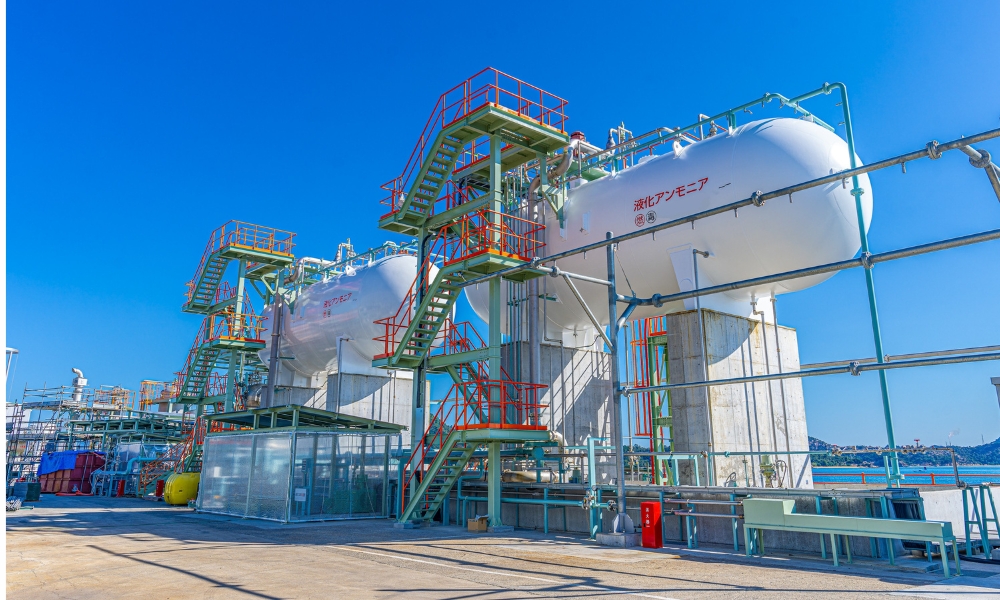
Mitsui E&S on Thursday (20 August) said it has completed the commercialisation of large ammonia dual-fuel marine engines and ammonia fuel supply systems (AFSS).

As the only company in Japan manufacturing both ammonia dual fuel engines and AFSS, the company said it has established a supply framework for marine propulsion systems aimed at the practical implementation of ammonia-fuelled vessels.

“While ammonia holds promise as a next-generation fuel that emits no carbon dioxide during combustion, it is difficult to ignite and poses risks related to toxicity and corrosiveness; therefore, ensuring safety, reliability, and environmental performance is crucial for its practical implementation in society,” it said. 

In February, Mitsui E&S conducted land-based tests involving the integrated operation of the Ammonia dual fuel engine MITSUI-Everllence B&W 7S60ME-C10.5-LGIA-HPSCR and the AFSS, witnessed by ClassNK (Nippon Kaiji Kyokai), and verified their performance. 

Following the completion of the tests and the subsequent review, Mitsui E&S confirmed the completion of onshore testing in accordance with classification society rules and verified compliance with International Maritime Organization (IMO) NOx regulations through NOx certification. 

“Consequently, we have finalised the commercialisation of the ammonia dual fuel engines and the AFSS and are now able to supply it for actual vessels,” it added. 

Mitsui E&S said it has already decided to expand its land-based testing facilities for AFSS compatible with both Everllence and WinGD licensed engines. 

“In conjunction with this, we will establish a mass-production system for both the engines and the AFSS to meet the anticipated rise in demand,” it said. 

Mitsui E&S added the company is expanding its engine lineup to accommodate a diverse range of next-generation marine fuels, including ammonia, by offering ammonia-fuelled engines and AFSS as an integrated package.


Photo credit: Mitsui E&S
Published: 24 August, 2026

Continue Reading

Events

London forum to address critical bottlenecks holding back maritime decarbonisation

Marine Energy Transition Forum 2026 will be held on 11 November to address bunker fuel, technology and infrastructure barriers that continue to slow the industry’s transition to net-zero emissions.
Admin

Published

on

By

London forum to address critical bottlenecks holding back maritime decarbonisation

The Marine Energy Transition Forum (METF) 2026 will bring together leading voices from across the global maritime sector on 11 November 2026 at Norton Rose Fulbright, London.

The forum will tackle one of shipping’s most pressing challenges: how to overcome the fuel, technology and infrastructure barriers that continue to slow the industry’s transition to net-zero emissions.

Under the theme “Reframing the maritime decarbonisation roadmap: addressing fuel, technology and infrastructure bottlenecks,” the one-day forum will provide a platform for shipowners, fuel suppliers, technology developers, ports, policymakers and financiers to examine the practical steps needed to accelerate progress while maintaining commercial competitiveness.

As the maritime industry navigates an increasingly complex regulatory and commercial landscape, METF 2026 will focus on delivering practical insight into the challenges—and opportunities—shaping the next phase of the energy transition.

The conference programme will explore five key themes:

  • The effectiveness of current regulatory frameworks and policy measures, including regional and international initiatives driving maritime decarbonisation.
  • Progress in developing a resilient multi-fuel future, examining investment, fuel availability, supply chains and infrastructure.
  • The commercial readiness of emerging technologies, including alternative propulsion systems, vessel optimisation, batteries, carbon capture, wind propulsion and digital solutions.
  • Building a supportive business environment for energy transition companies, with discussions covering finance, innovation, scaling businesses and market development.
  • The evolving role of ports as critical enablers of shipping’s energy transition through new fuel infrastructure, shore power and energy cluster development.

METF 2026 is designed to encourage open discussion between every part of the maritime value chain, recognising that collaboration across fuel producers, shipowners, ports, technology providers, investors and policymakers will be essential if global decarbonisation ambitions are to be achieved.

The event will feature expert speakers, panel discussions and extensive networking opportunities, enabling delegates to exchange ideas, develop partnerships and gain practical insight into the strategies shaping the future of maritime energy.

Registration for METF 2026 is now open. Further information and registration can be found here


Photo credit: ship.energy
Published: 13 August, 2026

Continue Reading

Engine

Japan’s first WinGD methanol dual-fuel marine engine passes FAT at MITSUI E&S

Company successfully completed the Factory Acceptance Test of the DU-WinGD 6X82DF-M-1.0 LP-SCR, the first methanol dual-fuel WinGD large marine engine built in Japan.
Admin

Published

on

By

MITSUI E&S completes FAT of Japan's first WinGD methanol dual-fuel engine

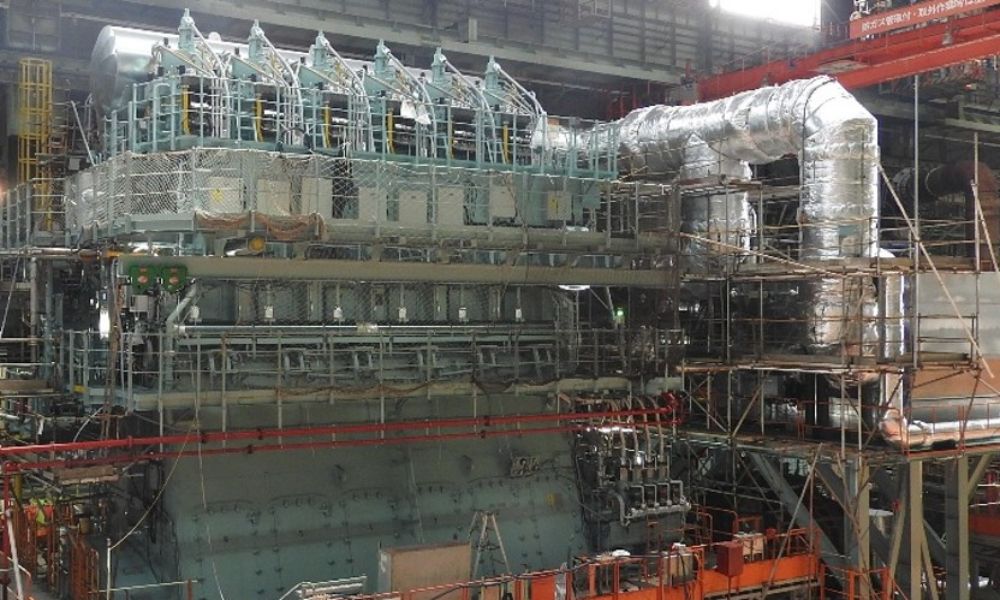
MITSUI E&S on Monday (3 August) announced that Mitsui E&S DU, a group company of MITSUI E&S, has successfully completed the Factory Acceptance Test (FAT) of the DU-WinGD 6X82DF-M-1.0 LP-SCR, the first methanol dual-fuel WinGD large marine engine built in Japan.

The engine is also the first WinGD large marine engine manufactured at MITSUI E&S Tamano Works.

“The engine is scheduled to be installed on the first vessel in a series of four vessels being built for a domestic shipowner,” the company said on its website. 

By utilising green methanol as fuel, it will contribute to a substantial reduction in greenhouse gas (GHG) emissions from shipping operations.

“To meet the expected increase in marine engine demand under the Japanese government’s Shipbuilding Industry Revitalisation Roadmap, the MITSUI E&S Group is working to enhance production efficiency for large marine engines through integrated operation at MITSUI E&S Tamano and Mitsui E&S DU Aioi,” the company added.


Photo credit: MITSUI E&S
Published: 4 August, 2026

Continue Reading
Advertisement

OUR INDUSTRY PARTNERS


Trending