Connect with us

Alternative Fuels

J-ENG completes land-based testing of hydrogen-fuelled marine engine

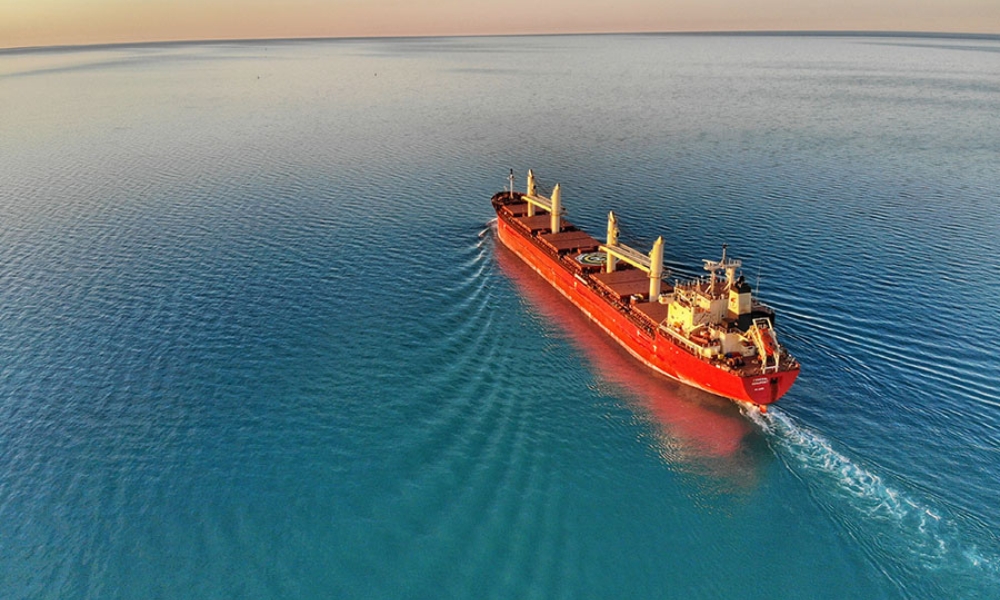
Engine will be installed on a 17,500 DWT multipurpose vessel to be built by Onomichi Dockyard for MOL and MOL Drybulk, with onboard demonstration testing scheduled to begin in April 2028.

Admin

Published

on

12 2

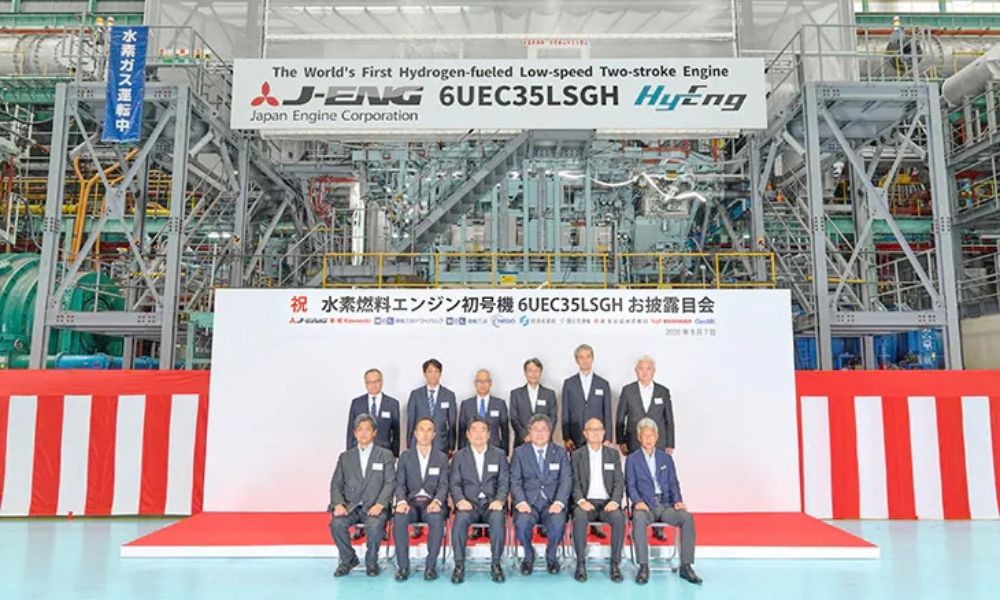
Japan Engine Corporation (J-ENG) on Friday (18 September) said it has completed land-based testing of the world’s first hydrogen-fuelled engine for large commercial vessels, the 6UEC35LSGH.

During factory testing, the engine achieved a hydrogen co-firing rate of at least 95%, reducing GHG emissions by more than 95% compared with conventional heavy-fuel-oil engines.

By adopting a high-pressure direct injection system, which injects fuel directly into the cylinder at high pressure, J-ENG said the engine achieves stable hydrogen combustion. 

Safety measures were also implemented, including a robust structure to prevent hydrogen leakage and double-walled piping for hydrogen supply lines. 

“Approval testing was conducted in the presence of ClassNK and was completed successfully,” the company said. 

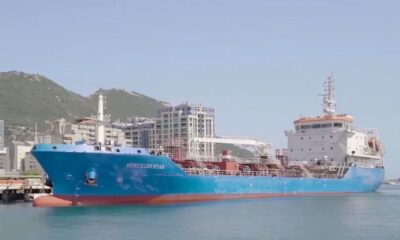
The engine will be installed on a 17,500 DWT multipurpose vessel to be built by Onomichi Dockyard for Mitsui O.S.K. Lines and MOL Drybulk.

Hydrogen fuel will be supplied to the engine through a marine hydrogen fuel system, consisting of marine hydrogen fuel tanks and a fuel supply system, developed and manufactured by Kawasaki Heavy Industries.

In addition, Nippon Kaiji Kyokai (ClassNK) will conduct safety assessments throughout each stage of the engine’s development and the vessel’s design, construction and operation.

The vessel will then undergo sea trials before onboard demonstration testing begins in April 2028. 

Kawasaki will also develop and manufacture bunkering equipment for supplying liquefied hydrogen to vessels. 

“The demonstration will further evaluate the engine’s durability and performance under actual operating conditions,” J-ENG added.


Photo credit: J-ENG
Published: 22 September, 2026

Continue Reading

Alternative Fuels

Singapore-based Golden Island, Qingdao Port team up on alternative bunker fuels

Agreement covers green methanol, green ammonia and bio-LNG, with cooperation spanning fuel production and transportation through to storage, sales and bunkering.
Admin

Published

on

By

Golden Island, Qingdao Port team up on green methanol, ammonia and bio-LNG

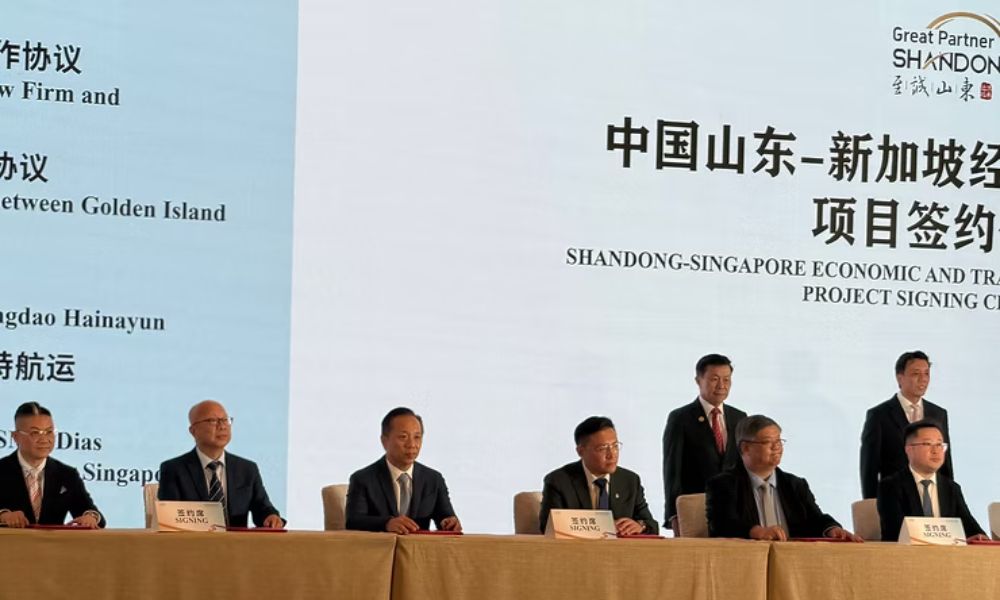
Singapore bunker supplier Golden Island Pte Ltd on Monday (21 September) said it has signed a strategic framework agreement with Qingdao Port International Co Ltd to collaborate on the supply of alternative marine fuels.

The agreement covers green methanol, green ammonia and bio-LNG, with cooperation spanning fuel production and transportation through to storage, sales and bunkering.

“By combining our MPA-licensed bunkering capabilities with Qingdao Port’s incredible logistics and strategic hub position, we are building something truly robust for the global shipping industry’s low-carbon future,” the company said in a statement. 

Qingdao Port International, which operates five major port areas in China, will bring its logistics network, storage facilities and customs clearance capabilities to the partnership.

Golden Island is licensed by the Maritime and Port Authority of Singapore (MPA) to conduct methanol bunkering and is ISCC EU-certified.

The companies are also engaging with container liners, bulk carriers, oil tankers and cruise ships regarding the adoption of alternative marine fuels.


Photo credit: Golden Island Pte Ltd
Published: 22 September, 2026

Continue Reading

Ammonia

HD HHI and HD KSOE secure ABS AiP for ammonia bunkering vessel design

ABS awarded approval in principle for the basic design of a 22,000 CBM bunkering vessel capable of supplying ammonia as marine fuel.
Admin

Published

on

By

HD HHI and HD KSOE secure ABS AiP for ammonia bunkering vessel

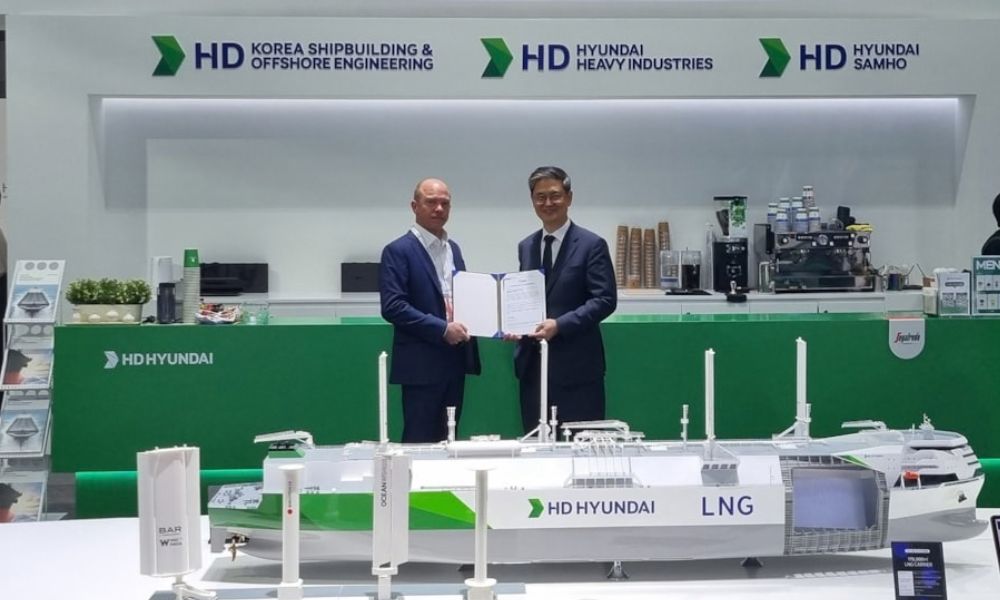
Classification society ABS on Monday (21 September) said it has awarded HD Hyundai Heavy Industries (HD HHI) and HD Korea Shipbuilding & Offshore Engineering (HD KSOE) approval in principle (AIP) for the basic design of a 22,000 CBM bunkering vessel capable of supplying ammonia as marine fuel.

The approval is the result of a joint development project initiated earlier this year. ABS reviewed the design’s general arrangement, machinery arrangement, ammonia cargo handling system and fuel supply system against applicable class and international requirements.

Gareth Burton, ABS Senior Vice President, Global Engineering, said: “Bunkering infrastructure is a critical step for any marine fuel to scale, and it has to be implemented with safety designed in from the start.

“This AIP reflects the industry’s need for fuel flexibility while advancing the safe bunkering of ammonia. ABS is proud to support HD HHI and HD KSOE as they develop technologies that expand fuel flexibility.”

Ryu Hong-Ryeul, Chief Technical Officer (CTO) of HD HHI, said: “As ammonia rapidly emerges as a viable low-carbon alternative fuel, demand for ammonia bunkering vessels is expected to grow in line with the increasing adoption of ammonia-fuelled ships. 

“This AIP marks a significant milestone toward the commercialisation of ammonia bunkering vessels.”

ABS and the HD Hyundai group have worked together across a range of technologies supporting ammonia as a marine fuel. Recent projects have included AIP for HD KSOE’s ammonia cargo handling and bunkering system and initial review for HD HHI’s machinery arrangement in engine room.


Photo credit: ABS
Published: 22 September, 2026

Continue Reading

Alternative Fuels

DNV on IMO CCC 12: Revised guidelines for methanol as marine fuel

CCC 12 finalized the revision of the interim guidelines for use of methyl/ethyl alcohol as fuel while work continued on guidelines for low-flashpoint oil fuels and onboard carbon capture and storage systems.
Admin

Published

on

By

RESIZED Chris Pagan

Classification society DNV on Monday (21 September) highlighted progress made on several regulatory and technical matters at the 12th session of the IMO Sub-Committee on Carriage of Cargoes and Containers (CCC 12), held from 14 to 18 September. 

This includes alternative fuels, cargo securing, onboard carbon capture systems, and battery carriage: 

Amendments to the IGF Code and development of guidelines for alternative fuels and related technologies

Methyl/ethyl alcohols

CCC 12 finalized the revision of the Interim Guidelines for the Safety of Ships Using Methyl/Ethyl Alcohol as Fuel (MSC.1/Circ.1621). The amendments revise all sections of the existing guidelines, taking into account experience gained to date.

The revised guidelines:

  • provide more flexibility in fuel tank placement and leakage-handling arrangements;
  • introduce a new concept for ventilation of fuel spaces;
  • expand guidance on the design of bunkering stations and fire extinguishing; and
  • add new guidance on bunkering operations and personal protective equipment.

Low-flashpoint oil fuels

CCC 12 continued work on the interim guidelines for ships using low-flashpoint oil fuels (fuel with a flashpoint between 52°C and 60°C). It was agreed not to develop detailed provisions for the “temperature-controlled engine room concept” but focus on a safety concept more aligned with the existing guidelines under the IGF code, however with major simplifications of the safety barriers. Work on the interim guidelines will continue in a Correspondence Group aiming for finalization at CCC 13 in 2027.  

Fuel cell power installations and IGF Code amendments

The revision of the Interim Guidelines for the Safety of Ships Using Fuel Cell Power Installations (MSC.1/Circ.1647), and other proposals for amendments to the IGF Code were not discussed in detail, but work will continue in a Correspondence Group reporting to CCC 13 in 2027.  

Development of a safety regulatory framework to support the reduction of GHG emissions from ships using new technologies and alternative fuels

Onboard carbon capture and storage (OCCS)

CCC 12 started the discussion to develop guidelines for the safety of ships fitted with OCCS. The guidelines should contain a technology-neutral main body for common ship-level requirements, while technology-specific safety requirements will be placed in individual annexes. Work on the guidelines will continue in a Correspondence Group reporting to CCC 13 in 2027. The guidelines are expected to be finalized in 2028.

Note: The full technical and regulatory news by DNV can be found here


Photo credit: Chris Pagan on Unsplash
Published: 22 September, 2026

Continue Reading

Trending