Connect with us

Wind-assisted

DNV on wind-assisted propulsion: Managing safety while regulation takes shape

Georgios Kasimatis explains how wind-assisted propulsion systems safety is already being managed through the ISM Code, class standards, and flag state engagement.

Admin

Published

on

DNV on wind-assisted propulsion: Managing safety while regulation takes shape

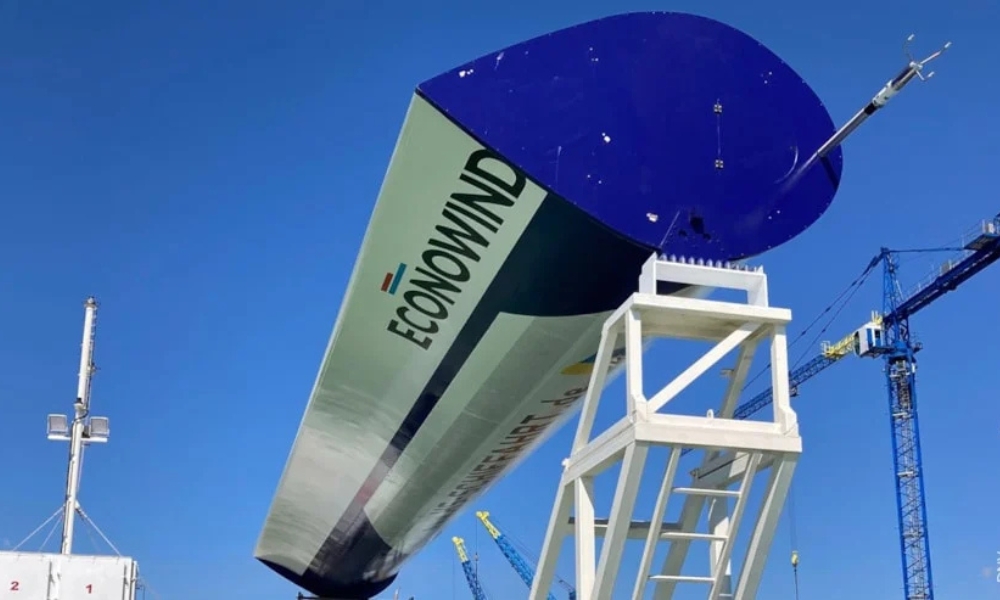
In this Maritime Impact article, published on Monday (8 June), Georgios Kasimatis, Director of Regulatory Affairs at classification society DNV, explained how wind-assisted propulsion systems (WAPS) safety is already being managed through the ISM Code, class standards, and flag state engagement. 

The article explored current operational practices, emerging IMO guidance, and what shipowners can expect as safety frameworks continue to evolve alongside wider adoption of the technology:

Wind-assisted propulsion systems (WAPS) have moved beyond pilot projects. Today, ships equipped with rotors, wings, and sails are trading globally, helping owners cut fuel consumption and emissions while responding to increasingly stringent greenhouse gas requirements. Yet this rapid operational uptake is unfolding faster than binding international regulation is being finalized. 

This creates a familiar but critical tension. The technology is already in service and increasing in scale across the global fleet, but the International Maritime Organization (IMO) is still developing harmonized safety guidance. For operators in the space, that gap can feel like uncertainty or risk. In reality, the regulatory signals around WAPS are becoming clearer, and safety processes are already in place through the International Safety Management (ISM) Code, flag state engagement, and classification standards.  

WAPS are now firmly on the IMO safety agenda 

At the IMO level, wind propulsion and wind-assisted power are now clearly on the safety agenda. The subcommittee on ship design and construction has been formally tasked with developing interim safety guidelines, supported by correspondence group work and progressing towards consideration by the maritime safety committee. While timelines at IMO can be revised, these guidelines are expected to be developed and finalized within the next three to four years.    

Importantly, these discussions are not happening in a vacuum. They sit within a wider IMO effort to ensure that new and emerging technologies and fuels are addressed within a broader, coherent safety framework. For WAPS, key developments so far have included their identification as a technology which requires dedicated safety standards, as well as recognition that existing instruments, such as SOLAS, COLREG, stability codes, and other navigational safety provisions, may not fully capture safety hazards specific to the technologies. 

The prevailing view in discussions to date is that risks appear manageable when systematically identified and controlled. Attention has centred on well-known risks that can be managed with the right design assumptions, operational controls, and human element safeguards. These include visibility and sensor performance, manoeuvrability and controllability, air draft and port interfaces, stability effects, extreme weather exposure, and crew competence.

Existing frameworks already manage WAPS risks 

Crucially, the absence of finalized IMO guidance does not mean that WAPS safety is unmanaged. Far from it. Today’s operational safety baseline rests on three pillars: flag state engagement, class approval using established technical standards, and – most fundamentally – the Safety Management System (SMS) under the ISM Code, a mandatory requirement under SOLAS Chapter IX. 

Class frameworks – including DNV’s technical standard (DNV-ST-0511) – already address core technical aspects, including structural integrity, fatigue, extreme wind loading, system integration, and operational limits. For installations designed and approved against these standards, future IMO guidance is more likely to bring harmonization than to trigger fundamental changes, and existing WAPS installations are therefore unlikely to be significantly affected.  

Where WAPS installations affect visibility in ways that touch SOLAS Chapter V/22, acceptance of equivalent arrangements remains a flag state decision, typically supported by class technical assessments. In practice, guidance such as DNV’s recommended practice for CCTV-based solutions (DNV-CG-0662) is commonly used to support these evaluations. 

Note: The full article by DNV can be read here


Photo credit: DNV
Published: 10 June, 2026

Continue Reading

Wind-assisted

KR, HD Hyundai, BAR Technologies and LISCR team up on wind-assisted LNG carrier

All four signed a MoU, aimed to assess the technical feasibility and safety of applying wind-assisted propulsion technology to LNG carriers.
Admin

Published

on

By

KR, HD Hyundai, BAR Technologies and LISCR team up on wind-assisted LNG carrier

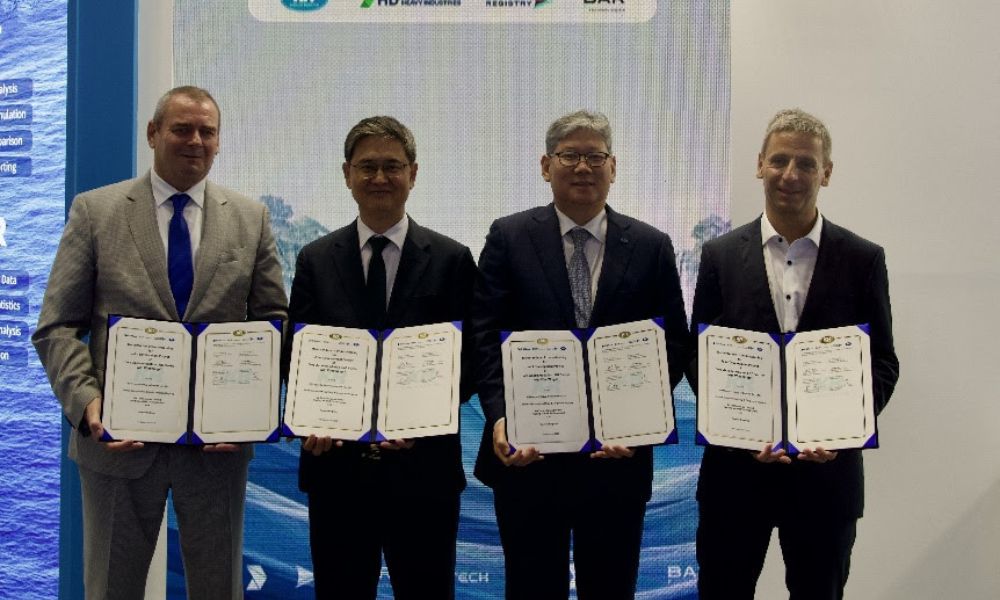
Classification society Korean Register (KR) on Tuesday (15 September) said it has signed a Memorandum of Understanding (MoU) with HD Hyundai Heavy Industries (HHI), UK-based wind propulsion technology company BAR Technologies, and the Liberian International Ship & Corporate Registry (LISCR) to jointly develop a 174K LNG carrier equipped with the WindWings® wind-assisted propulsion system.

The agreement was signed on 15 September at Gastech 2026 in Bangkok and aims to assess the technical feasibility and safety of applying wind-assisted propulsion technology to LNG carriers as the global shipping industry accelerates its transition toward decarbonisation.

The project will focus on a 174K LNG carrier developed by HHI featuring a forward accommodation arrangement. 

By positioning the crew accommodation block toward the bow, the design provides additional space on the upper deck, creating an opportunity to integrate BAR Technologies’ WindWings® system. 

WindWings® uses large, rigid wing sails installed on a vessel to harness wind as supplementary propulsion. By reducing reliance on the vessel’s main propulsion system, the technology can lower fuel consumption and greenhouse gas emissions while improving overall energy efficiency.

Under the collaboration, HHI will lead the vessel’s basic design and design review, while BAR Technologies will provide technical data covering the arrangement and specifications of WindWings®, structural strength, operational concepts and expected fuel savings.

KR, together with LISCR, will assess the safety and technical suitability of the design against applicable rules and international requirements. Based on the outcome of the assessment, KR will also consider granting Approval in Principle (AIP), supporting the application and future commercialization of wind-assisted propulsion technology on LNG carriers.

Hong-ryul Ryu, Senior Executive Vice President and CTO of HHI, said: “Through this project, we aim to integrate wind-assisted propulsion technology into our forward accommodation LNG carrier design, further enhancing the competitiveness of next-generation, low-emission LNG carriers.”

John Cooper, CEO of BAR Technologies, said: “We already have WindWings® deployed across 10 bulkers and tankers, with 23 WindWings® collectively saving approximately 100 tonnes of CO₂ per day. We look forward to extending the application of WindWings® to next-generation gas carriers, establishing a robust foundation for safe commercialisation, and providing shipowners with a genuinely attractive environmental solution.”

Yongsok Lee, Chairman and CEO of KR, said: “Through this joint development project, KR will assess the safety and technical suitability of applying wind-assisted propulsion to this LNG carrier design against applicable rules and international requirements, with a view to granting Approval in Principle.”

Alfonso Castillero, CEO of the Liberian International Ship & Corporate Registry, added: “By assessing wind-assisted propulsion for LNG carriers from an early design stage, the partners can help translate the decarbonization challenge into practical opportunities for improved efficiency, future-ready ship designs and competitive advantage, without compromising safety or quality.”


Photo credit: Korean Register
Published: 16 September, 2026

Continue Reading

Wind-assisted

LDA’s methanol-powered “Spirit of Toulouse” gets Norsepower rotor sail in Shanghai

Now in Shanghai, the installation of the vessel’s innovative wind-assisted propulsion system has begun with the fitting of the first of its six 35-metre-high rotors.
Admin

Published

on

By

LDA’s methanol-powered “Spirit of Toulouse” gets Norsepower rotor sail in Shanghai

French shipowner LD Armateurs on Thursday (10 September) said its new RoRo vessel has reached another major milestone in her construction journey with the start of the installation of a wind-assisted propulsion system. 

Following its launch earlier this year, Spirit of Toulouse has completed a journey along the Yangtze River to Shanghai. 

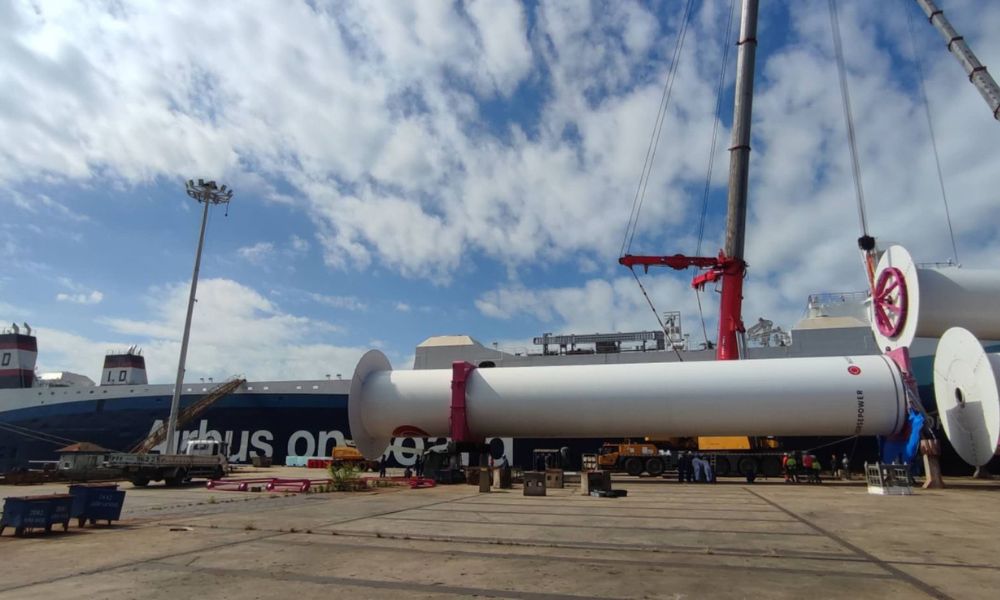
Now in Shanghai, the installation of the vessel’s innovative wind-assisted propulsion system has begun with the fitting of the first of its six 35-metre-high rotors. 

“This highly visible phase marked a significant step forward in bringing to life the world’s biggest low-emission RoRo vessels ever built,” the company said. 

Combining six Norsepower Rotor Sails ™ and two dual-fuel engines capable of running on e-/bio-methanol or marine diesel oil, the Spirit of Toulouse has been specifically designed to substantially reduce emissions while maintaining the highest standards of operational performance and reliability. 

The ship will operate on the Atlantic route, transporting aircraft elements for Airbus between European production sites and the final assembly line in the US. 

“As work progresses in Shanghai, the silhouette of the Spirit of Toulouse is beginning to take shape, bringing this unique vessel one step closer to entering service and setting new standards for sustainable maritime transport,” the company added. 


Photo credit: LD Armateurs
Published: 14 September, 2026

Continue Reading

Events

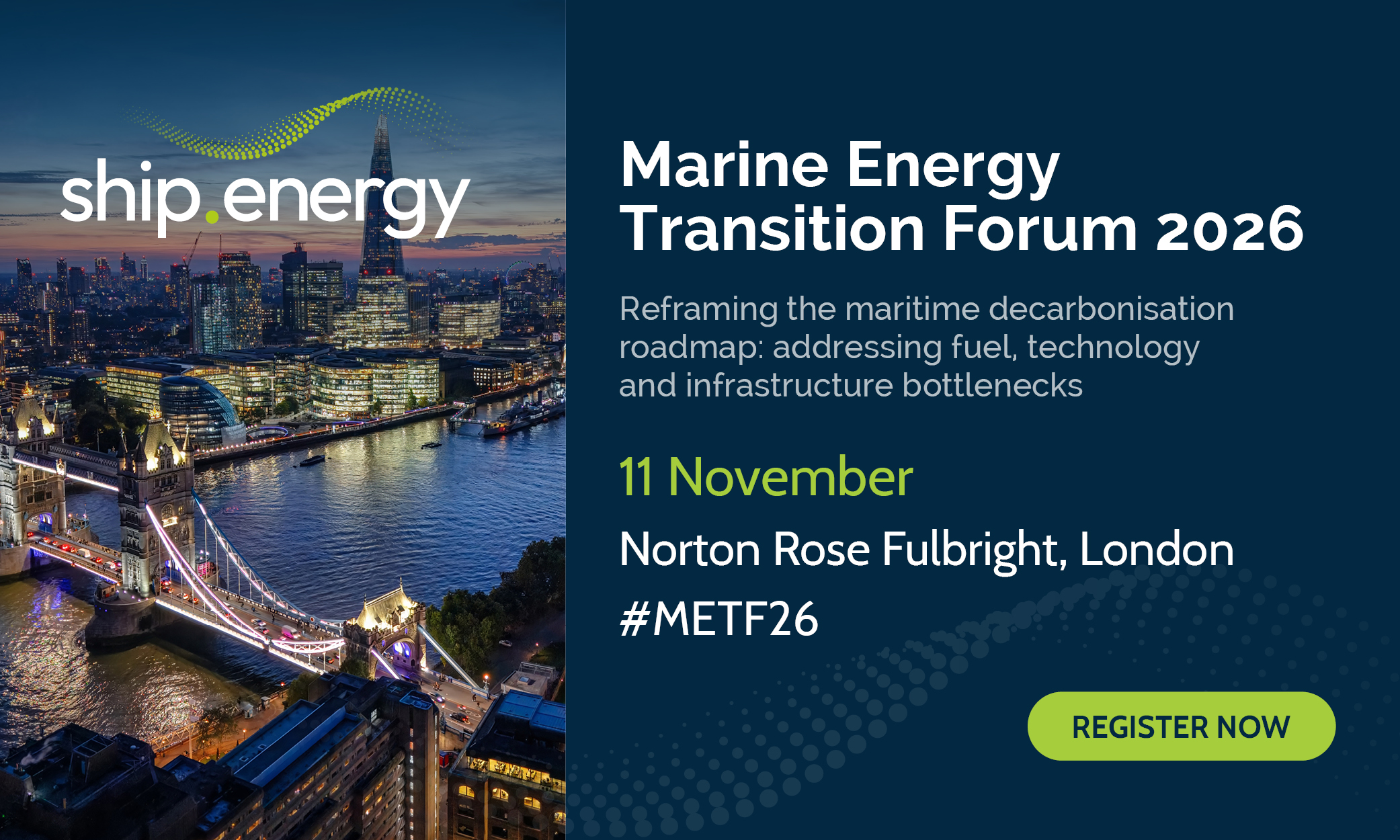
London forum to address critical bottlenecks holding back maritime decarbonisation

Marine Energy Transition Forum 2026 will be held on 11 November to address bunker fuel, technology and infrastructure barriers that continue to slow the industry’s transition to net-zero emissions.
Admin

Published

on

By

London forum to address critical bottlenecks holding back maritime decarbonisation

The Marine Energy Transition Forum (METF) 2026 will bring together leading voices from across the global maritime sector on 11 November 2026 at Norton Rose Fulbright, London.

The forum will tackle one of shipping’s most pressing challenges: how to overcome the fuel, technology and infrastructure barriers that continue to slow the industry’s transition to net-zero emissions.

Under the theme “Reframing the maritime decarbonisation roadmap: addressing fuel, technology and infrastructure bottlenecks,” the one-day forum will provide a platform for shipowners, fuel suppliers, technology developers, ports, policymakers and financiers to examine the practical steps needed to accelerate progress while maintaining commercial competitiveness.

As the maritime industry navigates an increasingly complex regulatory and commercial landscape, METF 2026 will focus on delivering practical insight into the challenges—and opportunities—shaping the next phase of the energy transition.

The conference programme will explore five key themes:

  • The effectiveness of current regulatory frameworks and policy measures, including regional and international initiatives driving maritime decarbonisation.
  • Progress in developing a resilient multi-fuel future, examining investment, fuel availability, supply chains and infrastructure.
  • The commercial readiness of emerging technologies, including alternative propulsion systems, vessel optimisation, batteries, carbon capture, wind propulsion and digital solutions.
  • Building a supportive business environment for energy transition companies, with discussions covering finance, innovation, scaling businesses and market development.
  • The evolving role of ports as critical enablers of shipping’s energy transition through new fuel infrastructure, shore power and energy cluster development.

METF 2026 is designed to encourage open discussion between every part of the maritime value chain, recognising that collaboration across fuel producers, shipowners, ports, technology providers, investors and policymakers will be essential if global decarbonisation ambitions are to be achieved.

The event will feature expert speakers, panel discussions and extensive networking opportunities, enabling delegates to exchange ideas, develop partnerships and gain practical insight into the strategies shaping the future of maritime energy.

Registration for METF 2026 is now open. Further information and registration can be found here


Photo credit: ship.energy
Published: 13 August, 2026

Continue Reading

Trending