Connect with us

Biofuel

ENGINE on Biofuel Bunker Snapshot: Biofuel premiums narrow across major ports

Middle East war pushes conventional prices sharply higher; bunker suppliers in Fujairah suspend deliveries amid attacks; B30 blend offered in new French port.

Admin

Published

on

ENGINE on Biofuel Bunker Snapshot: Biofuel premiums narrow across major ports

Once a week, bunker intelligence platform ENGINE will publish a snapshot of biofuel bunker prices in Europe, Fujairah and Singapore. The following is the latest snapshot:

  • Middle East war pushes conventional prices sharply higher
  • Bunker suppliers in Fujairah suspend deliveries amid attacks
  • B30 blend offered in new French port

Europe

Brent’s price has shot up after the US and Israel launched strikes on Iran, creating a major conflict in the region and Iran to close the Strait of Hormuz, a major oil trade route. This has pushed bunker prices higher across the world.

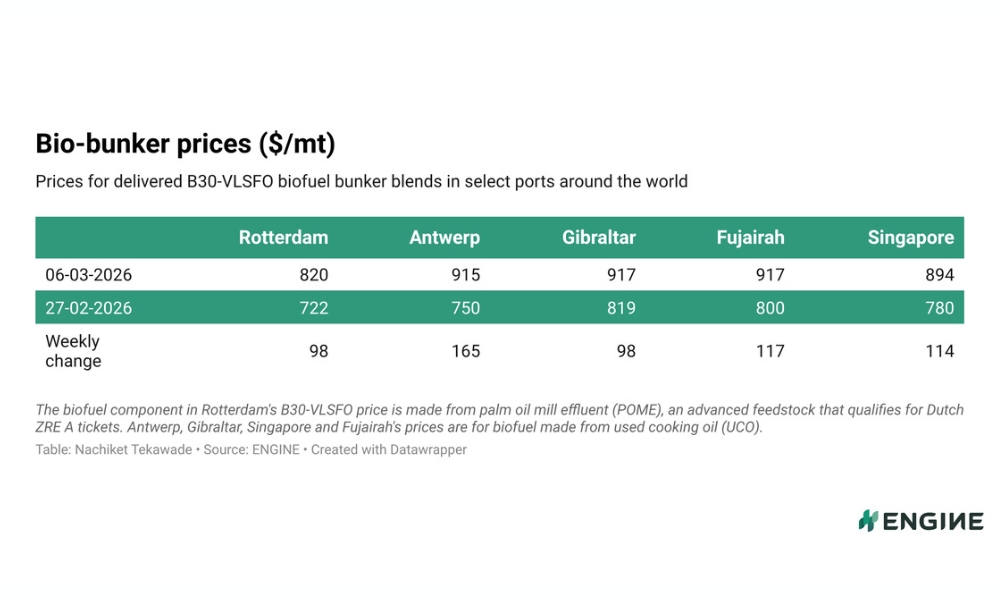
Rotterdam’s B30-VLSFO (POMEME) price has rallied $98/mt higher in the past week. Meanwhile, the port’s conventional VLSFO price has increased by an even greater $124/mt.

This has narrowed the bio-blend’s premium over the port’s VLSFO price by around $26/mt.

Antwerp’s B30-VLSFO (UCOME) price has surged $165/mt higher in the past week, while its conventional VLSFO price has also gained $122/mt. This has led the B30-blend’s premium over VLSFO to widen by $43/mt.

Prima Markets-assessed ARA POMEME and UCOME barge prices have both increased by $77/mt over this period. These biofuel grades have massively underperformed against a $19/bbl ($139/mt) front-month Brent price rally that has sent VLSFO and especially LSMGO prices flying.

Rotterdam’s B30-VLSFO is now a discount of $95/mt to Antwerp’s, which is more than three times the $28/mt discount seen last week.

Unlike Antwerp’s B30-VLSFO (UCOME) price, Rotterdam’s B30-VLSFO (POMEME) price is rebated by Dutch suppliers who can generate ZRE units from advanced biofuel bunker sales. 

Rotterdam’s LSMGO price has gained sharply compared to the port’s B30-LSMGO blend price. This has narrowed the blend’s premium over conventional LSMGO by around $90/mt in the last week.

LSMGO premiums over B30-LSMGO have also narrowed sharply in other European ports. Lisbon’s is down by $63/mt and Piraeus’ by $147/mt.

Gibraltar’s B30-VLSFO (UCOME) price has gained by $98/mt in the past week. The port has faced weather disruptions this week, which has led to supply delays and backlogs, port agent MH Bland said.

Fujairah and Singapore

Fujairah’s VLSFO price has shot up by $190/mt in the past week to narrow its premium over B30-VLSFO (UCOME) by $74/mt.

Several bunker suppliers in Fujairah have suspended deliveries amid security concerns following Iranian strikes across the UAE. Most suppliers have paused operations due to uncertainty surrounding loadings, as some terminals remain closed.

Singapore’s B30-VLSFO price has increased by $114/mt in the last week, while its conventional VLSFO price has jumped $190/mt higher during the same period. Consequently, the bio-blend’s premium over VLSFO has tightened by $76/mt.

The Prima-assessed UCOME China cargo price – which can influence Singapore’s biofuel bunker prices – has remained unchanged in the past week.

In other biofuel news this week, French energy firm Petroineos has started offering B30 biofuel blends by truck in multiple French ports. The biofuel supplied is a blend of 30% used cooking oil methyl ester (UCOME) and 70% conventional fuels like HSFO, VLSFO or LSMGO.

Bunker supplier Burando Energies said it hasadded a new bunker barge to its fleet that will primarily supply biofuel in the Port of Zeebrugge and also in other northwest European ports.

By Nachiket Tekawade


Photo credit and source: ENGINE
Published: 10 March, 2026

Continue Reading

Alternative Fuels

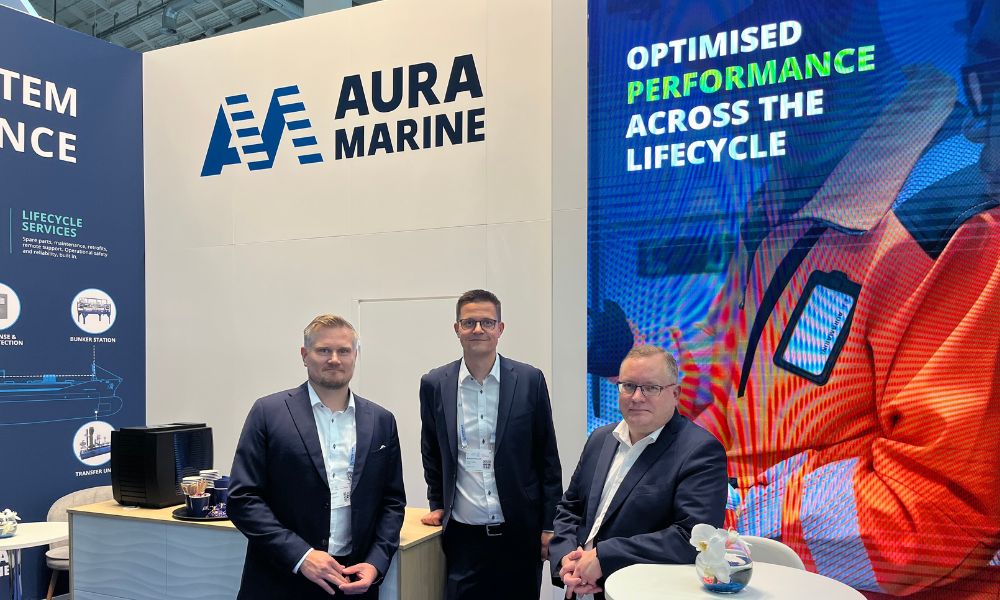
Auramarine: Marine fuel flexibility will be key to shipping’s energy transition

Operators who adapt best will be the ones who built in the flexibility to their marine fuel strategy to respond as conditions change, says CEO John Bergman.
Admin

Published

on

By

31 1

Finland-based fuel supply systems provider Auramarine on Wednesday (2 September) said it believes shipping’s energy transition is entering a phase where flexibility, not fuel choice, will determine which operators adapt successfully. 

With fuel price volatility, inconsistent alternative availability and tightening environmental regulation at different speeds across regions, Auramarine argued that the right approach to fuel supply infrastructure is now as strategically important as the fuel itself.

“The industry has spent years asking which fuel will win,” said John Bergman, CEO, Auramarine. 

“That may be the wrong question. No operator today can predict with confidence what will be available, compliant or commercially viable in five years. The operators who adapt best will be the ones who built in the flexibility to their fuel strategy to respond as conditions change.”

Auramarine’s own fuel split technology, first delivered in 2019 and now installed on around 20 vessels, reflects this thinking in practice. The retrofit system adds a fuel booster module onboard, allowing a ship to run different fuels through the same engine without the extended changeover procedures dual-fuel systems typically require.

This lets operators switch to MGO or biofuel, for example, to meet an ECA requirement, support maintenance schedules, or respond to fuel pricing shifts, without taking a vessel out of service. Delivered in sections through existing doors and hatches, it can be retrofitted to vessels already in operation.

Bergman sees this need for adaptability sharpening in sectors under the most operational and regulatory pressure. 

“Cruise and ferry operators feel this earliest and most acutely,” he said. 

“These vessels constantly move between regulatory zones and environmentally sensitive waters, so the ability to switch fuel supply without disrupting a schedule is an operational necessity. What’s notable is how many operators in this space still don’t know infrastructure like this exists, despite how directly it addresses what they’re already dealing with.”

Reliable flexibility requires a tailored approach, not just adding equipment. “The best results come from scoping flexibility to an owner’s actual fuel strategy, not adding complexity for its own sake,” Bergman added. 

Automated fuel changeover systems are designed to keep multi-fuel operations straightforward for crews, while a structured maintenance approach ensures inspection, testing and servicing can be carried out safely throughout the vessel’s lifecycle. This is where Auramarine’s lifecycle services play a central role, supporting operators well beyond initial installation with the ongoing servicing, spares and technical support needed to keep flexible fuel systems performing reliably for the long term, whatever the fuel landscape looks like in years to come.

“Over the next few years, operators who succeed will be the ones who stopped waiting for certainty and started building optionality instead,” Bergman added

“In a transition this uncertain, adaptability matters more than any single fuel bet. That’s the conversation we want the industry to have.”


Photo credit: Auramarine
Published: 7 September, 2026

Continue Reading

Alternative Fuels

DNV: Alternative-fuelled vessel orders hit highest monthly level since October 2024

LNG-fuelled vessels accounted for the vast majority of August activity while the strong summer performance marked a significant acceleration in ordering activity after a relatively slow start to the year.
Admin

Published

on

By

DNV: Alternative-fuelled vessel orders hit highest monthly level since October 2024

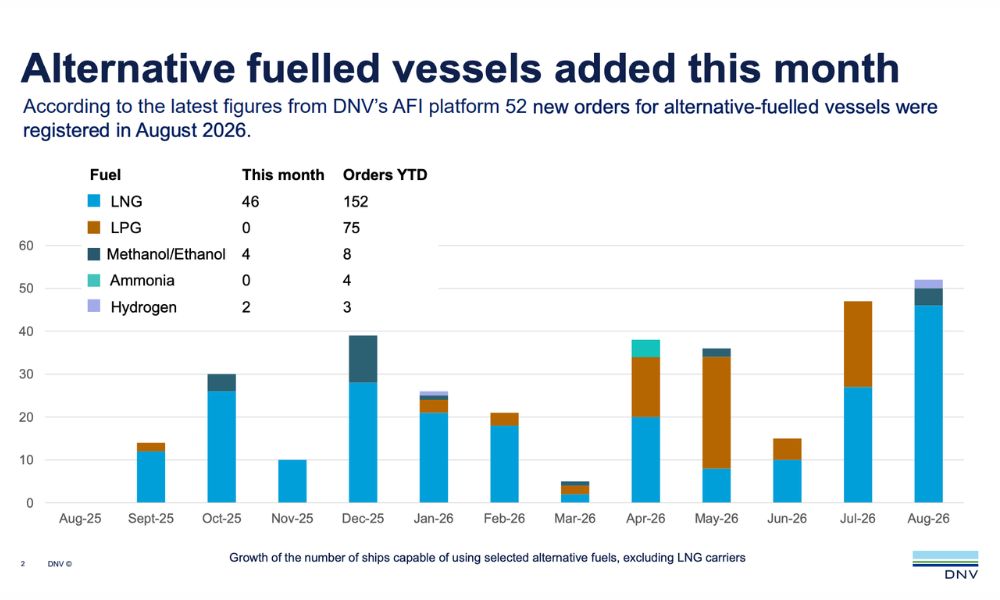
Latest data from classification society DNV’s Alternative Fuels Insight (AFI) platform alternative-fuelled vessel ordering was strong in August, with 52 new vessels added to the platform.

This is the highest monthly total since October 2024 and follows another active month in July, when 47 vessels were added to the database.

LNG-fuelled vessels accounted for the vast majority of August activity, with 46 orders recorded. The container segment led the way with 30 orders, while the car carrier segment contributed a further 12 LNG-fuelled vessels. In addition, four ethanol-fuelled bulk carriers and two hydrogen-powered bulk carriers were added during the month, as well as one LNG bunker vessel.

The strong summer performance marked a significant acceleration in ordering activity after a relatively slow start to the year. In total, 242 alternative-fuelled vessel orders have been placed in the first eight months of 2026, representing a 27% increase compared with the same period in 2025.

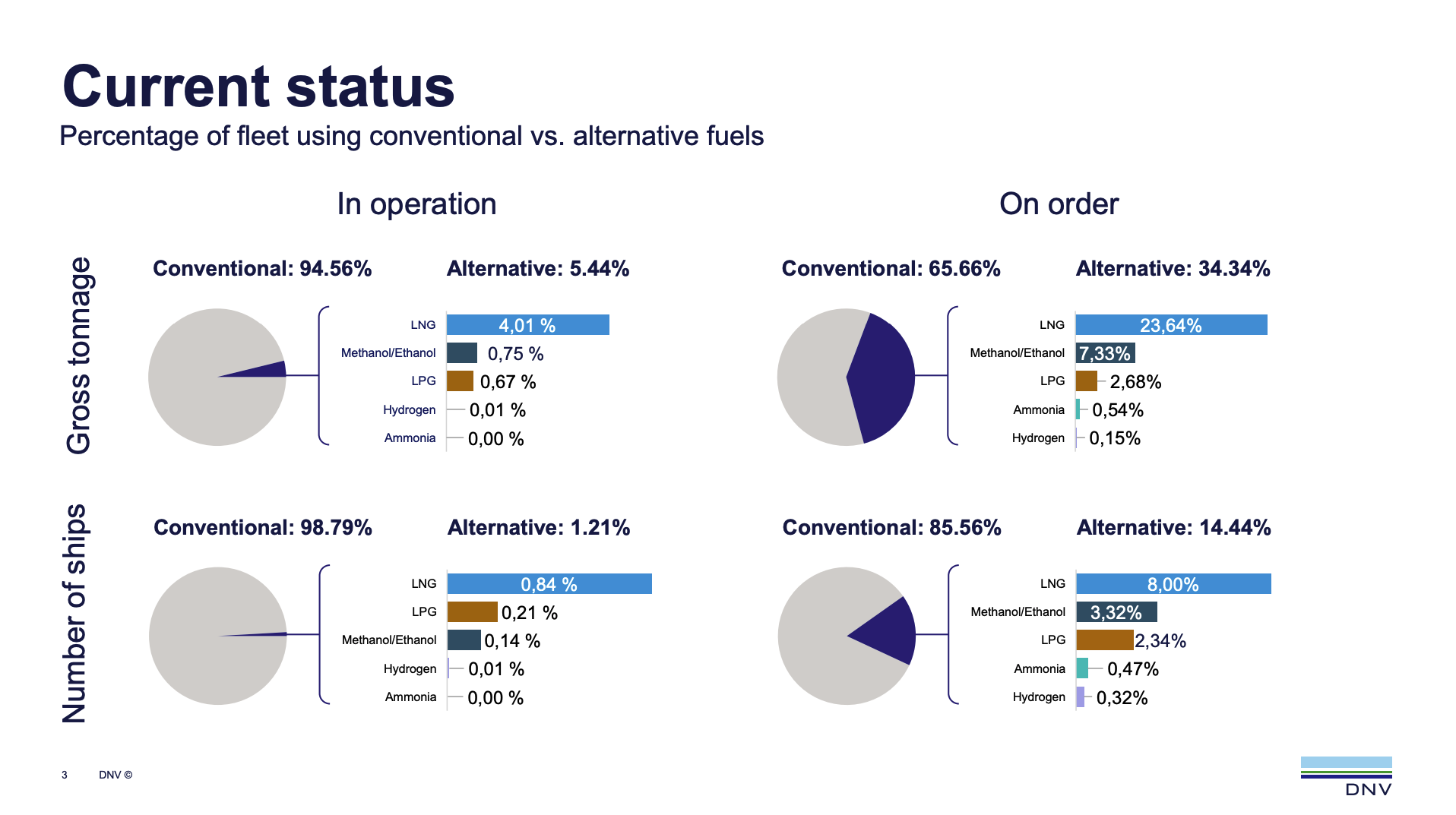
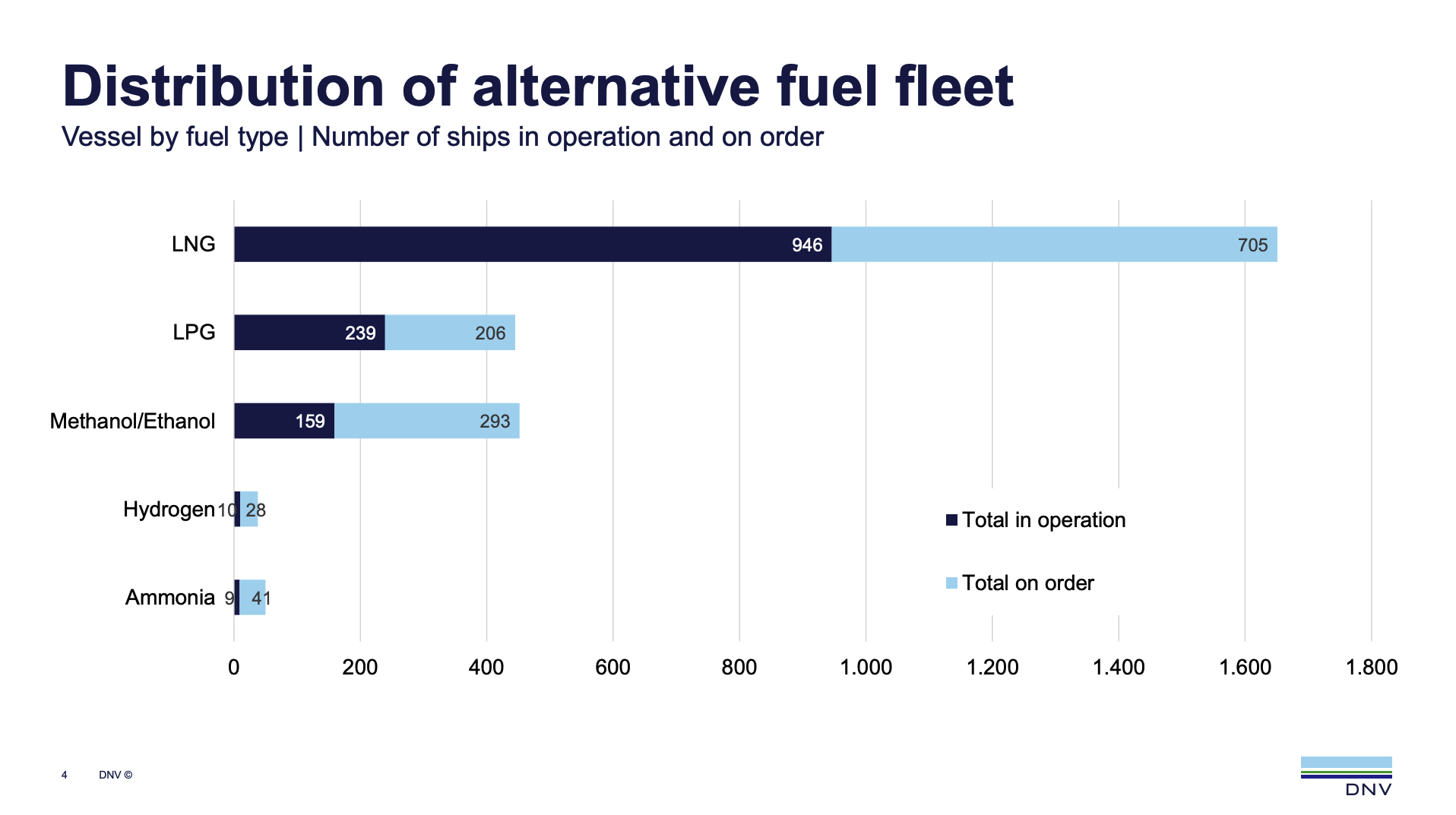
LNG remains the dominant fuel choice, accounting for 63% of all alternative-fuelled vessel orders registered so far this year. Container vessels represent the largest share of these LNG orders (59%), followed by car carriers (30%).

Jason Stefanatos, Global Decarbonization Director at DNV Maritime, said: “The past two months have been particularly strong for alternative-fuelled vessel ordering, with August recording the highest monthly total we’ve seen since October 2024. This has helped lift year-to-date orders to a level well above the same period last year.

“LNG remains the leading fuel choice, driven largely by activity in the container and car carrier segments. These sectors have been among the earliest adopters of alternative fuels, supported by predictable liner operations and increasing demand from cargo owners to reduce emissions across supply chains. 

“For many owners, LNG offers a combination of emissions reductions, fuel availability and future flexibility while the longer-term fuel landscape continues to evolve. 

“At the same time, the latest figures include orders for ethanol- and hydrogen-fuelled vessels, highlighting that owners continue to explore a range of decarbonization pathways. Different segments are making different fuel choices, but the overall level of activity demonstrates continued investment in lower-emission shipping.”
Screenshot 2026 09 04 at 12.29.26 PM Screenshot 2026 09 04 at 12.29.36 PM


Photo credit: DNV
Published: 4 September, 2026

Continue Reading

Alternative Fuels

Hercules Tanker Management’s ‘Ultra-Spec Series’ tanker “Vanessa” begins maiden voyage

Designed for worldwide deployment, the series can transport and supply conventional marine fuels as well as alternative fuels up to B100 and methanol.
Admin

Published

on

By

Hercules Tanker Management’s ‘Ultra-Spec Series’ tanker “Vanessa” begins maiden voyage

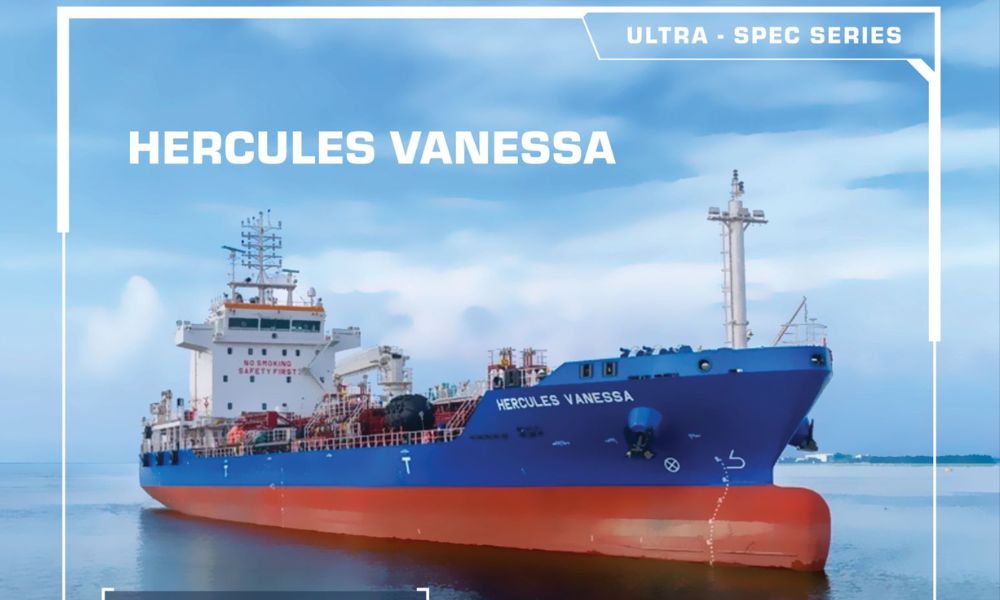
Hercules Tanker Management (HTM) on Wednesday (2 September) said its latest Ultra-Spec Series of next-generation tankers, Hercules Vanessa, has commenced her maiden voyage.

HTM is the shipping venture launched by John A. Bassadone, founder and CEO of independent marine fuel supplier Peninsula.

The 10-vessel programme forms part of the company’s long-term fleet renewal strategy, replacing ageing tonnage with more efficient vessels while delivering the future-ready capability needed to support the maritime industry’s evolving energy landscape. 

Designed for worldwide deployment, the series can transport and supply conventional marine fuels as well as alternative fuels up to B100 and methanol. 

Hercules Vanessa is also the first in the series to feature MarineLINE, a high-performance cargo tank coating system. 

The vessel is currently en route to Port Louis to take bunkers and provisions before continuing southbound towards Cape Town. It is scheduled to discharge a cargo of biofuel, loaded at Nansha Terminal in China, in Ghent later this year.

“HTM’s Ultra-Spec Series continues to gather momentum as we build a modern fleet capable of supporting cleaner marine fuel supply chains,” the company said. 

Related: Hercules Tanker Management launches ‘Ultra-Spec Series’ bunker tanker “Harriet”


Photo credit: Hercules Tanker Management
Published: 3 September, 2026

Continue Reading
Advertisement

OUR INDUSTRY PARTNERS


Trending