Connect with us

Methanol

Interview: Auramarine eyes significant market share of methanol fuel supply systems

Tuomas Häkkinen, Director Business Line Projects, discusses methanol marine fuel engines, decarbonisation-related market opportunities and how Auramarine’s solutions stand out from the competition.

Admin

Published

on

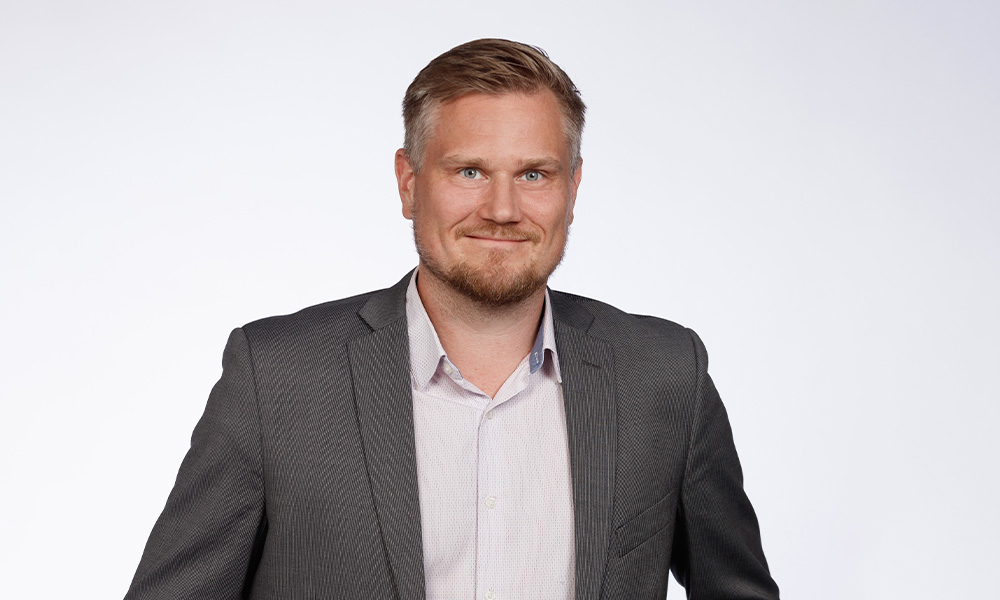
Tuomas Häkkinen, Director Business Line Projects, Auramarine

Tuomas Häkkinen, who was recently appointed as Director Business Line Projects of Finland-based fuel supply systems provider Auramarine Ltd, discussed with bunkering publication Manifold Times on methanol marine fuel engines, decarbonisation-related market opportunities for the firm and how Auramarine solutions stand out from the competition:

MT: What is the forecasted uptake potential for methanol marine fuel engines by the global merchant fleet in light of IMO 2030/2050? 

This is difficult to estimate as the marine industry is changing rapidly. While there are a number of new low and zero-carbon fuels in the mix, the future and main make-up of the bunkering supply chain within shipping will likely comprise of a combination of ammonia, biofuels and methanol.

It is difficult to forecast the precise number but leading classification society Lloyd’s Register, in its recent paper ‘The future of maritime fuels’ (September 2023), predicted bio and e-methanol would have a combined market share of total shipping fuel by 2050 of 13.4%.  However, the most optimistic scenario projects a market share for bio-methanol of 43% by 2050.

There is, therefore, a lot of potential for the uptake of methanol, both in newbuilds and retrofits. It’s currently one of the more mature and advanced alternative fuels and is easy to adopt. With this foundation, we aim to reach significant market share of methanol fuel supply systems both in newbuilds and retrofits.

MT: What is the number one misunderstanding about methanol marine fuel engines that you would like to debunk?  

Based on our experience, very often the integration of ship and engine systems can cause challenges and uncertainty where the responsibility of specific system parts is unclear or where there are many different players involved in the system integration. However, with proper planning and expert design, solutions can be deployed to overcome these challenges.

It’s also important to note that you get different challenges depending on whether it’s a system for a retrofit or newbuild vessel. For example, a retrofit carried out for an existing vessel always requires more attention than a newbuild, as there are more preconditions to consider. The key points a shipowner should consider when planning for a retrofit range from engine modification availability, space constraints such as tank availability, health and safety guidelines and fuel availability through to specific sustainability goals and compliance considerations.

From Auramarine’s perspective, safety is one of the most important issues due to methanol toxicity and high flammability where, for crew, inhaling, touching, or breathing in methanol is very dangerous. We, therefore, provide onboard and in-house training for crew, officers, and onshore staff, where all aspects are considered to ensure trouble-free operations as well as compliance with all environmental, health and safety regulations.  Ultimately, a well-trained crew ensures a safe voyage and efficient operations, and we always ensure that we provide project-specific training plans, as well as operation and maintenance manuals for each project.

We also firmly believe that when one experienced supplier is responsible for the design of the entire system, it is easier to control the many subsystems to ensure optimum results. Specific responsibilities and requirements are always clearer and better for efficiency. Doing this reduces project-related risks because an understanding of the interface and relationships among different components and stakeholders helps avoid misunderstandings and prevents any oversight.

MT: In terms of technology, how have maritime fuel supply systems evolved over the years and how will this sector grow in the future to accommodate shipping’s green trend? 

To meet the requirements of retrofits, and the planning and production cycles of new builds, maritime fuel supply systems are becoming more modular and flexible to install in different spaces and setups. This ensures a clear line of responsibility, allowing an experienced provider to take accountability for the safety and performance of the fuel supply system to minimise risks.

MT: Other than methanol/ammonia fuel supply systems, what other decarbonisation-related market opportunities do you see for Auramarine? 

There are a lot of opportunities for more efficient use of fuels.  For example, we recently launched our AFE (Auramarine Fuel Economiser) solution, a real-time data monitoring and reporting tool, which enables shipowners and operators to proactively analyse and identify where fuel consumption and emissions can be reduced, delivering savings of between 5% and 20%.

The AFE monitors and measures the entire fuel consumption of vessels across a whole fleet, collecting data from all fuel and power-related systems on board, whether a vessel is in operation or not. This makes data collection easy for accurate reporting purposes in line with regulations such as the IMO’s Carbon Intensity Indicator, and, critically, it also highlights opportunities to reduce fuel consumption such as optimising operations by analysing fuel profiles.

MT: How are Auramarine’s solutions different and why should shipowners choose the firm’s fuel supply systems over the competition? 

We believe in close collaboration with shipowners to ensure their systems are tailormade to their needs no matter what fuel they use, including methanol, biofuels and soon ammonia, and we always provide fast, flexible and accurate project execution leveraging more than 50 years of experience in fuel supply system deliveries.

We also provide customers with global lifecycle support and a ‘one-stop-shop’- an end-to-end solution for our methanol fuel supply system. When the methanol system’s lifecycle support comes from a single, experienced supplier, the customer can be assured that all interfaces within the system are considered, and all needs are covered. Any interface issues can be avoided, there are clear lines of responsibility and there are no gaps in the management and upkeep of the system throughout its lifetime.

With the current and future reporting and regulatory requirements, it is important that the fuel system is kept up-to-date and compliant with the changing requirements.  This is where preventative maintenance and the role of data comes in. By using remote conditioning and operational monitoring, operational issues and downtime can be avoided, ensuring safety, efficiency and unnecessary costs.

Related: Auramarine appoints Tuomas Häkkinen as Director Business Line Projects


Photo credit: Auramarine
Published: 11 July, 2024

Continue Reading

Methanol

World Fuel and partners complete first green methanol bunkering of car carrier in Shanghai

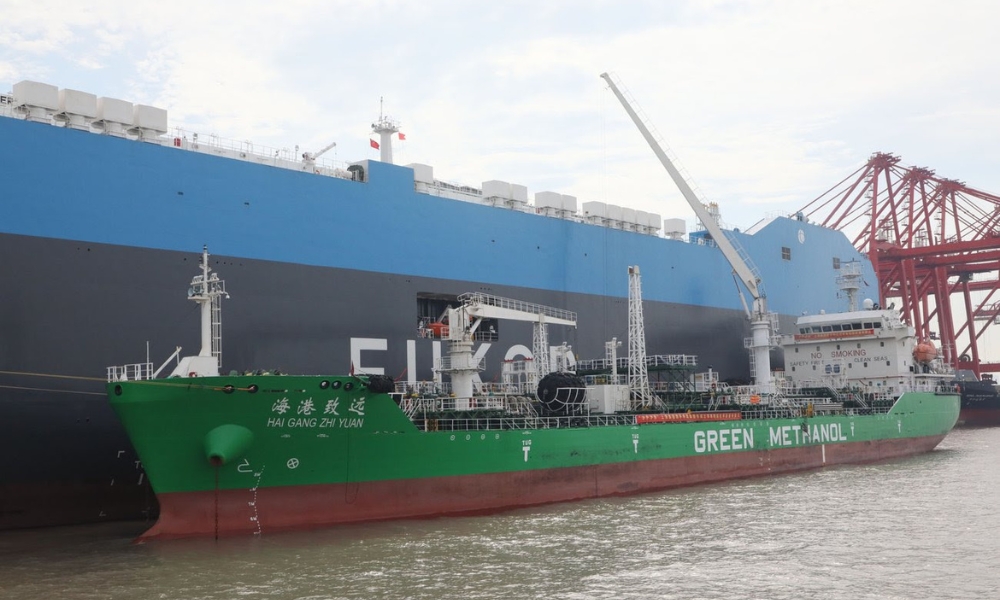
Operation involved the delivery of approximately 2,800 MT of green methanol to “Arctic Tern” via a ship-to-ship transfer using SIPG Energy’s dedicated methanol bunkering vessel “M/V Hai Gang Zhi Yuan”.
Admin

Published

on

By

World Fuel and partners complete first green methanol bunkering of car carrier in Shanghai

Marine fuel provider World Fuel on Tuesday (21 July) said it successfully completed the first green methanol bunkering of M/V Arctic Tern, with EUKOR Car Carriers and SIPG Energy at the Port of Shanghai. 

Arctic Tern is the first vessel in the new Shaper Class series of car carriers. 

The operation involved the delivery of approximately 2,800 MT of green methanol to Arctic Tern via a ship-to-ship transfer using SIPG Energy’s dedicated methanol bunkering vessel M/V Hai Gang Zhi Yuan, the largest vessel of its kind in operation. 

The bunkering operation was carried out at Haitong Terminal, Waigaoqiao Port Area, Shanghai Port, with cargo handling operations conducted simultaneously during bunkering.

This marks EUKOR Car Carriers’ first green methanol operation and the first time Arctic Tern has bunkered methanol since its delivery on 9 July. The operation marked the first bunkering at Shanghai Port of green methanol produced locally in Shanghai for an international PCTC operator. 

It also demonstrated the city’s integrated green methanol value chain, spanning local production, storage and bunkering, and established a replicable “Shanghai Model” for green methanol supply.

World Fuel arranged the supply and delivery of the fuel on behalf of EUKOR Car Carriers, working with SIPG Energy as the physical supplier at the Port of Shanghai.

The green methanol supplied was produced from municipal solid waste, ISCC-EU certified, and had a carbon intensity value below 25 gCO₂e/MJ.

Arctic Tern is the first of fourteen Shaper Class vessels ordered by Wallenius Wilhelmsen. With a capacity of 9,300 car equivalent units and methanol dual-fuel capability, the vessel will be operated by EUKOR Car Carriers, jointly owned by Wallenius Wilhelmsen and Hyundai Motor Group. Following her first green methanol bunkering, Arctic Tern will continue her maiden voyage from Asia to Europe.

Xavier Leroi, COO Shipping Services at Wallenius Wilhelmsen and CEO of EUKOR Car Carriers, said: “Completing Arctic Tern’s first green methanol bunkering shortly after delivery is a significant milestone towards our decarbonisation ambition for both EUKOR Car Carriers and Wallenius Wilhelmsen. It demonstrates how investments in next-generation vessel technology and fuel flexibility are being translated into real-world operations. 

“This achievement reflects the strong collaboration between all parties involved. Together, we have shown how partnerships across the maritime value chain can help make lower-emission fuels available and operationally viable at scale.”

Mark Tamsitt, SVP Global Marine Sales at World Fuel, said, “The first bunkering event with a new fuel is a significant moment for any shipowner, and our role is to make it as seamless as possible. By connecting EUKOR Car Carriers with SIPG Energy’s proven green methanol capability at the Port of Shanghai, we were able to deliver on reliable supply, fuel quality, and safe processes. As more of our customers bring methanol dual-fuel tonnage into service, we are committed to being the partner that makes these kinds of operations routine.”

Mr. Zhang Da, General Manager of SIPG Energy, said, “Welcoming Arctic Tern to the Port of Shanghai for her first green methanol bunkering demonstrates the strength and maturity of our supply capability. Building on our well-established methanol ship-to-ship bunkering services for container vessels, we have already extended such services to pure car and truck carriers (PCTCs). This bunkering sets a new record for the largest single SIMOPs green methanol bunkering for PCTCs in China, marking another step in building Shanghai’s position as a global green energy hub for international shipping.”

This operation follows Wallenius Wilhelmsen’s announcement on 9 July that Arctic Tern would complete her first methanol bunkering shortly after delivery. The vessel entered service on routes between Asia and Europe immediately following handover from China Merchants Jinling Shipyard in Nanjing.


Photo credit: World Fuel
Published: 22 July, 2026

Continue Reading

Methanol

Western Baltic Engineering unveils green methanol bunkering vessel design for Klaipėda

Designed for flexible operations in shallow waters and local bunkering routes, the concept features an 800-metric-tonne green methanol capacity and the potential to supply up to 250,000 mt annually.
Admin

Published

on

By

Western Baltic Engineering unveils green methanol bunkering vessel design for Klaipėda

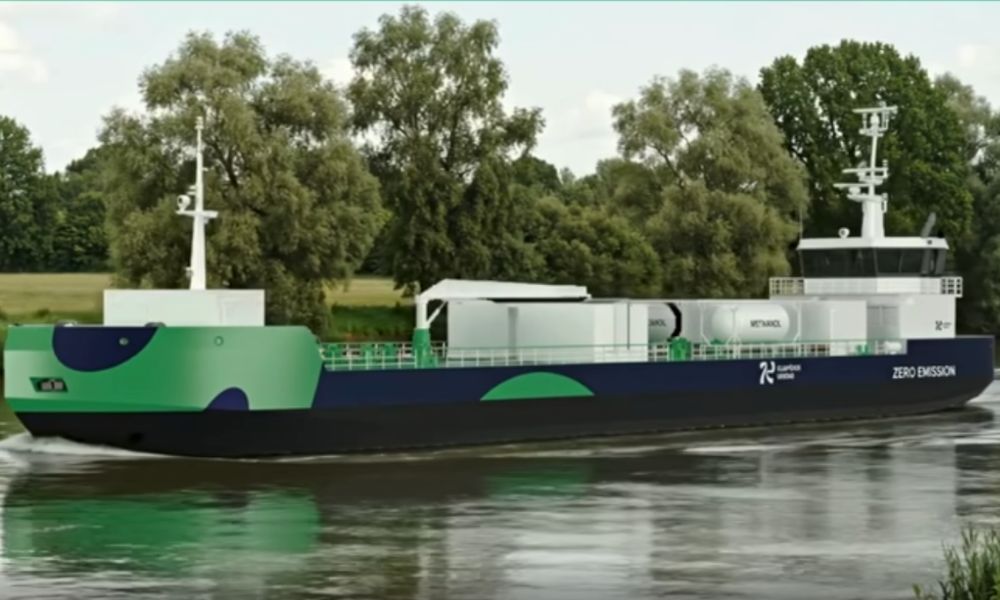
Ship design and engineering service provider Western Baltic Engineering on Thursday (16 July) showcased its latest concept design for a green methanol bunkering vessel, developed for the operational needs of the Port of Klaipėda.

Designed for flexible operations in shallow waters and local bunkering routes, the concept features an 800-metric-tonne green methanol capacity and the potential to supply up to 250,000 metric tonnes (mt) annually. 

“It is Western Baltic Engineering’s first concept dedicated exclusively to green methanol bunkering, expanding our portfolio of alternative-fuel vessel solutions,” the company said in a social media post.

“Building on our experience in methanol-ready vessel design, it reflects our continued focus on enabling the industry’s transition to cleaner fuels.”

“As the maritime sector evolves, engineering companies have a responsibility not only to respond to market needs but also to anticipate future challenges,” said Marius Arkusauskas, Director at Western Baltic Engineering.

“By exploring emerging technologies and alternative fuel applications, we help our partners prepare for the next generation of maritime operations while contributing to a more sustainable future.”


Photo credit: Western Baltic Engineering
Published: 20 July, 2026

Continue Reading

Methanol

China launches methanol shipping supply chain alliance to accelerate green transition

Marine fuel suppliers in the alliance include Sinopec Fuel Oil Sales, China Marine Bunker (PetroChina), SIPG Energy (Shanghai), and Shenzhen Port Energy Development.
Admin

Published

on

By

China Flag

China Waterborne Transport Research Institute under the Ministry of Transport and China Transport News recently jointly launched a Methanol Fuel Shipping Supply Chain Innovation Alliance with 20 organisations spanning the shipping, port, energy, equipment, research and industry association sectors.

The alliance was officially announced during the main event of China Maritime Day 2026 on 11 July, where members also released a joint initiative to develop a collaborative methanol-fuelled shipping supply chain.

The alliance aims to implement China’s national strategy for green economic transformation and support the Ministry of Transport’s “One Network, Four Modernisations” initiative by building a safe, efficient, economical and reliable methanol marine fuel supply chain

Under the joint initiative, alliance members pledged to align with China’s national decarbonisation strategy by promoting methanol as a key pathway for the shipping sector’s green transition and optimising the industry’s energy mix.

The members also pledged to strengthen collaboration across the supply chain to improve coordination between bunker fuel production, transportation and end users while advancing technological innovation.

Lastly, the alliance will support the development of policies, planning and technical standards, promote resource sharing and joint research, and accelerate the large-scale adoption of methanol as a marine fuel.

The alliance brings together companies and organisations representing the entire methanol shipping supply chain.

Members include shipping and port members such as China Changjiang National Shipping (Group) Corporation, COSCO Shipping Bulk Co., Ltd., Shandong Port Group, and Wuhan Chuangxin Jianghai Shipping Co., Ltd.

Energy companies in the alliance include Sinopec Chemical Commercial Holding Company Limited and Methanex Corporation.

Marine fuel suppliers including Sinopec Fuel Oil Sales, China Marine Bunker (PetroChina), SIPG Energy (Shanghai) Co Ltd and Shenzhen Port Energy Development Co Ltd are also part of the alliance. 

Equipment manufacturers in the alliance are CSSC 711th Research Institute, CSSC Power (Group) Corporation Ltd and Chongqing Hongjiang Machinery Co Ltd.

Research, media and industry organisations participating in the alliance include the China Waterborne Transport Research Institute, China Transport News, and the Methanol Institute.

The Methanol Institute said methanol is moving beyond individual projects towards coordinated action across the entire value chain. 

“And China continues to play a leading role in advancing methanol as a marine fuel,” it said in a social media post.  

“We’re proud to work alongside our fellow alliance members to help strengthen the methanol supply chain and support the continued growth of methanol as a marine fuel.”


Photo credit: David Yu from Pixabay
Published: 17 July, 2026

Continue Reading

Trending