Connect with us

LNG Bunkering

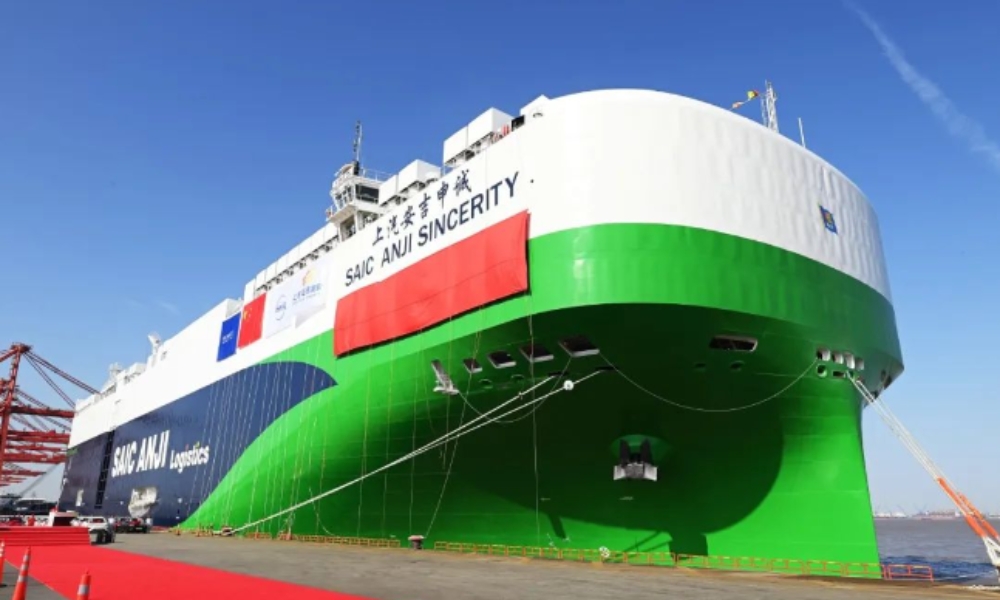
China: SAIC Anji Logistics takes delivery of LNG dual-fuel PCTC “SAIC Anji Sincerity”

Jiangnan Shipyard and China Shipbuilding Trading delivered “SAIC Anji Sincerity” to owner SAIC Anji Logistics; ship set sail for its maiden voyage on 17 January.

Admin

Published

on

China: SAIC Anji Logistics takes delivery of LNG dual-fuel PCTC “SAIC Anji Sincerity”

China State Shipbuilding Corporation (CSSC) subsidiary Jiangnan Shipyard and China Shipbuilding Trading on Wednesday (17 January) delivered the first ship in a series of 7,600-unit capacity LNG dual-fuel ocean-going Pure Car And Truck Carriers (PCTC). 

SAIC Anji Sincerity, owned by SAIC Anji Logistics and operated by its subsidiary Anji Shipping, set sail for its maiden voyage on the same day. 

The ship is designed to have a total length of 199.9 metres, a moulded width of 38 metres, a moulded depth of 15.5 metres, a structural draft of 10.2 metres, and a service speed of 19 knots. It was classed by DNV and China Classification Society.

The ship order was the first time Jiangnan Shipyard cooperated with a top domestic car carrier shipowner to build a large-scale LNG dual-fuel car carrier.

Compared with a 3,600-unit capacity dual-fuel hybrid car carrier previously built by Jiangnan Shipbuilding, the ship’s cargo volume has doubled and the construction period has been reduced by 30%.

Jiangnan Shipyard currently has orders for eight SAIC Anji Logistics dual-fuel ocean-going car carriers, which will be delivered starting from this year.

Disclaimer: The above article published by Manifold Times was sourced from China’s domestic market through a local correspondent. While considerable efforts have been taken to verify its accuracy through a professional translator and processed from sources believed to be reliable, no warranty is made regarding the accuracy, completeness and reliability of any information.

Related: China: SAIC Anji Logistics launches LNG dual-fuel PCTC “SAIC ANJI SINCERITY”


Photo credit: China State Shipbuilding Corporation
Published: 23 January, 2024

Continue Reading

Alternative Fuels

ORLEN and Port of Gdynia to explore LNG and bio-LNG bunkering in Poland

Cooperation will examine market demand, the potential scale of LNG and bioLNG bunkering, required infrastructure, operating conditions and the regulatory framework needed to support future services.
Admin

Published

on

By

ORLEN and Port of Gdynia to explore LNG and bio-LNG bunkering in Poland

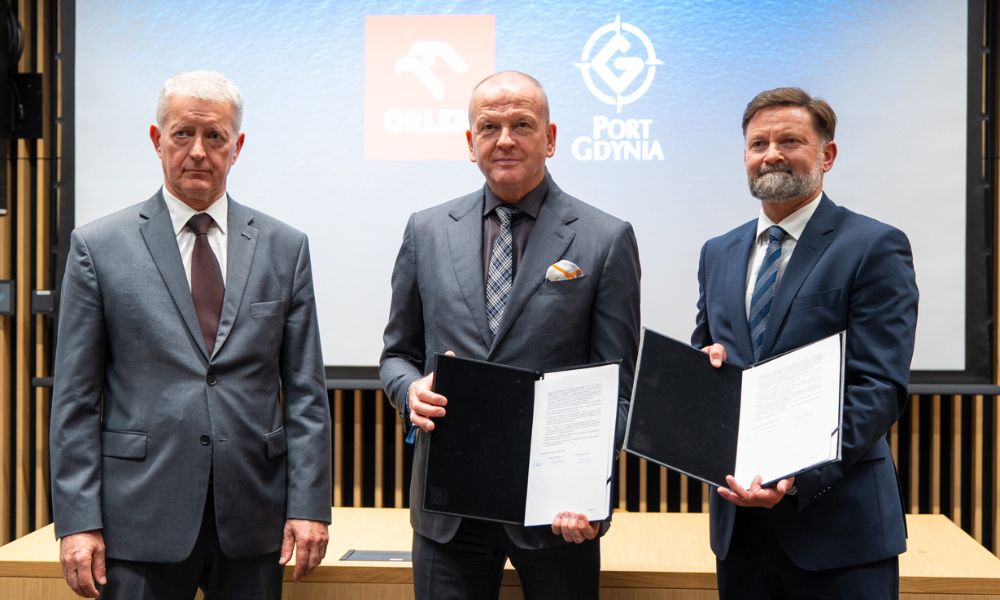
Polish energy company ORLEN on Friday (4 September) said it has signed an agreement with Port of Gdynia Authority to assess the development of LNG and bioLNG bunkering services for marine vessels, as both organisations explore infrastructure and market solutions that could expand access to alternative fuels along the Polish coast.

The cooperation will examine market demand, the potential scale of LNG and bioLNG bunkering, required infrastructure, operating conditions and the regulatory framework needed to support future services.

One of the main areas under consideration will be waterside bunkering, including ship-to-ship operations, where fuel is transferred directly from a bunker vessel to another ship while in port.

Robert Soszyński, Vice President of the ORLEN Management Board for Operations, said the cooperation with the Port of Gdynia forms part of the Group’s broader fuel portfolio transformation through 2035.

Under ORLEN’s strategy, natural gas, including LNG, is expected to retain an important role as a transitional fuel supporting energy security and transport decarbonisation.

The company is seeking to strengthen capabilities across the full value chain, including fuel sourcing, logistics and final use.

At the same time, ORLEN is developing renewable fuel capabilities, including bioLNG, which the company sees as a potential route for reducing emissions in heavy-duty road transport and shipping.

Soszyński said ORLEN’s ambition is to work with ports not only as a fuel supplier but also as a partner in developing infrastructure and market conditions for alternative marine fuels in Poland and the wider region.

Piotr Gorzeński, CEO of the Port of Gdynia Authority, said the shipping industry’s energy transition is already changing the fuel and technology requirements faced by ports.

“Shipowners are increasingly examining ways to reduce emissions, while ports need to be capable of serving vessels using a wider range of propulsion technologies and fuels,” he said. 

The cooperation will include knowledge sharing and an assessment of requirements among shipowners and port users, particularly operators of scheduled ferry, container and ro-ro services.

ORLEN and the Port of Gdynia will also analyse bunkering models used at other European ports.

Among the options under review will be the suitability of ship-to-ship bunkering for larger vessels and the possibility of supplying fuel while ships are alongside the berth.

The partners will also examine whether bunkering could take place in parallel with cargo-handling operations.


Photo credit: ORLEN
Published: 8 September, 2026

Continue Reading

LNG Bunkering

Singapore-based EPS takes delivery of three LNG dual-fuel bulk carriers

Three vessels are the third, fourth and fifth in the company’s series of 14 Newcastlemaxes being built at the yard, and were delivered five months ahead of their contracted delivery dates.
Admin

Published

on

By

35

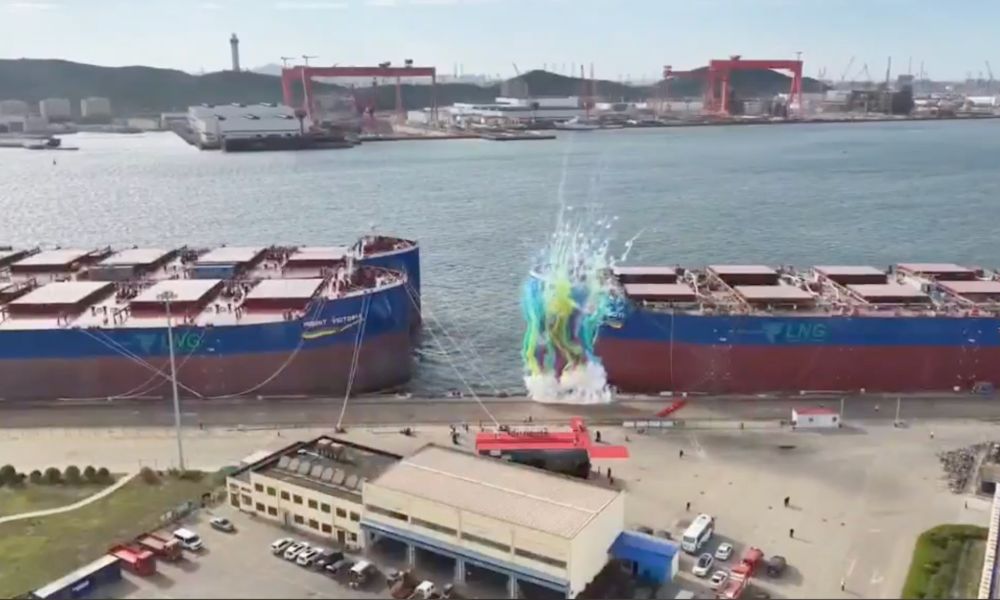
Singapore-based Eastern Pacific Shipping (EPS) on Friday (4 September) announced the naming and delivery of three new LNG dual-fuel Newcastlemax bulk carriers from China’s Qingdao Beihai Shipbuilding. 

Cyril Ducau, CEO of EPS, said the vessels were named Mount Victoria, Mount Yulong and Mount Wuyi

The three vessels are the third, fourth and fifth in the company’s series of 14 Newcastlemaxes being built at the yard, and were delivered five months ahead of their contracted delivery dates.

“A big thank you to CSSC Group and Qingdao Beihai Shipbuilding, working alongside our EPS team, for the tremendous collaboration and commitment behind this achievement,” Ducau said in a social media post.  


Photo credit: Eastern Pacific Shipping
Published: 7 September, 2026

Continue Reading

LNG Bunkering

LR awards AiP to CSSC Huangpu Wenchong for 12,500 m³ LNG bunker vessel design

Vessel design incorporates Type C LNG cargo tanks and has been evaluated against a range of class notations covering gas operations, automation, environmental performance and cyber resilience.
Admin

Published

on

By

33

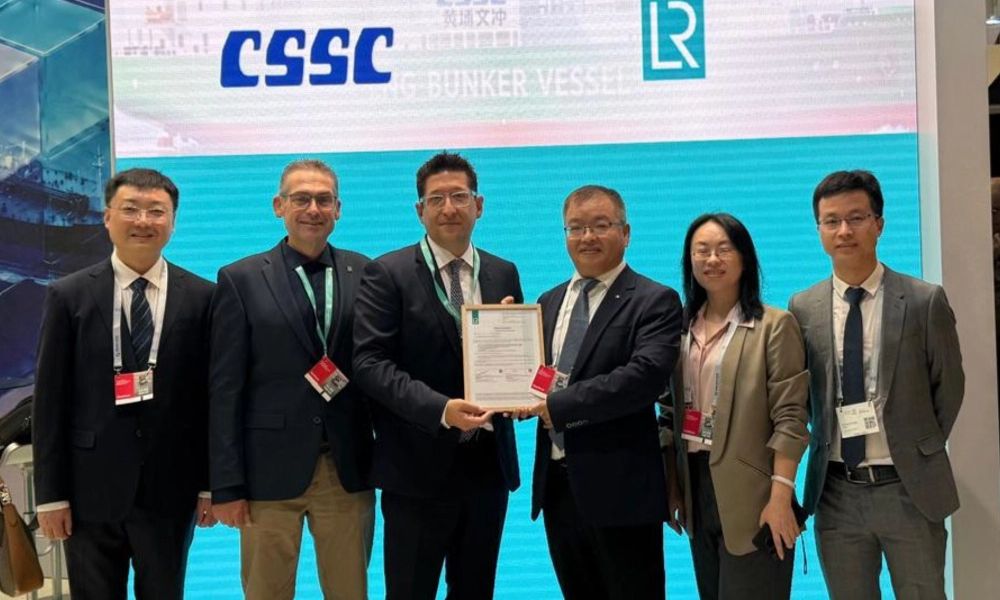
Classification society Lloyd’s Register (LR) on Thursday (3 September) said it has awarded Approval in Principle (AiP) to CSSC Huangpu Wenchong Shipbuilding Co., Ltd. for a new 12,500 m³ LNG bunkering vessel design.

The AiP was signed at SMM 2026 in Hamburg and confirms that the vessel concept has successfully completed an independent design assessment against LR’s latest classification requirements.

The new 12,500 m³ vessel design incorporates Type C LNG cargo tanks and has been evaluated against a comprehensive range of class notations covering gas operations, automation, environmental performance and cyber resilience.

LR’s assessment was carried out in accordance with its Rules and Regulations for the Classification of Ships and Rules and Regulations for the Construction and Classification of Ships for the Carriage of Liquefied Gas in Bulk.

Constantinos Chaelis, LR’s Global Gas Segment Director, said: “This project demonstrates the continued market confidence in LNG and the importance of building the supporting infrastructure that enables owners to make practical emissions reductions today, while maintaining flexibility for the future. Through early engagement between shipyard and class, we can accelerate the delivery of robust designs that meet both operational and regulatory requirements.”

A Huangpu Wenchong spokesperson, said: “This Approval in Principle from Lloyd’s Register validates the technical approach and provides a strong foundation for future development. We believe vessels of this type will play an increasingly important role in supporting the energy transition by helping ensure LNG is available where shipowners need it most.”


Photo credit: Lloyd’s Register
Published: 7 September, 2026

Continue Reading

Trending