Connect with us

Technology

Glander: Evolving cybersecurity challenge in bunker fuel industry

Bunker sector’s critical infrastructure automatically makes it a prime target for cyberattacks, because of potential for significant economic and environmental impact, says CFO David Varghese.

Admin

Published

on

Glander: Evolving cybersecurity challenge in bunker fuel industry

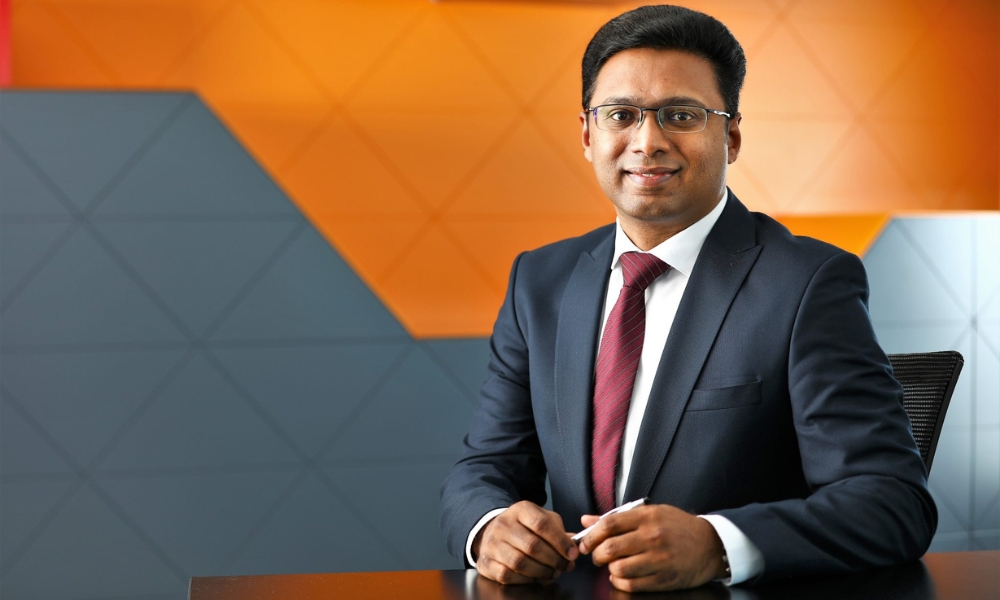
David Varghese, chief financial officer of global bunker trading firm Glander International Bunkering, on Monday (22 January) wrote on the bunker industry’s vulnerability to cyberattacks and how digitalisation in the industry offers crucial defence to fend off such attacks: 

The digitalisation of the bunker industry can’t just be an optional upgrade.

Singapore’s MPA has highlighted the potential savings in man-hours as it pushes its local bunker firms into using e-BDNs, barge data tracking and other digital services.

But this trend goes a lot further than that; it’s an essential defence against some of the cybersecurity risks facing everyone. We can make a majority of all bunker documentation electronic within the next five years, and we will both make the handling of that paperwork easier and more transparent, and do much to protect our industry against evolving threats.

The Bunker Industry’s Vulnerability

The bunker sector’s critical infrastructure automatically makes it a prime target for cyberattacks, because of the potential for significant economic and environmental impact. The industry’s large financial transactions also make it vulnerable, coupled with its lack of cybersecurity measures, employee training and incident response plans.

Bunkering relies on a complex supply chain involving multiple parties. If one or more of these entities has cybersecurity weaknesses, this can compromise the whole chain. At the same time, shipping companies often rely on outdated, legacy systems that may not be equipped for modern cybersecurity threats. Retrofitting these systems can be expensive, which in particular can discourage smaller shipping companies.

Evolving Threats

The financial risk that may be the costliest – but also the easiest to rectify – is fraudulent invoices. Not detecting a fraudulent invoice can lead to operational disruption and damaged relationships, which is why employee training and awareness are pivotal.

Data breaches that can give unauthorised parties access to sensitive information are another problem. Ransomware attacks can halt bunkering operations, causing disruption and potential environmental incidents. Any non-compliance with regulations could result in fines, legal liabilities and reputational damage.

Pitfalls to Avoid

But a move towards electronic record-keeping can bring new problems of its own; get digitalisation wrong, and you’ll expose your company to a whole new set of risks.

Without adequate protection, documents can be altered or manipulated. There are now more phishing attacks, where recipients click on email attachments and links sent by cybercriminals that initially appear legitimate.

That is why data needs to be encrypted and employees must be educated on best practices.

At Glander International Bunkering, we have implemented digital signatures to enhance the integrity and efficiency of our business transactions. These documents signal to the recipient whether or not there has been an unauthorised alteration, or if they are sent from another source.

Working With the Shipping Industry

Upholding the highest standards of cybersecurity to protect our clients’ interests and finances goes beyond our digitally secure invoicing system.

We also share information and work closely with shipping companies, suppliers and industry stakeholders in order to collectively stay vigilant against cyber threats, fortify our defences and respond effectively.  In the unfortunate event of a cybersecurity incident, our team is proactive about reporting the information to the relevant authorities.

We also strongly encourage all companies in the shipping industry to take a proactive approach to protect themselves from potential cyberattacks. The most essential step is to invest in continuous cybersecurity training for employees to avoid human error. An informed employee is your first line of defence.

Beyond that, companies need strict access controls to limit who can access sensitive data. Stronger IT security measures are needed, and updates to older systems. Data encryption and strong firewalls are also critical technologies for business continuity.

Future Outlook

Singapore’s MPA is currently the most active authority in imposing bunker-industry digitalisation. In October the authority announced the introduction of e-BDNs, keeping to an ambitious digitalisation timeline announced at SIBCON 2022.

This initiative is positive, but the pace and success of similar efforts elsewhere may vary. The digital transition is complex, and requires careful planning, regulatory adjustments and cooperation.

More port authorities should be able to enforce electronic documentation in time, especially as more companies gradually digitalise their processes for their own efficiency and competitiveness.

Eliminating paper documents in bunkering, like any other industry, hinges on factors like technological advancement, regulatory changes, adoption rates and the readiness of all stakeholders.

At Glander International Bunkering, we already use electronic documentation for bunker transactions. But since some of our clients continue to rely on paper documents, we maintain a dual approach to provide both paper and digital formats for various regulatory and operational needs.

We are optimistic that a majority of bunkering transactions can be electronic within the next five years, if all factors are addressed successfully.


Photo credit: Glander International Bunkering
Published: 23 January, 2024

Continue Reading

Technology

Genevos and Koedood Marine Group team up on maritime hydrogen fuel cell deployment

Collaboration will explore how ready-to-use marine fuel cell systems can support shipowners and shipyards in the transition towards zero-emission operations.

Admin

Published

on

By

Genevos and Koedood Marine Group team up on maritime hydrogen fuel cell deployment

Marine fuel cell systems provider Genevos recently said the company signed a Letter of Intent (LOI) with engine supplier Koedood Marine Group to explore the deployment of hydrogen fuel cell systems for inland and coastal maritime transport. 

The LOI was signed by Phil Sharp, co-founder and CTO of Genevos, and Mühlheim, Business Development Director of Koedood Marine Group during the 2026 Advanced Maritime Technology Show in Amsterdam.

Building on Koedood’s proven experience in hydrogen maritime projects – including its ongoing work with Mitsubishi Heavy Industries and TNO on hydrogen engine development – the collaboration will explore how ready-to-use marine fuel cell systems can support shipowners and shipyards in the transition towards zero-emission operations. 

“Koedood has a strong reputation in the maritime sector and a deep understanding of vessel operators’ needs. This LOI is an important step in exploring how Genevos’ hydrogen fuel cell systems can be deployed more widely across inland and maritime applications, helping shipowners reduce onboard emissions with robust, practical and scalable clean power solutions,” said Sharp.

The collaboration aligns with growing market demand for rapidly deployable hydrogen solutions and the wider need to accelerate the adoption of zero-emission technologies across the maritime sector. 

“With this collaboration, we are further strengthening our portfolio of maritime energy solutions. Together with Genevos, we are exploring how we can support our customers in the adoption of hydrogen technology,” said Mühlheim.


Photo credit: Genevos
Published: 20 July, 2026

Continue Reading

Wind-assisted

DNV awards TADC to Econowind for VentoFoil 3-Series

System actively harnesses wind power to generate forward thrust, helping to reduce bunker fuel consumption and mitigate FuelEU penalties.

Admin

Published

on

By

DNV awards TADC to Econowind for VentoFoil 3-Series

Dutch wind-assisted propulsion technology firm Econowind on Wednesday (15 July) said it has received a Type Approval Design Certificate (TADC) from classification society DNV for its VentoFoil 3-Series boundary layer suction wing. 

The company said the certification confirms compliance with DNV’s ST-0511 standard for Wind-Assisted Propulsion Systems and enables easier integration of VentoFoils on DNV-classed vessels worldwide. 

Econowind added that the approval accelerates the deployment of wind propulsion across the shipping industry.

“DNV is one of the world’s leading classification societies. This TADC gives DNV-classed shipowners confidence that VentoFoils meet the highest industry standards,” said Chiel de Leeuw, Chief Commercial Officer at Econowind. 

“It simplifies the approval process for both retrofits and newbuilds. VentoFoils are ideal for late-stage design integration and retrofit projects. This is an important milestone for Econowind and for the wider adoption of wind-assisted ship propulsion.”

The 3-Series VentoFoil is Econowind’s best-selling suction wing to date, with over 150 units sold. The system actively harnesses wind power to generate forward thrust, helping to reduce fuel consumption and mitigate FuelEU penalties. The system includes a tilting foundation, allowing the wings to be tilted down during port operations or in adverse weather conditions, making it a flexible solution.

The TADC applies to the 16-meter VentoFoil 3-Series product design and supports easy integration into DNV-classed vessels without repeating the full design assessment process. This enables shipowners, shipyards, and project teams to move more efficiently from concept to installation, reducing project complexity and accelerating deployment. 

Hasso Hoffmeister, Senior Principal Engineer at DNV Maritime, said: “It is a great pleasure to award Econowind this new certificate. WAPS have been going from strength to strength over the past few years, from 2022 the number of vessels in operation has increased five times, and we’ve now topped the century mark. 

“And with the current advances in technology, materials, and production capacity in the segment, we expect this to accelerate. So, while the wind always changes, the shipping industry is likely to be sailing strong for years to come.”

Econowind expects the DNV Type Approval Design Certificate to accelerate adoption of the VentoFoil, particularly among shipowners seeking proven, independently certified technology that can support fuel savings, emissions reductions, and decarbonization goals.

MS Heinz of HS Schiffahrt is among the first vessels to sail under this TADC.The company said the approval builds on Econowind’s growing installed base and further strengthens confidence in wind-assisted ship propulsion as a practical solution to address energy scarcity and high fuel prices. 

In addition to the 3-Series, Econowind offers the 5-Series for the deep-sea market.


Photo credit: Econowind
Published: 17 July, 2026

Continue Reading

Technology

Malaysia: Maharani Freeport to implement MFM and e-BDN technologies for enhanced bunkering transparency

Initiatives reflect the Freeport’s commitment to delivering transparency, operational integrity and international best practices across its bunkering ecosystem, says MEG spokesperson.

Admin

Published

on

By

MEG 1145 cropped MT

Maharani Freeport, a National Project officially launched by His Majesty Sultan Ibrahim, King of Malaysia, in November 2025, will be introducing mass flowmeter (MFM) and electronic bunker delivery note (e-BDN) technologies to its bunkering operations, learns Manifold Times.

These strategic initiatives underscore the port’s commitment in establishing a highly transparent, efficient and trustworthy bunkering environment, aligned with global best practices and addressing critical industry demands, according to a Maharani Energy Gateway (MEG) spokesperson.

MEG is the Master Developer of Maharani Freeport and seeks to position the Freeport as a strategic nexus for shipment, storage and trading operations on a global scale. MEG Synergy is the trading division and a wholly owned entity of MEG; it seeks to position Maharani Freeport as a strategic nexus for shipment, storage, and trading operations on a global scale.

As part of its long-term bunkering strategy, the Freeport is currently in the process of acquiring bunker vessels of various sizes to support marine fuel deliveries and accommodate the evolving requirements of regional and international customers. These vessels will be equipped with MFM technology to ensure accurate, transparent and efficient fuel transfer operations.

Including bunkering and ship-to-ship (STS) trading operations from its High Sulphur Fuel Oil (HSFO) Floating Storage Unit (FSU), MEG Synergy already oversees a healthy volume of Bunker cargo deliveries to regional players each month.

MFM for Trust, Transparency and Traceability

MEG highlighted the custody transfer of bunker fuels at the Freeport will be handled by MFM-equipped bunker tankers.

“The adoption of MFM technology to support bunkering operations is a direct response to persistent industry challenges such as quantity discrepancies and delivery disputes,” explained the spokesperson.

“By equipping our bunker vessels with certified mass flowmeters, we aim to ensure precise and verifiable fuel delivery measurements.

“This initiative is pivotal in fostering trust among customers and strengthening the Freeport’s reputation as a professionally managed zone where businesses can operate with confidence. The overarching goal is to create a secure and well-governed environment for commercial activities, reducing operational risks and uncertainties while supporting efficient and transparent trade.”

e-BDN to Digitalise Documentation Workflow

The implementation of electronic bunker delivery notes (e-BDN), together with MFM technology, further aligns with the Freeport’s focus on creating comprehensive digital custody transfer records and robust data retention systems, added the spokesperson.

This digital approach, integrated with MFM technology, will streamline operational workflows, reduce administrative burdens and provide an immutable record of transactions to enhance transparency, minimising potential friction and expediting dispute resolution

MEG emphasised that the Freeport’s commitment extends beyond technological enhancements to encompass a comprehensive governance framework.

The port aims to adhere to stringent international standards, including those established by the International Maritime Organization (IMO), while offering dispute resolution mechanisms under the International Chamber of Commerce (ICC) to ensure the swift and fair handling of disagreements.

This holistic approach to operational integrity and governance is designed to address perceived transparency gaps, positioning the Freeport as a reliable and commercially attractive hub for the maritime and commodities sectors.

Note: For enquiries in respect of Maharani Freeport, readers may reach out to:

[email protected]

Related: Interview: Maharani Energy Gateway – Forging a new energy nexus in the Straits of Malacca
Related: New Johor bunkering hub: Maharani debuts as Malaysia’s first duty-exempted energy freeport


Photo credit: Maharani Energy Gateway
Published: 15 July 2026

Continue Reading

Trending