Connect with us

Decarbonisation

China: Dealfeng New Energy completes rotor sail installations on oil tanker, deck carrier

Firm completed the installation of Dealfeng Rotor Sails on a 5,000-tonne class product oil tanker and a 25,000 DWT deck carrier following agreements with Haiyue and Offshore Oil Engineering.

Admin

Published

on

China: Dealfeng New Energy completes rotor sail installations on oil tanker, deck carrier

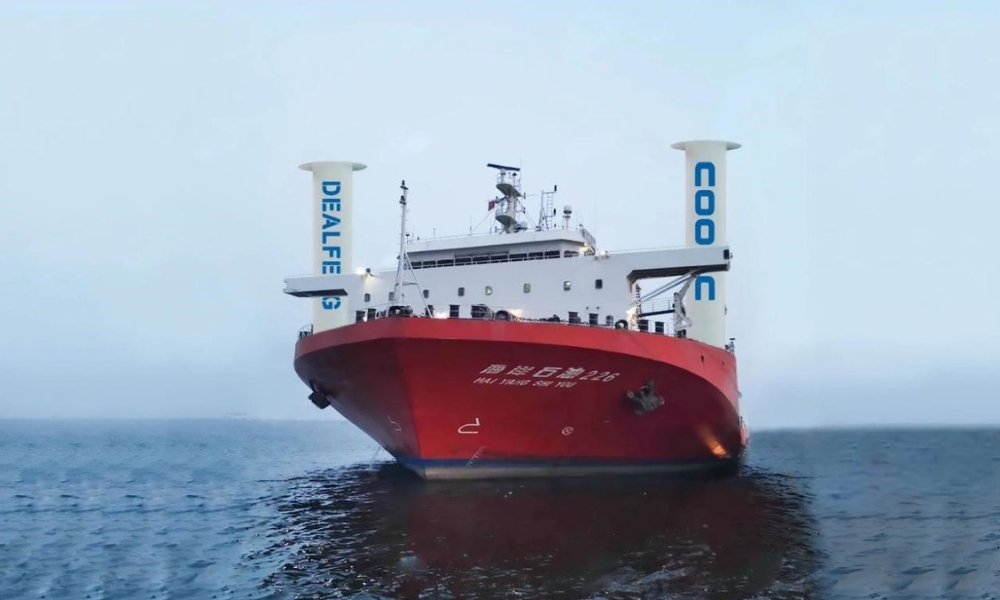
Dealfeng New Energy Technology on Friday (24 November) said it completed the installation of Dealfeng Rotor Sails on a 5,000-tonne class product oil tanker and a 25,000 DWT deck carrier.

This is following a partnership deal between Dealfeng and Haiyue in October 2022.

The delivery of the rotor sails took three months following the approval of drawings by the Classification Society.           

The Dealfeng Rotor Sail is made of lightweight and strong composite material. With a fully automatic Dealfeng control system, they generate forward thrust as the wind causes pressure difference around the rotating rotor while a vessel is sailing. 

“When using this technology, a vessel is expected to achieve a reduction of around 8% fuel and GHG emissions, resulting in the possibility of lowering the power and energy consumption of a vessel’s main engine when wind conditions are favorable, saving fuel and maintaining speed and travel time,” Dealfeng said in a statement. 

As such, the application of Dealfeng Rotor Sail technology enables significant advancements of China’s fleet towards national decarbonisation goals.

Additionally, following the signing of a retrofitting contract with Offshore Oil Engineering Co., Ltd. (COOEC), Dealfeng has installed two sets of Dealfeng rotor sails on a 25,000 DWT deck carrier classed by China Classification Society (CCS). The vessel will be delivered on December 20, 2023 and is expected to achieve fuel savings of around 10%.                                                 

Dealfeng will continue to work towards both the energy saving innovative technologies and the reduction of GHG emissions, helping domestic and international ocean vessels to meet the efficiency and emission-reducing policy requirements of EEDI, EEXI, CII and EU ETS. The technology will also facilitate the maritime industry to early reach carbon peaking and carbon neutrality, achieving green & sustainable development.

Photo credit: Dealfeng New Energy Technology 
Published: 27 November, 2023

Continue Reading

Alternative Fuels

DNV at SMM: Yanmar Maritime awarded type approval for fuel cell system

Certification marked an important step in moving Yanmar’s maritime hydrogen fuel cell technology from successful domestic deployment toward broader commercial adoption in international markets.
Admin

Published

on

By

DNV at SMM: Yanmar Maritime awarded type approval for fuel cell system

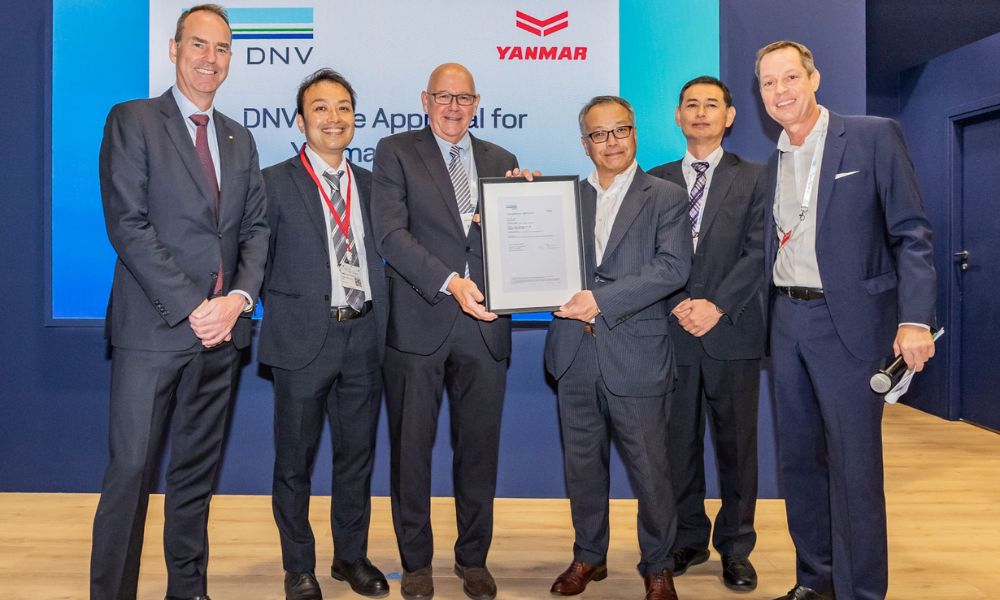
Classification society DNV on Monday (7 September) said it awarded Yanmar Power Solutions Co Ltd, a subsidiary of Yanmar Holdings, type approval (TA) for its Maritime Hydrogen Fuel Cell System at the SMM trade fair in Hamburg last week. 

DNV said the certification marked an important step in moving Yanmar’s maritime hydrogen fuel cell technology from successful domestic deployment toward broader commercial adoption in international markets.

“This certification represents a significant milestone in the commercialization and global deployment of hydrogen fuel cell technology for marine applications,” the classification society said in a statement. 

The approval confirms that the GH-FC series complies with DNV’s industry leading rules and guidelines, enabling shipbuilders, system integrators, and vessel operators to adopt the technology with greater confidence and reduced certification burden for future projects.

Masaru Hirose, President and Representative Director of Yanmar Power Solutions Co Ltd, said: “Achieving DNV Type Approval represents a major milestone in our journey to bring hydrogen-powered solutions to the marine market. Building on our operational experience in Japan, we aim to support customers around the world in their transition to zero-emission operations and realize sustainable maritime transportation.”

Eric Tigelaar, Department Manager of Commercial Marine Department at Yanmar Europe, stated: “This certification strengthens our ability to support customers throughout Europe and beyond who are seeking practical pathways toward decarbonization. The GH-FC series combines easy installation, operational flexibility, modularity and environmental performance, making it an attractive solution for a wide range of vessel applications.”

Olaf Drews, Head of Engines & Pressurized Equipment, DNV Maritime, said: “We are very pleased to continue our cooperation with Yanmar and award them this latest Type Approval Award for their GH-FC series. Every step demonstrates the growing maturity of hydrogen fuel cell technology and continues to build confidence in the market and showcase its readiness for broader commercial applications. DNV is pleased to continue supporting innovative solutions that can help accelerate the transition toward zero-emission shipping.”


Photo credit: DNV
Published: 8 September, 2026

Continue Reading

Alternative Fuels

ORLEN and Port of Gdynia to explore LNG and bio-LNG bunkering in Poland

Cooperation will examine market demand, the potential scale of LNG and bioLNG bunkering, required infrastructure, operating conditions and the regulatory framework needed to support future services.
Admin

Published

on

By

ORLEN and Port of Gdynia to explore LNG and bio-LNG bunkering in Poland

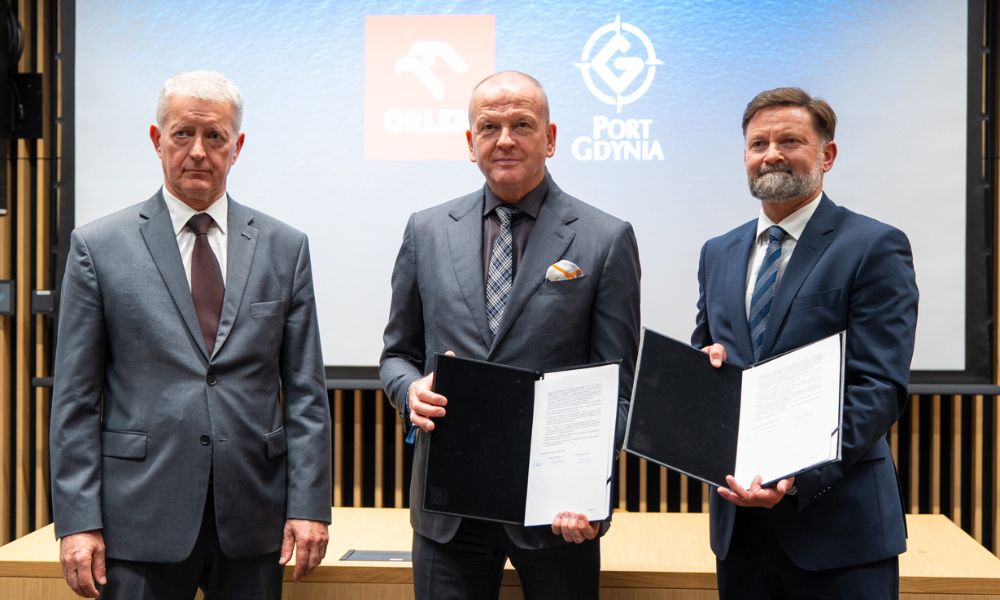
Polish energy company ORLEN on Friday (4 September) said it has signed an agreement with Port of Gdynia Authority to assess the development of LNG and bioLNG bunkering services for marine vessels, as both organisations explore infrastructure and market solutions that could expand access to alternative fuels along the Polish coast.

The cooperation will examine market demand, the potential scale of LNG and bioLNG bunkering, required infrastructure, operating conditions and the regulatory framework needed to support future services.

One of the main areas under consideration will be waterside bunkering, including ship-to-ship operations, where fuel is transferred directly from a bunker vessel to another ship while in port.

Robert Soszyński, Vice President of the ORLEN Management Board for Operations, said the cooperation with the Port of Gdynia forms part of the Group’s broader fuel portfolio transformation through 2035.

Under ORLEN’s strategy, natural gas, including LNG, is expected to retain an important role as a transitional fuel supporting energy security and transport decarbonisation.

The company is seeking to strengthen capabilities across the full value chain, including fuel sourcing, logistics and final use.

At the same time, ORLEN is developing renewable fuel capabilities, including bioLNG, which the company sees as a potential route for reducing emissions in heavy-duty road transport and shipping.

Soszyński said ORLEN’s ambition is to work with ports not only as a fuel supplier but also as a partner in developing infrastructure and market conditions for alternative marine fuels in Poland and the wider region.

Piotr Gorzeński, CEO of the Port of Gdynia Authority, said the shipping industry’s energy transition is already changing the fuel and technology requirements faced by ports.

“Shipowners are increasingly examining ways to reduce emissions, while ports need to be capable of serving vessels using a wider range of propulsion technologies and fuels,” he said. 

The cooperation will include knowledge sharing and an assessment of requirements among shipowners and port users, particularly operators of scheduled ferry, container and ro-ro services.

ORLEN and the Port of Gdynia will also analyse bunkering models used at other European ports.

Among the options under review will be the suitability of ship-to-ship bunkering for larger vessels and the possibility of supplying fuel while ships are alongside the berth.

The partners will also examine whether bunkering could take place in parallel with cargo-handling operations.


Photo credit: ORLEN
Published: 8 September, 2026

Continue Reading

LNG Bunkering

Singapore-based EPS takes delivery of three LNG dual-fuel bulk carriers

Three vessels are the third, fourth and fifth in the company’s series of 14 Newcastlemaxes being built at the yard, and were delivered five months ahead of their contracted delivery dates.
Admin

Published

on

By

35

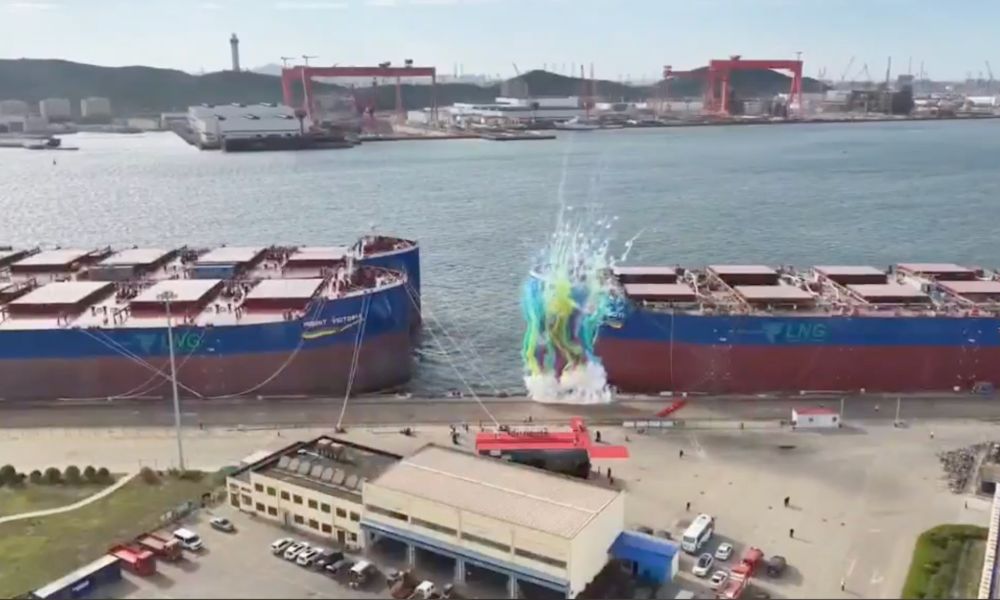
Singapore-based Eastern Pacific Shipping (EPS) on Friday (4 September) announced the naming and delivery of three new LNG dual-fuel Newcastlemax bulk carriers from China’s Qingdao Beihai Shipbuilding. 

Cyril Ducau, CEO of EPS, said the vessels were named Mount Victoria, Mount Yulong and Mount Wuyi

The three vessels are the third, fourth and fifth in the company’s series of 14 Newcastlemaxes being built at the yard, and were delivered five months ahead of their contracted delivery dates.

“A big thank you to CSSC Group and Qingdao Beihai Shipbuilding, working alongside our EPS team, for the tremendous collaboration and commitment behind this achievement,” Ducau said in a social media post.  


Photo credit: Eastern Pacific Shipping
Published: 7 September, 2026

Continue Reading

Trending