
Events
China: Headway unveils proprietary Methanol Fuel Supply System and CCSU, leads forum on alternative bunker fuel and propulsion technology
Headway Technology Group organised a forum discussing the latest advancements and prospects of alternative bunker fuels and propulsion technologies in late October.

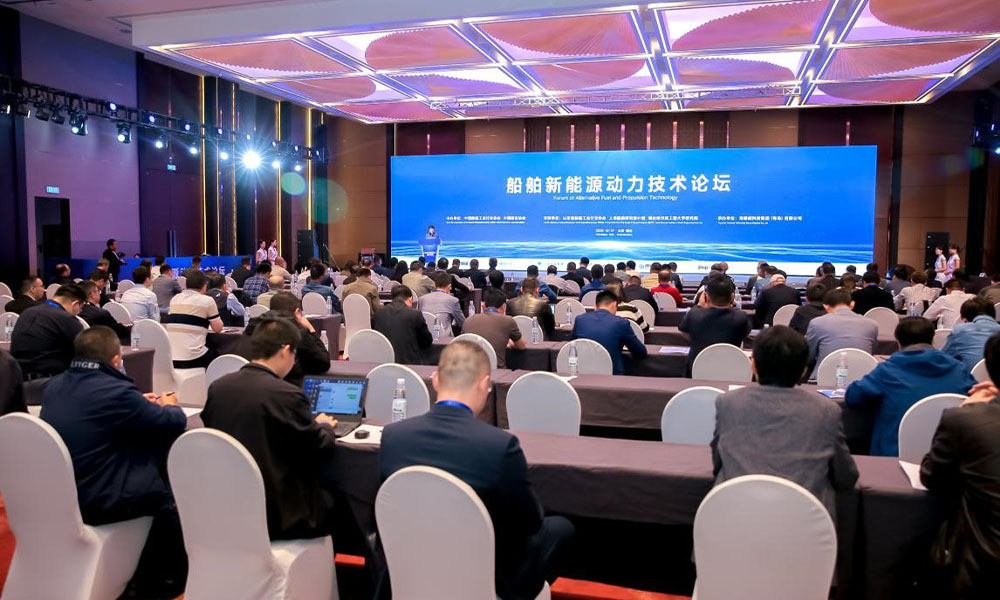
Qingdao-based maritime technology firm Headway Technology Group (Headway) on Friday (27 October) organised the Forum of Alternative Fuel and Propulsion Technology in Yantai, China.
With the China Association of the National Shipbuilding Industry (CANSI) and the China Shipowners’ Association (CSA) as hosts, many representatives from government agencies, industrial associations, ship owners, shipyards and naval design institutes gathered at this event to engage in detailed discussions on the latest advancements and prospects of alternative bunker fuels and propulsion technologies.
During the forum, Headway showcased its groundbreaking Methanol Fuel Supply System, which was in live operation. The event garnered support from notable organisations, including the Shandong Provincial Association of the Shipbuilding Industry (SPASI), Shanghai Merchant Ship Design & Research Institute (SDARI) and leading universities.
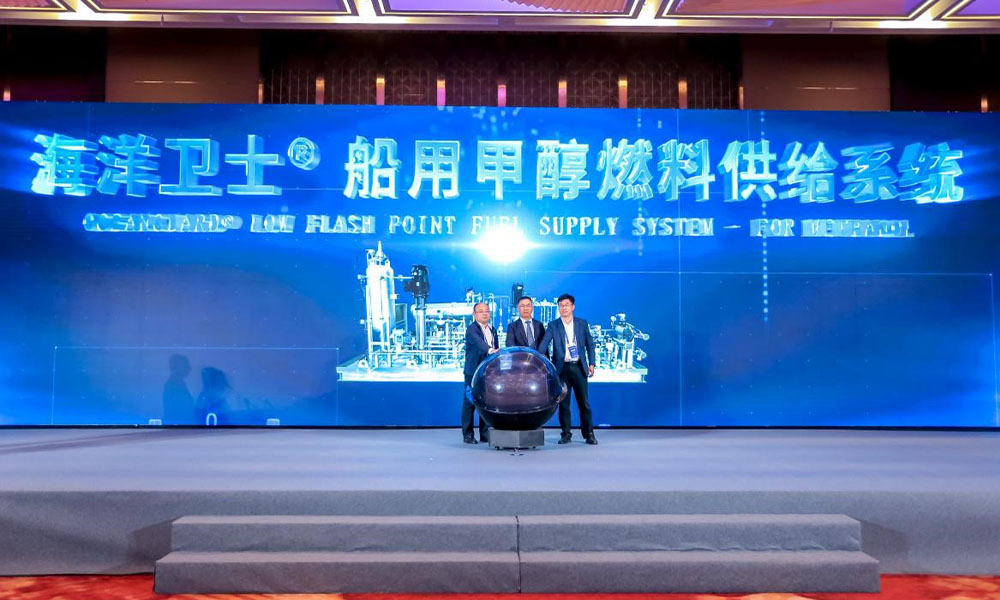
Headway took centre stage at the forum by unveiling two advanced decarbonisation solutions: the Methanol Fuel Supply System (LFSS) and the Carbon Capture, Storage and Utilisation System (CCSU).
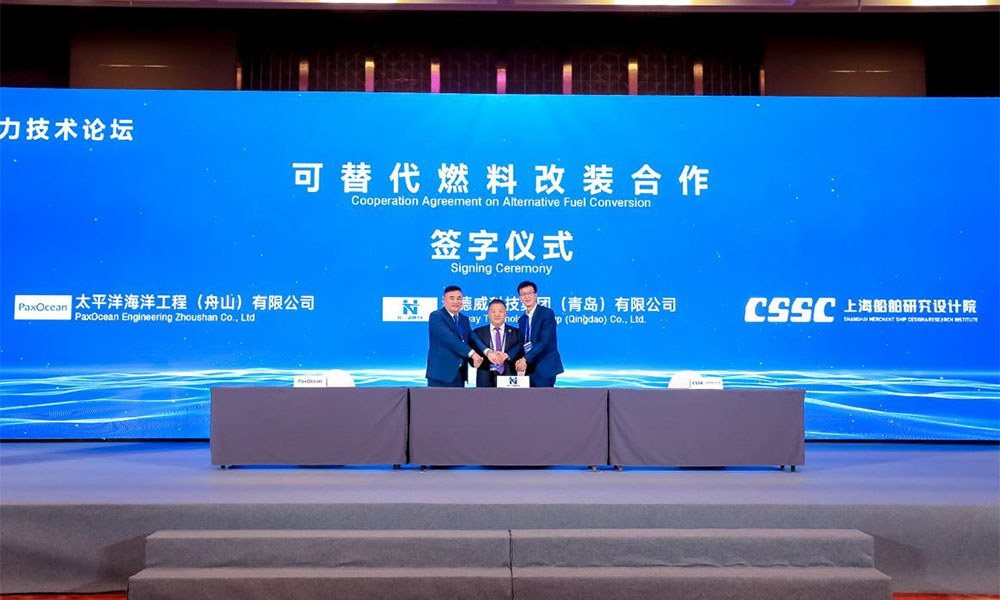
Additionally, the firm formalised a Cooperation Agreement on Alternative Fuel Conversion with PaxOcean Engineering Zhoushan Co., Ltd and SDARI.
Under this agreement, the three companies will collaborate to provide comprehensive turnkey solutions, encompassing retrofitting, installation, commissioning and technical/after-sales support for alternative bunker fuel sources such as methanol and ammonia. The partnership is anticipated to yield mutual benefits for the entire supply chain and, most importantly, for the customer.
Ms. Naifen Tan, Deputy Secretary General of CANSI, emphasised that the global economic slowdown has introduced increased uncertainties and challenges. Furthermore, with the finalisation of the “2023 IMO Strategy on Reduction of GHG Emissions from Ships”, the shipping industry has embarked on a faster journey toward decarbonisation.
In this context, the shipbuilding industry finds itself at a crossroads, brimming with both opportunities and challenges. There is an urgent need for a stronger commitment to digitalisation and green technologies, fostering the growth of intelligent manufacturing and integrated solutions. These steps are essential in empowering a bottom-up approach to conversion.
Ms. Tan commended the forum for providing a valuable platform for the industry to explore possibilities for steering the shipping sector toward a greener future.
The other two specially invited guests further prepared speeches. Ms. Ying Xin from Department of industry and information Technology, and Mr. Hailong, Chen from a leading university, underscored that venturing down the path of industrialisation is a critical objective for achieving industrialisation with distinct Chinese characteristics.
Both emphasised that promoting innovation serves as the cornerstone of industrialisation, and sustainability should be ingrained as an integral element of this process. It was mentioned in a recent provincial ship and offshore supply chain conference, the paramount importance and concentrating efforts should be put in key areas and prioritising major tasks aimed at fostering the exclusive, intelligent and sustainable development of the shipping industry.
Universities should fully take the advantages of talents and scientific and technological innovation, cooperate with suppliers in the industry, seize the research and development opportunities of key technologies for green ships, and jointly promote the update and iteration of new energy power technologies for ships.
During the forum, Mr. Yao Yu, the Director of the Mechanical and Electrical Department at the Development Institute of Jiangnan Shipyard (Group) Co., Ltd., delivered a keynote speech on “The Application of Methanol Propulsion Systems for Large Container Carriers”. He shared Jiangnan’s extensive expertise in the design and construction of large, low-carbon container carriers.
Dr. Enzhe Song, an expert in marine power and propulsion, representing leading Chinese universities, gave a speech titled “Development Path of Marine Propulsion”. The presentation provided a detailed introduction to the strategic requirements and potential development pathways for alternative marine fuels. Dr. Song’s speech also outlined a practical approach for Chinese shipping companies to achieve green and sustainable development tailored to their specific needs.
Kechao Lu, the Director of the Strategy & Development Department at Headway, delivered a speech titled “Headway’s Low Carbon Solutions based on the Strategy for Reduction of GHG Emissions”. This presentation fully unveiled Headway’s comprehensive solutions for low-carbon shipping, along with sharing data analytics from bench tests of the OceanGuard® LFSS.
Zhuo Zhang, Director of the Innovation Center at SDARI, introduced SDARI’s brand-new Dolphin 210,000 and 85,000 DWT methanol dual-fuel bulk carriers. He also shared insights on optimized tanker and PCTC designs.
Hongxing Li, Promotion Manager at MAN Energy Solutions, delivered a speech titled “Introduction to Two-Stroke Methanol Marine Engines and Auxiliary Systems”. This presentation provided technical specifications for MAN’s two-stroke methanol engines, highlighted major components, and discussed modular retrofitting.
Field visit to Headway’s alternative fuel test centre
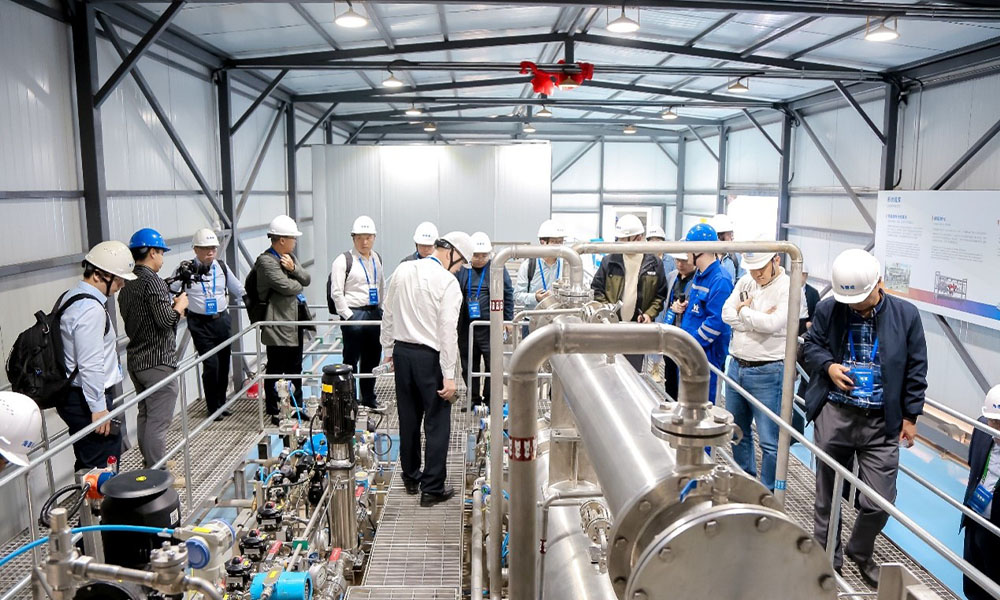
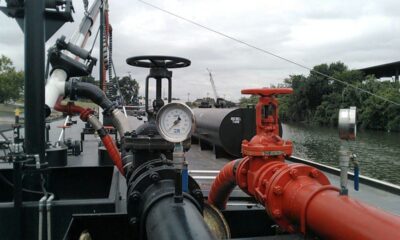
Later in the afternoon, the speakers and audience had the opportunity to visit Headway’s alternative fuel test centre to observe the OceanGuard® Methanol Fuel Supply System in action. The test centre was purposefully designed to serve as an intelligent platform, facilitating technical research, commercialisation, product testing and talent development. The field visit provided an in-depth understanding of the components and operational aspects of the OceanGuard® LFSS, including the Methanol Supply Unit, Bunkering Unit, Service Tank and Control Unit.
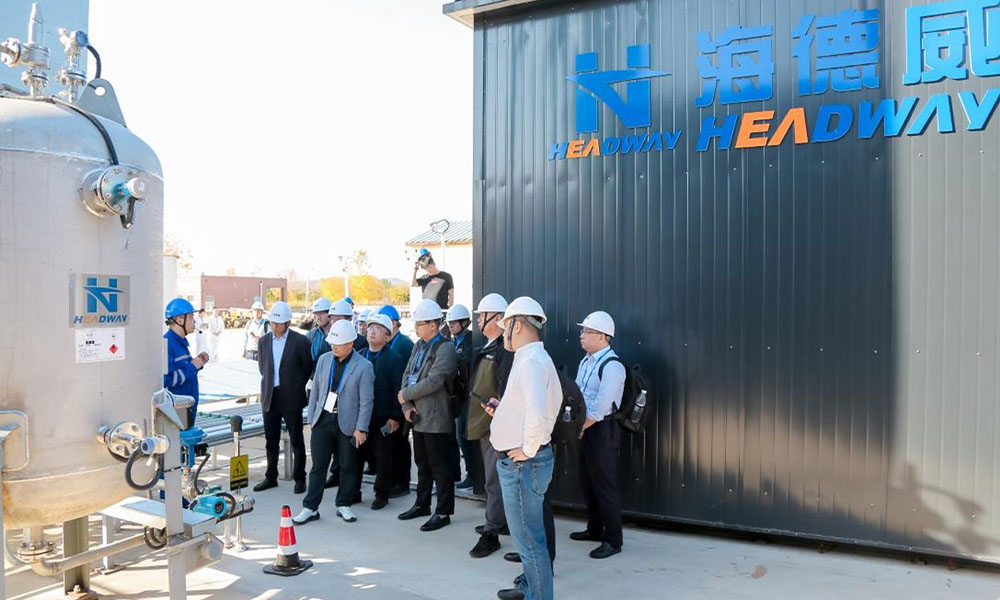
“The forum, as a whole, serves as a pivotal platform for the alternative fuel value chain to foster communication and collaboration. It is poised to drive the industry toward a greener future, characterised by mutual benefits. This collective effort will propel the industry along a steady and sustainable path toward a more environmentally conscious course,” Headway concluded.
Photo credit: Headway Technology Group
Published: 6 November, 2023
Bunker Fuel
JLC China Bunker Fuel Market Monthly Report (August 2026)
China sold 1.61 million mt of bonded bunker fuel in August, with the daily sales at 51,974 mt, down by 9.62% month on month, JLC’s data shows.

Beijing-based commodity market information provider JLC Network Technology Co. recently shared its JLC China Bunker monthly report for August 2026 with Manifold Times through an exclusive arrangement:
Bunker Fuel Demand
China’s bonded bunker fuel sales decline in August
China sold 1.61 million mt of bonded bunker fuel in August, with the daily sales at 51,974 mt, down by 9.62% month on month, JLC’s data shows.
Typhoons continued in many regions in August, and some ports in East China even suspended bunkering temporarily.
Meanwhile, bonded bunker fuel supply at some domestic ports remained tight, which also dragged down the sales.
Shipowners were still cautious about bunkering as bonded bunker fuel prices remained on the rise.
Regarding the sales by supplier, the sales by Chimbusco, Sinopec (Zhoushan), SinoBunker, and China Changjiang Bunker (Sinopec) respectively settled at 315,000 mt, 620,000 mt, 57,000 mt, and 5,000 mt in the month, while those by suppliers with regional bunkering licenses settled at 614,200 mt.
China’s LSFO output drops in August
Chinese refiners produced about 1.12 million mt of low-sulfur fuel oil (LSFO) in August, with the daily output at 36,258 mt, a cut of 12.87% month on month, JLC’s data shows.
Specifically, Sinopec’s LSFO output slipped in the month, as refineries were more inclined to produce gasoline and diesel when cracking spreads of these two products increased.
Meanwhile, certain refineries were still under maintenance, which also capped the overall output.
PetroChina lowered its refineries’ LSFO production plans due to tightening export quotas.
By contrast, CNOOC recorded an increase in its output, with T aizhou Petrochemical resuming production.
Zhoushan Petrochemical did not produce any LSFO in the month.
ZPC and Sinochem did not produce any LSFO in the month, but the latter produced and exported 10,000 mt of marine gas oil (MGO).


Domestic-trade bunker fuel demand weakens in August
Domestic-trade bunker fuel demand continued to weaken in August, as inland and coastal shipping remained seasonally tepid and port operations in East China were hindered by severe weather.
Domestic-trade heavy bunker fuel demand settled at 270,000 mt in the month, with the daily demand at 8,710 mt, down by 10.00% month on month, JLC’s data shows.
In the meantime, domestic-trade light bunker fuel demand fell to 120,000 mt, with the daily volume at 3,871 mt, down by 14.29% from the prior month, the data shows. Downstream buying interest was depressed by high MGO prices.
Bunker Fuel Supply
China’s bonded bunker fuel imports increase in July
China’s bonded bunker fuel imports increased in July, as some bonded distributors resumed imports of LSFO after a three-month suspension.
The country imported 530,400 mt of bonded bunker fuel in the month, a modest boost of 2.93% month on month, calculations show, based on the GACC data.
Bonded bunker suppliers imported some LSFO to meet demand when domestic production retreated.
In addition, they increased purchases of imported high-sulfur fuel oil (HSFO) in June when the conflict between the U.S. and Iran eased, leading to a rise in the arrivals for July.
The arrivals of imported MGO also grew in July.
On a year-on-year comparison, however, China’s bonded bunker fuel imports plunged by 17.54% in July.
Regarding the imports by source, Russia remained the largest supplier by exporting 234,600 mt of bonded bunker fuel to China, accounting for 44.23% of the latter’s total imports. Singapore became the second largest supplier with 153,800 mt, accounting for 29.00%, while South Korea slipped to the third place with 81,100 mt, accounting for 15.30%. Japan ranked fourth with 60,800 mt, accounting for 11.47%.
China’s bonded bunker fuel imports totaled 3.91 million mt in the first seven months of this year, an increase of 1.68% from the same period of time in 2025, calculations also indicate.

Domestic-trade bunker fuel supply tightens in August
Chinese blenders supplied 250,000 mt of domestic-trade heavy bunker fuel in August, with the daily supply at 8,065 mt, down by 7.41% month on month, JLC’s data shows.
Despite some unit restarts, blendstock supply was still relatively tight, especially low-sulfur residual oil supply .
Meanwhile, blenders in North China showed lower blending interest amid stricter tax inspections, and they maintained low inventories of consumption-tax-included bunker fuel.
Domestic-trade MGO supply settled at 150,000 mt in August, with the daily supply at 4,839 mt, down by 11.76% month on month, the data shows. Refineries’ production enthusiasm was dampened by high feedstock costs and tight feedstock supply.

Bunker Prices, Profits

Editor
Yvette Luo
+86-020-38834382
[email protected]
Sales (Beijing)
Tony Tang
+86-10-84428863
[email protected]
Sales (Singapore)
Ginny Teo
+65-31571254
[email protected]
[email protected]
JLC Network Technology Co., Ltd is recognised as the leading information provider in China. We specialise in providing the transparent, high-value, authoritative market intelligence and professional analysis in commodity market. Our expertise covers oil, gas, coal, chemical, plastic, rubber, fertilizer and metal industry, etc.
JLC China Bunker Fuel Market Monthly Report is published by JLC Network Technology Co., Ltd every month on China bunker market, demand, supply, margin, freight index, forecast and so on. The report provides full-scale & concise insight into China bunker oil market.
All rights reserved. No portion of this publication may be photocopied, reproduced, retransmitted, put into a computer system or otherwise redistributed without prior authorization from JLC.
Related: JLC China Bunker Fuel Market Monthly Report (July 2026)
Related: JLC China Bunker Fuel Market Monthly Report (June 2026)
Related: JLC China Bunker Fuel Market Monthly Report (May 2026)
Related: JLC China Bunker Market Monthly Report (April 2026)
Related: JLC China Bunker Market Monthly Report (March 2026)
Related: JLC China Bunker Fuel Market Monthly Report (February 2026)
Related: JLC China Bunker Market Monthly Report (December 2025)
Related: JLC China Bunker Market Monthly Report (November 2025)
Related: JLC China Bunker Fuel Market Monthly Report (October 2025)
Related: JLC China Bunker Fuel Market Monthly Report (September 2025)
Related: JLC China Bunker Fuel Market Monthly Report (July 2025)
Related: JLC China Bunker Fuel Market Monthly Report (June 2025)
Related: JLC China Bunker Fuel Market Monthly Report (May 2025)
Related: [Updated 15 May] JLC China Bunker Market Monthly Report (April 2025)
Related: JLC China Bunker Market Monthly Report (February 2025)
Related: JLC China Bunker Fuel Market Monthly Report (January 2025)
Related: JLC China Bunker Fuel Market Monthly Report (December 2024)
Related: JLC China Bunker Fuel Market Monthly Report (November 2024)
Related: JLC China Bunker Fuel Market Monthly Report (October 2024)
Related: JLC China Bunker Fuel Market Monthly Report (September 2024)
Related: JLC China Bunker Fuel Market Monthly Report (August 2024)
Related: JLC China Bunker Fuel Market Monthly Report (July 2024)
Related: JLC China Bunker Fuel Market Monthly Report (June 2024)
Related: JLC China Bunker Fuel Market Monthly Report (May 2024)
Related: JLC China Bunker Market Monthly Report (April 2024)
Related: JLC China Bunker Market Monthly Report (March 2024)
Related: JLC China Bunker Fuel Market Monthly Report (February 2024)
Related: JLC China Bunker MaAmogy, LOTTE Fine Chemical to explore ammonia bunkering in South Korearket Monthly Report (January 2024)
Note: China-based commodity market information provider JLC Technology has been providing Singapore bunkering publication Manifold Times China bunker volume data since 2020. Data from earlier periods are available here.
Photo credit: JLC Network Technology
Published: 11 September, 2026
Ammonia
Amogy and LOTTE Fine Chemical to explore ammonia bunkering in South Korea
Under a MoU, both will explore supplying ammonia to vessels equipped with Amogy’s Ammonia-to-Power technology, leveraging LFC’s ammonia terminal at Ulsan Port and ship-bunkering capabilities.

Events
PIL’s new LNG dual-fuel boxship “Kota Elan” makes maiden call in Singapore
“Kota Elan” is currently operating on PIL’s East Coast Service 1 (ES1) route that connects Asia with South America and is now on its way to Brazil.


OUR INDUSTRY PARTNERS

JLC China Bunker Fuel Market Monthly Report (August 2026)

Amogy and LOTTE Fine Chemical to explore ammonia bunkering in South Korea

PIL’s new LNG dual-fuel boxship “Kota Elan” makes maiden call in Singapore

IBIA condemns attacks on shipping after latest incident hits bunkering community

Polaris Shipping orders WinGD engines capable of running on methanol, ethanol

BV, Everllence partnership covers alternative bunker fuels, marine propulsion

ENGINE: Americas Fuel Availability Outlook (10 Sep 2026)

Rajah & Tann: Bunker disputes are won in the first 48 hours

Malaysia: MMEA detains two vessels over suspected illegal ship-to-ship transfer off Johor

Singapore strengthens LNG bunkering framework with new SS 727 standard

Yang Ming orders six LNG dual-fuel, ammonia-ready containerships from Hanwha Ocean

Ahti Climate and DNV connect verified emissions data to FuelEU pooling platform

Singapore: Notices of intended dividend issued for Hua An Shipping and related firms

TFG Marine advances global MFM rollout with two US Gulf bunker barges
-
 Bunker Claim2 weeks ago
Rajah & Tann: Bunker disputes are won in the first 48 hours
-
 Vessel Arrest1 week ago
Malaysia: MMEA detains two vessels over suspected illegal ship-to-ship transfer off Johor
-
 LNG Bunkering2 weeks ago
Singapore strengthens LNG bunkering framework with new SS 727 standard
-
 Alternative Fuels1 week ago
Yang Ming orders six LNG dual-fuel, ammonia-ready containerships from Hanwha Ocean
-
 FuelEU2 weeks ago
Ahti Climate and DNV connect verified emissions data to FuelEU pooling platform
-
 Winding up2 weeks ago
Singapore: Notices of intended dividend issued for Hua An Shipping and related firms
-
 Mass Flowmeter1 week ago
TFG Marine advances global MFM rollout with two US Gulf bunker barges
-

 Bunker Fuel Availability1 week ago
ENGINE: Europe & Africa Fuel Availability Outlook (2 Sep 2026)