Connect with us

Business

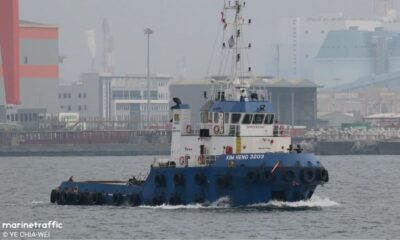
ENGINE: East of Suez Bunker Fuel Availability Outlook

VLSFO and HSFO availability improves in Singapore; LSMGO readily available across Sri Lankan ports; good demand in Fujairah.

Admin

Published

on

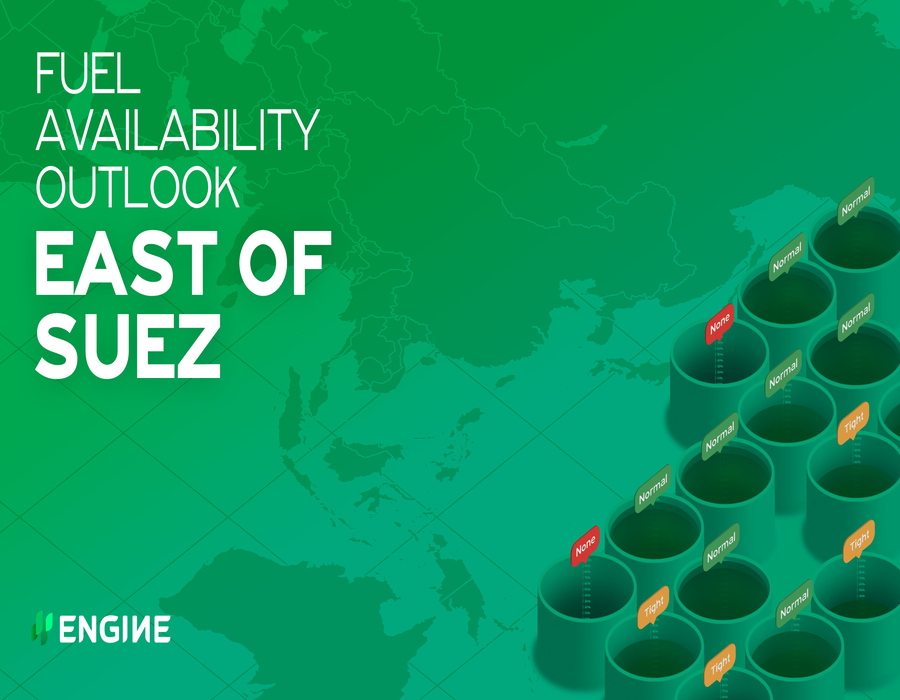
ENGINE East of Suez Bunker Fuel Availability Outlook

The following article regarding regional bunker fuel availability outlook for the East of Suez region has been provided by online marine fuels procurement platform ENGINE for publication on Singapore bunkering publication Manifold Times:

28 February, 2023

  • VLSFO and HSFO availability improves in Singapore
  • LSMGO readily available across Sri Lankan ports
  • Good demand in Fujairah

Singapore

Demand for bunkers has been average in Singapore so far this week. Prompt availability of VLSFO and HSFO grades remains tight, but lead times have improved slightly – from 7-9 days for both grades last week, to 5-7 days for VLSFO and 6-8 days for HSFO now.

LSMGO is still readily available in the port. Recommended lead times for the grade remain unchanged from the previous week’s 2-4 days.

Singapore’s residual fuel oil stocks have averaged 5% higher so far this month than in January and risen above their five-year average for the year, according to Enterprise Singapore. Stock levels have been helped by a 7% increase in net imports.

Meanwhile, the port’s middle distillate stocks have averaged 9% lower this month and continue to be far below their five-year average position.

East Asia

Availability of VLSFO in Zhoushan is tight for prompt dates as some suppliers are running low on stocks, but muted demand has kept a check on tightness, a source says. One supplier is expecting a VLSFO replenishment cargo to arrive in early March, which is likely to alleviate the tightness.

VLSFO and LSMGO stems require 3-5 days of lead time in the port – unchanged from the previous week. Availability has improved for HSFO in the Chinese bunkering hub, with lead times shortening from 5-7 days to 4-6 days over the past week.

Hong Kong has been witnessing weak demand so far this week, while availability across grades remain normal, a source says. Lead times for VLSFO and LSMGO are 5-6 days, up from around four days last week. Around 5-6 days ahead is advised for HSFO, which was subject to enquiry last week.

Strong wind gusts of 19-22 knots and waves of over a metre are forecast to hit Hong Kong between 2-3 March, which may disrupt bunkering operations.

A source says bad weather is forecast in the South Korean ports of Ulsan, Onsan, Daesan, Taean and Yeosu between 1-5 March, which might hit bunkering.

Lead times across all grades in southern and western South Korean ports vary widely, with the shortest at three days and the longest at around 12. This is almost same as last week’s 3-11 days for southern South Korean ports, but much longer than the 3-4 days needed previously in the country’s western ports.

Strong wind gusts of 19-26 knots and swells of close to a metre are forecast to hit the Philippine port of Subic Bay from Tuesday until Friday, which might hamper bunkering operations.

South Asia

Availability of VLSFO and LSMGO remains good with lead times of 2-3 days across several Indian ports, including Mumbai and Kandla on the northwest coast, Cochin and Chennai on the southern coast, and Visakhapatnam on the southwestern coast.

Availability of grades are subject to enquiry in Tuticorin in the southeast coast and Haldia on the eastern coast of India.

However, the Indian ports of Kandla and Sikka are struggling with congestion and backlogs, which is only expected to ease by 3 March, a source says.

The Sri Lankan ports of Colombo and Trincomalee have good availability of LSMGO, with prompt dates available.

Middle East

Availability continues to be under pressure across grades in Fujairah, while demand has been good. Lead times of around nine days are recommended for VLSFO and LSMGO in the UAE port, and almost 12 days are needed for HSFO. But some suppliers can offer the grades for prompt dates, a source says. Lead times for all these grades have increased from last week’s seven days.

The Omani ports of Muscat, Salalah, Sohar and Duqm have LSMGO readily available.

By Tuhin Roy


Photo credit and source: ENGINE
Published: 2 March, 2023

Continue Reading

Business

FLEX Commodities appoints Euwyn Tan as Senior Marine Fuels Trader in Singapore

Tan has experience across the marine fuels, bunkering and shipping markets, with a strong background in trading, procurement, commercial negotiations and developing relationships.

Admin

Published

on

By

FLEX Commodities appoints Euwyn Tan as Senior Marine Fuels Trader in Singapore

Dubai-based bunker trading firm FLEX Commodities FZCO (FLEX) on Monday (7 September) announced the appointment of Euwyn Tan as its Senior Marine Fuels Trader based in Singapore.

Tan has experience across the marine fuels, bunkering and shipping markets, with a strong background in trading, procurement, commercial negotiations and developing relationships with shipowners and charterers across Asia and Europe.

Before FLEX, he was a Bunker Trading Manager in Propeller Fuels from 2023 to this month. 

“Based in Singapore, Euwyn will play an important role in strengthening FLEX Commodities’ marine fuels trading capabilities and expanding our presence across the Asian market,” the company said in a social media post. 

“We are delighted to have Euwyn on board and look forward to his contribution as we continue to grow our global trading business.”


Photo credit: FLEX Commodities
Published: 8 September, 2026

Continue Reading

LNG Bunkering

Osaka Gas conducts Osaka Bay’s first STS LNG bunkering operation

Acting through Singapore-based marine fuel trading firm Integr8 Fuels, Osaka Gas supplied LNG bunker fuel to an LNG-fuelled PCTC operated by an overseas shipping company calling at the Port of Kobe.
Admin

Published

on

By

Osaka Gas conducts Osaka Bay’s first STS LNG bunkering operation

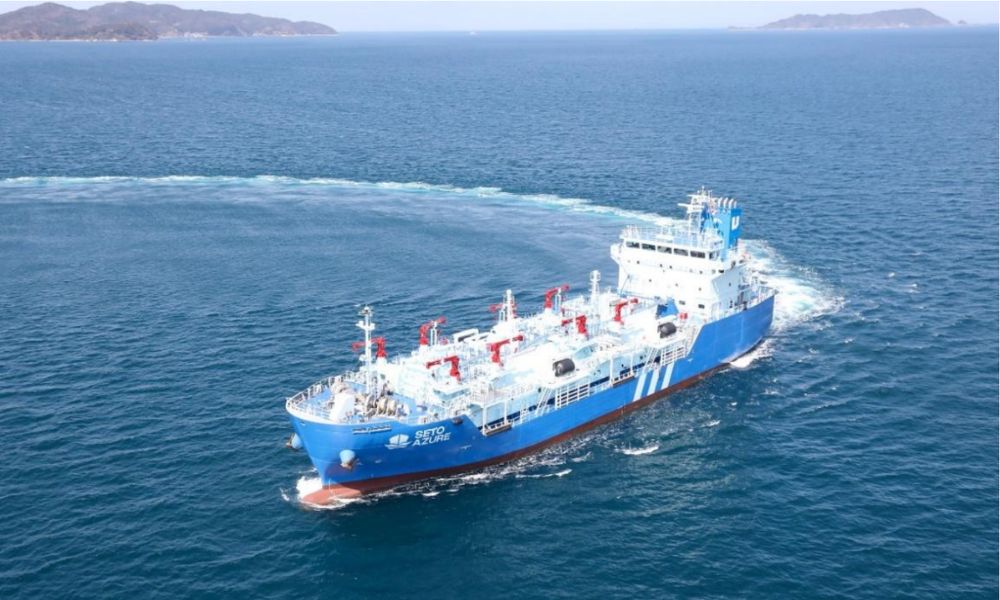
Japanese energy company Osaka Gas on Friday (4 September) said it has successfully completed the first-ever ship-to-ship LNG bunkering operation in Osaka Bay, supplying LNG fuel to an LNG-fuelled PCTC.

The operation was conducted using SETO AZURE, an LNG bunkering vessel owned by Osaka Bay LNG Shipping Co Ltd, an affiliated company of Osaka Gas. 

Acting through Integr8 Fuels Pte Ltd, a Singapore-based marine fuel trading company, Osaka Gas supplied LNG fuel to an LNG-fuelled PCTC operated by an overseas shipping company calling at the Port of Kobe.

Ship-to-ship bunkering will help ensure a stable supply of LNG fuel in the Osaka Bay area and support the development of the Port of Kobe as a Carbon Neutral Port.

In addition to ship-to-ship bunkering, Osaka Gas provides LNG fuel through truck-to-ship bunkering and port-to-ship bunkering. With capability covering all three major LNG bunkering methods, Osaka Gas provides flexible and reliable LNG fuel supply services to meet customers’ diverse needs.

The company said LNG bunkering infrastructure in Japan remains insufficient, highlighting the need to establish a stable fuel supply network to support the wider adoption of LNG-fuelled vessels.


Photo credit: Osaka Gas
Published: 8 September, 2026

Continue Reading

Bunker Fuel

Bunker Holding, Dan-Bunkering to join USTC units at new Copenhagen hub

Employees from Bunker Holding, Dan-Bunkering, Global Risk Management, CM Biomass, Unit IT, Uni-Tankers, Selfinvest, and USTC will all be based together in a new shared USTC Hub.
Admin

Published

on

By

Bunker Holding, Dan-Bunkering to join USTC companies at new Copenhagen hub

The owners and management of Danish-owned USTC have decided to consolidate the Group’s offices in the Greater Copenhagen area in a new shared USTC Hub, according to the Group on Monday (7 September). 

Employees from Bunker Holding, Dan-Bunkering, Global Risk Management, CM Biomass, Unit IT, Uni-Tankers, Selfinvest, and USTC will all be based together in the new USTC Hub. 

The lease will take effect on 1 December 2026, with employees and companies moving into the new hub in phases thereafter.

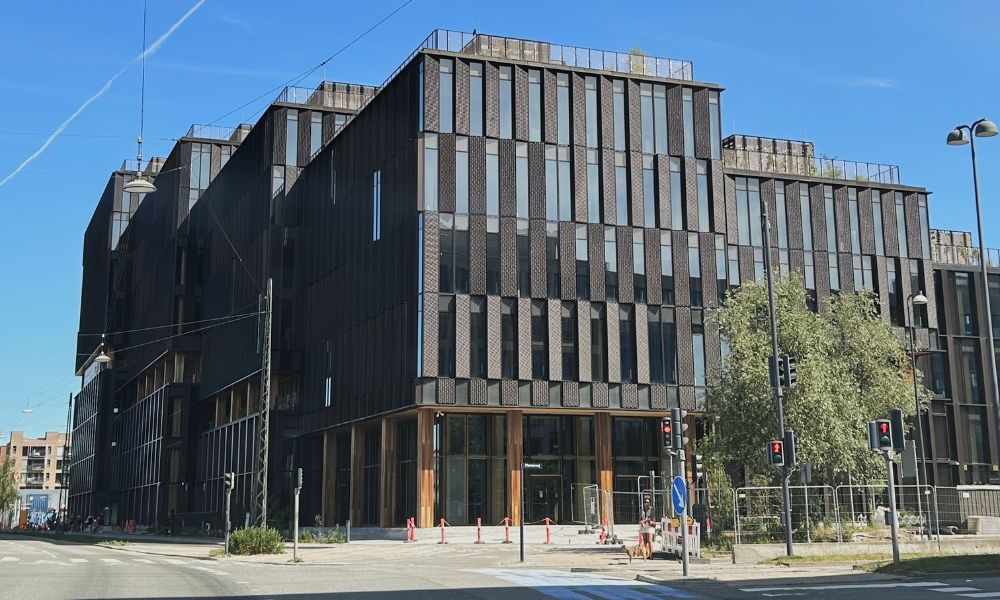
The chosen location is the brand-new Marmormolen development in Nordhavn, which will accommodate more than 150 workstations from across the Group’s companies under one roof.

The USTC Hub will provide better opportunities for the companies to connect and make the most of the possibilities that arise when independent businesses work in closer proximity. In that sense, the hub is a tangible expression of USTC’s approach: strong business acumen, a sense of cohesion and a keen eye for opportunities across the Group.

“In locations such as Houston and Singapore, we already have USTC Hubs where several of our companies are based together. This has created strong professional communities and valuable synergies across our organisation. We have therefore wanted to establish a similar concept in Copenhagen for some time. At the same time, the experience gained from our existing hubs will help us assess opportunities for additional hubs in other parts of the world where they make sound business sense,” said Nina Østergaard, co-owner and CEO of USTC.

The USTC Hub will span more than 3,000 square metres on the sixth floor of Marmormolen and will offer access to rooftop terraces as well as a range of shared facilities. This will provide an ideal setting for both formal and informal interactions across companies and teams.

According to Østergaard, however, the ambition is not to make the companies more alike.

“The hub is intended to be a platform for closer collaboration and knowledge sharing, but the aim is not to make our companies the same. Quite the opposite. Their differences are an important part of our strength. Each company has its own capabilities and direction. But by bringing people closer together, we create better opportunities to learn from each other, build bridges and make better use of the strengths that exist across our organisation,” said Østergaard.

The establishment of the USTC Hub will also support USTC’s ambitions for continued growth while creating a more attractive professional environment for employees.

“We are a Danish Group with offices around the world, and we have ambitions to continue developing. That makes it important for us to have a strong base in Copenhagen. It brings us closer to businesses, professional communities and some of the capabilities we will need in the future. At the same time, it gives us a stronger hand when it comes to attracting talented people,” said Østergaard.

“Our companies should, of course, retain their own identity. But it is equally important that there is something that connects us. To me, that includes strong business acumen, a sense of responsibility, keeping the distance from idea to action short, and staying close to the business.”


Photo credit: USTC
Published: 8 September, 2026

Continue Reading

Trending