Connect with us

Alternative Fuels

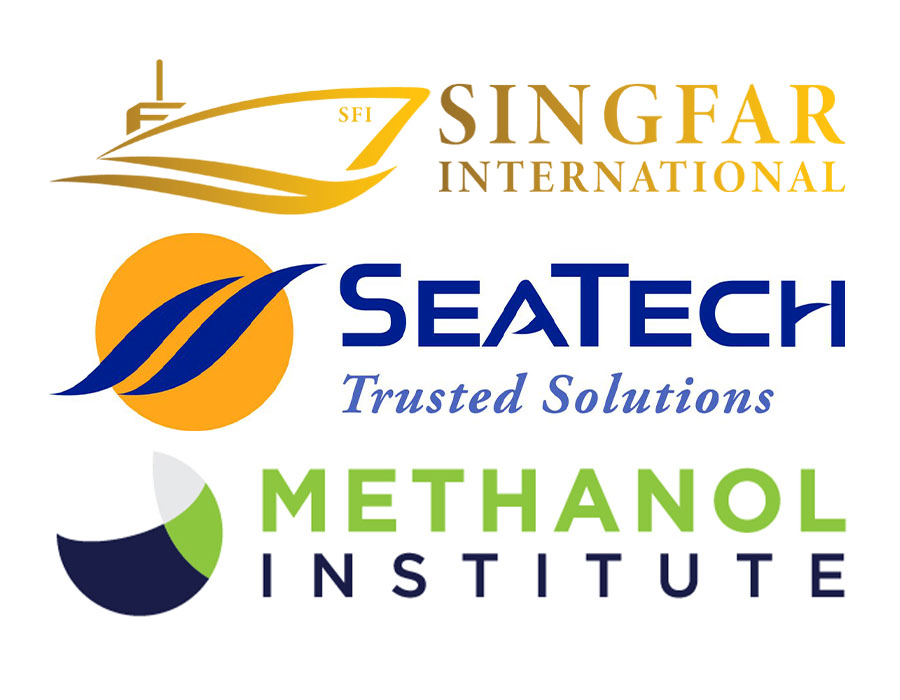
SeaTech Solutions, Singfar International, Methanol Institute in ‘first step’ for methanol bunkering at Singapore

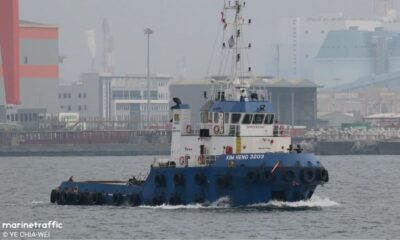
Singfar International has identified “MT HANTEK 3” which SeaTech Solutions will evaluate and identify gaps to propose the necessary modifications and engineering work required for the vessel to bunker methanol.

Admin

Published

on

SeaTech Solutions Singfar International Methanol Institute in ‘first step for methanol bunkering at Singapore

SeaTech Solutions, Singfar International, and Methanol Institute (MI) on Thursday (27 January) jointly said they have agreed to collectively conduct a study that will assess current gaps in operating procedures, infrastructure, and equipment onboard bunker vessels in Singapore that will have to be bridged for the safe conduct of methanol bunkering operations in Singapore.

As the international shipping industry steams ahead with its plans to decarbonize under the mandate of the International Maritime Organization (IMO), different alternative fuels and technologies are explored to reduce the environmental footprint of marine vessels.

Methanol has been identified as a viable alternative fuel which can be deployed today to reduce the emissions of the shipping industry. As a clean-burning liquid fuel, methanol can deliver immediate emission reductions onboard marine vessels. When methanol is produced from renewable feedstocks such as carbon dioxide and agricultural residue it becomes a very low-carbon, and potentially carbon-neutral, fuel for ships.

This has led to a growing interest in methanol as a marine fuel. Currently, dual-fuelled vessels burning methanol already ply global trade routes and more newbuilds recently announced are expected to be in operation in near future.

As a global bunker hub, Singapore will need to develop the necessary capabilities, expertise, and facilities to bunker different alternative fuels including methanol. Currently, there lacks a dedicated bunkering standard for methanol in Singapore.

The IMO had previously issued the Interim Guidelines for the Safety of Ships Using Methyl/Ethyl Alcohol as Fuel which outlines key considerations for methanol bunkering operations. Lloyd’s Register has also published its Methanol Bunkering Technical Reference which provides guidance on the safe bunkering of methanol with checklists to assist shipowners, operators, ports, and bunker suppliers.

Despite international experience with bunkering methanol at other ports, the parties of the MoU acknowledged that local circumstances and regulations in Singapore will have to be considered to ensure that procedures are fit for the safe and efficient bunkering of methanol at the world’s biggest bunker hub.

The study will consist of three elements. The parties will identify reference cases for methanol bunkering at other ports and review existing recommendations for methanol bunkering to assess the necessary modifications to adapt methanol bunkering procedures to the Singaporean context.

Singfar International has also identified MT HANTEK 3 from its fleet of bunker vessels which SeaTech Solutions will evaluate and identify gaps to propose the necessary modifications and engineering work required for the vessel to bunker methanol.

Lastly, SeaTech Solutions will prepare a conversion specification & concept design for Methanol Bunker Vessel, based on its recommendations for the MT HANTEK 3, for an Approval-in-Principle submission.

This study will serve as the foundation for developing standards and procedures for methanol bunkering in Singapore and strengthen Singapore’s position as a leading global bunkering hub providing shipowners with the continued confidence.


Published: 27 January, 2022

Continue Reading

Battery

WK NatPower expands inland shipping electrification drive into Jiangsu

WK NatPower and Jiangsu Port Investment will strengthen collaboration across the maritime, port and clean energy sectors, bringing together expertise in shipping, port infrastructure and electrification technologies.
Admin

Published

on

By

WK NatPower expands inland shipping electrification drive into Jiangsu

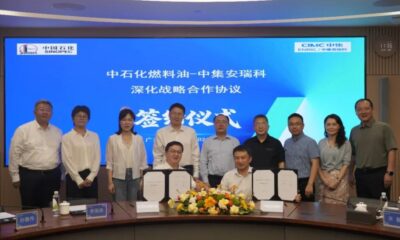
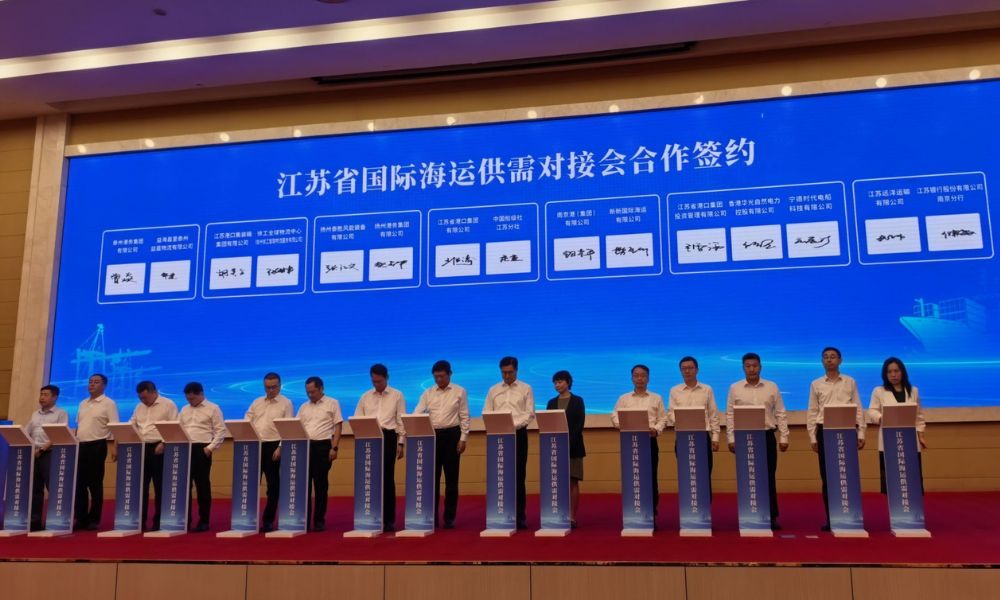
Wah Kwong NatPower (WK NatPower) on Wednesday (2 September) said it signed a Memorandum of Understanding (MoU) with Jiangsu Port Group Investment Management Co Ltd (Jiangsu Port Investment), a wholly owned subsidiary of Jiangsu Port Group, at the Jiangsu International Maritime Conference in Nanjing. 

The company said the MoU strengthens collaboration across the maritime, port and clean energy sectors, bringing together expertise in shipping, port infrastructure and electrification technologies.

As China’s leading province for inland waterway transport, with the country’s largest inland waterway network, Jiangsu plays a critical role in the nation’s shipping and logistics system. 

“The partnership represents a strategic step in WK NatPower’s China strategy,” the company said in a statement. 

Building on the momentum of its Zhejiang projects, WK NatPower is extending its footprint further into one of the country’s most significant inland shipping areas. By leveraging the strengths of their respective parent companies, Jiangsu Port Group, Wah Kwong Maritime Transport and NatPower, the parties will also establish a cooperation mechanism to explore opportunities for deeper collaboration and enhance the complementary use of global maritime and port resources.

From a technological perspective, WK NatPower is evolving from individual charging infrastructure towards integrated energy systems combining charging, battery storage and battery-swapping solutions capable of serving a broader range of operational scenarios. 

By combining the international experience and global network of WK NatPower and its partner NatPower Marine, with Jiangsu Port Group’s local resources and project delivery capabilities, the partnership will promote coordinated regional development. 

It also demonstrates WK NatPower’s commitment to the electrification of China’s inland waterway transport sector.


Photo credit: Wah Kwong NatPower
Published: 3 September, 2026

Continue Reading

Alternative Fuels

Hercules Tanker Management’s ‘Ultra-Spec Series’ tanker “Vanessa” begins maiden voyage

Designed for worldwide deployment, the series can transport and supply conventional marine fuels as well as alternative fuels up to B100 and methanol.
Admin

Published

on

By

Hercules Tanker Management’s ‘Ultra-Spec Series’ tanker “Vanessa” begins maiden voyage

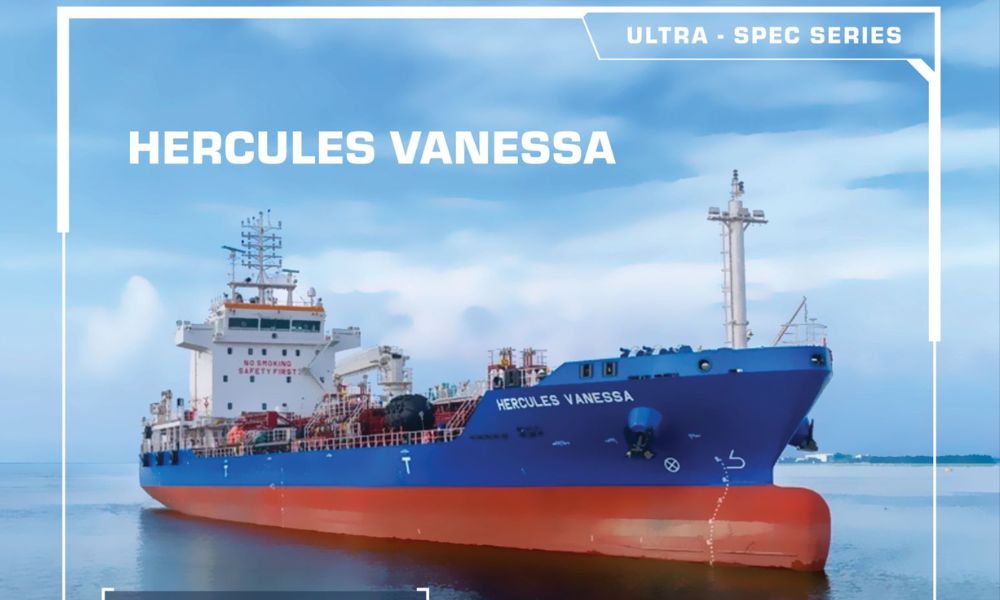
Hercules Tanker Management (HTM) on Wednesday (2 September) said its latest Ultra-Spec Series of next-generation tankers, Hercules Vanessa, has commenced her maiden voyage.

HTM is the shipping venture launched by John A. Bassadone, founder and CEO of independent marine fuel supplier Peninsula.

The 10-vessel programme forms part of the company’s long-term fleet renewal strategy, replacing ageing tonnage with more efficient vessels while delivering the future-ready capability needed to support the maritime industry’s evolving energy landscape. 

Designed for worldwide deployment, the series can transport and supply conventional marine fuels as well as alternative fuels up to B100 and methanol. 

Hercules Vanessa is also the first in the series to feature MarineLINE, a high-performance cargo tank coating system. 

The vessel is currently en route to Port Louis to take bunkers and provisions before continuing southbound towards Cape Town. It is scheduled to discharge a cargo of biofuel, loaded at Nansha Terminal in China, in Ghent later this year.

“HTM’s Ultra-Spec Series continues to gather momentum as we build a modern fleet capable of supporting cleaner marine fuel supply chains,” the company said. 

Related: Hercules Tanker Management launches ‘Ultra-Spec Series’ bunker tanker “Harriet”


Photo credit: Hercules Tanker Management
Published: 3 September, 2026

Continue Reading

Methanol

Methanol Institute rebrands to reflect expanding methanol value chain

Methanol Institute rebrands as MI — The Global Methanol Alliance, reflecting what the organisation has grown into: a global alliance connecting companies across every part of the methanol value chain.
Admin

Published

on

By

Methanol Institute rebrands to reflect expanding methanol value chain

The Methanol Institute on Tuesday (1 September) unveiled its new brand becoming MI — The Global Methanol Alliance, adopting a name that reflects what the organisation has grown into: a global alliance connecting companies across every part of the methanol value chain. 

Methanol is central to the energy transition. Its established role as a chemical building block remains the backbone of global demand, while its use in new markets is growing. Methanol is now a well-established marine fuel, with more than 150 methanol-capable vessels in operation and over 290 on order. 

Globally, 47 renewable methanol projects are operational or under development, while renewable methanol production capacity is expected to grow from 0.9 million tonnes today to 6 to 12 million tonnes by the end of 2031. New applications are also advancing in aviation, road transport, power generation, alongside growing interest in methanol’s role as a hydrogen carrier.

This shift is bringing new companies, technologies, and industries into the methanol value chain, and changing the questions the industry needs to solve.

“The methanol industry has changed, and we have changed with it. Over the past six years, we have seen methanol move into new markets and our membership expand across sectors and the value chain. This new identity reflects the organisation we have become today, while building on the knowledge, experience and industry relationships developed over more than three decades”, said Ben Iosefa, Chair of MI’s Board of Directors. 

Across the Americas, Europe and Asia, MI increasingly operates at the points where these sectors intersect: connecting industry with policymakers, bringing operational experience into regulatory discussions, and working across the value chain on the standards, safety frameworks, and regulations needed for methanol markets to develop and scale.

“We bring together an industry that spans more sectors, more regions, and more parts of the value chain than ever before,” said Alexander Döll, CEO of MI. 

“Our new identity is about making that clearer. The Global Methanol Alliance reflects who we are today: a place where the industry comes together, connects across markets and sectors, and works collectively on the issues that will shape methanol’s next phase of growth.”

Alongside the new identity, MI has launched a new website designed to become a go-to source for methanol knowledge and intelligence, bringing together industry data, market insights, interactive tools and practical resources covering methanol’s markets and applications, safety, policy and regulation.


Photo credit: MI — The Global Methanol Alliance
Published: 3 September, 2026

Continue Reading
Advertisement

OUR INDUSTRY PARTNERS


Trending