Connect with us

Business

Interview: Hafnia shares IMO 2020 preparations, promotes transparency for bunkering operations

‘We support MFMs for bunker deliveries at Singapore and that goes for other tech as well; Hafnia is onboard any initiatives improving transparency in the bunker supply chain,’ says Bunker Manager.

Admin

Published

on

KSO Photo v1

The following interview is part of pre-event coverage for the upcoming Singapore International Bunkering Conference and Exhibition (SIBCON) 2020, where Manifold Times is an official media partner:


Hafnia is one of the world’s leading oil product tanker owners and operators. The company provides transportation of oil and oil products to leading national and international oil companies, major chemical companies, as well as trading and utility companies. Hafnia operates a fleet of 178 vessels in pools and is a part of BW Group – an international shipping group that has worked in oil and gas transportation, floating gas infrastructure, environmental technologies and deep-water production for over 80 years.

Hafnia Bunker Services, which operates within Hafnia, purchases bunkers for part of the BW Group fleet; the company also acts as brokers for its pool partners and third-party members in order to enjoy synergies associated with economies of scale for its alliance members.

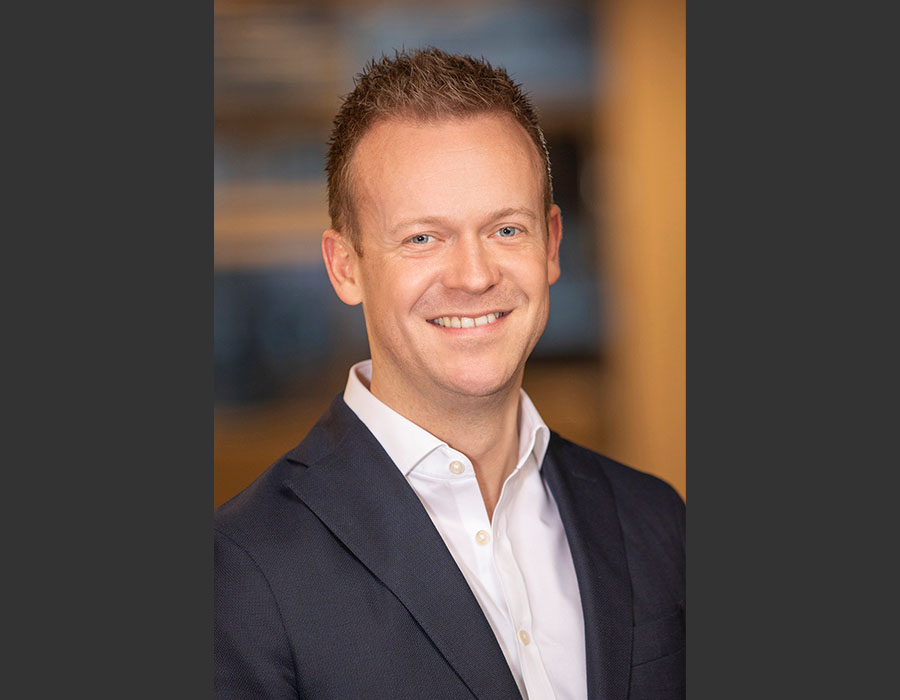
 Manifold Times recently spent time with Kasper Sørensen, Bunker Manager at Hafnia, who shared with the Singapore bunker publication how Hafnia prepared for IMO, as well as his thoughts and actions in the face of other events in the past year.

 MT: What did Hafnia do to prepare for IMO 2020, and how has that preparation paid off to date?

We formed an internal IMO 2020 committee years before the event in order to prepare for the technical side of the transition. This committee was responsible for considering whether to adopt a scrubber based approach for compliance. We didn’t choose the scrubber route for various reasons and have been happy with that decision.

Our IMO 2020 committee also discussed what kind of problems one can expect with the new types of marine fuels. So far, the preparation has proven to be useful and has helped deal with most of the issues that have come up.

On the commercial side of the transition preparation, we had to ensure our terms and conditions were up to the standards required of our typical bunker contracts. We decided to formalise our strong relationships by establishing partnerships with bunker suppliers, which meant more term contracts. We believe this commercial strategy makes sense for both bunker suppliers and ourselves.

Another difficult task was managing expectations of all stakeholders, both on and off-shore, while also ensuring we were not underestimating the impact of the transition in Q4 2019. We had expected this period to be a squeeze both in terms of product but also for barges.

We also spent a long time vetting counterparties to ensure they had the size and firepower to withstand hits even if the market went against them. It is all fine and well having a lucrative contract, but it doesn’t make much sense if they go bust two months after IMO 2020.

 MT: Do you feel there is any difference between bunker procurement pre and post-IMO 2020? In what ways?

On the technical side, bunker buyers are now required to have an even deeper knowledge of the supply chain. We now need to understand different product characteristics for bunkers that have emerged around the market with IMO 2020 in order to make fully informed decisions.

The product we get from various suppliers and markets are not uniform, creating many different challenges. There is now a lot of focus on fuel handling. As a result, we have introduced certain restrictions on how much fuel our vessels can carry of any one batch at a given time as part of our risk management practises.

Further, we now, more than ever, have to consider prioritising quality over fuel prices. Just making buying decisions based purely on prices no longer makes much sense, as now we must also consider other factors such as quality and availability of product. It isn’t much use if you have a very good price but cannot use the product.

 MT: Were there any unexpected events (e.g. Covid-19, etc.) which affected the bunker buying process in 2020? How did Hafnia overcome associated challenges?

Of course, the coronavirus (Covid-19) was a big curveball in 2020. In terms of the bunker side of things, we capitalised on us being both a strong and reliable counterpart that have also liaised with other strong and reliable counterparties.

As such, we have the luxury of being able to choose counterparts from the top shelf – to fit our profile. During the IMO 2020 transition, we were an attractive counterpart because of our strong financial status and name, which was further bolstered by our strong 2020 results.

 MT: Have the commodity trading mishaps in Singapore affected the way Hafnia purchases bunkers and operate as a bunker broker? How so?

The case of Hin Leong and the other commodity trading firms just emphasises the importance of knowing who you are dealing with and having proper K.Y.C. (know your customer) and general terms and conditions.

 MT: Thoughts on mass flow meters and the installation of MFM onboard Hafnia tankers to measure fuel delivered at other ports?

We do not have plans to install MFMs onboard our tankers to measure fuel received during bunker deliveries.

We buy bunkers for more than 450 ships. In terms of volume, this means we purchase about 2.5 million metric tonnes of marine fuels a year, including for our third-party members. Out of the total amount, we lift between 30% to 40% of marine fuel from the port of Singapore.

Singapore is the only place that mandates the use of MFMs for bunker deliveries. We are a strong supporter of this. We also encourage any other new technologies that improve the transparency in the supply chain.

 MT: What do you think is the next big thing that will happen in the Singapore or global bunkering sector?

We think there will be further consolidation on both sides of the table for bunker suppliers and buyers, and we are playing an active role in this via our Bunker Alliance.

We also expect more new fuels to materialise and, hopefully, more transparency through digitalisation efforts and other technology initiatives that improve the performance of the industry and its procedures.

As a company purchasing bunkers, we are keen to see and support any activity that promotes transparency in the industry.


Photo credit: Hafnia
Published: 2 October, 2020
 

Continue Reading

Winding up

Singapore: High Court to hear Norvic Shipping Asia winding up application on 31 July

Application for the winding up of Norvic Shipping Asia Pte Ltd was filed by Netherlands-registered Mur Shipping BV on 8 April, according to Government Gazette notice.

Admin

Published

on

By

RESIZED singapore high court

An application for the winding up of Norvic Shipping Asia Pte Ltd was filed by Netherlands-registered Mur Shipping BV on 8 April, according to a Tuesday (21 July) notice on the Government Gazette.

It noted the winding up application is directed to be heard before the Judge sitting in the General Division of the High Court at 10am on 31 July.

Any creditor or contributory of the company desiring to support or oppose the making of an order on the winding up application may appear at the time of hearing by himself or his counsel for that purpose.

A copy of the winding up application will be furnished to any creditor or contributory of the company requiring the copy of the winding up application by the solicitors of the applicant’s, Oon & Bazul LLC, on payment of the regulated charge for the same.

The Applicant’s address is Hiridostraat 5, Gebouw Prismatrium, 1101CW Amsterdam, The Netherlands.

The Applicant’s solicitors are Oon & Bazul LLC of 103 Penang Rd, #04-04/05/06 Singapore 238467. 

Queries on the winding up application may be directed to the following email addresses: [email protected] and [email protected].


Photo credit: Manifold Times
Published: 22 July, 2026

Continue Reading

Methanol

World Fuel and partners complete first green methanol bunkering of car carrier in Shanghai

Operation involved the delivery of approximately 2,800 MT of green methanol to “Arctic Tern” via a ship-to-ship transfer using SIPG Energy’s dedicated methanol bunkering vessel “M/V Hai Gang Zhi Yuan”.

Admin

Published

on

By

World Fuel and partners complete first green methanol bunkering of car carrier in Shanghai

Marine fuel provider World Fuel on Tuesday (21 July) said it successfully completed the first green methanol bunkering of M/V Arctic Tern, with EUKOR Car Carriers and SIPG Energy at the Port of Shanghai. 

Arctic Tern is the first vessel in the new Shaper Class series of car carriers. 

The operation involved the delivery of approximately 2,800 MT of green methanol to Arctic Tern via a ship-to-ship transfer using SIPG Energy’s dedicated methanol bunkering vessel M/V Hai Gang Zhi Yuan, the largest vessel of its kind in operation. 

The bunkering operation was carried out at Haitong Terminal, Waigaoqiao Port Area, Shanghai Port, with cargo handling operations conducted simultaneously during bunkering.

This marks EUKOR Car Carriers’ first green methanol operation and the first time Arctic Tern has bunkered methanol since its delivery on 9 July. The operation marked the first bunkering at Shanghai Port of green methanol produced locally in Shanghai for an international PCTC operator. 

It also demonstrated the city’s integrated green methanol value chain, spanning local production, storage and bunkering, and established a replicable “Shanghai Model” for green methanol supply.

World Fuel arranged the supply and delivery of the fuel on behalf of EUKOR Car Carriers, working with SIPG Energy as the physical supplier at the Port of Shanghai.

The green methanol supplied was produced from municipal solid waste, ISCC-EU certified, and had a carbon intensity value below 25 gCO₂e/MJ.

Arctic Tern is the first of fourteen Shaper Class vessels ordered by Wallenius Wilhelmsen. With a capacity of 9,300 car equivalent units and methanol dual-fuel capability, the vessel will be operated by EUKOR Car Carriers, jointly owned by Wallenius Wilhelmsen and Hyundai Motor Group. Following her first green methanol bunkering, Arctic Tern will continue her maiden voyage from Asia to Europe.

Xavier Leroi, COO Shipping Services at Wallenius Wilhelmsen and CEO of EUKOR Car Carriers, said: “Completing Arctic Tern’s first green methanol bunkering shortly after delivery is a significant milestone towards our decarbonisation ambition for both EUKOR Car Carriers and Wallenius Wilhelmsen. It demonstrates how investments in next-generation vessel technology and fuel flexibility are being translated into real-world operations. 

“This achievement reflects the strong collaboration between all parties involved. Together, we have shown how partnerships across the maritime value chain can help make lower-emission fuels available and operationally viable at scale.”

Mark Tamsitt, SVP Global Marine Sales at World Fuel, said, “The first bunkering event with a new fuel is a significant moment for any shipowner, and our role is to make it as seamless as possible. By connecting EUKOR Car Carriers with SIPG Energy’s proven green methanol capability at the Port of Shanghai, we were able to deliver on reliable supply, fuel quality, and safe processes. As more of our customers bring methanol dual-fuel tonnage into service, we are committed to being the partner that makes these kinds of operations routine.”

Mr. Zhang Da, General Manager of SIPG Energy, said, “Welcoming Arctic Tern to the Port of Shanghai for her first green methanol bunkering demonstrates the strength and maturity of our supply capability. Building on our well-established methanol ship-to-ship bunkering services for container vessels, we have already extended such services to pure car and truck carriers (PCTCs). This bunkering sets a new record for the largest single SIMOPs green methanol bunkering for PCTCs in China, marking another step in building Shanghai’s position as a global green energy hub for international shipping.”

This operation follows Wallenius Wilhelmsen’s announcement on 9 July that Arctic Tern would complete her first methanol bunkering shortly after delivery. The vessel entered service on routes between Asia and Europe immediately following handover from China Merchants Jinling Shipyard in Nanjing.


Photo credit: World Fuel
Published: 22 July, 2026

Continue Reading

Ammonia

HPA and MB Energy develop safety concept for STS ammonia bunkering

HPA says the Port of Hamburg will become “bunker ready” for ammonia, laying the groundwork for safe and reliable ammonia bunkering in the future.

Admin

Published

on

By

HPA and MB Energy develop safety concept for STS ammonia bunkering

The Hamburg Port Authority (HPA) and integrated energy company MB Energy on Tuesday (21 July) said they have completed a comprehensive risk analysis and developed a dedicated safety concept for ship-to-ship ammonia bunkering.

MB Energy said the analysis lays the groundwork for the safe introduction of ammonia as a future marine fuel.

“With our planned ammonia import terminal in Hamburg-Blumensand, MB Energy intends to provide the reliable land side supply infrastructure needed to support this transition across northern German ports,” it said in a social media post. 

Mabanaft Group was renamed to MB Energy last year and merged over 50 existing brands under one identity. 

Separately, HPA said the Port of Hamburg will become “bunker ready” for ammonia, laying the groundwork for safe and reliable ammonia bunkering in the future.

“The focus is in particular on container ships, cruise ships as well as RoRo and ConRo (Container/RoRo) ships,” it said. 

“We expect ammonia to establish itself as an alternative marine marine fuel in the coming years. With our preparatory work, we are already creating the conditions to welcome the first ammonia-powered ships in Hamburg and to bunker them safely.:

HPA added that the import terminal for ammonia planned by MB Energy from 2029 will make a decisive contribution to ensuring the reliable availability of ammonia as a bunker fuel in northern German ports in the long term. 

“The use of an ammonia bunker barge is considered a possible addition to the landside infrastructure to enable ship bunkering in the port and beyond in the future,” it said.

Related: Mabanaft Group renames as MB Energy, merging over 50 brands under one identity


Photo credit: Hamburg Port Authority
Published: 22 July, 2026

Continue Reading

Trending