Connect with us

Port & Regulatory

MPA informs Singapore shipping community of resolutions adopted at MEPC 82

MEPC 82 was held from 30 September 2024 to 04 October 2024; MPA urges the shipping community to prepare for the implementation of the resolutions.

Admin

Published

on

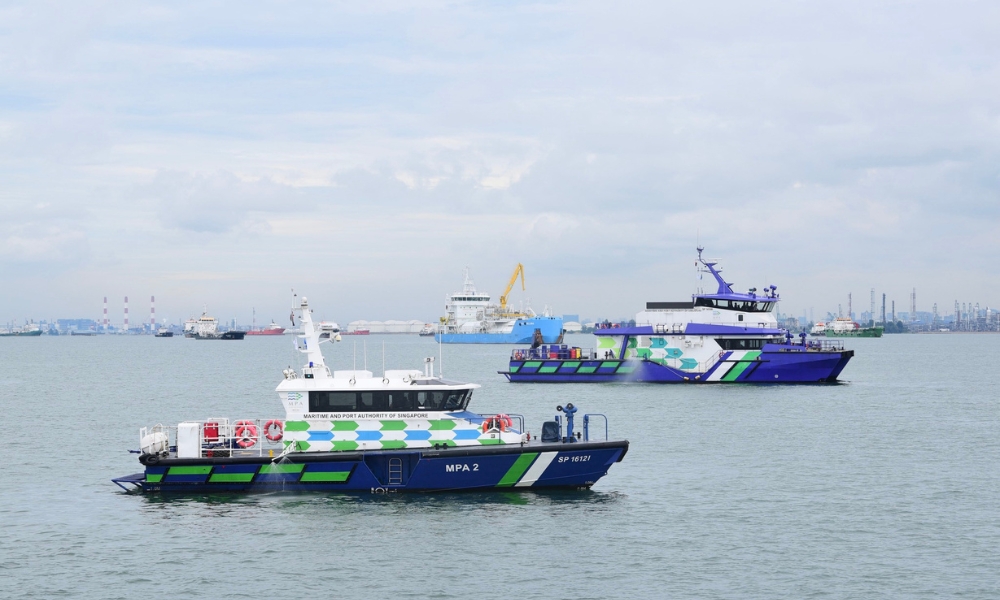
MPA patrol vessels

The Maritime and Port Authority of Singapore (MPA) on Saturday (28 December) issued Shipping Circular No. 18 of 2024 informing shipowners, ship managers, operators, agents and masters of Singapore-registered ships of resolutions adopted at 82nd session of the Marine Environment Protection Committee (MEPC 82).

MEPC 82 was held from 30 September 2024 to 04 October 2024; MPA urges the shipping community to prepare for the implementation of these resolutions:

Resolution MEPC.392(82) – Amendments to MARPOL Annex VI (Designation of the Canadian Arctic and the Norwegian Sea as Emission Control Areas for Nitrogen Oxides, Sulphur Oxides and
Particulate Matter, as appropriate).

This resolution adopts amendments to the International Convention for the Prevention of Pollution from Ships, 1973, as modified by the Protocols of 1978 and 1997 relating thereto (MARPOL), Annex VI, to designate the Canadian Arctic and the Norwegian Sea as Emission Control Areas (ECA)
for Nitrogen Oxides, Sulphur Oxides and Particulate Matter. The amendments will enter into force on 01 March 2026 and will be given effect through amendments to the Prevention of Pollution of the Sea (Air Pollution) Regulations 2022.

The Canadian Arctic ECA will be applicable to ships constructed on or after 01 January 2025, while the Norwegian Sea ECA will be applicable to ships constructed on or after 01 March 2026, including a “three dates criteria” of date of building contract; keel laying date; and delivery date, to be reflected
as amendments to the Supplement to International Air Pollution Prevention Certificate (IAPP Certificate).

Resolution MEPC.393(82) – Guidance On Best Practice On Recommendatory Goal-Based Control Measures To Reduce The Impact On The Arctic Of Black Carbon Emissions From International
Shipping

This resolution adopts Guidance on best practice on recommendatory goal-based control measures to reduce the impact on the Arctic of Black Carbon emissions from international shipping. It is intended to assist ship operators/companies in their efforts to reduce Black Carbon emissions from
their ships operating in or near the Arctic in measurable and concrete ways.

Resolution MEPC.394(82) – Guidelines On Recommendatory Black Carbon Emission Measurement, Monitoring And Reporting

This resolution adopts Guidelines on recommendatory Black Carbon emission measurement, monitoring and reporting. It specifies recommendations for the measurement, monitoring and reporting of Black Carbon emissions data from marine diesel engines or exhaust gas treatment
systems, in combination or individually, to enhance development of recommendations and regulations to reduce the impact on the Arctic of Black Carbon emissions.

Resolution MEPC.395(82) – 2024 Guidelines For The Development Of A Ship Energy Efficiency Management Plan (SEEMP)

This resolution adopts the 2024 Guidelines for the development of a SEEMP to have a more consistent methodology for fuel oil reporting, taking into account the data collected in the IMO Ship Fuel Oil Consumption Database (IMO DCS) thus far. This resolution revokes Resolution MEPC.346(78).

Resolution MEPC.396(82) – Designation Of The Nusa Penida Islands And Gili Matra Islands In Lombok Strait As A Particularly Sensitive Sea Area (PSSA)

This resolution designates the Nusa Penida Islands and Gili Matra Islands in Lombok Strait as a PSSA, with the Associated Protective Measures (APMs) being the previously established Traffic Separation Scheme (TSS) which entered into force on 01 July 2019.

Editor’s note: The full Shipping Circular No. 18 of 2024 document may be obtained from MPA’s official website here.


Photo credit: Manifold Times
Published: 30 December 2024

Continue Reading

Alternative Fuels

Singapore-based Golden Island, Qingdao Port team up on alternative bunker fuels

Agreement covers green methanol, green ammonia and bio-LNG, with cooperation spanning fuel production and transportation through to storage, sales and bunkering.
Admin

Published

on

By

Golden Island, Qingdao Port team up on green methanol, ammonia and bio-LNG

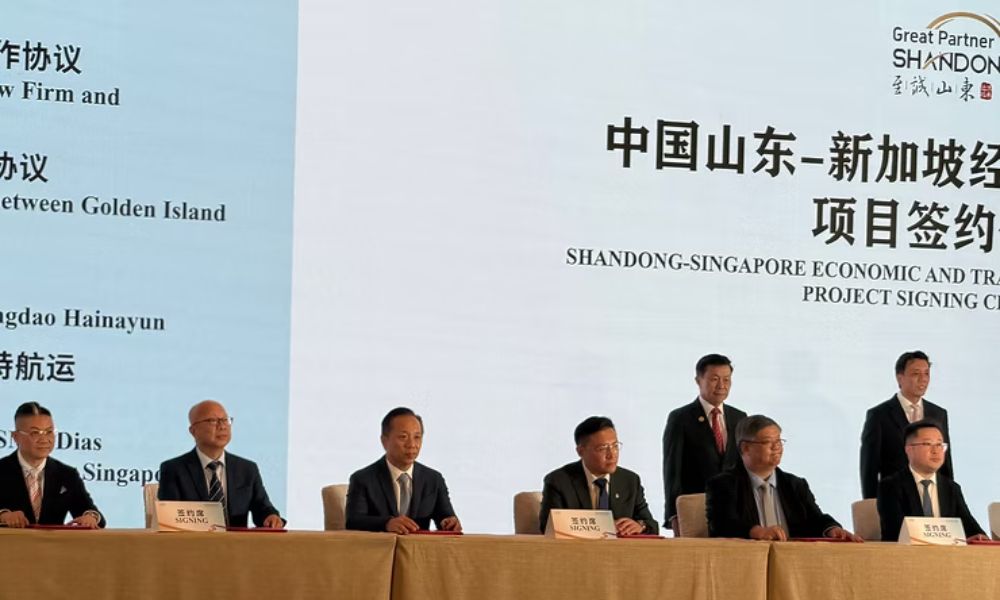
Singapore bunker supplier Golden Island Pte Ltd on Monday (21 September) said it has signed a strategic framework agreement with Qingdao Port International Co Ltd to collaborate on the supply of alternative marine fuels.

The agreement covers green methanol, green ammonia and bio-LNG, with cooperation spanning fuel production and transportation through to storage, sales and bunkering.

“By combining our MPA-licensed bunkering capabilities with Qingdao Port’s incredible logistics and strategic hub position, we are building something truly robust for the global shipping industry’s low-carbon future,” the company said in a statement. 

Qingdao Port International, which operates five major port areas in China, will bring its logistics network, storage facilities and customs clearance capabilities to the partnership.

Golden Island is licensed by the Maritime and Port Authority of Singapore (MPA) to conduct methanol bunkering and is ISCC EU-certified.

The companies are also engaging with container liners, bulk carriers, oil tankers and cruise ships regarding the adoption of alternative marine fuels.


Photo credit: Golden Island Pte Ltd
Published: 22 September, 2026

Continue Reading

Ammonia

HD HHI and HD KSOE secure ABS AiP for ammonia bunkering vessel design

ABS awarded approval in principle for the basic design of a 22,000 CBM bunkering vessel capable of supplying ammonia as marine fuel.
Admin

Published

on

By

HD HHI and HD KSOE secure ABS AiP for ammonia bunkering vessel

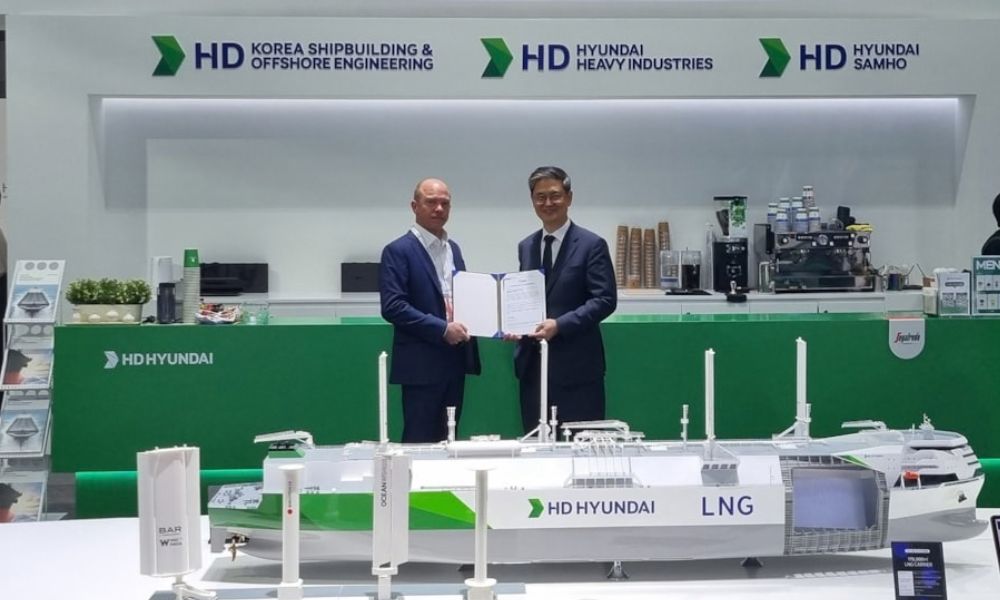
Classification society ABS on Monday (21 September) said it has awarded HD Hyundai Heavy Industries (HD HHI) and HD Korea Shipbuilding & Offshore Engineering (HD KSOE) approval in principle (AIP) for the basic design of a 22,000 CBM bunkering vessel capable of supplying ammonia as marine fuel.

The approval is the result of a joint development project initiated earlier this year. ABS reviewed the design’s general arrangement, machinery arrangement, ammonia cargo handling system and fuel supply system against applicable class and international requirements.

Gareth Burton, ABS Senior Vice President, Global Engineering, said: “Bunkering infrastructure is a critical step for any marine fuel to scale, and it has to be implemented with safety designed in from the start.

“This AIP reflects the industry’s need for fuel flexibility while advancing the safe bunkering of ammonia. ABS is proud to support HD HHI and HD KSOE as they develop technologies that expand fuel flexibility.”

Ryu Hong-Ryeul, Chief Technical Officer (CTO) of HD HHI, said: “As ammonia rapidly emerges as a viable low-carbon alternative fuel, demand for ammonia bunkering vessels is expected to grow in line with the increasing adoption of ammonia-fuelled ships. 

“This AIP marks a significant milestone toward the commercialisation of ammonia bunkering vessels.”

ABS and the HD Hyundai group have worked together across a range of technologies supporting ammonia as a marine fuel. Recent projects have included AIP for HD KSOE’s ammonia cargo handling and bunkering system and initial review for HD HHI’s machinery arrangement in engine room.


Photo credit: ABS
Published: 22 September, 2026

Continue Reading

Alternative Fuels

J-ENG completes land-based testing of hydrogen-fuelled marine engine

Engine will be installed on a 17,500 DWT multipurpose vessel to be built by Onomichi Dockyard for MOL and MOL Drybulk, with onboard demonstration testing scheduled to begin in April 2028.
Admin

Published

on

By

12 2

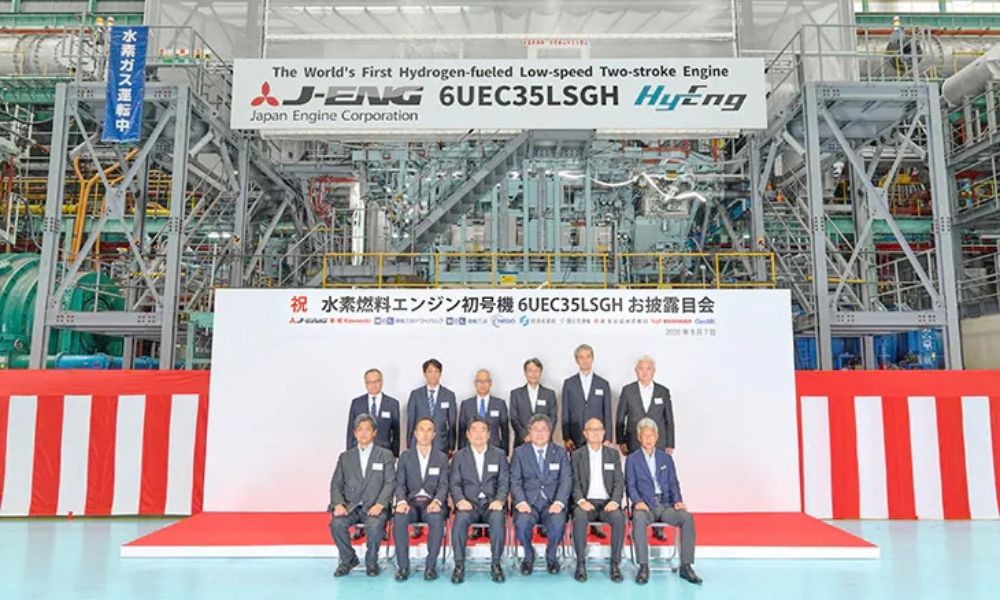
Japan Engine Corporation (J-ENG) on Friday (18 September) said it has completed land-based testing of the world’s first hydrogen-fuelled engine for large commercial vessels, the 6UEC35LSGH.

During factory testing, the engine achieved a hydrogen co-firing rate of at least 95%, reducing GHG emissions by more than 95% compared with conventional heavy-fuel-oil engines.

By adopting a high-pressure direct injection system, which injects fuel directly into the cylinder at high pressure, J-ENG said the engine achieves stable hydrogen combustion. 

Safety measures were also implemented, including a robust structure to prevent hydrogen leakage and double-walled piping for hydrogen supply lines. 

“Approval testing was conducted in the presence of ClassNK and was completed successfully,” the company said. 

The engine will be installed on a 17,500 DWT multipurpose vessel to be built by Onomichi Dockyard for Mitsui O.S.K. Lines and MOL Drybulk.

Hydrogen fuel will be supplied to the engine through a marine hydrogen fuel system, consisting of marine hydrogen fuel tanks and a fuel supply system, developed and manufactured by Kawasaki Heavy Industries.

In addition, Nippon Kaiji Kyokai (ClassNK) will conduct safety assessments throughout each stage of the engine’s development and the vessel’s design, construction and operation.

The vessel will then undergo sea trials before onboard demonstration testing begins in April 2028. 

Kawasaki will also develop and manufacture bunkering equipment for supplying liquefied hydrogen to vessels. 

“The demonstration will further evaluate the engine’s durability and performance under actual operating conditions,” J-ENG added.


Photo credit: J-ENG
Published: 22 September, 2026

Continue Reading

Trending