Connect with us
DNV Decarbonization Insight Series August 2026 - What maritime professionals should know about AI Training

Mass Flowmeter

MFM requirement takes effect in Rotterdam and Antwerp-Burges

Use of a Mass Flow Meter system on board bunker vessels became mandatory for the delivery of residual distillates and biofuels in the ports of Rotterdam and Antwerp-Bruges, from 1 January 2026.

Admin

Published

on

RESIZED EH dual mfm setup

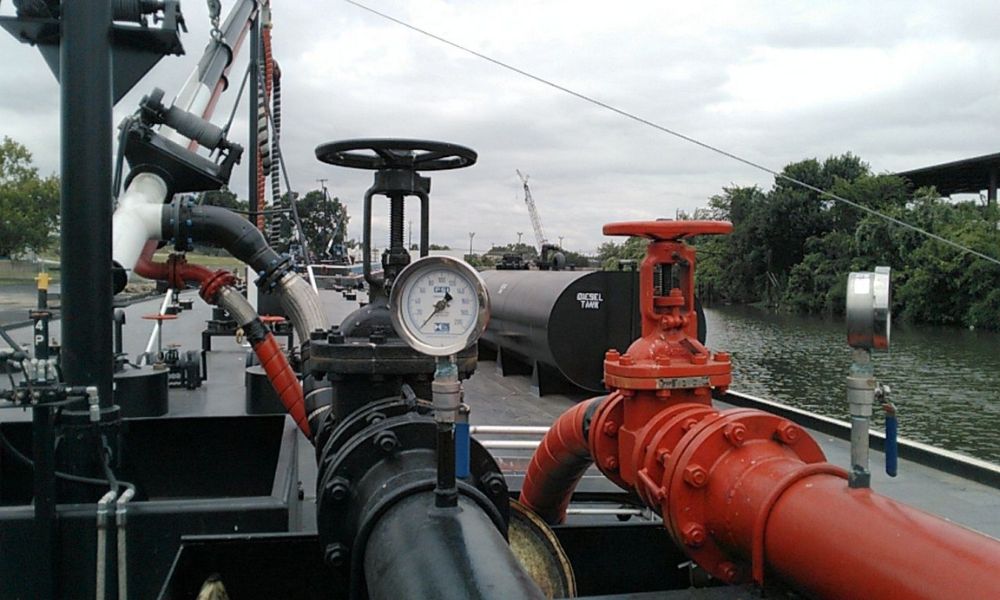
The use of a Mass Flow Meter (MFM) system on board bunker vessels became mandatory for the delivery of residual distillates and biofuels in the ports of Rotterdam and Antwerp-Bruges, from 1 January 2026.

The Port of Rotterdam, on its website, said the system measures precisely how much fuel is transferred from the bunker vessel to the sea-going vessel. 

“The aim is to make the bunker market in both ports more transparent, efficient and reliable,” it said. 

A bunker licence for residual fuels, distillates and biodiesel is mandatory for (owners of) bunker vessels supplying sea-going vessels, to ensure that such operations are conducted safely, correctly and in an environmentally responsible manner.

It added that all bunker activities must be reported and registered in advance via Portbase.

In 2023, the port announced the mandate, requiring bunker vessels in the two ports to have a certified system that indicates the exact amount of fuel they are delivering to seagoing vessels.

Note: A detailed explanation of the Mass Flow Meter process is available in the MFM manual and FAQ’s.

Related: MFM bunker measurement system to be mandatory in Antwerp-Bruges and Rotterdam
Related: Rotterdam keen to improve its bunkering sector, is hot on the heels of Singapore’s MFM mandatory adoption
Related: IBIA welcomes news of Rotterdam’s plans to mandate MFMs
Related: CE Delft releases report on bunker fuels supplied to Port of Rotterdam and Port of Antwerp-Bruges


Photo credit: Manifold Times
Published: 7 January, 2026

Continue Reading

Interview

Exclusive: Caroline Yang takes helm on future of IBIA Asia

The newly appointed Chair of IBIA’s Regional Board – Asia, shares her plans to strengthen bunkering standards while promoting transparency and industry collaboration across key Asian maritime hubs.

Admin

Published

on

By

Exclusive: Caroline Yang takes helm on future of IBIA Asia

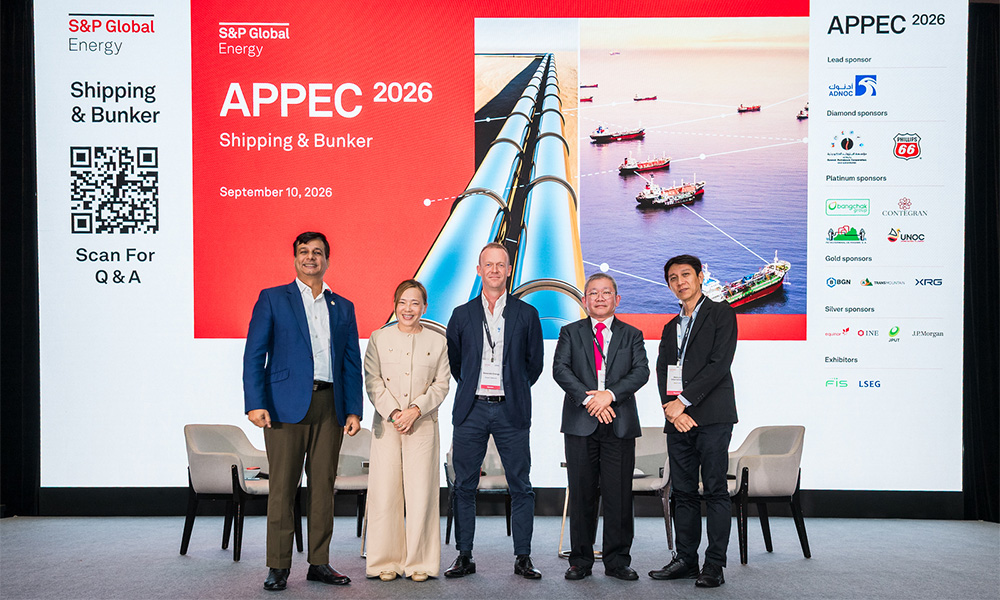
Caroline Yang, CEO of Hong Lam Marine Pte Ltd, outlines her plans for IBIA Asia in her first interview with Manifold Times since becoming Chair of the Regional Board – Asia:

MT: Why is IBIA important to the bunkering market in Asia?

IBIA Asia is amongst five regional boards operating under the umbrella of London-based IBIA Global. Its presence in Asia is vital because the region, excluding the Middle East, accounts for more than 50% of global bunkering volume.

While Singapore continues to maintain its strong lead as the world’s busiest bunkering port with almost 56 million mt of marine fuel delivered in 2025, several ports in China are showing to be strong bunkering ports as well; these developments take place on the back of a forecast for China to be amongst the leading suppliers of green fuels such as methanol.

Based on this alone, IBIA Asia has to play an important role in raising and addressing issues of suppliers and shipowners and the other parties in the regional bunkering eco-system.

MT: What is the overall state of bunkering standards at major Asian ports and how can IBIA elevate this?

Singapore is the clear leader in standards, acting as a “flag bearer” with established protocols including SS 600 for bunkering, SS 648 for bunker mass flow metering, SS 524 for quality management of bunker supply chain, TR 56 for LNG bunkering, and TR 80 for meter verification using master MFM.

While other Asian ports are adopting mass flow meters – a positive step – IBIA Asia’s role is to disseminate these best practices while maintaining deep respect for local operational realities and regulatory environments.

MT: As Chair of the Regional Board – Asia, what are your plans to make this happen? Are there any topics you will be focusing on?

The IBIA Asia regional board of 10 members from comes from a diverse group of suppliers, shipowners, bunker buyers, fuels testers and bunker tanker owners. Backed by a strong secretariat, we are committed to move the needle for bunkering in Asia.

Our initial strategy is outreach-driven, progressing beyond a Singapore-centric approach. For starters, the board will be concentrating on Hong Kong, Zhoushan, and Shanghai, with potential expansion to Japan and South Korea.

The core objective is to promote the quality, transparency, and integrity of bunkers lifted in Asia. This includes building on existing MOUs such as the collaboration with Hong Kong Shipowners Association (HKSOA) to explore alternative bunker fuels, and participation in regional maritime week programmes.

MT: Do you expect to encounter any challenges? What do you think are the solutions?

Challenges, without a doubt; these include macro-level standards and topical quality issues, such as those highlighted in a recent FOBAS report.

We are aware most solutions will not have instant results, but produce short-term, mid-term and long-term responses.

The solution lies in structured communication and feedback loops involving industry, regulators, and experts. Success requires an altruistic approach where stakeholders prioritise the health of the bunkering ecosystem to achieve win-win outcomes, even at the compromise of individual sectors.

MT: Is participation of local/regional IBIA members included within your plan? How will they be involved?

Member participation is the foundation of an association’s strength. The plan involves active outreach – meeting members where they operate and integrating them into meetings to ensure the board’s positions reflect representative industry views. We must push out credible, strong messages to encourage active engagement. If there is anyone in the maritime bunkering in these areas and reading this interview, reach out to us so we can start our conversations!

The Secretariat and some board members have scheduled to visit and attend bunkering events in Hong Kong and China. In November 2026, IBIA will participate in the Hong Kong Maritime Week by organising a one-day conference. We hope to be also participating in the Shanghai Pudong Maritime Conference and the 9th International Petroleum and Natural Gas Enterprises Conference (IPEC 2026), also known as the “Zhoushan Bunker Oil conference”, in late October.

MT: How will previous experience gained at SSA, ICS, MPA, SMF, and Hong Lam Marine contribute to your role at IBIA?

As CEO of Hong Lam Marine, our bunker tankers supply about 10% of bunkering volume in Singapore, so we are an involved and relevant stakeholder. My experiences in the above-mentioned organisations have taught me how to crystallise and articulate important issues, engage effectively with diverse stakeholders, and leverage on pre-existing professional connections to engage more effectively for IBIA Asia.

Related: IBIA announces Caroline Yang as new Regional Board Chair for Asia
Related: IBIA and Hong Kong Shipowners Association to collaborate on alternative bunker fuels
Related: FOBAS report warns of growing operational risks from ISO-compliant bunker fuels


Photo credit: Manifold Times
Published: 6 August 2026

Continue Reading

Technology

Malaysia: Maharani Freeport to implement MFM and e-BDN technologies for enhanced bunkering transparency

Initiatives reflect the Freeport’s commitment to delivering transparency, operational integrity and international best practices across its bunkering ecosystem, says MEG spokesperson.

Admin

Published

on

By

MEG 1145 cropped MT

Maharani Freeport, a National Project officially launched by His Majesty Sultan Ibrahim, King of Malaysia, in November 2025, will be introducing mass flowmeter (MFM) and electronic bunker delivery note (e-BDN) technologies to its bunkering operations, learns Manifold Times.

These strategic initiatives underscore the port’s commitment in establishing a highly transparent, efficient and trustworthy bunkering environment, aligned with global best practices and addressing critical industry demands, according to a Maharani Energy Gateway (MEG) spokesperson.

MEG is the Master Developer of Maharani Freeport and seeks to position the Freeport as a strategic nexus for shipment, storage and trading operations on a global scale. MEG Synergy is the trading division and a wholly owned entity of MEG; it seeks to position Maharani Freeport as a strategic nexus for shipment, storage, and trading operations on a global scale.

As part of its long-term bunkering strategy, the Freeport is currently in the process of acquiring bunker vessels of various sizes to support marine fuel deliveries and accommodate the evolving requirements of regional and international customers. These vessels will be equipped with MFM technology to ensure accurate, transparent and efficient fuel transfer operations.

Including bunkering and ship-to-ship (STS) trading operations from its High Sulphur Fuel Oil (HSFO) Floating Storage Unit (FSU), MEG Synergy already oversees a healthy volume of Bunker cargo deliveries to regional players each month.

MFM for Trust, Transparency and Traceability

MEG highlighted the custody transfer of bunker fuels at the Freeport will be handled by MFM-equipped bunker tankers.

“The adoption of MFM technology to support bunkering operations is a direct response to persistent industry challenges such as quantity discrepancies and delivery disputes,” explained the spokesperson.

“By equipping our bunker vessels with certified mass flowmeters, we aim to ensure precise and verifiable fuel delivery measurements.

“This initiative is pivotal in fostering trust among customers and strengthening the Freeport’s reputation as a professionally managed zone where businesses can operate with confidence. The overarching goal is to create a secure and well-governed environment for commercial activities, reducing operational risks and uncertainties while supporting efficient and transparent trade.”

e-BDN to Digitalise Documentation Workflow

The implementation of electronic bunker delivery notes (e-BDN), together with MFM technology, further aligns with the Freeport’s focus on creating comprehensive digital custody transfer records and robust data retention systems, added the spokesperson.

This digital approach, integrated with MFM technology, will streamline operational workflows, reduce administrative burdens and provide an immutable record of transactions to enhance transparency, minimising potential friction and expediting dispute resolution

MEG emphasised that the Freeport’s commitment extends beyond technological enhancements to encompass a comprehensive governance framework.

The port aims to adhere to stringent international standards, including those established by the International Maritime Organization (IMO), while offering dispute resolution mechanisms under the International Chamber of Commerce (ICC) to ensure the swift and fair handling of disagreements.

This holistic approach to operational integrity and governance is designed to address perceived transparency gaps, positioning the Freeport as a reliable and commercially attractive hub for the maritime and commodities sectors.

Note: For enquiries in respect of Maharani Freeport, readers may reach out to:

[email protected]

Related: Interview: Maharani Energy Gateway – Forging a new energy nexus in the Straits of Malacca
Related: New Johor bunkering hub: Maharani debuts as Malaysia’s first duty-exempted energy freeport


Photo credit: Maharani Energy Gateway
Published: 15 July 2026

Continue Reading

Mass Flowmeter

NorthStandard: No switching off when bunker mass flow meters are switched on

While Mass Flow Meters have significantly improved transparency and accuracy in bunker deliveries, experience shows that they are not immune to misuse, says Alvin Forster.

Admin

Published

on

By

NorthStandard: No switching off when bunker mass flow meters are switched on

While Mass Flow Meters have significantly improved transparency and accuracy in bunker deliveries, experience shows that they are not immune to misuse, writes Alvin Forster, Senior Loss Prevention Executive – Americas & UK of global marine insurer NorthStandard:

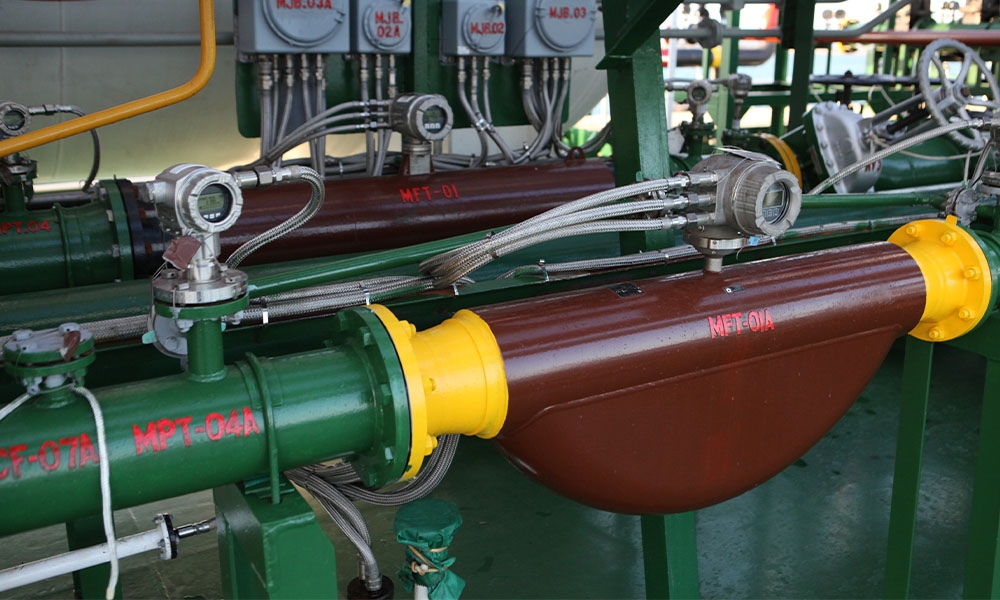
Bunker quantity disputes remain one of the most frequent and contentious causes of claims and charterparty disputes. Traditional measurement methods based on tank soundings, ullage measurements and calibration/sounding tables have long been criticised for susceptibility to error and manipulation. In response, some of the major bunkering ports have mandated the use of Mass Flow Meters (MFMs) as the primary means of measuring the quantity transferred.

MFMs have significantly improved transparency and accuracy, but experience has shown that they are not immune to misuse or deliberate manipulation. Recent enforcement actions, most notably in Singapore, demonstrate that unscrupulous suppliers may attempt to defeat even sophisticated measurement systems.

Singapore pioneered the mandatory use of MFMs. Since 1 January 2017, MFMs have been compulsory for the delivery of marine fuel oil in the Port of Singapore, with the delivered quantity on the Bunker Delivery Note (BDN) derived exclusively from the MFM totaliser.

The regime has continued to evolve. From 1 April 2025, Singapore mandates compliance with SS 648:2024, which tightens requirements around data security, system integrity, piping arrangements, certification, and the use of data loggers and edge devices, reflecting lessons learned from earlier enforcement cases.

Mass appeal for MFMs

From 1 January 2026, MFMs have also been made mandatory on bunker vessels delivering fuel oil, diesel and biofuels at the ports of Rotterdam and Antwerp‑Bruges. The systems must be certified and broadly aligned with ISO 22192, mirroring the Singapore model. The use of MFMs is mandatory across port terminals in Türkiye and at the Port of Ceuta in the Gibraltar Strait, while they are also used in Gibraltar by yacht bunker supplier CEPSA, and others.    

These developments signal a significant shift in the European bunker market, which has traditionally been reliant on shore tank measurements and barge gauging.

Elsewhere, Sohar Port and Freezone have introduced measures that effectively mandate the use of MFMs for bunker supplies. Hong Kong is also looking to introduce regulations that mandate their use, but only for methanol.

Further afield, an increasing number of suppliers are adopting the use of MFMs in ports and hubs where there is no mandate.

Locations where MFMs are currently used on a non-mandatory basis include Fujairah, Zhoushan, Busan, Houston and Prince Rupert (Canada).

Manipulation against the flow

Despite the broadening appeal, and the tamper‑resistant design work that has gone into MFM solutions, there have been instances that show they can still be manipulated through physical or operational interference.

The most well‑known example concerns the bunker tankers Southernpec 6 and Southernpec 7 in Singapore. Between 2016 and 2019, industrial‑strength magnets were placed on the MFM sensors to distort measurement signals, causing the meters to record more fuel than was actually delivered. The fraud resulted in buyers being cheated of over US$300,000 worth of marine fuel oil.

Another recurring manipulation method involves irregular piping arrangements between the MFM and the ship’s manifold. Investigations in Singapore revealed cases where bunker barges had connections allowing fuel to be siphoned back to barge tanks during delivery, inflating MFM readings without the receiving vessel receiving the corresponding quantity.

Such arrangements directly contravene certification requirements but may be difficult for ship crews to detect without detailed inspection.

MFMs have defined operational limits, calibrated for liquid at constant flow. When removing the final amounts from a tank, flow rates may fall outside these parameters, and risk producing unreliable readings.

Guidance for Shipowners and Operators

Despite the increased use of MFMs and the introduction of mandates in some ports, the crew of the receiving vessel should remain vigilant with respect to the way these systems can be manipulated and take measures to protect their position. As a matter of routine, crew should:

  • Always take ship’s bunker tank soundings and witness barge measurements before and after bunkering, even where MFM figures are contractually binding, and retain records.
  • Inspect visible sections of MFM systems, including seals, cabling, and piping.
  • Request to see the MFM bunker system certificate and confirm the unit’s serial number.
  • Engage reputable, experienced bunker surveyors.  
  • Issue letters of protest promptly where discrepancies arise between ship calculations and MFM figures, even if suppliers refuse to countersign.
  • Ensure crews are familiar with bunkering procedures and aware of common manipulation indicators.

Crew should also be aware of the limitations in accuracy when comparing tank measurements with MFM readings. Even when both measurement technologies are accurate, differences can still exist between them.


Photo credit: NorthStandard
Published: 3 July, 2026

Continue Reading

Trending