The International Maritime Organization (IMO), on Wednesday (1 December) said it has recognised the need to strengthen the ambition of the Initial IMO greenhouse gas (GHG) Strategy during its revision process and agreed to initiate the revision of its GHG strategy.
IMO’s Marine Environment Protection Committee (MEPC), meeting virtually for its 77th session between, 22-26 November 2021, also adopted a resolution on voluntary use of cleaner fuels in the Arctic, to reduce black carbon emissions.
In other work, the MEPC adopted a strategy to address marine plastic litter from ships; adopted revised guidelines for exhaust gas cleaning systems (EGCS) and agreed the scope of work on discharge water of EGCS; and considered matters related to the Ballast Water Management Convention.
The following is a summary of developments from the recent MEPC 77:
Tackling climate change – cutting GHG emissions from ships
The MEPC agreed to initiate the revision of the Initial IMO Strategy on Reduction of GHG emissions from ships, recognizing the need to strengthen the ambition during the revision process. The move comes in the wake of the United Nations Climate Change Conference (COP 26), held in Glasgow, United Kingdom, (1-12 November) and in view of the urgency for all sectors to accelerate their efforts to reduce GHG emissions.
A final draft Revised IMO GHG Strategy would be considered by MEPC 80 (scheduled to meet in spring 2023), with a view to adoption.
The Initial IMO Strategy on Reduction of GHG Emissions from Shipping was adopted in 2018. (see https://www.imo.org/en/MediaCentre/HotTopics/Pages/Cutting-GHG-emissions.aspx ) .
The Committee invited interested Member States and international organizations to work together and to submit concrete proposals for a revised IMO GHG Strategy to MEPC 78 (June 2022) for consideration.
Closing the session, IMO Secretary-General Kitack Lim said: “Strengthening the ambition of the Initial IMO GHG Strategy during its revision will be crucial. Our collective actions must show our dedication to contribute towards the global issue, climate change.”
Discussion of proposals to further reduce GHG emissions from shipping
A number of proposals for further mid-term GHG reduction measures, including market-based measures, to address GHG emissions from shipping, as well as a proposal to establish an International Maritime Research and Development Board, were discussed during the session.
Following presentation of a number of proposals in the Intersessional Working Group on Reduction of GHG Emissions from Ships (ISWG GHG 10).
Following an constructive discussion, the Committee referred the proposals and relevant documents, including associated impact assessments, to the next sessions ISWG-GHG for further assessment in accordance with Phase I of the Organization’s Work plan on the development of mid-term measures.
The terms of reference for the next sessions of the ISWG-GHG were agreed. ISWG-GHG 11 is set to meet 14 to 18 March 2022 and ISWG-GHG 12, 16 to 20 May 2022
Impact assessment of GHG measures
The Initial IMO GHG strategy recognizes that the impacts on States of a proposed measure should be assessed and taken into account as appropriate, with particular attention paid to the needs of developing countries, especially small island developing States (SIDS) and least developed countries (LDCs).
The Committee agreed to establish an Ad-hoc Expert Workshop on Impact Assessments to consider concrete proposals for improving the impact assessment procedure and provide recommendations as part of the lessons-learned exercise, the outcome of which will be submitted to ISWG-GHG 11. The workshop is set to be held 8 -9 March 2022.
GHG TC Trust Fund
New pledges were made by Governments to support the work of the Organization in supporting the implementation of the Initial GHG Strategy in developing countries, in particular SIDS and LDCs, through technical cooperation and capacity building through the IMO GHG TC Trust Fund.
These pledges will enhance the Organization’s work on energy efficiency technology cooperation and demonstration ensuring nobody is left behind in implementing the Initial Strategy.
Correspondence Group on Carbon Intensity Reduction
A Correspondence Group on Carbon Intensity Reduction was established, to finalize and update guidelines. These relate, in particular, to the short-term measures adopted in 2021, consisting of technical (EEXI) and operational (CII and its rating) measures. These mandatory rules are expected to enter into force in November 2022, aiming at 40% reduction of carbon intensity by 2030. (Read more here.)
Meanwhile, the MEPC approved the MEPC circular on 2021 Guidance on treatment of innovative energy efficiency technologies for calculation and verification of the attained EEDI and EEXI, particularly accommodating the use of wind propulsion as an alternative (complimentary) source of propulsion.
Black carbon in the Arctic – resolution adopted
The MEPC adopted a resolution which urges Member States and ship operators to voluntarily use distillate or other cleaner alternative fuels or methods of propulsion that are safe for ships and could contribute to the reduction of Black Carbon emissions from ships when operating in or near the Arctic.
The resolution encourages Member States to commence addressing the threat to the Arctic from Black Carbon emissions, and report on measures and best practices to reduce Black Carbon emissions from shipping
The Committee further agreed the terms of reference for the PPR Sub-Committee’s future work on reduction of the impact on the Arctic of Black Carbon emissions from international shipping.
Revised Guidelines for exhaust gas cleaning systems adopted
The MEPC adopted 2021 Guidelines for exhaust gas cleaning systems, to update the last version adopted in 2015 (see PPR 7).
The Committee approved an MEPC circular with updated guidance on indication of ongoing compliance in the case of the failure of a single monitoring instrument, and recommended actions to take if the exhaust gas cleaning system (EGCS) fails to meet the provisions of the EGCS Guidelines.
Evaluation and harmonization of rules and guidance on the discharge of discharge water from EGCS
The Committee agreed the scope of work for the PPR Sub-Committee relating to evaluation and harmonization of rules and guidance on EGCS discharge water into the aquatic environment, including the conditions and areas for discharge. The work will cover: risk assessment; impact assessment; delivery of EGCS residues; regulatory matters; and developing a database of substances identified in EGCS discharge water.
The PPR Sub-Committee is set to meet for its 9th session in April 2022.
Strategy to address marine plastic litter from ships adopted
The MEPC, in order to enhance implementation of IMO’s mandatory international regulations, adopted the Strategy to address marine plastic litter from ships, which sets out the ambitions to reduce marine plastic litter generated from, and retrieved by, fishing vessels; reduce shipping’s contribution to marine plastic litter; and improve the effectiveness of port reception and facilities and treatment in reducing marine plastic litter.
The Strategy also aims to achieve further outcomes, including: enhanced public awareness, education and seafarer training; improved understanding of the contribution of ships to marine plastic litter; improved understanding of the regulatory framework associated with marine plastic litter from ships; strengthened international cooperation; and targeted technical cooperation and capacity-building.
The adoption of the Strategy follows the adoption, in 2018, of the IMO Action Plan to address marine litter (read more here: https://www.imo.org/en/MediaCentre/HotTopics/Pages/marinelitter-default.aspx)
IMO, in cooperation with the Food and Agriculture Organization of the United Nations (FAO), is implementing the GloLitter Partnerships Project which aims to help shipping and fisheries move to a low-plastics future. (Read more here: https://wwwcdn.imo.org/localresources/en/OurWork/PartnershipsProjects/Documents/DPP-Factsheets/DPP%20one-page%20fact%20sheets_(25-10-21)_FINAL_ONLINE_GLOLITTER.pdf )
Marking of fishing gear
The Committee considered proposals related to making the marking of fishing gear mandatory. It agreed to refer relevant documents to PPR 9 for further discussion.
Garbage Record Book
The MEPC considered a proposal to extend the requirement for a Garbage Record Book to ships less than 400 GT and equal to or greater than 100 GT. It agreed to instruct the PPR Sub-Committee to prepare draft amendments to MARPOL Annex V.
Plastic pollution by plastic pellets
A document submitted by Sri Lanka, reporting on the May 2021 MV X-Press Pearl incident, during which 11,000 tonnes of plastic pellets were spilled off the shore of Colombo, Sri Lanka, was referred by the Committee to the PPR Sub-committee for further discussion.
Harmful aquatic organisms in ballast water
The MEPC was updated on the experience-building phase associated with the Ballast Water Management Convention (BWM), which has been in force since 2017 and aims to prevent the spread of invasive aquatic species in ballast water. The Committee was informed that there is now available data from 35 Member States and seven other stakeholders. corresponding to approximately 15,000 ships.
This is currently being analysed by the World Maritime University (WMU) and a full data analysis report will be submitted to MEPC 78.
The MEPC approved a unified interpretation of the Date to be used for determining the implementation of mandatory commissioning testing of individual ballast water management systems in accordance with resolution MEPC.325(75). The MEPC also established fundamental elements to be taken into account for the further development of guidance on measures that may be taken when ballast water management systems encounter challenging water quality on uptake.
Annex II draft amendments on categorization of noxious liquid substances approved
The MEPC approved draft amendments to appendix I (Guidelines for the categorization of noxious liquid substances) to MARPOL Annex II that are consequential to the revised GESAMP Hazard Evaluation Procedure, which was approved by GESAMP as part of the GESAMP Hazard Evaluation Procedure for Chemicals Carried by Ships, 2019 (GESAMP Reports and Studies No.102). The draft amendments will be circulated, with a view to adoption at MEPC 78.
Next MEPC sessions
MEPC 78 has been tentatively scheduled to take place from 6 to 10 June 2022 and MEPC 79 from 12 to 16 December 2022.
If the Committee session will be held in person, the Secretariat delegations at least 90 days prior to the session, depending on the COVID-19 pandemic situation.
Election of chair
Mr. Hideaki Saito (Japan) was re-elected as chair for 2022. Mr. Harry Conway (Liberia) was also re-elected as the Vice-Chair.
Related: ‘Missed opportunity’ to decarbonise shipping at MEPC 77, says ICS
Related: Clean Shipping Coalition: UN shipping agency climate talks again held back by handful of blockers
Related: MEPC 77: For climate progress, shipping needs action from IMO member states on concrete initiatives
Related: INTERCARGO supports IMO’s MEPC 77 shipping decarbonisation goals by 2050
Related: INTERCARGO: Global challenges require global solutions to achieve zero-emission shipping by 2050
Related: Royal Belgian Shipowners’ Association: MEPC 77 needs to deliver concrete actions
Related: IBIA: ECGS guidelines and discharge policy on MEPC 77 agenda
Related: IBIA: MEPC 77 to discuss mandatory flashpoint on the BDN
Related: MEPC 77: Governments to decide on ICS USD 5 billion R&D fund to accelerate decarbonisation goals
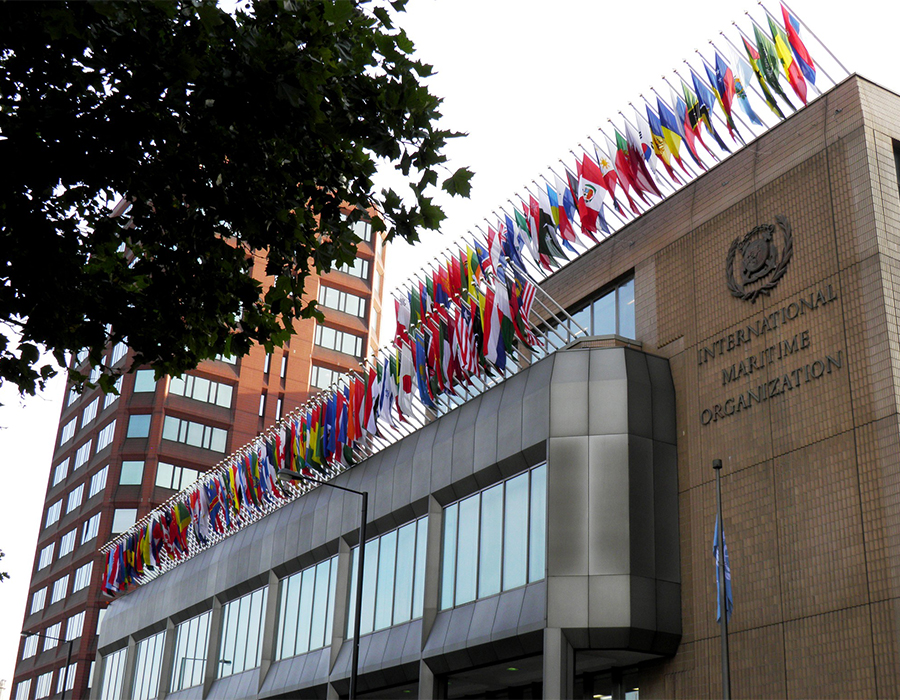
Photo credit and source: International Maritime Organization
Published: 2 December, 2021











 Decarbonisation2 weeks ago