Connect with us

Methanol

Mabanaft plans to convert four tanks at Hamburg terminal for methanol storage by 2027

Firm’s aim is to store methanol at Blumensand and facilitate import of low-carbon methanol to northern Germany as it expects demand for methanol to grow in shipping and other transport sectors.

Admin

Published

on

Mabanaft plans to convert four tanks at Hamburg terminal for methanol storage by 2027

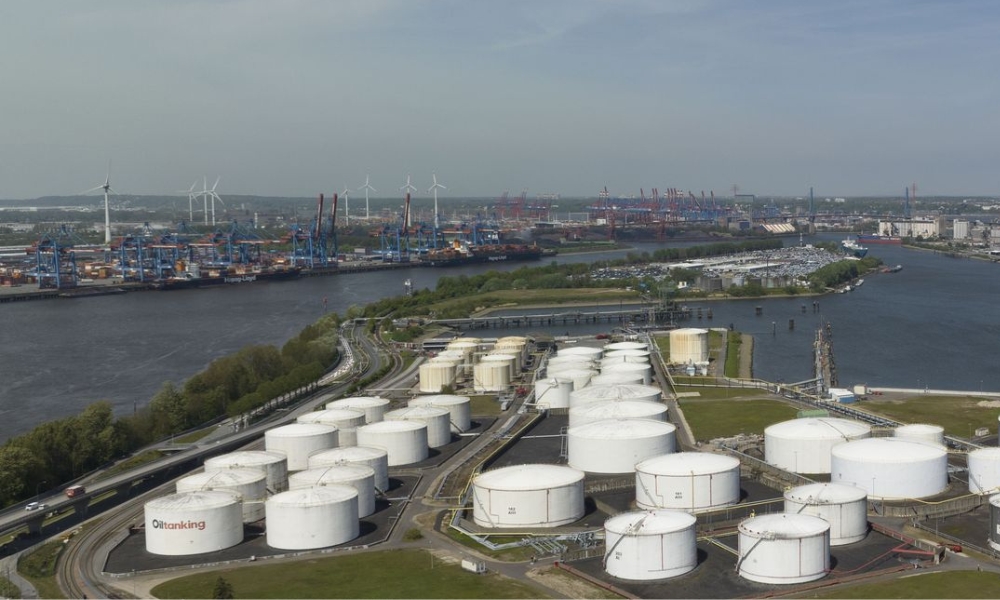
Energy company Mabanaft on Wednesday (22 January) said it plans to convert four of its tanks at the Blumensand tank terminal in the Port of Hamburg over the next two years. 

The company’s aim is to enable the storage of methanol at Blumensand and facilitate the import of low-carbon methanol to northern Germany. 

By investing in methanol storage capabilities, Mabanaft wants to support its customers’ transition towards greener alternatives. Mabanaft expects demand to grow in the future, both in shipping and other transport sectors, as well as in the chemical industry.

While the tanks are planned to be retrofitted from mid-2025, the methanol storage is scheduled to start in 2027. Mabanaft intends to import the methanol itself and then store and distribute it in Germany and possibly other locations. 

By deciding to apply for the necessary approvals in January this year, the company is willing to take on this multi-million-euro investment. The project requires the successful completion of an approval process with the Hamburg Authority of Environment, Climate, Energy and Agriculture (Behörde für Umwelt, Klima, Energie und Agrarwirtschaft, BUKEA).

The four tanks that would be converted have a total capacity of approximately 20,000 cubic metres. Subject to the necessary approvals their conversion is planned to be carried out in two stages: the first two tanks by mid of 2026 and the further tanks in 2027. 

Mabanaft is working with both existing and new customers to develop solutions for decarbonising their fuel needs.

“CO2-reduced methanol can be produced in several ways: through e-methanol synthesis using renewable electricity and captured CO2, through biomethanol production from biomass, or through the production of so-called blue methanol from natural gas with carbon capture and storage,” said Joost Vespermann, Business Developer in Mabanaft’s Sustainable Fuels division. 

“All these types of low-carbon methanol can be used in the future, depending on regional legislation and customer preferences.”

Shipping as the first market for methanol 

“In the shipping industry, there is no single solution for sustainable fuels,” said Oleksandr Siromakha, Head of Sustainable Fuels at Mabanaft. 

“That’s why we are committed to offering our customers a diverse range of options tailored to their needs—both now and in the future. Alongside conventional fuels, we currently offer bio-blends and want to provide more tailored solutions such as hydrogen, ammonia, and methanol.”

“Our goal is to simplify the transition for our customers by making methanol and other alternative fuels more accessible. The challenges of decarbonisation are great. We are here to support our customers every step of the way.”

In Europe in particular, Mabanaft is helping cruise lines and other players in the shipping industry to use methanol. In January 2024, Mabanaft signed a Memorandum of Understanding (MoU) with cruise operator TUI Cruises to supply green methanol bunker fuel in the future.

In addition to the marine sector, the company intends to offer methanol to other areas of the transportation industry, such as a gasoline additive, as well as to the chemical industry. 

Related: Mabanaft to supply TUI Cruises with green methanol bunker fuel


Photo credit: Mabanaft
Published: 23 January, 2025

Continue Reading

Methanol

Western Baltic Engineering unveils green methanol bunkering vessel design for Klaipėda

Designed for flexible operations in shallow waters and local bunkering routes, the concept features an 800-metric-tonne green methanol capacity and the potential to supply up to 250,000 mt annually.
Admin

Published

on

By

Western Baltic Engineering unveils green methanol bunkering vessel design for Klaipėda

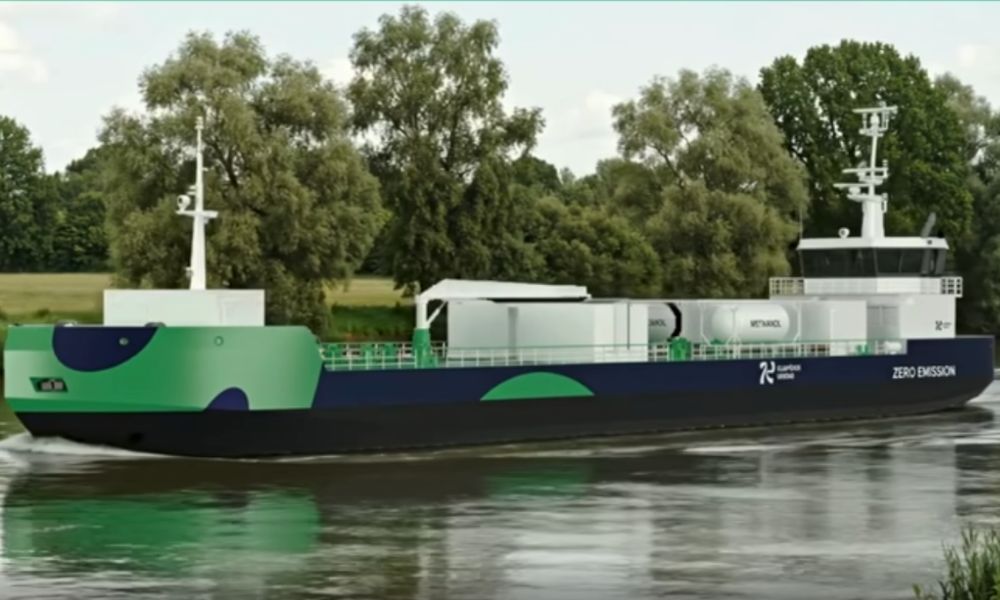
Ship design and engineering service provider Western Baltic Engineering on Thursday (16 July) showcased its latest concept design for a green methanol bunkering vessel, developed for the operational needs of the Port of Klaipėda.

Designed for flexible operations in shallow waters and local bunkering routes, the concept features an 800-metric-tonne green methanol capacity and the potential to supply up to 250,000 metric tonnes (mt) annually. 

“It is Western Baltic Engineering’s first concept dedicated exclusively to green methanol bunkering, expanding our portfolio of alternative-fuel vessel solutions,” the company said in a social media post.

“Building on our experience in methanol-ready vessel design, it reflects our continued focus on enabling the industry’s transition to cleaner fuels.”

“As the maritime sector evolves, engineering companies have a responsibility not only to respond to market needs but also to anticipate future challenges,” said Marius Arkusauskas, Director at Western Baltic Engineering.

“By exploring emerging technologies and alternative fuel applications, we help our partners prepare for the next generation of maritime operations while contributing to a more sustainable future.”


Photo credit: Western Baltic Engineering
Published: 20 July, 2026

Continue Reading

Methanol

China launches methanol shipping supply chain alliance to accelerate green transition

Marine fuel suppliers in the alliance include Sinopec Fuel Oil Sales, China Marine Bunker (PetroChina), SIPG Energy (Shanghai), and Shenzhen Port Energy Development.
Admin

Published

on

By

China Flag

China Waterborne Transport Research Institute under the Ministry of Transport and China Transport News recently jointly launched a Methanol Fuel Shipping Supply Chain Innovation Alliance with 20 organisations spanning the shipping, port, energy, equipment, research and industry association sectors.

The alliance was officially announced during the main event of China Maritime Day 2026 on 11 July, where members also released a joint initiative to develop a collaborative methanol-fuelled shipping supply chain.

The alliance aims to implement China’s national strategy for green economic transformation and support the Ministry of Transport’s “One Network, Four Modernisations” initiative by building a safe, efficient, economical and reliable methanol marine fuel supply chain

Under the joint initiative, alliance members pledged to align with China’s national decarbonisation strategy by promoting methanol as a key pathway for the shipping sector’s green transition and optimising the industry’s energy mix.

The members also pledged to strengthen collaboration across the supply chain to improve coordination between bunker fuel production, transportation and end users while advancing technological innovation.

Lastly, the alliance will support the development of policies, planning and technical standards, promote resource sharing and joint research, and accelerate the large-scale adoption of methanol as a marine fuel.

The alliance brings together companies and organisations representing the entire methanol shipping supply chain.

Members include shipping and port members such as China Changjiang National Shipping (Group) Corporation, COSCO Shipping Bulk Co., Ltd., Shandong Port Group, and Wuhan Chuangxin Jianghai Shipping Co., Ltd.

Energy companies in the alliance include Sinopec Chemical Commercial Holding Company Limited and Methanex Corporation.

Marine fuel suppliers including Sinopec Fuel Oil Sales, China Marine Bunker (PetroChina), SIPG Energy (Shanghai) Co Ltd and Shenzhen Port Energy Development Co Ltd are also part of the alliance. 

Equipment manufacturers in the alliance are CSSC 711th Research Institute, CSSC Power (Group) Corporation Ltd and Chongqing Hongjiang Machinery Co Ltd.

Research, media and industry organisations participating in the alliance include the China Waterborne Transport Research Institute, China Transport News, and the Methanol Institute.

The Methanol Institute said methanol is moving beyond individual projects towards coordinated action across the entire value chain. 

“And China continues to play a leading role in advancing methanol as a marine fuel,” it said in a social media post.  

“We’re proud to work alongside our fellow alliance members to help strengthen the methanol supply chain and support the continued growth of methanol as a marine fuel.”


Photo credit: David Yu from Pixabay
Published: 17 July, 2026

Continue Reading

Methanol

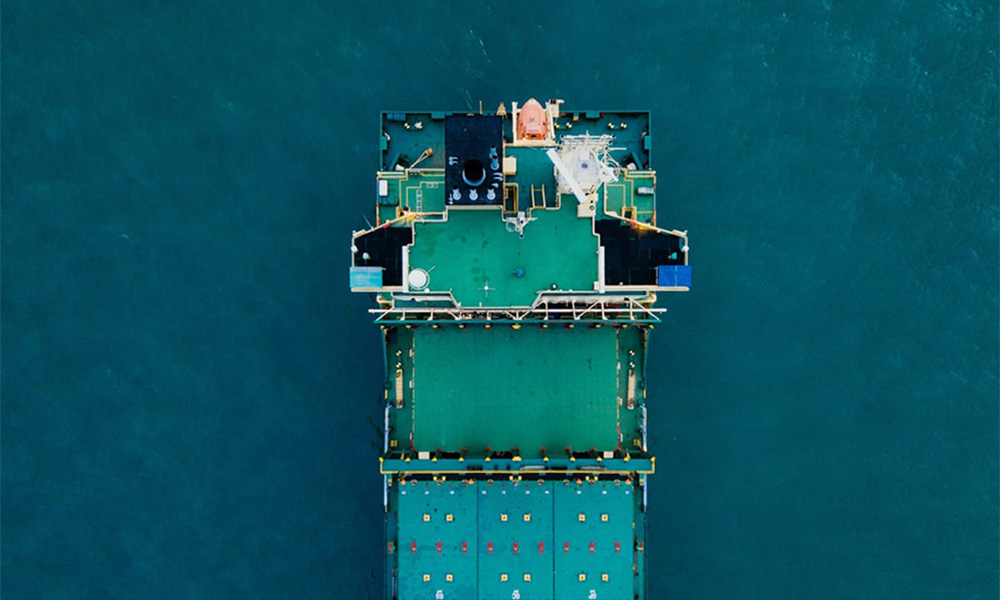
MTF releases new safety guidelines for methanol-fuelled ships

Recognising that methanol as a marine fuel remains at an early stage of adoption, the guidelines place particular emphasis on risk-based decision-making, continuous improvement and organisational agility.
Admin

Published

on

By

CHUTTERSNAP MT

The Maritime Technologies Forum (MTF) recently announced the publication of new guidelines to support companies in developing new Safety Management Systems (SMS) and strengthening existing SMS for ships using methanol as marine fuel.

As the maritime industry accelerates its decarbonisation efforts, low-carbon methanol has emerged as one of the most scalable alternative fuel options. 

Its liquid state under ambient conditions, compatibility with existing fuel infrastructure, and increasing industry adoption make methanol an attractive near-term solution. However, its toxicity, low flashpoint and invisible vapour and flame characteristics introduce new safety challenges for the maritime industry that require enhanced procedural controls and risk management measures for safe operations.

“Developed collaboratively by MTF members and industry stakeholders with expertise in methanol fuel technologies and the International Safety Management (ISM) Code, the guidelines provide methanol-specific recommendations across all functional areas of an SMS,” MTF said in a statement. 

Recognising that methanol as a marine fuel remains at an early stage of adoption, the guidelines place particular emphasis on risk-based decision-making, continuous improvement and organisational agility. 

The guidelines emphasised the importance of learning from hazardous occurrences, near-misses and accidents involving methanol fuel.

The report also highlighted the importance of developing versatile SMS frameworks capable of supporting mixed-fuel operations during the transition period, where both conventional fuels and methanol may be carried and used onboard.

Human factors are identified as a critical element in ensuring safe methanol operations. The guidelines recommend that companies assess competency, training, familiarisation and resource requirements based on individual roles and responsibilities.

By providing clear, practical recommendations aligned with the ISM Code, the new MTF guidelines aim to support the safe and effective adoption of methanol as fuel while enabling the maritime industry’s transition towards lower-carbon shipping.

Note: The new guidelines can be viewed here.


Photo credit: CHUTTERSNAP on Unsplash
Published: 17 July, 2026

Continue Reading

Trending