Connect with us
DNV Decarbonization Insight Series August 2026 - What maritime professionals should know about AI Training

Alternative Fuels

SunGas Renewables halts development of US biomethanol project

Company says the decision reflects a combination of factors that affected Beaver Lake’s ability to advance, including slower-than-expected market adoption of low-carbon marine fuels.

Admin

Published

on

SunGas Renewables halts development of US biomethanol project

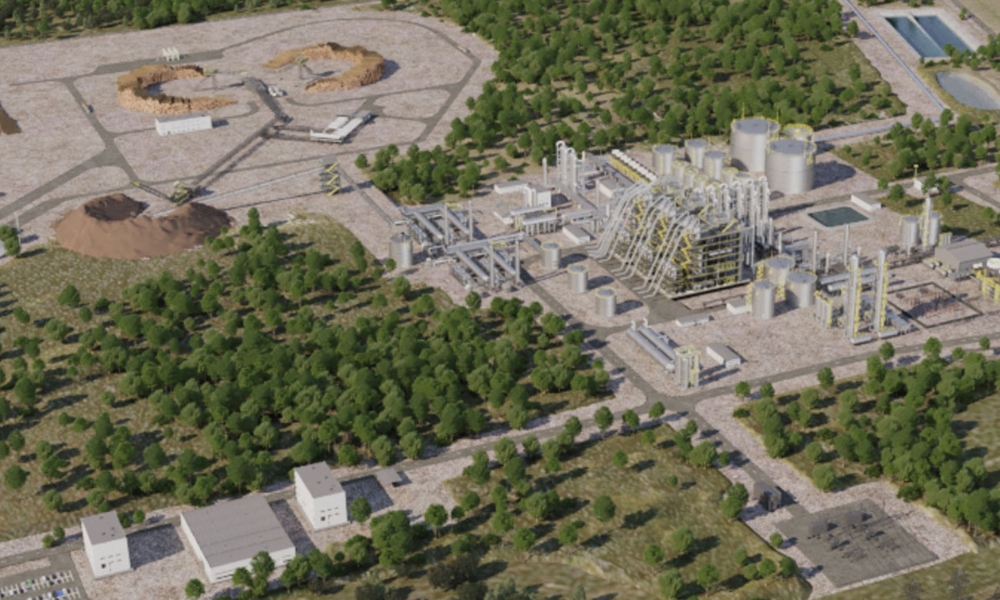
SunGas Renewables Inc. (SunGas) recently announced that it will cease further development of the Beaver Lake Biofuels project, a proposed wood fiber-to-low carbon methanol facility in Central Louisiana near Alexandria.

Beaver Lake’s design contemplated the integration of three SunGas S1000 syngas production systems together with downstream technologies to produce approximately 553,000 metric tonnes (mt) per year of low carbon methanol and geological storage of approximately 1.1 million mt per year of biogenic CO2. 

This combination of scale and low product carbon intensity supported a globally competitive bio-methanol offering, illustrating the potential viability of this technology pathway as decarbonization requirements become more stringent.

“This decision reflects a combination of factors that affected Beaver Lake’s ability to advance on the timetable required, including slower-than-expected market adoption of low-carbon marine fuels (specifically low carbon methanol), uncertainty regarding the carbon capture and storage pathway for the project and clarity on the available regulatory support and financing conditions needed to support a project of this scale,” the company said. 

Robert Rigdon, Chief Executive Officer of SunGas, said: “We continue to believe low carbon methanol can help decarbonize the maritime, aviation and chemicals industries. However, given the current regulatory uncertainty, slower customer uptake and broader financing and infrastructure constraints, we do not believe the conditions are in place to move the project forward successfully. 

“We are grateful to the many public and private partners who supported the project, and today’s announcement does not change our confidence in the long-term potential of SunGas’ technology to produce low-cost, low carbon molecules, including methanol, SAF, other transportation fuels and methane.”

Manifold Times previously reported SunGas Renewables announcing that the Central Louisiana facility would produce green methanol for Maersk.

At the time, the facility was expected to generate nearly 400,000 metric tonnes (mt) of green methanol per year for marine fuel.

Related: SunGas Renewable to build its first facility to produce green methanol bunker fuel for Maersk
Related: Maersk and SunGas Renewables sign letter of intent for strategic green methanol production


Photo credit: SunGas Renewables
Published: 18 June, 2026

Continue Reading

Biofuel

Peninsula and Evos to develop bio bunker fuel storage facility in Port of Algeciras

Proposed Evos expansion includes plans to develop up to 60,000 cubic metres of storage capacity, fully allocated to Peninsula to support the expansion of its marine biofuels supply chain in the region.

Admin

Published

on

By

Peninsula

Marine fuels supplier Peninsula on Wednesday (5 August) said it has signed a Memorandum of Understanding (MOU) with European independent liquid energy and chemicals storage company Evos to jointly progress the development of dedicated biofuel storage infrastructure at Evos’ terminal in the Port of Algeciras.

The proposed Evos expansion includes plans to develop up to 60,000 cubic metres of storage capacity, fully allocated to Peninsula to support the expansion of its biofuels supply chain in the region.

Located at the Strait of Gibraltar—one of the world’s busiest maritime corridors—the Evos Algeciras expansion project is intended to strengthen infrastructure for the energy transition in shipping. It will provide dedicated storage and handling capacity for low-carbon marine fuels, underpinning Peninsula’s quality proposition through control of its own supply chain.

John A. Bassadone, founder and CEO of Peninsula, said: “We are seeing an acceleration of biofuel adoption as a result of price volatility of conventional fuels and regulatory measures such as FuelEU and EU ETS. These regulations are designed to ratchet up, and biofuels are the most versatile, available option today to meet decarbonisation targets. 

“By partnering with Evos to build storage infrastructure, it allows us to control the quality of product and to blend biofuel ratios according to market demand. It will also offer our customers full flexibility and optionality when lifting bio products from us and further demonstrates Peninsula’s active commitment to the decarbonisation of marine fuels.”

Under the MOU, the parties will continue technical and commercial discussions on a long-term storage and handling agreement, subject to Evos’ final investment decision.

Evos will lead project development at its Algeciras terminal, including engineering, permitting and construction, while Peninsula will integrate the capacity into its growing global biofuels supply network.

Daan Vos, CEO at Evos, said: “Algeciras is already an important bunker and trading hub, with direct relevance to global shipping activity and inter-Mediterranean trade flows. Evos has a well-established position in the port as a bunker fuel storage terminal, and the expansion project with a strategic partner such as Peninsula builds on that position. 

“By developing infrastructure for marine biofuels, we can respond to changing demand in the bunker market and strengthen Algeciras’ role in the transition to lower-carbon shipping.”

The agreement reflects a shared ambition to support the evolution of the marine energy sector by investing in scalable, future-facing infrastructure in key global hubs.


Photo credit: Peninsula
Published: 6 August, 2026


Continue Reading

Alternative Fuels

India’s SCI launches global tender for up to six LNG dual-fuel containerships

Tender covers two firm orders with options for four additional vessels and each ship will have a capacity of approximately 8,000 TEU and be capable of operating on LNG as well as conventional marine fuels.

Admin

Published

on

By

india flag

State-owned Shipping Corporation of India (SCI) recently launched an international tender for the construction of up to six LNG dual-fuel container vessels as part of its fleet renewal programme.

The tender covers two firm orders with options for four additional vessels. Each ship will have a capacity of approximately 8,000 TEU and be capable of operating on LNG as well as conventional marine fuels.

Both Indian and foreign shipyards are eligible to bid, subject to SCI’s technical and financial requirements. 

Foreign yards must have delivered at least two container vessels exceeding 5,000 TEU that have entered service within the past 10 years. Indian shipyards without prior containership construction experience must partner with a reputed foreign yard that has previously built LNG dual-fuel vessels, capable of running on LNG and Conventional fuel which are in service.

According to the tender documents, SCI will evaluate bids based on factors including delivery and payment schedule of the vessel, bunker fuel consumption, service speed and cargo-carrying capacity.

Bids for the tender must be submitted by 31 August at 1700 hours IST and a virtual pre-bid meeting will be held on 18 August at 1500 hours. 


Photo credit: Naveed Ahmed on Unsplash
Published: 6 August, 2026

Continue Reading

Alternative Fuels

MMMCZCS outlines subsidy design options to accelerate low-emissions bunker fuels

In a paper, the center focuses on the active policy debate of the IMO’s Net-Zero Framework to analyze the various design options.

Admin

Published

on

By

MMMCZCS outlines subsidy design options to accelerate low-emissions bunker fuels

Mærsk Mc-Kinney Møller Center for Zero Carbon Shipping (MMMCZCS) on Tuesday (4 August) released a new publication on how to design subsidy programmes to incentivize the use of zero or near-zero (ZNZ) fuels.

Decarbonizing shipping requires a shift to low- and zero-emissions fuels, but these remain substantially more expensive than the fossil energy they replace. 

“Targeted financial support can help close that gap, but its design determines whether subsidies buy cheap near-term emissions cuts or build a future low-emissions fuel system,” it said in a social media post.

“Pursuing both aims with a single undifferentiated instrument risks achieving neither well.”

In this paper, the center focuses on the active policy debate of the International Maritime Organization’s (IMO) Net-Zero Framework (NZF) to analyze the various design options.

“If implemented, this framework currently under negotiation would be a globally binding climate regulation for shipping,” MMMCZCS added.

MMMCZCS distilled the design of a ZNZ reward program into five interlocking “variables”: eligibility, abatement benchmark, multipliers, differentiation, and reward instruments. 

In this paper, it sets out the options under each variable and examines the trade-offs across incentive strength, fiscal durability, and environmental integrity. 

Note: The full paper can be viewed here


Photo credit: Mærsk Mc-Kinney Møller Center for Zero Carbon Shipping
Published: 6 August, 2026

Continue Reading

Trending