Connect with us

Port & Regulatory

MEPC 84 opening: IMO Sec-Gen urges for constructive and pragmatic exchanges

‘Listen to one another, there is no need to argue. We are adult enough to agree to disagree. There is no reason to repeat what happened last October. There is no need for it,’ says Arsenio Dominguez.

Admin

Published

on

MEPC 84 opening: IMO Sec-Gen urges for constructive and pragmatic exchanges

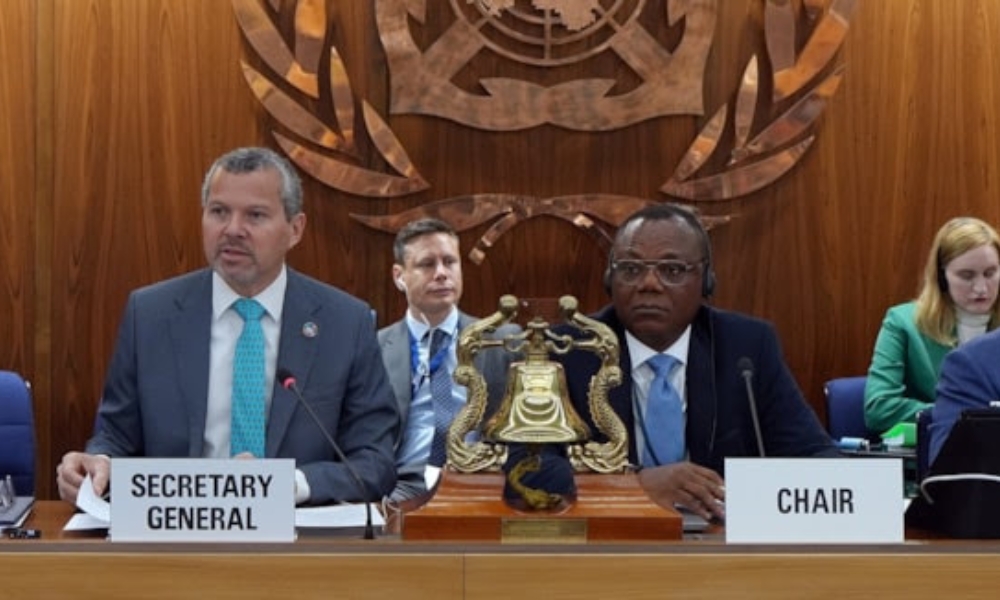
International Maritime Organization (IMO) Secretary-General Arsenio Dominguez on Monday (27 April) opened the 84th session of the Marine Environment Protection Committee (MEPC 84), urging Member States to find convergence and make meaningful progress on the IMO Net-Zero Framework to cut global shipping emissions, and set an example of effective multilateralism.

The following is the full transcript of the Secretary-General’s opening remarks:

Good morning, distinguished delegates, 

Welcome to the 84th session of the Marine Environment Protection Committee.

Situation in the Strait of Hormuz

Before turning to the work of this session, and further to my briefing to Member States last Friday, I must once again address the situation in the Strait of Hormuz, which continues to be of grave concern. Thousands of seafarers remain stranded inside the Gulf on board vessels, exposed to significant risks and considerable psychological strain. They are victims of a situation with broader consequences for the global economy and food security. The longer this situation goes on, the greater the risk of serious accidents, including environmental accidents. 

The Council held an extraordinary session in March, reaffirming the respect for the freedom of navigation; the paramount importance of the safety of seafarers and shipping; the conviction that seafarers and shipping must never be used as collateral victims of any geopolitical conflict; and the importance of dialogue and diplomacy in de-escalating tensions. 

I wish to reaffirm that the IMO is the place for multilateral agreement on international shipping. This includes measures such as Traffic Separation Schemes in high volume straits between two or more Member States. 

I continue to engage with relevant stakeholders on this matter and I urge all parties to work towards de-escalation.

Reduction of Greenhouse Gas Emissions and Energy Efficiency

Turning to the meeting this week, a very important task this week is to find convergence to make meaningful progress on the IMO Net-Zero Framework for international shipping.

I am pleased to see that many of you have used the time since last year’s extraordinary session wisely and productively. The submissions to this session, as well as the constructive discussions during last week’s ISWG-GHG 21, demonstrate a genuine commitment to address the concerns expressed at the extraordinary session and to move this work forward.

I am confident the Committee is now in a better position to understand each other’s respective views, which will facilitate progress towards consensus on mid-term greenhouse gas reduction measures. In particular, I welcome the good progress on the guidelines supporting the technical element of the framework, notably the greenhouse gas fuel intensity, or GFI, regulating component. The work is not complete, however your work on the GFI Calculation Guidelines, together with the fuel certification and life-cycle assessment guidelines, provides a solid basis for further progress on globally harmonized reporting and will support practical and effective implementation.

With regard to the economic element, I am encouraged by your continued efforts to develop a shared understanding of what a just and equitable transition means in the IMO context.

My request to you is that we engage in constructive and pragmatic exchanges. Listen to one another, there is no need to argue. We are adult enough to agree to disagree. There is no reason to repeat what happened last October. There is no need for it. Let us move forward where we agree and continue to elaborate where further work and understanding is required. At a time where there is already enough disagreement around the world, I ask you that we can set an example of effective multilateralism.

It is also important to recognize that IMO’s regulations are already delivering tangible results. According to IMO’s Fuel Consumption Reporting data submitted to this session, the carbon intensity of international shipping has decreased by more than 38% compared to 2008. This demonstrates that concrete action to reduce fuel consumption, save costs, and improve efficiency is possible today.

You will also be invited this week to continue the review of the short-term measures, including the Carbon Intensity Indicator regulations, as well as consider emerging technologies including onboard carbon capture, wind propulsion, and the monitoring of methane and nitrous oxide emissions, with a view to provide further clarity on the use of fuels and technologies through global regulations.

Ballast Water Management and Biofouling

Concerning ballast water management, you are invited to approve a package of amendments to the BWM Convention, adopt the revised G4 Guidelines, and progress work on the BWMS Code and associated guidelines, as well as consider the way forward on the remaining steps of the experience-building phase. 

You are also invited to confirm that the legally binding framework on ships’ biofouling will take the form of a standalone instrument, as recommended by the PPR Sub-Committee.

Marine Plastic Litter

On marine plastic litter, the Committee will be invited to adopt the draft 2026 Strategy and Action Plan to Address Marine Plastic Litter from Ships. You will also consider the recommendation from PPR 13 that a new mandatory code be developed on the maritime transport of plastic pellets in freight containers, and a draft MEPC circular promoting the implementation of fishing gear marking systems.

Closing

I am confident that under the expert guidance of your Chair, Dr. Harry Conway of Liberia, ably supported by the Vice-Chair, Mr. Hanqiang Tan of Singapore, as well as the staff of the Marine Environment Division and the supporting divisions, you will be able to successfully achieve the objectives set for this session.

I invite you all to the welcome reception in the Delegates’ Lounge at the close of today’s business.

Thank you.


Photo credit: International Maritime Organization
Published: 28 April, 2026

Continue Reading

Alternative Fuels

APPEC 2026: Panellists navigate maritime decarbonisation and alternative marine fuel strategies

Experts discuss maritime decarbonisation, emphasising global regulatory clarity, crew training, and collaborative strategies for adopting sustainable alternative marine fuels.
Admin

Published

on

By

IMG 9319 MT

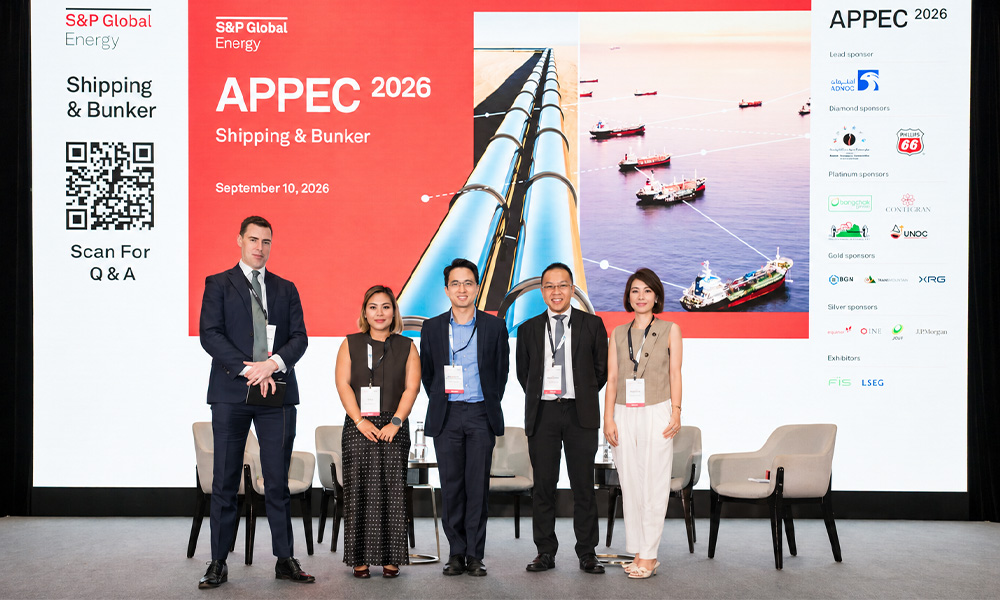
Panel members consisting of Singapore’s maritime and port regulator Maritime and Port Authority of Singapore (MPA), legal firm Rajah & Tann, bunker trading firm Sing Fuels, and the International Bunker Industry Association (IBIA) discussed the complexities of maritime decarbonisation at APPEC 2026 on Thursday (10 September).

The panel Balancing the Bunker Fuel Mix on the Path to Decarbonization moderated by John Morley, Global Director, Crude and Fuel Oil Markets, S&P Global Energy explored the complex landscape of maritime decarbonisation, sanctions fragmentation, and the transition to alternative marine fuels in Singapore.

Panellists broadly agree regulatory clarity – particularly from the International Maritime Organization (IMO) – is the single most critical enabler for large-scale investment, whilst highlighting regional fragmentation, crew competency gaps, and trade finance constraints pose significant near-term challenges.

Biofuels were seen as the most immediately scalable alternative marine fuel, with methanol and ammonia as longer-term prospects.

The following points were raised by panel members during discussion:

New Wei Siang, Director, Maritime Decarbonisation & Net-Zero Pathways, MPA, advocated for a global, IMO-led regulatory framework to guide shipping’s decarbonisation.

He believed regional patchwork regulations create unhelpful uncertainty, whereas a unified approach would be more helpful for long-term investment.

While acknowledging progress at recent IMO inter-sessional meetings held in September has been “slow but deliberate,” he remains focused on the upcoming MEPC 85 scheduled from November 30 to December 3, 2026.

To address the technical and safety challenges of new bunker fuels, he pointed out the MPA has established the Maritime Energy Training Facility (METF) to upskill crews on handling future marine fuels including methanol.

Furthermore, the MPA has launched ten green and digital shipping corridor partnerships to trial alternative fuels, exchange knowledge, and raise safety standards.

Mr New emphasised Singapore’s goal is to serve as a comprehensive maritime hub, balancing global regulatory engagement with practical, collaborative efforts to build competency for the future.

Nathanael Lin, Partner, Shipping & International Trade, Rajah & Tann Singapore, highlighted the significant legal and commercial challenges posed by regulatory fragmentation.

He argued regional environmental rules, such as those in the EU, force shipowners to make high-stakes gambles on trade routes and infrastructure until the IMO codifies standards into MARPOL Annex VI.

He also noted sanctions compliance has become dramatically more complex, with competing unilateral regimes replacing the previous era of UN consensus, creating immense operational risk for industry participants.

Furthermore, Mr Lin warned trade finance frameworks are currently ill-equipped to handle the complexities of blended alternative bunker fuels; he recommended banks to actively upskill their compliance functions to support the maritime energy transition.

Finally, he observed while claims regarding alternative marine fuels remained low due to the sophistication of early adopters, they will likely rise as adoption broadens. He also flagged the future migration of residual fuel demand as a critical, under-examined industry issue.

Juwita Setiawan, Trading Manager & New Fuels Lead, Sing Fuels, emphasised the energy transition has been making bunkering increasingly complex due to overlapping regulations.

She advocated for holistic voyage planning, where shipowners consider total emissions, costs, and marine fuel flexibility rather than evaluating port calls in isolation. She highlighted the critical role of high-quality data, fuel flexibility, including dual-fuel capabilities and fuel optimisation as essential tools for navigating the increasingly complex energy transition and supporting a practical pathway towards decarbonisation.

Regarding market structure, Ms Setiawan believed a symbiotic partnership between large integrated energy companies – which provide necessary capital and infrastructure – and agile, specialist suppliers is vital for success.

She identified biofuels and LNG as the most viable near-term maritime decarbonisation solutions, with methanol emerging as a mid-term option.

Ultimately, even though government incentives remain essential to help shipowners manage the high costs associated with adopting greener bunker fuels, regulatory clarity is the single most important factor to simplify market trading.

Looking ahead, she believes three things need to happen over the next three years:

  1. Clear and stable regulation – Shipowners and fuel suppliers need regulatory certainty and confidence to make long-term investments.
  2. Scale in supply and infrastructure – The industry needs to move beyond pilot projects towards reliable volumes, competitive pricing and stronger infrastructure across major bunkering hubs.
  3. Greater confidence in the fuels themselves – Common standards, proven technologies and reliable fuel performance will be essential to building trust and accelerating adoption.

“At Sing Fuels, we believe the transition is not about choosing one fuel for every vessel. It is about optimising the right fuel, at the right place, at the right cost, with the right emissions outcome – while keeping operational realities at the centre of the decision.

Siti Noraini Zaini, Regional Manager, Asia, IBIA, identified energy security and decarbonisation as objectives that need not be competing, noting that when energy security is under pressure, the immediate focus naturally shifts towards availability, reliability and affordability.

Over the longer term, however, a diversified marine fuel mix ultimately enhances industry resilience.

She stressed low carbon fuels alone is insufficient; shipowners need confidence that fuels will be available to meet the demand, where they are needed and at commercially manageable prices.

A critical focus for Ms Siti is the parallel development of standards. She warned the industry could not wait for the market to mature before establishing protocols. Standards for fuel quality measurement, green bunkering procedures, safety, and crew competency must be developed alongside the fuels themselves.

Looking ahead, she identified the upcoming MEPC 85 meeting as the industry’s primary regulatory watchpoint. Achieving clarity at the meeting is essential to enable the safe, financed, and commercially viable bunkering of new marine fuels, ensuring shipping’s decarbonisation transition remains both practical and sustainable.


Photo credit: S&P Global
Published: 14 September 2026

Continue Reading

Methanol

Goldwind green methanol facility completes trial production, ships first 500 mt

Goldwind has also secured long-term offtake agreements with A.P. Moller – Maersk and Hapag-Lloyd, connecting planned production with demand from shipping.
Admin

Published

on

By

Goldwind green methanol facility completes trial production, ships first 500 mt

MI — The Global Methanol Alliance on Friday (11 September) said the world’s largest green methanol production facility to date has completed its first trial run. 

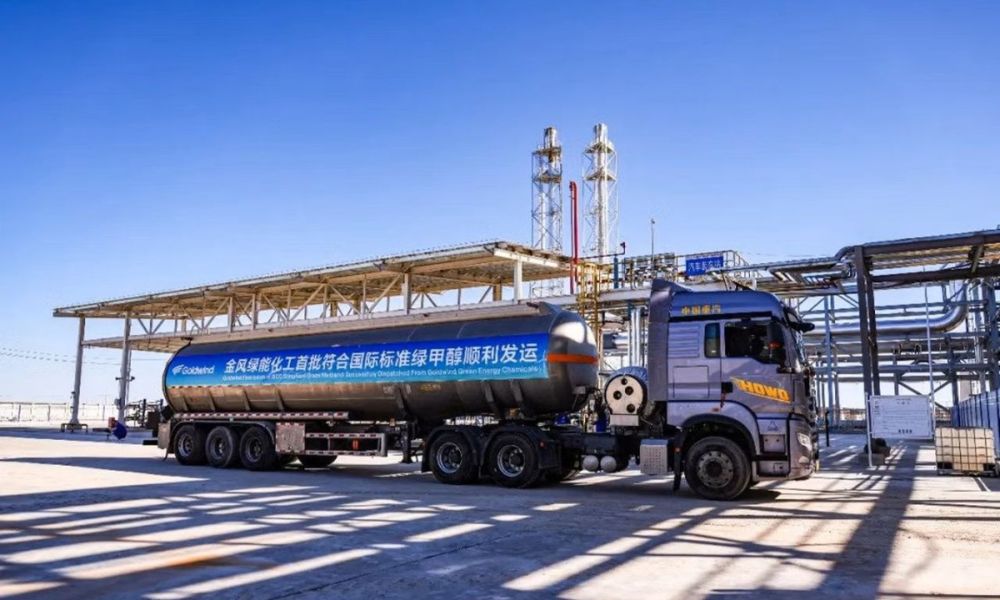
The alliance’s member Goldwind Green Energy has successfully produced biomethanol at its new 250,000 metric tonne (mt)/year facility in Inner Mongolia, with the first 500 mt of trial product now headed to South Korea.

“The facility uses wind-powered green hydrogen and locally sourced corn straw to produce biomethanol meeting EU RED III sustainability requirements. Commercial operations are expected to begin later this month,” it said. 

Goldwind has also secured long-term offtake agreements with A.P. Moller – Maersk and Hapag-Lloyd, connecting planned production with demand from shipping.

In 2024, Hapag-Lloyd reached a long-term agreement with Chinese energy firm Goldwind for the delivery of 250,000 mt of green methanol per year to ensure long-term supply for its vessels.

In 2023, Maersk signed a deal with Goldwind, marking the first large scale green methanol offtake agreement for the global shipping industry.

The commercially viable long-term offtake agreement for annual volumes of 500KT will enable low carbon operations for the first 12 large methanol-enabled Maersk vessels on order. The first volumes are expected in 2026.

Related: Hapag-Lloyd, Goldwind enter offtake deal for green methanol bunker fuel supply
Related: Maersk and China-based Goldwind sign landmark green methanol bunker fuel offtake deal


Photo credit: MI — The Global Methanol Alliance
Published: 14 September, 2026

Continue Reading

Wind-assisted

LDA’s methanol-powered “Spirit of Toulouse” gets Norsepower rotor sail in Shanghai

Now in Shanghai, the installation of the vessel’s innovative wind-assisted propulsion system has begun with the fitting of the first of its six 35-metre-high rotors.
Admin

Published

on

By

LDA’s methanol-powered “Spirit of Toulouse” gets Norsepower rotor sail in Shanghai

French shipowner LD Armateurs on Thursday (10 September) said its new RoRo vessel has reached another major milestone in her construction journey with the start of the installation of a wind-assisted propulsion system. 

Following its launch earlier this year, Spirit of Toulouse has completed a journey along the Yangtze River to Shanghai. 

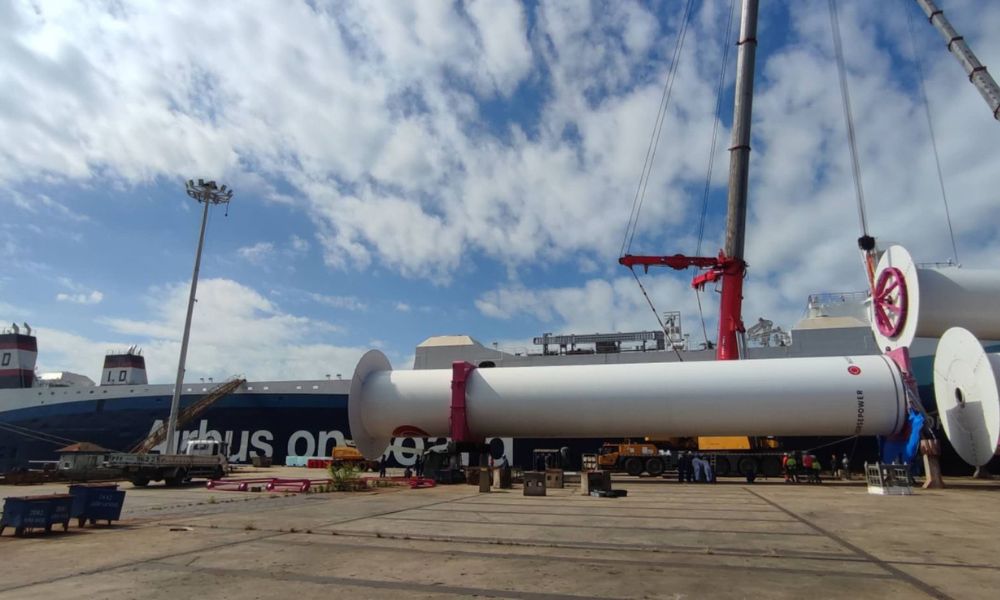
Now in Shanghai, the installation of the vessel’s innovative wind-assisted propulsion system has begun with the fitting of the first of its six 35-metre-high rotors. 

“This highly visible phase marked a significant step forward in bringing to life the world’s biggest low-emission RoRo vessels ever built,” the company said. 

Combining six Norsepower Rotor Sails ™ and two dual-fuel engines capable of running on e-/bio-methanol or marine diesel oil, the Spirit of Toulouse has been specifically designed to substantially reduce emissions while maintaining the highest standards of operational performance and reliability. 

The ship will operate on the Atlantic route, transporting aircraft elements for Airbus between European production sites and the final assembly line in the US. 

“As work progresses in Shanghai, the silhouette of the Spirit of Toulouse is beginning to take shape, bringing this unique vessel one step closer to entering service and setting new standards for sustainable maritime transport,” the company added. 


Photo credit: LD Armateurs
Published: 14 September, 2026

Continue Reading
Advertisement

OUR INDUSTRY PARTNERS


Trending